

Grilling pizza on a gas grill with a stone gives crisp, blistered crust and fast, even cooking every time.
I’ve cooked hundreds of pizzas on a gas grill with a stone. I know what works and what fails. This guide walks you through choosing the right stone, setting up your grill, shaping dough, and mastering heat control. You will learn step-by-step how to get pizzeria-style results at home using simple tools and clear techniques for grilling pizza on a gas grill with stone. Read on for tested tips, common fixes, and easy recipes that save time and improve flavor.
Why use a pizza stone on a gas grill
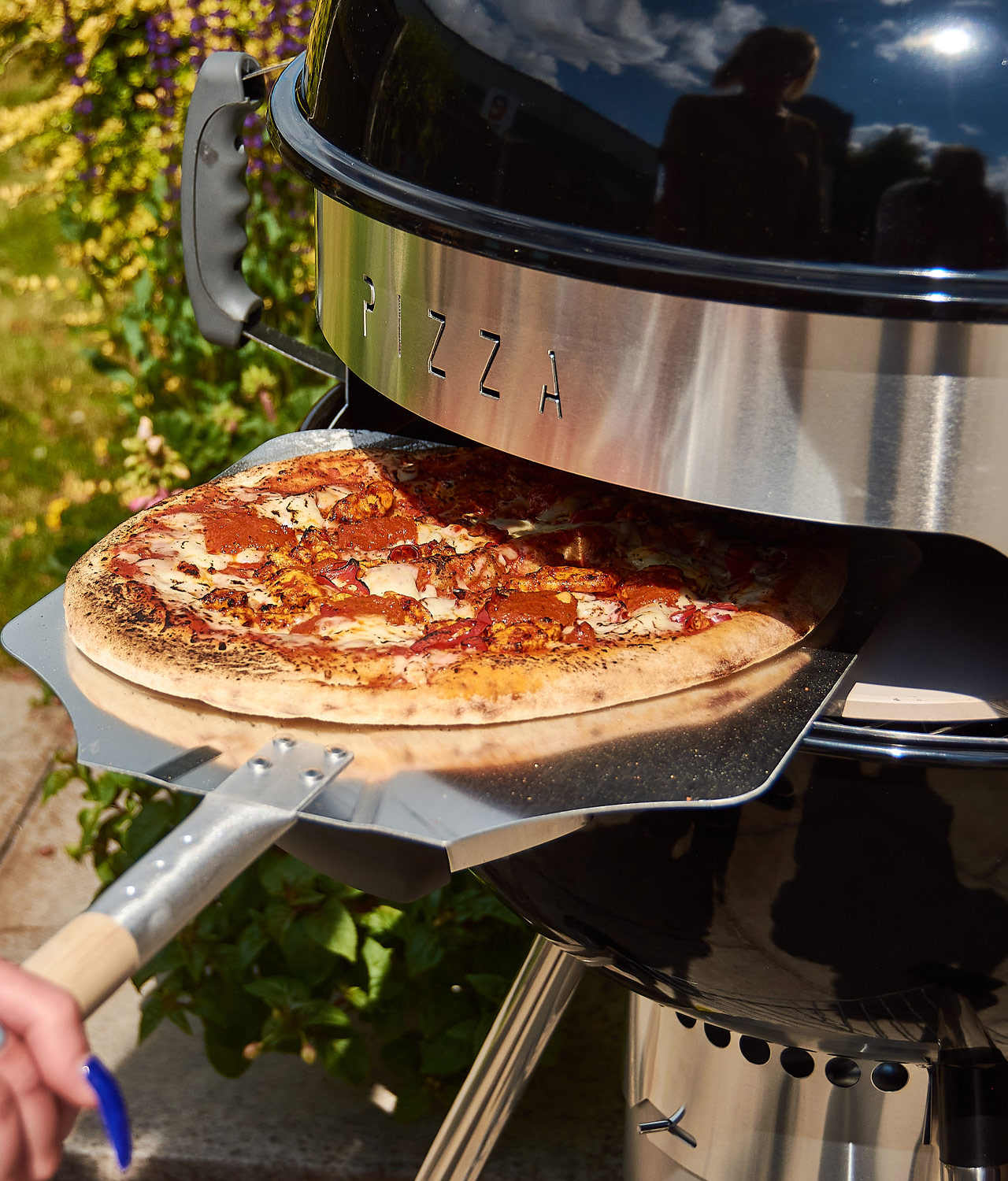
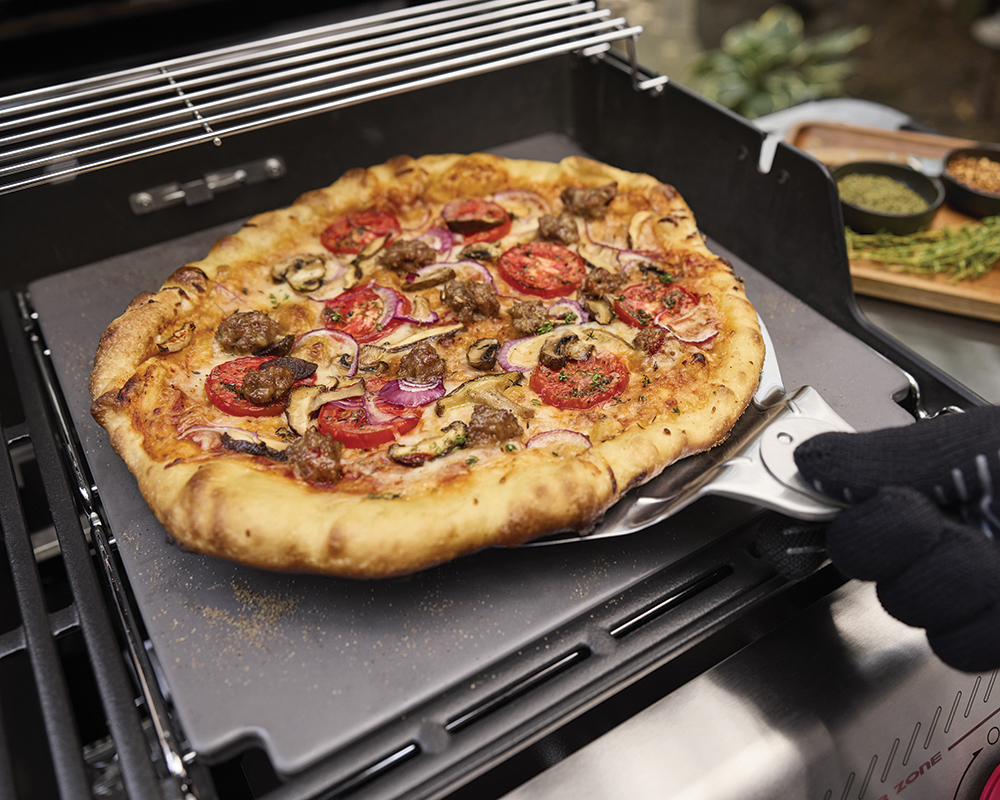
A pizza stone stores heat and spreads it evenly. It creates a hot, dry surface that mimics a pizza oven. Using a stone on a gas grill gives you a crisp bottom and faster bake times than a sheet pan. I use a stone because it reduces hot spots and holds steady heat when the lid opens. Grilling pizza on a gas grill with stone turns a regular grill into a true pizza oven.
:max_bytes(150000):strip_icc()/__opt__aboutcom__coeus__resources__content_migration__simply_recipes__uploads__2015__05__how-to-grill-pizza-horiz-a-1600-89d2838940b340b4b5a836253f0a07ca.jpg)
Choosing the right stone and tools
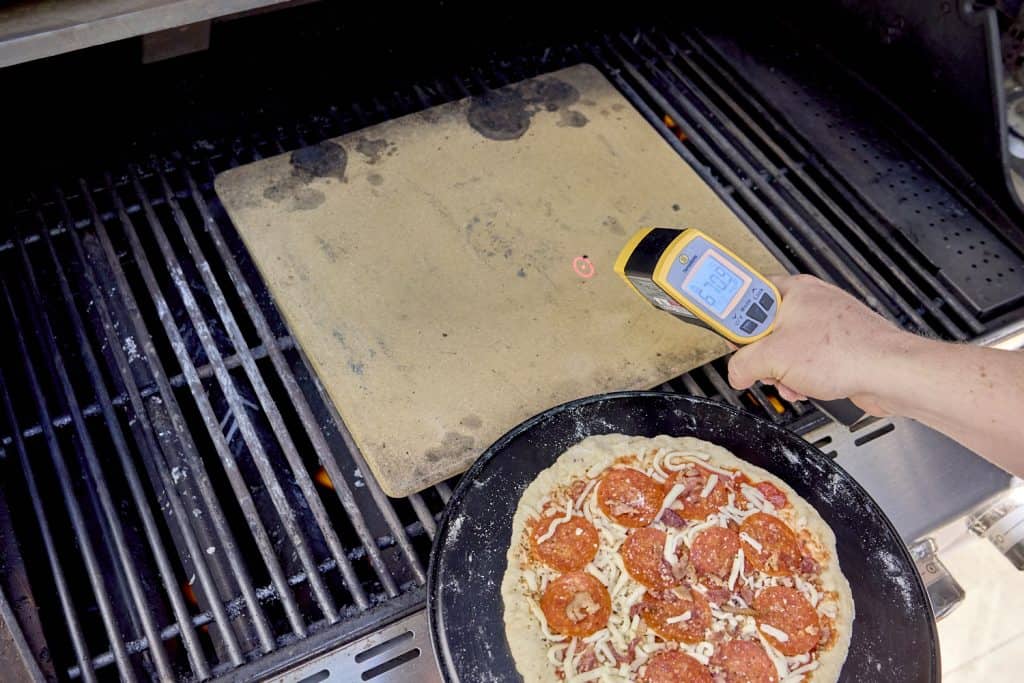
Pick a stone that fits your grill. Look for cordierite or firebrick rated for high heat. Thicker stones hold heat better but take longer to preheat. Choose a pizza peel and a good metal spatula for transfers. Get an infrared grill thermometer and a pizza cutter. These tools make grilling pizza on a gas grill with stone easier and more consistent.
Preparing the grill and stone
Preheat the stone slowly. Start the grill on medium and close the lid. Increase to high after 10 minutes if needed. Aim for 500°F to 650°F at the stone surface. Let the stone heat at least 30 to 45 minutes. Use an infrared thermometer to check the stone surface. I learned the hard way: not preheating causes soggy crusts when grilling pizza on a gas grill with stone.
Dough, sauce, and toppings that work best
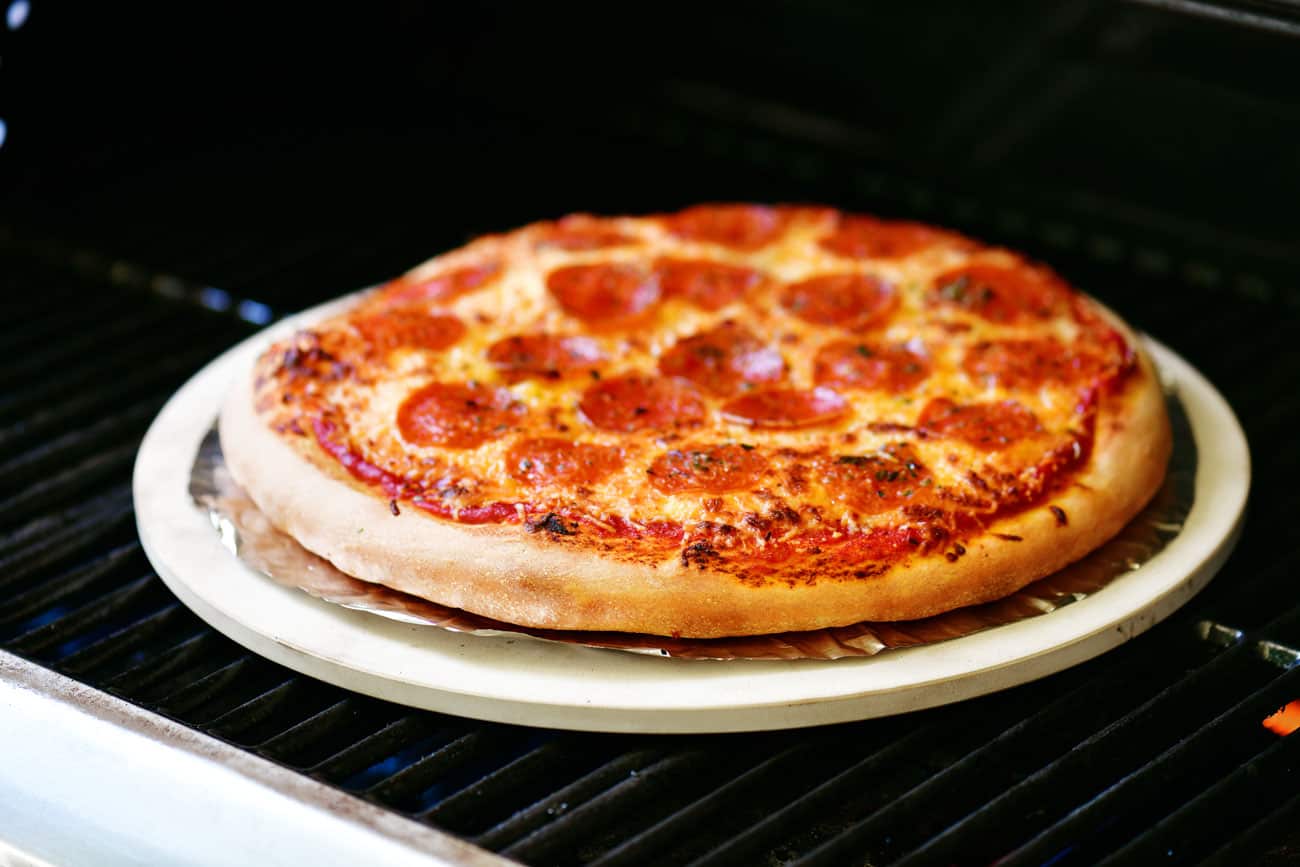
Keep the dough simple and hydrated but not wet. Use a 60–65% hydration dough for easy handling. Stretch by hand. Avoid excess sauce or wet toppings. Favor these choices:
- Thin, hand-stretched dough for quick cooking.
- A light tomato sauce or brushed olive oil.
- Low-moisture cheeses or pre-drained fresh mozzarella.
- Pre-cooked meats and quick-cooking veggies like thin peppers.
Choosing right ingredients helps when grilling pizza on a gas grill with stone, because the surface cooks fast.

Step-by-step: grilling pizza on a gas grill with stone
- Heat the grill and stone to 500°F–650°F. Close the lid and wait 30–45 minutes.
- Prepare dough on a floured peel or board. Keep it thin.
- Dust the peel with semolina or flour. Slide the dough onto the peel.
- Add sauce and toppings sparingly. Keep center light.
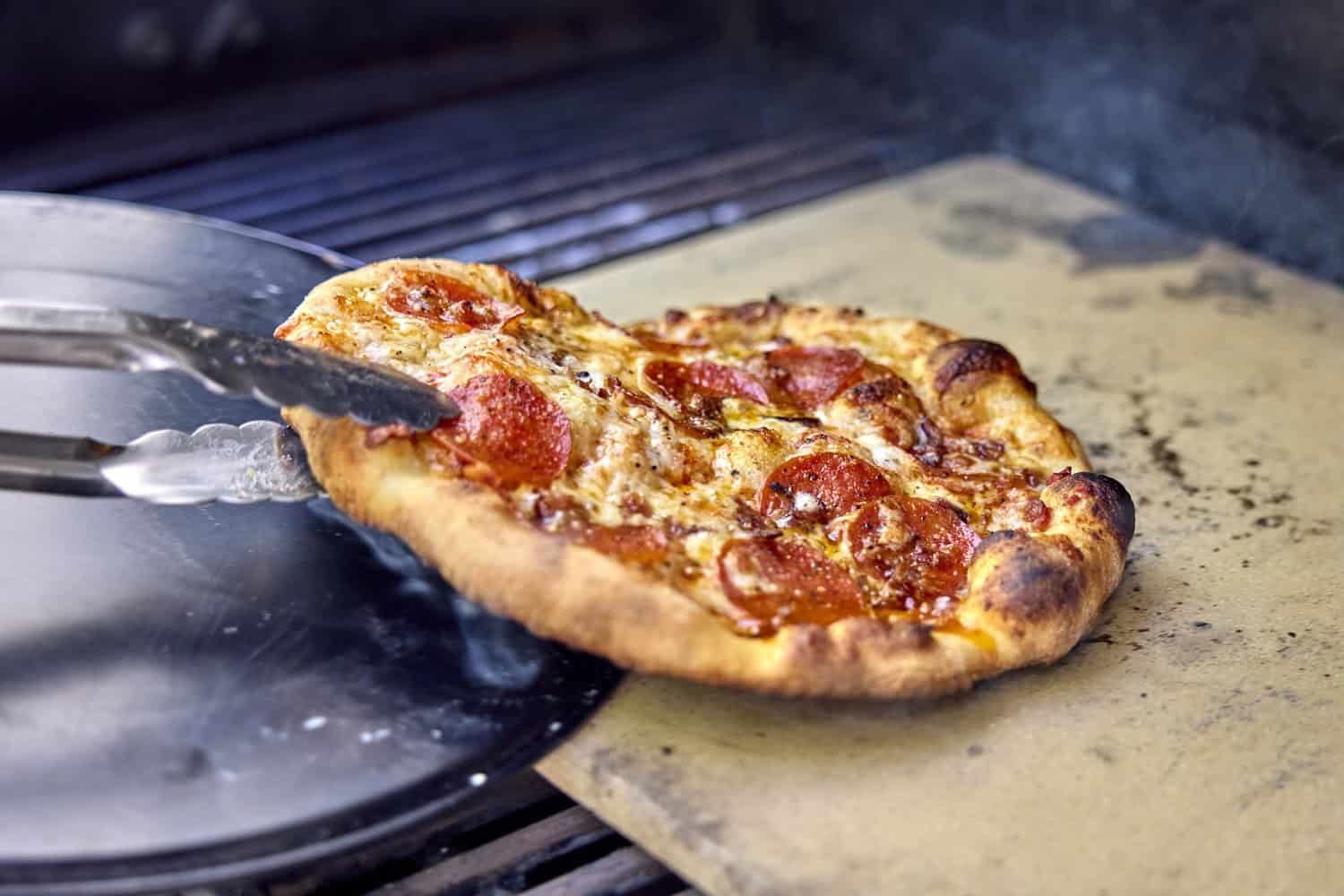
- Slide the pizza onto the hot stone. Close the lid.
- Check after 2–3 minutes. Rotate the pizza if one side browns more.
- Bake 4–7 minutes total, depending on temp and thickness. Remove with the peel.
- Let rest for a minute, then slice.
I repeat this routine every time I grill. It’s reliable for grilling pizza on a gas grill with stone.

Troubleshooting and common mistakes
Here are quick fixes for usual problems:
- Soggy crust: Preheat longer and use less sauce. Heat stone hotter.
- Burnt bottom: Lower the heat or move pizza off direct flame for a minute.
- Sticking to the peel: Use more semolina or flour on the peel. Stretch dough properly.
- Uneven bake: Rotate pizza often. Use a thermometer to find hot spots.
- Cracked stone: Avoid sudden temperature shocks and never put a cold stone onto a hot grill.
These tips come from mistakes I made early on while mastering grilling pizza on a gas grill with stone.
Cleaning and maintenance of your stone and grill
Let the stone cool fully before cleaning. Scrape off residue with a stiff brush or scraper. Do not soak or use soap. Wipe with a damp cloth if needed. Store the stone dry and handle it gently. Clean grill grates after each use to prevent flare-ups. Proper care improves performance when grilling pizza on a gas grill with stone.
Safety tips
Use heat-resistant gloves when handling the stone or peel. Keep children and pets away from the hot grill. Watch for flare-ups from drips. Place the stone stably on the grill to avoid tipping. Always cool the stone slowly. Safety keeps your pizza sessions fun and worry-free when grilling pizza on a gas grill with stone.
Frequently Asked Questions of grilling pizza on a gas grill with stone
How hot should the stone be for pizza?
Aim for 500°F to 650°F at the stone surface. Higher temps give a crisp crust and quick bake times.
Can I use a ceramic or glass stone on a gas grill?
Use cordierite or firebrick. Glass and some ceramics can crack under high, rapid heat.
How long do I preheat the stone?
Preheat 30 to 45 minutes with the lid closed. Use an infrared thermometer for best accuracy.
Do I need a pizza peel?
Yes. A peel helps transfer the pizza on and off the stone quickly and safely.
Can I cook frozen pizza on the stone?
Yes, but thaw slightly and watch closely. Frozen pizzas may need a bit longer and more rotation.
How do I prevent the pizza from sticking to the stone?
Dust the peel with semolina or flour and use a well-heated stone. Avoid excess sauce and wet toppings.
Is it okay to use the stone on a gas grill all the time?
Yes, if the stone is rated for high heat and you preheat slowly. Avoid thermal shock and sudden temperature changes.
Conclusion
You can make great pizza at home by grilling pizza on a gas grill with stone. Choose a good stone, preheat well, use light toppings, and follow the step-by-step routine. I’ve seen consistent wins by sticking to these basics. Try one recipe tonight and tweak your heat and toppings next time. Share your results, ask a question, or subscribe for more grilling tips.
