

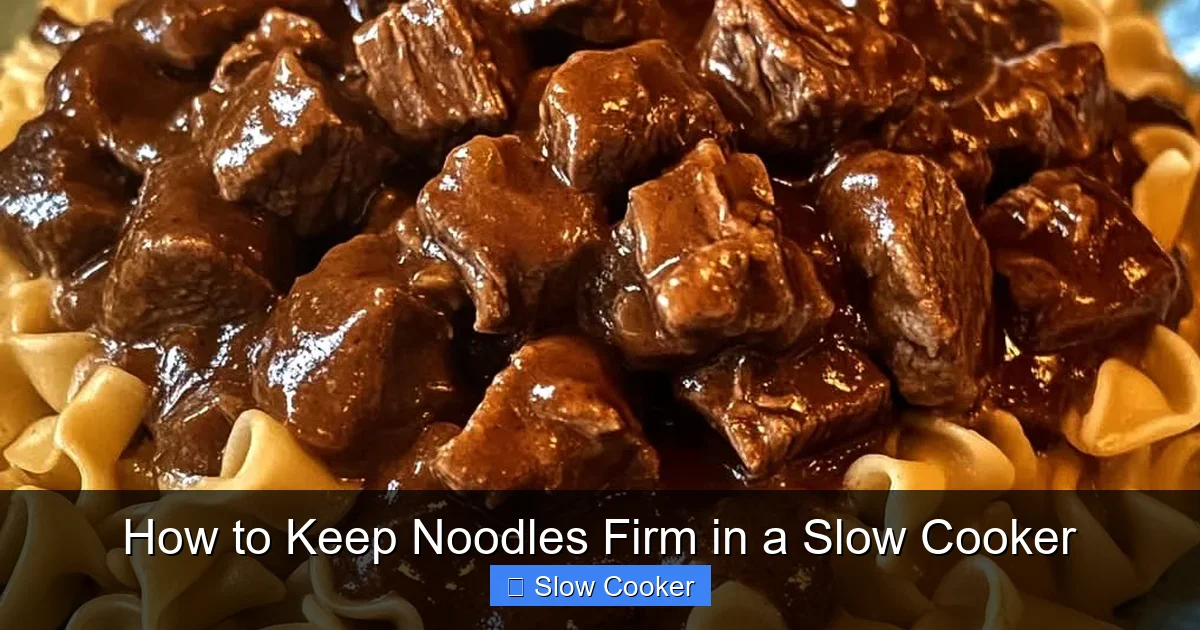
Cooking noodles in a slow cooker can be tricky—they tend to become mushy if not monitored properly. In this guide, you’ll learn effective techniques to keep noodles firm while cooking, ensuring your dishes stay flavorful and with the perfect texture. Whether you’re making soups, stews, or casseroles, these tips will help you achieve ideal results every time.
Key Takeaways
- Timing matters: Add noodles later in the cooking process to prevent over-softening.
- Use the right type of noodles: Denser noodles like penne or rigatoni hold their texture better than thin rice or vermicelli.
- Cook on low heat: Slow cooking on low allows more control and reduces the risk of mushiness.
- Monitor cooking time: Keep track of how long noodles are in the slow cooker to avoid overcooking.
- Consider pre-cooking: Slightly undercook noodles before adding them to the slow cooker for better firmness.
- Use a separate pot for noodles: Cook noodles separately and add them just before serving for perfect firmness.
- Add acid or fat: A splash of vinegar or a bit of oil can help maintain noodle texture.
Introduction
Slow cookers are fantastic for making hearty stews, soups, and casseroles with minimal effort. But one common challenge is keeping noodles firm and not mushy. Overcooked noodles can ruin a dish, turning it into a soggy mess. Luckily, with a few simple techniques, you can enjoy perfectly firm noodles every time you use your slow cooker. In this guide, we’ll walk through step-by-step instructions, tips, and troubleshooting to help you achieve noodle perfection in your slow cooker. For those making chicken noodle soup specifically, check out our expert picks for the best slow cookers designed to handle this classic dish.
Understanding Why Noodles Turn Mushy in a Slow Cooker
Before diving into the solutions, it’s helpful to understand why noodles tend to overcook in a slow cooker. The main reasons include:
- Extended cooking time: Longer exposure to heat breaks down the structure of noodles, making them soft and mushy.
- High temperatures: Cooking on high heat accelerates softening, leading to overdone noodles.
- Type of noodles: Thin, delicate noodles like rice or vermicelli are more prone to overcooking.
- Adding noodles too early: Including noodles at the beginning of cooking exposes them to prolonged heat.
Step 1: Choose the Right Noodles
Select Denser Pasta Types
Start by choosing noodles with a sturdy structure. Types like penne, rigatoni, fusilli, or even whole wheat pasta are more resistant to overcooking than thin varieties like vermicelli or angel hair. These denser noodles hold their shape better and stay firm longer.
Avoid Fragile Noodles
Try to avoid delicate noodles such as rice vermicelli, glass noodles, or thin angel hair pasta for slow cooker recipes. They tend to turn to mush quickly, especially if overcooked.
Step 2: Pre-Cook or Partially Cook Noodles
Pre-Cook Noodles Slightly
One effective method is to cook your noodles until they are just al dente in boiling water before adding them to the slow cooker. This way, they won’t overcook during slow cooking. To do this:
- Bring a large pot of salted water to a boil.
- Add noodles and cook for 2 minutes less than the package instructions.
- Drain and rinse with cold water to stop the cooking process.
Once pre-cooked, add the noodles to your slow cooker near the end of the cooking time, just enough to heat through.
Step 3: Add Noodles at the Right Time
Timing Is Key
The best way to keep noodles firm is to add them late in the cooking process. For most recipes, add the noodles during the last 15-30 minutes of cooking. This prevents them from sitting in heat for too long and becoming mushy.
For Soups and Stews
If you’re making a soup or stew, wait until the meat and vegetables are fully cooked before adding noodles. Cover and cook on low, then add the noodles and cook for the final 15-20 minutes. To prevent vegetables from also turning mushy, review our guide on how to keep vegetables firm during slow cooking.
Step 4: Adjust Cooking Settings and Time
Use Low Heat
Always opt for the ‘low’ setting instead of ‘high’. Slow cooking on low provides gentler heat, giving you better control over noodle texture.
Set a Timer
Monitor the cooking time carefully. Most noodles only need 10-15 minutes to cook through once added to the slow cooker. Use a timer to avoid overcooking.
Step 5: Consider Cooking Noodles Separately
Cook Noodles Independently
For perfect firmness, cook noodles separately in boiling water. Drain and add to the dish just before serving. This method ensures noodles stay al dente and prevents them from absorbing too much liquid or breaking down.
Combine Before Serving
Simply ladle your cooked noodles into the dish, mix gently, and serve hot. This is especially useful for recipes like casseroles or thick soups.
Step 6: Incorporate Tips to Maintain Noodle Texture
- Add a splash of acid: A teaspoon of vinegar or lemon juice can help preserve noodle firmness.
- Use a small amount of oil or butter: Adding a little fat prevents noodles from sticking together and maintains texture.
- Cover loosely: When adding noodles late, cover the slow cooker loosely to prevent excess moisture build-up, which can soften noodles.
Troubleshooting Common Issues
Noodles Turn Mushy Even When Timing Correct
Solution: Check your slow cooker’s temperature setting. If it’s too high, reduce to low. Also, consider pre-cooking noodles or adding them at the last minute.
Noodles Are Too Firm
Solution: If noodles are undercooked, simply turn up the heat slightly and cook for a few more minutes. For future, add noodles later in the process to avoid this problem.
Dish Is Too Thick or Gummy
Solution: Add a splash of broth or water to loosen the dish. Stir gently to distribute moisture evenly.
Conclusion
Keeping noodles firm in a slow cooker is all about timing, choice of noodles, and cooking method. By selecting denser pasta types, pre-cooking or adding noodles late in the process, and controlling the heat, you can enjoy perfectly textured noodles every time. Remember, patience and attention to timing are your best tools for delicious, firm noodles in slow cooker recipes. If you’re shopping for a new slow cooker optimized for pasta dishes, explore our expert picks for slow cookers ideal for flavorful, noodle-based curries.
Final Tips
- Always consider the type of dish you’re making when choosing your noodles.
- Experiment with timing and settings to find what works best in your slow cooker.
- When in doubt, cook noodles separately for guaranteed firmness.
