
Many home cooks wonder, “is food processor different from blender?” The answer is a resounding yes! While both are kitchen appliances designed for processing ingredients, their fundamental design, blade systems, and intended uses vary significantly. A food processor excels at chopping, slicing, shredding, and kneading denser foods with minimal liquid, while a blender is perfect for creating smooth, liquid-based mixtures like smoothies, soups, and purees. Understanding these distinctions helps you pick the right tool for the job every time.
Is Food Processor Different from Blender? Unpacking Your Kitchen Powerhouses
Have you ever stood in your kitchen, ingredients laid out, wondering whether to grab your food processor or your blender? You’re not alone! It’s one of the most common questions home cooks ask, and for good reason. Both are incredible time-saving tools, but they’re designed for distinctly different culinary tasks. While they might seem similar at a glance – both have motors, blades, and containers – their construction, power, and primary functions set them worlds apart.
In this comprehensive guide, we’ll dive deep into the world of kitchen appliances to answer the burning question: “is food processor different from blender?” We’ll explore their unique designs, what they’re best used for, and why trying to make one do the job of the other can lead to frustration (and sometimes, a mess!). By the end, you’ll be a pro at knowing exactly which appliance to reach for, making your cooking more efficient and enjoyable.
Let’s demystify these kitchen workhorses and help you master your meal prep!
Key Takeaways
- Fundamental Design Differences: A food processor typically has a wide, shallow bowl with S-blades or various disks for chopping, slicing, and shredding, while a blender features a tall, narrow pitcher with fixed blades at the bottom designed to create a vortex for liquid-based mixtures.
- Blade Systems & Functionality: Food processors use interchangeable blades and discs for diverse tasks like chopping, grating, and kneading dough, whereas blenders have a primary set of blades optimized for pulverizing and blending liquids into smooth consistencies.
- Primary Uses: A food processor is ideal for tasks requiring precise cuts, shredding, emulsifying thick sauces, or preparing dough. A blender is best suited for achieving smooth textures with liquids, such as making smoothies, pureed soups, and sauces.
- Liquid Handling: Food processors are not designed for large amounts of liquid and can leak, while blenders are specifically sealed to handle high volumes of liquids efficiently and without mess.
- Texture Achieved: With a food processor, you get chunky, grated, sliced, or finely minced textures; a blender consistently delivers smooth, creamy, and aerated results.
- Versatility vs. Specialization: While blenders are highly specialized for blending, food processors often come with a wider array of attachments, offering greater versatility for various food preparation tasks beyond just blending.
Understanding the Basics: What is a Food Processor?
Imagine a versatile kitchen assistant that can chop, slice, shred, grate, mix, and even knead dough with ease. That’s a food processor! This powerful appliance is designed to handle a wide range of solid and semi-solid ingredients, transforming them into various textures.
Design and Components of a Food Processor
A typical food processor consists of a sturdy motor base, a large work bowl (usually 7 cups or more, but compact models exist), and a lid with a feed tube. The magic happens inside the bowl with its interchangeable blade system.
- Motor Base: Houses a powerful motor, often more robust for handling dense, heavy ingredients without stalling.
- Work Bowl: A wide, often short bowl that sits on the motor base. It’s designed to accommodate larger quantities of food and provides ample space for ingredients to move around the blades without getting jammed.
- Lid with Feed Tube: Crucial for adding ingredients while the machine is running, ensuring safety and consistency.
- Blades and Discs: This is where the food processor truly shines in its versatility.
- S-Blade (Chopping Blade): The most common blade, it’s shaped like an “S” and is excellent for chopping, mincing, pureeing thick ingredients, and mixing.
- Slicing Disc: A flat disc with a razor-sharp blade that slices vegetables and fruits uniformly.
- Shredding Disc: Another flat disc with raised perforations, perfect for grating cheese, carrots, or cabbage.
- Dough Blade (Plastic): A specialized plastic blade designed to mix and knead dough without overworking it.
Common Uses and Strengths of a Food Processor
A food processor is your go-to for tasks that require precision and power without relying on a lot of liquid. Its strengths lie in:
- Chopping and Mincing: Onions, garlic, herbs, nuts – a food processor can get them uniformly chopped in seconds.
- Slicing and Shredding: From cucumber slices to shredded cheese or cabbage for coleslaw, it makes quick work of tedious manual tasks.
- Making Dough: Whether it’s pie crusts, pizza dough, or bread dough, the dough blade takes the hard work out of kneading.
- Emulsifying and Pureeing Thick Mixtures: Think hummus, pesto, nut butters, or chunky salsa. It creates smooth, thick textures. If you’re wondering, should I make hummus in blender or food processor, the food processor is often the preferred choice for its texture.
- Making Breadcrumbs: Turning stale bread into fresh breadcrumbs is a breeze.
- Grinding Meat: Many models can grind raw meat for homemade burgers or sausages.
Understanding the Basics: What is a Blender?
Now, let’s turn our attention to the blender. If the food processor is the master of solids, the blender is the king of liquids. Its primary purpose is to create smooth, homogeneous mixtures from both liquid and solid ingredients.
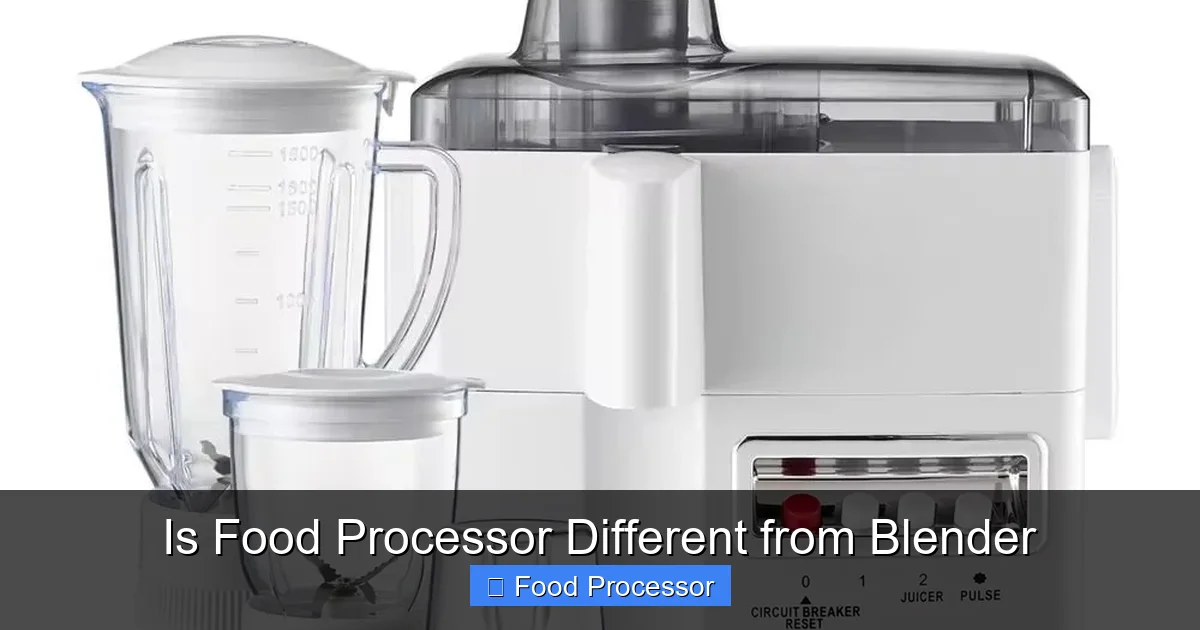
Design and Components of a Blender
A blender’s design is distinctively different, optimized for liquid-based processing:
Visual guide about Is Food Processor Different from Blender
Image source: m.media-amazon.com
- Motor Base: Similar to a food processor, it houses the motor, but blenders often have higher RPMs (rotations per minute) for pulverizing.
- Blender Jar/Pitcher: This is typically tall, narrow, and made of glass, plastic, or stainless steel. Its shape is crucial for creating a powerful vortex that pulls ingredients down into the blades.
- Lid: Usually sealed tightly to prevent leaks when blending liquids, often with a removable cap for adding ingredients.
- Blades: Unlike the interchangeable blades of a food processor, blenders usually have a fixed blade assembly at the bottom of the jar. These blades are often multi-tiered and designed for maximum pulverization and efficient liquid flow.
Common Uses and Strengths of a Blender
Blenders excel at tasks that require combining ingredients with a good amount of liquid to achieve a smooth, pourable consistency:
- Smoothies and Shakes: Its most iconic use, blending fruits, vegetables, and liquids into perfectly smooth beverages.
- Pureed Soups and Sauces: Transforming cooked vegetables into creamy soups or silky sauces. If you need to make a smooth soup, a blender is typically your best bet.
- Crushing Ice: Many blenders, especially high-powered ones, can easily crush ice for frozen drinks.
- Making Batters: For pancakes, waffles, or crepes, a blender can quickly combine ingredients without lumps.
- Making Dressings: Emulsifying oil and vinegar for salad dressings.
- Nut Milks: Creating almond milk, oat milk, or other plant-based milks.
The Core Differences: Food Processor vs. Blender
Now that we’ve looked at each appliance individually, let’s put them head-to-head to clearly highlight their differences. This will help clarify “is food processor different from blender” once and for all.
Design and Structure
- Food Processor: Features a wide, shallow bowl for handling bulkier, drier ingredients. The wide opening makes it easy to add and remove food, and the bowl often has a larger capacity to accommodate more volume.
- Blender: Designed with a tall, narrow pitcher that promotes the creation of a vortex, drawing contents down into the blades for thorough liquid blending. The tight-fitting lid prevents spills.
Blade Systems
- Food Processor: Employs interchangeable S-blades, slicing discs, shredding discs, and sometimes a dough blade. These various attachments allow for a wide range of processing tasks, from fine chopping to thick slicing.
- Blender: Relies on a single, fixed blade assembly at the bottom of the pitcher. These blades are typically sharper and angled specifically to create a powerful swirling action that pulverizes ingredients into a liquid state.
Power and Speed
- Food Processor: Generally designed with more torque (rotational force) to handle dense, heavy ingredients like raw vegetables, nuts, or dough without bogging down. The RPMs are usually lower than blenders.
- Blender: Often boasts higher RPMs, focusing on speed to break down ice and fibrous ingredients into ultra-smooth liquids.
Capacity
- Food Processor: Bowls can range from mini 3-cup models to large 14-cup capacities, ideal for batch cooking or preparing multiple ingredients simultaneously.
- Blender: Pitchers typically range from 48 to 72 ounces, perfect for making multiple servings of smoothies or soups. While some high-performance blenders have wider bases, the core design remains for liquid movement.
Primary Functions and Textures
- Food Processor: Excels at chopping, slicing, shredding, grating, mincing, and kneading. It creates textures ranging from finely minced to coarsely chopped, grated, or uniformly sliced. It’s perfect for tasks where you want to maintain some texture, or work with solids.
- Blender: Its main function is blending and liquefying. It produces smooth, creamy, and often aerated textures, ideal for drinks, smooth purees, and silky sauces.
Versatility and Attachments
- Food Processor: Highly versatile due to its array of interchangeable blades and discs. This allows it to perform many different prep tasks.
- Blender: While specialized, some high-end blenders come with personal blending cups or tamper tools, but their core function remains blending liquids.
When to Choose a Food Processor
Knowing when to use your food processor can significantly speed up your cooking.
For Solid and Semi-Solid Prep
Reach for your food processor when your ingredients are mostly solid, and you want to chop, shred, or mix them without turning them into a liquid.
Visual guide about Is Food Processor Different from Blender
Image source: m.media-amazon.com
- Making Pesto or Hummus: The S-blade is perfect for grinding nuts, herbs, and chickpeas into thick, flavorful pastes.
- Chopping Vegetables: Need finely minced onions, garlic, or carrots for a soffritto? A few pulses in the food processor will do the trick.
- Shredding Cheese or Cabbage: The shredding disc saves so much time compared to manual grating, especially for large quantities.
- Slicing Potatoes or Cucumbers: Use the slicing disc for uniform slices for gratins or salads.
- Mixing Doughs: From flaky pie crusts to bread dough, the food processor handles the mixing and kneading with ease.
- Making Crumb Toppings: Whether it’s breadcrumbs for a coating or cookie crumbs for a pie crust, the food processor makes quick work of it.
When to Choose a Blender
Your blender is the undisputed champion for all things smooth and liquid.
For Liquid-Based Creations
Opt for your blender when your goal is a smooth, liquid consistency, often involving a good amount of liquid ingredients.
- Morning Smoothies: Fruits, yogurt, milk, and ice blend into a perfect breakfast or snack.
- Creamy Soups: After cooking, transfer your soup to the blender for a silky-smooth texture. Remember, it is safe to put hot food in food processor in small batches, but a blender (especially with a vented lid) is often better for hot liquids due to its sealed design and higher capacity for liquids.
- Sauces and Purees: Making a marinara sauce silky smooth, or pureeing baby food, is where the blender shines.
- Nut Butters (with care): While a food processor can make thick nut butters, a high-powered blender can achieve an even creamier, smoother consistency with a bit more liquid or oil, using a tamper to push ingredients down.
- Milkshakes and Frozen Drinks: Crushing ice and blending with liquids is a blender’s forte.
Can a Food Processor Do What a Blender Does (and vice versa)?
It’s a common desire to have one appliance do it all. So, can a food processor be used in place of a blender, and vice-versa? To some extent, yes, but with significant limitations.
Food Processor as a “Blender”
A food processor can *puree* thick, low-liquid mixtures, like a very thick hummus or chunky salsa. However, it’s not designed to handle large quantities of liquid. If you try to make a smoothie or a thin soup in a food processor, it will likely leak from the lid or the spindle hole, and you won’t achieve the smooth, uniform consistency of a blender. The S-blade simply doesn’t create the same powerful vortex.
Blender as a “Food Processor”
A blender can *chop* very small amounts of soft ingredients (like herbs or nuts) if there’s enough liquid to get them moving. However, it cannot slice, shred, or grate. Trying to chop vegetables or mix dough in a blender will usually result in unevenly processed ingredients, or worse, a soupy mess at the bottom with chunks at the top. The tall, narrow design and fixed blades are not suitable for these tasks.
The Food Processor and Blender Combo: A Hybrid Solution?
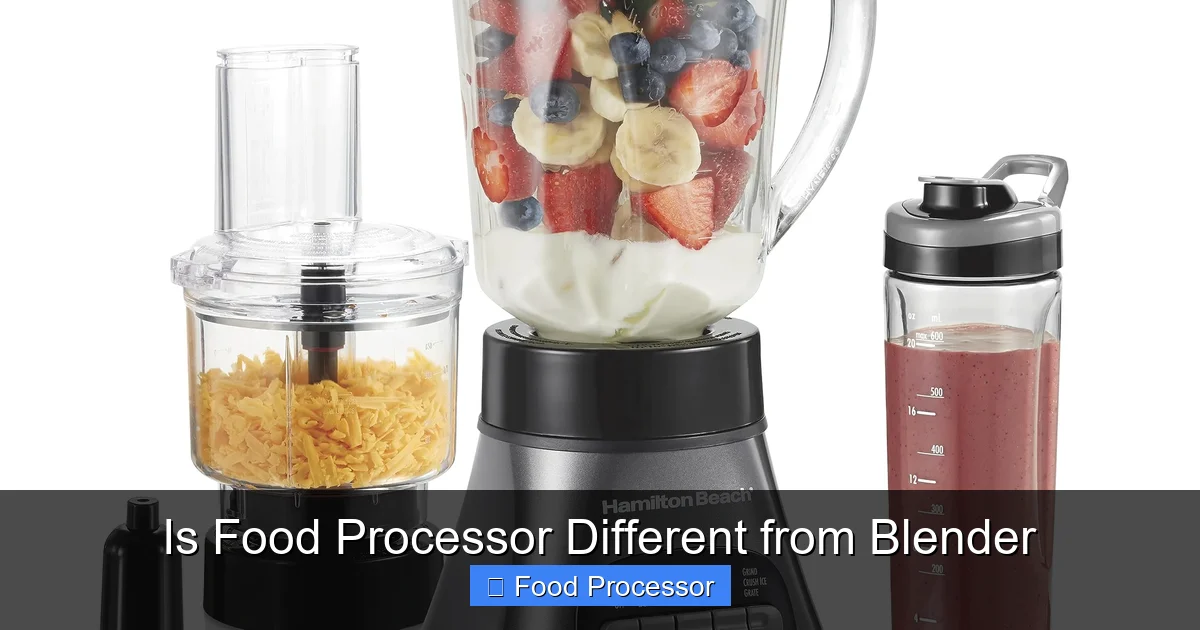
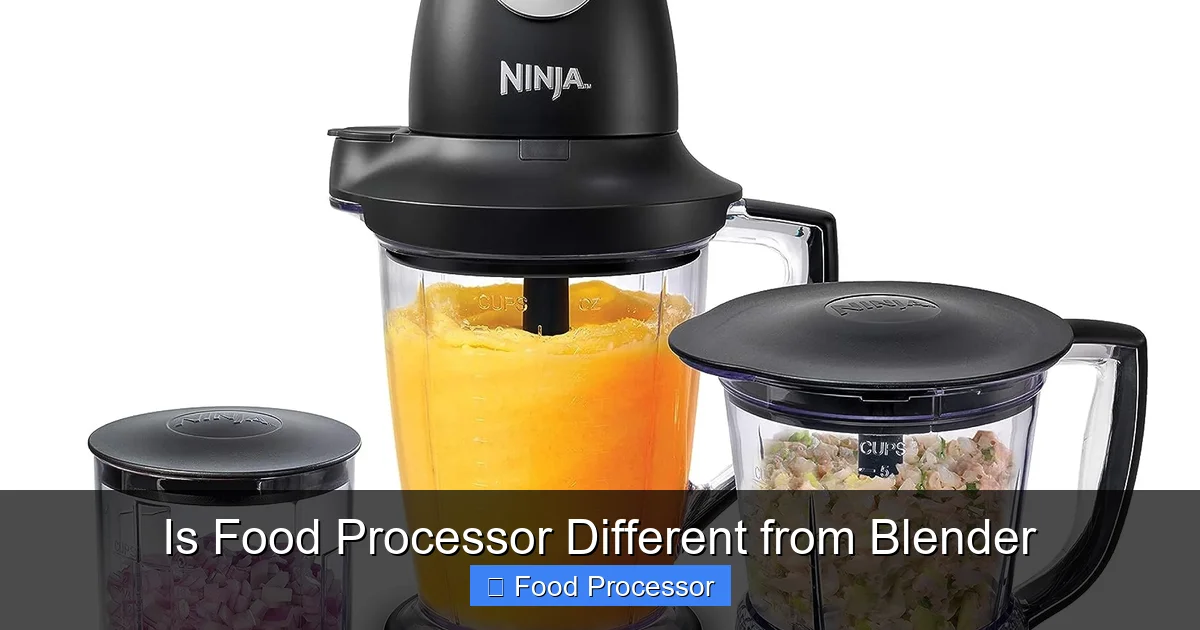
For those who love both appliances but are short on space, combo units exist. These appliances feature a single motor base that can accept both a food processor bowl and a blender pitcher. They aim to offer the best of both worlds in one convenient package. While they can be a great space-saver, it’s worth noting that dedicated, individual machines often offer superior performance in their respective areas. If you’re considering this route, research what is the best food processor and blender combo for your needs.
Tips for Making the Right Choice for Your Kitchen
Still unsure which one is right for you, or if you need both? Here are some tips:
Consider Your Cooking Habits
- Love to bake, prep veggies, or make dips? A food processor will be invaluable.
- Are smoothies, soups, and sauces staples in your diet? A good blender is a must-have.
- Do you do both frequently? Investing in both dedicated appliances might be the best long-term solution.
Budget and Space
- High-quality appliances can be an investment. Consider what tasks you do most often to prioritize.
- Think about your counter and storage space. A combo unit might save space, but two smaller, dedicated units could also fit depending on your setup.
Troubleshooting Common Issues (Brief)
While both appliances are generally robust, occasional issues can arise. If your food processor isn’t turning on, always check that the bowl and lid are correctly assembled and locked into place – this is a common safety feature. For blenders, ensure the pitcher is securely seated on the base. Overloading either machine can cause the motor to strain or overheat, so always follow capacity guidelines and process in batches if necessary.
Conclusion
So, “is food processor different from blender?” Absolutely! While both are essential tools for modern kitchens, they are designed with distinct purposes in mind. The food processor is your workhorse for chopping, slicing, shredding, and mixing solid and semi-solid ingredients, offering incredible versatility with its interchangeable blades. The blender, on the other hand, is optimized for creating smooth, liquid-based mixtures, perfect for everything from morning smoothies to creamy pureed soups.
Understanding these core differences empowers you to choose the right appliance for the task at hand, saving you time, effort, and frustration. For most serious home cooks, having both a food processor and a blender will unlock a world of culinary possibilities, making meal prep faster, easier, and more enjoyable. Happy cooking!
