
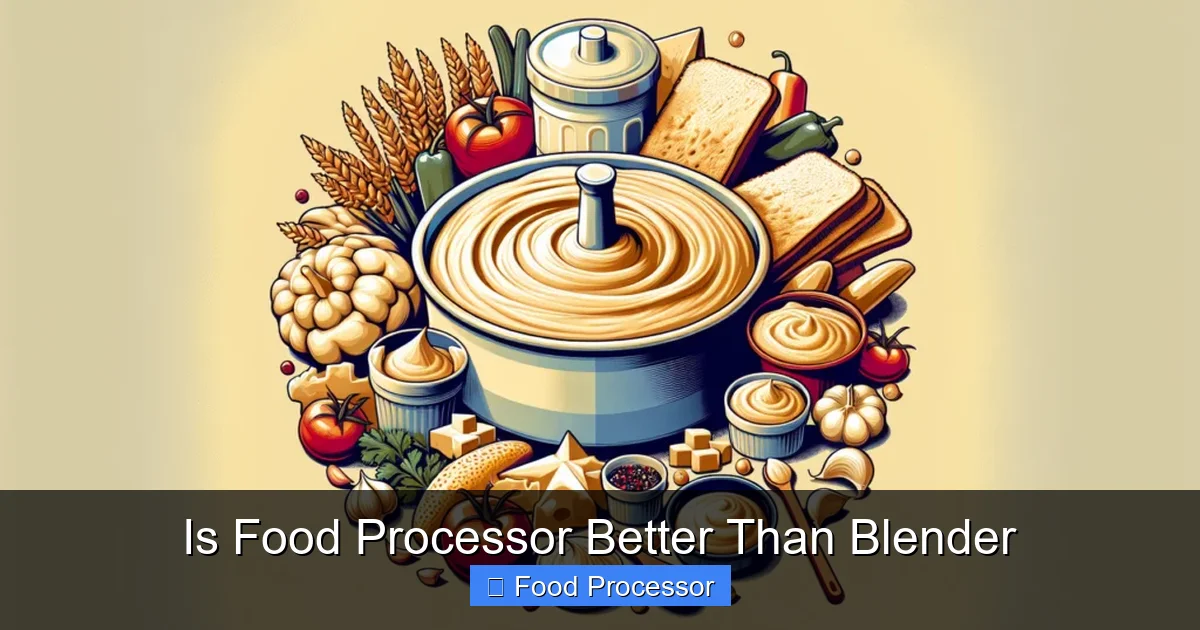
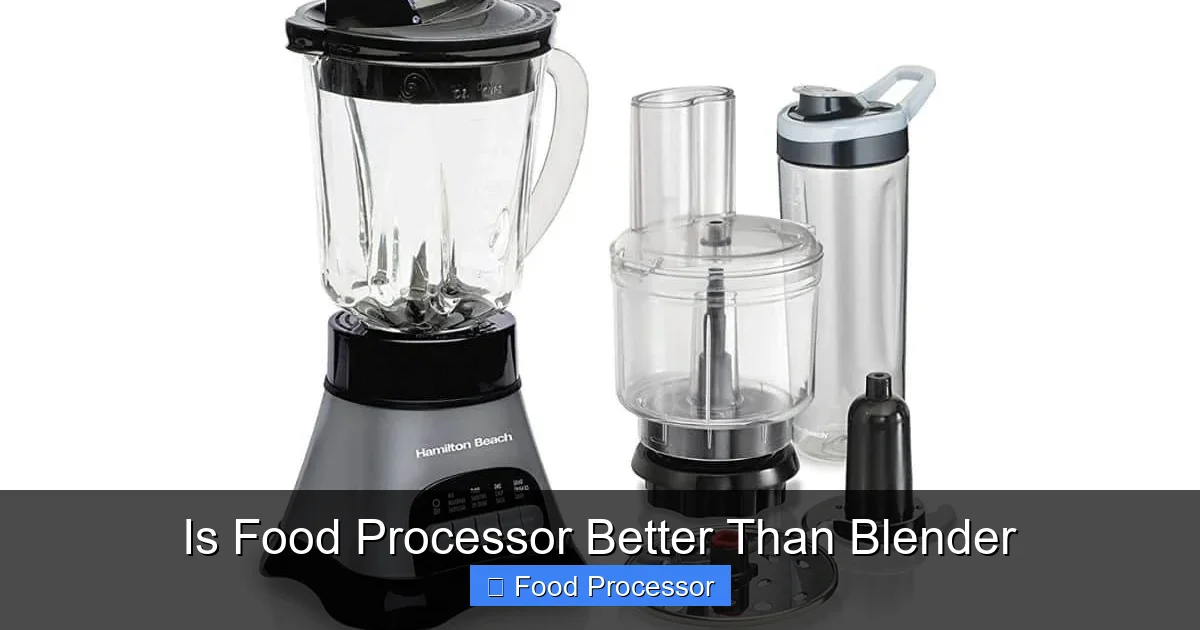
Deciding whether a food processor is better than a blender boils down to your primary kitchen tasks. While blenders excel at creating smooth, liquid-heavy mixtures like smoothies and pureed soups, food processors are champions for chopping, slicing, shredding, and kneading denser ingredients. Understanding their unique strengths will help you pick the right tool for optimal results in your culinary adventures.
Is Food Processor Better Than Blender?
So, you’re standing in your kitchen, maybe looking at a recipe, and a question pops into your head: “Is a food processor better than a blender?” It’s a classic culinary dilemma that many home cooks face. Both appliances are powerful, both have blades, and both promise to make your life easier. But they aren’t interchangeable, and understanding their unique strengths is the secret to choosing the right tool for the job.
This comprehensive guide will help you unpack the “food processor vs. blender” debate. We’ll dive deep into what makes each appliance tick, what tasks they excel at, and how to confidently decide which one is the “better” choice for your specific cooking needs. By the end, you’ll be able to grab the perfect gadget every time, making your kitchen adventures smoother and more successful.
Key Takeaways
- Functionality is Key: Blenders are designed for liquids, creating smooth, consistent purees, while food processors are built for processing solid and semi-solid ingredients like chopping, slicing, shredding, and kneading.
- Blenders Excel at Liquids: Choose a blender for smoothies, milkshakes, pureed soups, sauces, and crushing ice, where a super-smooth consistency is desired.
- Food Processors Dominate Solids: Opt for a food processor when you need to chop vegetables, shred cheese, make dough, grind nuts, or prepare thick dips and spreads like hummus.
- Attachments Matter: Food processors come with various blades and discs (slicing, shredding, dough) that blenders typically lack, adding to their versatility for solid foods.
- Consistency Differences: Blenders produce a vortex that pulls ingredients into the blades for uniform liquid blends. Food processors have wider bowls and S-blades for more controlled chopping and mixing of solids, often leaving some texture.
- Cross-Over Capabilities are Limited: While a food processor can handle some thick purees and a blender can do light chopping, neither is a perfect substitute for the other’s primary function.
- Consider Combo Units: If kitchen space or budget is a concern, a food processor and blender combo unit might offer a good compromise for diverse culinary needs.
Understanding the Basics: What’s the Difference?
Let’s start by clarifying what each machine is truly designed for. While they might look similar from a distance, their core mechanisms and ideal uses are quite distinct. It’s important to understand why a food processor is different from a blender to make an informed choice.
The Food Processor: Your Kitchen Workhorse
A food processor is your ultimate prep assistant. Think of it as a multi-tool designed for hands-on, heavy-duty processing of solid and semi-solid ingredients.
- Wide Bowl: Food processors typically have a wide, shallow bowl that allows ingredients to spread out, making it ideal for chopping, shredding, and slicing.
- Versatile Blades & Discs: Beyond the standard S-blade (also known as a sabatier blade) for chopping and mixing, food processors come with a variety of attachments. These include slicing discs (thin or thick), shredding discs (fine or coarse), and sometimes even a dough blade.
- Pulsing Power: The pulse function is critical for food processors. It gives you precise control over texture, letting you chop ingredients coarsely or finely without over-processing them into a paste.
- Low RPM, High Torque: Food processors generally operate at lower revolutions per minute (RPM) but deliver higher torque, making them strong enough to handle dense ingredients like raw vegetables, nuts, or stiff dough.
The Blender: Your Liquid Master
A blender, on the other hand, is built for liquids. Its primary goal is to create smooth, homogeneous mixtures by pulverizing ingredients with high-speed blades.
- Tall, Narrow Jar: Blenders feature a tall, narrow jar. This design creates a powerful vortex that pulls ingredients down into the rapidly spinning blades at the bottom, ensuring a smooth and consistent blend.
- Fixed Blades: Most blenders have fixed blades at the base of the jar, designed specifically for high-speed liquefaction and emulsification.
- High RPM, Lower Torque: Blenders typically operate at very high RPMs, ideal for breaking down soft ingredients and ice into a smooth liquid consistency. While powerful, they may struggle with very thick, dry mixtures without added liquid.
- Simpler Controls: Often, blenders have simpler controls, focusing on speed settings (low, medium, high) and sometimes a pulse function, optimized for liquid processing.
When to Choose a Food Processor
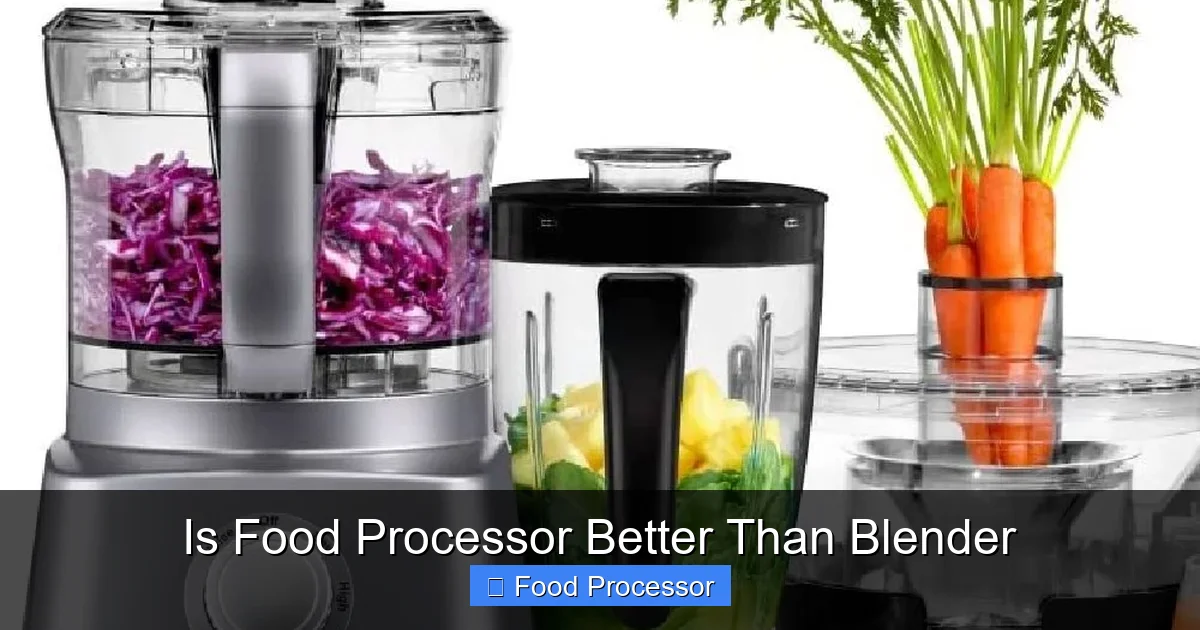
Visual guide about Is Food Processor Better Than Blender
Image source: culinaryhill.com
If your recipe involves a lot of chopping, slicing, or mixing of thicker ingredients, your food processor is likely the star of the show.
Chopping and Slicing Vegetables
This is where the food processor truly shines. Need finely chopped onions for a mirepoix? Sliced cucumbers for a salad? Diced potatoes for a hash? A food processor can do it in seconds with minimal effort, thanks to its S-blade and various slicing discs.
Shredding Cheese and Cabbage
Say goodbye to grated knuckles! With a shredding disc, your food processor can tackle blocks of cheese, heads of cabbage for coleslaw, or even carrots for salads, producing uniform results in a fraction of the time it would take by hand.
Making Dough
Many food processors come with a dedicated dough blade. This makes them excellent for kneading bread dough, pie crusts, or pizza dough, significantly cutting down on manual effort and sticky hands.
Preparing Thick Sauces and Dips
For recipes like hummus, pesto, or chunky salsas, the food processor’s ability to handle less liquid and provide precise texture control is invaluable. It can blend ingredients until smooth or leave them with a desired amount of texture. Wondering should I make hummus in a blender or food processor? The food processor is usually the winner for that perfect creamy-yet-textured consistency.
Grinding Nuts and Spices
If you’re making homemade nut butter (especially chunkier versions), grinding nuts for flour, or pulverizing whole spices, a food processor provides the power and control needed without turning everything into a fine powder instantly.
When to Choose a Blender
Visual guide about Is Food Processor Better Than Blender
Image source: catchyfinds.com
When you need silky smooth consistency, especially with liquids, the blender is your go-to kitchen tool.
Smoothies and Milkshakes
This is the blender’s most iconic role. Its powerful motor and specific blade design effortlessly transform fruits, vegetables, ice, and liquids into perfectly smooth, drinkable concoctions.
Pureeing Soups and Sauces
Making a creamy tomato soup or a velvety vegetable puree? The blender will give you that restaurant-quality smooth texture, breaking down all fibrous ingredients into a uniform liquid. If you’re pondering should I use a blender or food processor for soup, the blender usually wins for creamy results.
Crushing Ice
High-powered blenders are fantastic at pulverizing ice for frozen drinks, cocktails, or slushies. Their robust motors and strong blades are specifically designed to handle the rigidity of ice cubes.
Making Creamy Nut Butters
While a food processor can handle nut grinding, a powerful blender (especially high-speed models) can achieve incredibly smooth, pourable nut butters due to its ability to create a consistent vortex and finely emulsify the oils released from the nuts.
Emulsifying Dressings and Mayonnaise
For creating stable emulsions like homemade mayonnaise, salad dressings, or hollandaise, a blender’s controlled speed and ability to slowly incorporate oil while blending is highly effective.
The “Better” Question: It Depends on Your Needs
The simple answer to “Is a food processor better than a blender?” is that neither is inherently “better” than the other. They are different tools for different jobs. The “better” choice is the one that best suits your most frequent cooking tasks.
Consider Your Common Recipes
Think about the types of dishes you prepare most often.
- Are you a smoothie enthusiast, constantly whipping up healthy drinks or protein shakes? A blender is your priority.
- Do you frequently cook meals from scratch that require a lot of chopping, slicing, or shredding of vegetables? A food processor will be your best friend.
- Are you into baking and often make doughs or crusts? The food processor is a clear winner.
Evaluate Capacity and Power
Both appliances come in various sizes and power levels.
- Capacity: Blender jars typically range from personal-sized to large family-sized pitchers. Food processor bowls also vary, but their wider design is often more practical for processing larger batches of solid ingredients without needing to stop and stir.
- Power (Wattage): Higher wattage generally means more power. For blenders, this translates to smoother purees and better ice crushing. For food processors, more power means easier handling of tough ingredients like dense vegetables or sticky dough.
Think About Attachments
The range of attachments is a major differentiator. If you value versatility in food prep beyond just blending, a food processor with its array of discs and blades offers far more options for tasks like slicing, shredding, and grating.
Can One Do the Job of the Other? (Cross-Functionality)
Sometimes, you might try to stretch the capabilities of one appliance to cover the other’s territory. While there’s some overlap, it’s often a compromise.
When a Food Processor Can Mimic a Blender (for thick purees)
A food processor can create thick purees, like hummus, pesto, or thick sauces, especially if you add a little liquid. However, it usually won’t achieve the perfectly smooth, pourable consistency a blender would for things like thin soups or smoothies. You might end up with a slightly chunkier or grainier texture. For certain specific tasks, a food processor can be used in place of a blender, but it’s not ideal for all blending needs.
When a Blender Can Mimic a Food Processor (for small chopping tasks)
Some blenders, especially those with powerful motors and a pulse function, can handle very small chopping tasks like mincing garlic or chopping nuts. However, this often requires adding liquid, and it’s easy to over-process and turn ingredients into a paste or puree rather than evenly chopped pieces. It’s generally not recommended for large batches or precise chopping.
Tips for Making the Right Choice
Making a decision doesn’t have to be complicated. Here are some actionable tips:
Assess Your Cooking Style
Are you a raw food enthusiast, always blending green smoothies? Or a baker who loves making homemade bread? Perhaps you’re someone who cooks many savory dishes from scratch, requiring a lot of vegetable prep. Your cooking habits are the strongest indicator of which appliance you’ll use most.
Budget Considerations
Blenders and food processors come at various price points. High-end models offer more power, durability, and features. Consider your budget, but also view it as an investment in your culinary efficiency.
Exploring Combo Units
If you’re truly torn, or if kitchen counter space is at a premium, you might consider a food processor and blender combo unit. These appliances often feature one motor base with interchangeable jars and bowls, offering the best of both worlds without needing two separate machines. While they can be very convenient, some dedicated enthusiasts find that standalone units often excel slightly more in their specific primary function.
Troubleshooting Common Issues
Sometimes, the issue isn’t whether a food processor is better than a blender, but rather using the wrong tool for the task, or using it incorrectly.
Undesired Texture?
If your smoothie is chunky or your salsa is too watery, you might be using the wrong appliance, or not adding enough liquid to a blender, or too much liquid to a food processor. Always refer to your recipe and the guidelines above. For example, if you’re trying to get a perfectly smooth soup in a food processor, you’ll likely struggle.
Appliance Overheating?
Both blenders and food processors can overheat if overloaded or run continuously for too long. Give your machine breaks, especially when processing tough ingredients. For blenders, ensure there’s enough liquid to create a vortex. For food processors, don’t overfill the bowl.
Ingredients Stuck or Not Processing?
In a blender, this usually means there’s not enough liquid. Add more liquid, or use the tamper if your blender has one. In a food processor, this could mean the bowl is too full, or the ingredients are too large. Cut ingredients into smaller, more manageable pieces and don’t overload the bowl.
Conclusion
In the enduring debate of “is food processor better than blender,” the verdict is clear: neither is unilaterally superior. Instead, they are complementary kitchen tools, each with its own specialized domain. A blender is your champion for smooth liquids, purees, and crushing ice, while a food processor is your invaluable assistant for chopping, slicing, shredding, and kneading denser foods.
By understanding these fundamental differences and aligning them with your personal cooking style and most frequent recipes, you can confidently choose the appliance that will truly enhance your time in the kitchen. Whether you opt for one, the other, or a versatile combo unit, making an informed decision will empower you to create delicious meals with greater ease and efficiency. Happy cooking!
