

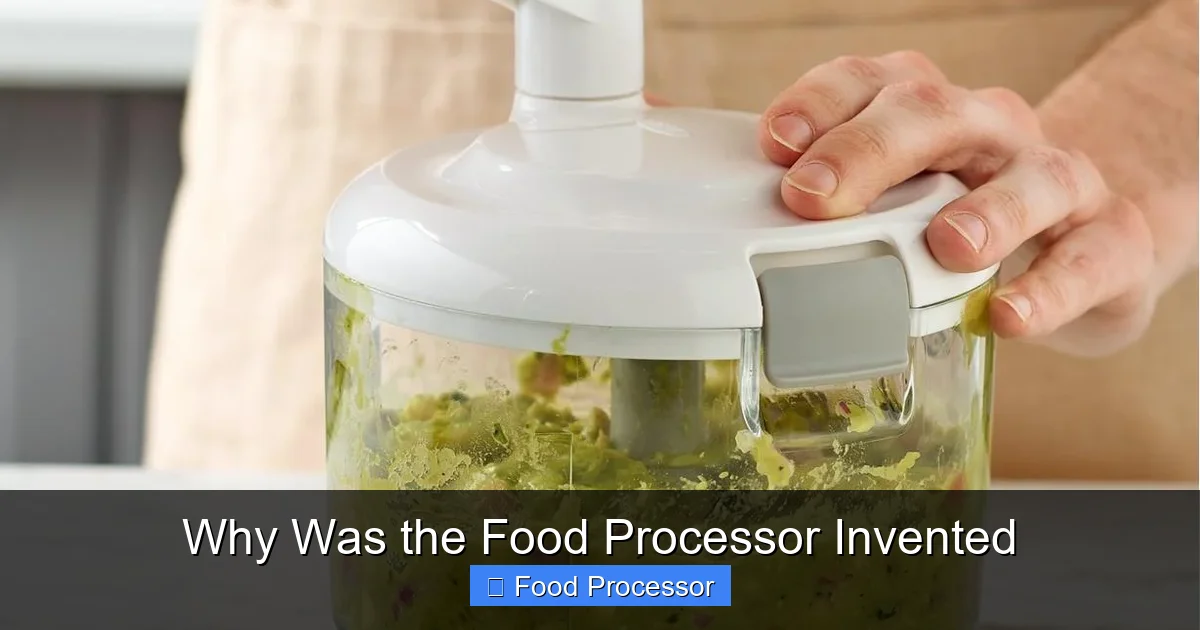
The food processor was invented to revolutionize kitchen efficiency, born from the need to simplify laborious food preparation tasks in both professional and home kitchens. Its creation by Pierre Verdon, later popularized by Carl Sontheimer’s Cuisinart, provided an unprecedented solution for quickly chopping, mixing, and pureeing ingredients. This ingenious device forever changed culinary practices, making gourmet cooking accessible and everyday meal prep significantly faster for everyone.
Why Was the Food Processor Invented?
Have you ever wondered who invented the food processor? Or perhaps, more importantly, *why* they invented it? It’s a simple question with a fascinating answer that deeply impacts how we cook and eat today. The food processor, a cornerstone of countless kitchens, didn’t just appear out of nowhere. It was born from a very real need: the desire to make food preparation faster, easier, and more efficient for everyone.
This guide will take you on a journey through the history of the food processor. We’ll explore the challenges faced in kitchens before its arrival, meet the brilliant minds behind its creation and popularization, and understand the profound impact it had on cooking, both in professional settings and in your home. By the end, you’ll have a new appreciation for this indispensable kitchen gadget and understand precisely why the food processor was invented and why it remains so vital.
Key Takeaways
- Professional Roots: The concept of the food processor originated in commercial kitchens in France, designed to streamline repetitive culinary tasks for chefs.
- Carl Sontheimer’s Vision: American engineer Carl Sontheimer discovered the French appliance (Robot-Coupe) and saw its potential for home kitchens, leading to the creation of Cuisinart.
- Problem Solver: The food processor addressed the significant time and effort previously required for manual chopping, slicing, shredding, and mixing ingredients.
- Culinary Democratization: It made complex recipes and techniques more accessible to home cooks, bridging the gap between professional and amateur cooking.
- Efficiency and Versatility: Its multi-functional blades and powerful motor offered unparalleled speed and precision for a wide range of food preparation tasks.
- Lasting Impact: The food processor transformed kitchen routines, enabling healthier eating and greater culinary creativity in households worldwide.
The Kitchen Before the Food Processor: A Labor of Love (and Labor)
Imagine a kitchen without a food processor. What does that look like? It means hours spent chopping vegetables by hand, tedious mincing of herbs, and arm-aching kneading of dough. Before the advent of this remarkable appliance, preparing meals, especially those involving multiple ingredients or complex textures, was an incredibly time-consuming and often tiring endeavor.
Manual Chopping, Slicing, and Dicing
Think about making a simple coleslaw. Without a food processor, every single cabbage leaf, every carrot, every onion had to be meticulously chopped or shredded with a knife. For a large family meal or a party, this could mean an hour or more of repetitive knife work. Dicing onions for a mirepoix or finely mincing garlic for a sauce required skill, patience, and a lot of valuable time. The sheer physical effort involved often deterred cooks from preparing fresh, healthy meals that required extensive preparation.
The Drudgery of Dough and Mixes
Baking, too, was a much more intensive process. Kneading dough for bread by hand can be therapeutic for some, but it’s undoubtedly strenuous and time-consuming. Preparing pie crusts, mixing batters for cakes, or creating smooth purees for baby food or soups all demanded significant manual labor, often with inconsistent results. Many delicious recipes remained out of reach for the average home cook simply due to the sheer effort involved in preparing the ingredients.
Limited Culinary Creativity
The limitations of manual preparation also stifled culinary creativity. Chefs and home cooks alike were often constrained by what they could reasonably prepare by hand within a given timeframe. Recipes that called for finely ground nuts, emulsified sauces, or perfectly uniform vegetable cuts were often reserved for professional kitchens with brigades of assistants, or for ambitious home cooks with endless patience. The dream of quickly whipping up a pesto or a silky smooth hummus was still a distant one. This highlights a key reason why the food processor was invented: to unlock new culinary possibilities.
The Genesis of an Idea: From Commercial Kitchens to Global Impact
Visual guide about Why Was the Food Processor Invented
Image source: d2qc09rl1gfuof.cloudfront.net
The journey of the food processor begins not in a home kitchen, but in the bustling, demanding environment of professional restaurants. The need for speed and consistency was paramount.
Inspiration from Commercial Kitchens: Robot-Coupe
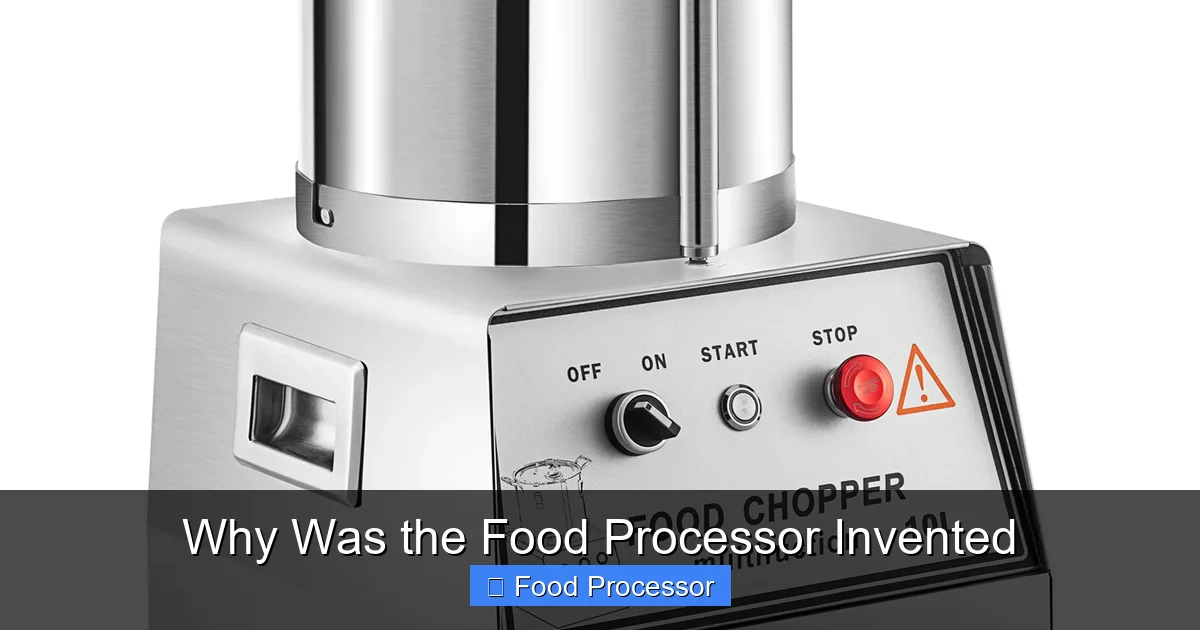
The true precursor to the modern food processor was invented in France in the early 1960s by Pierre Verdon, a catering supplies salesman. He noticed how much time chefs spent manually chopping and shredding vegetables in commercial kitchens. This inspired him to create a machine that could perform these tasks rapidly and efficiently. His invention was called the “Robot-Coupe” (Robot-Cutter), a commercial food preparation machine designed for restaurants.
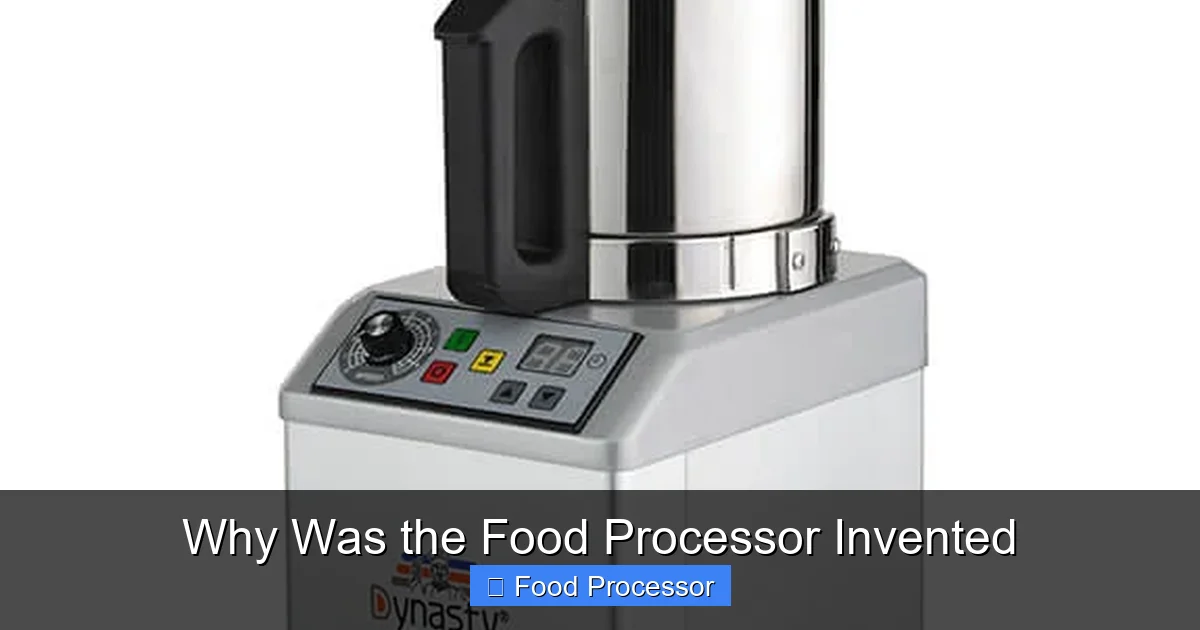
The Robot-Coupe was a sturdy, powerful device. It featured a motor base, a work bowl, and a set of interchangeable blades and discs. Chefs could use it to chop, mix, blend, slice, and grate large quantities of food in mere seconds, dramatically cutting down prep time. It quickly became indispensable in French professional kitchens, significantly improving the workflow and consistency of food production. This initial invention truly answers why the food processor was invented in the first place: to solve a pressing commercial need.
Carl Sontheimer and the Cuisinart Revolution
Fast forward to the early 1970s. An American engineer named Carl Sontheimer, a Massachusetts Institute of Technology (MIT) graduate, was living in France. During his time there, he encountered the Robot-Coupe in a trade show. He was immediately struck by its incredible efficiency and versatility. Sontheimer, with his engineering background, recognized the immense potential of adapting this powerful commercial appliance for the American home kitchen.
He believed that home cooks deserved the same level of efficiency and convenience that professional chefs enjoyed. Sontheimer dedicated himself to refining the design, making it more compact, user-friendly, and suitable for household use, while retaining its powerful capabilities.
In 1973, Sontheimer introduced his version of the appliance to the American market at a Chicago food show, calling it the “Cuisinart Food Processor.” The name “Cuisinart” itself is a blend of “cuisine” and “art,” reflecting his vision of making gourmet cooking accessible to everyone. The early Cuisinart food processor was a revelation. It allowed home cooks to perform labor-intensive tasks like chopping, slicing, shredding, and mixing with unprecedented speed and ease.
The Marketing Genius and Culinary Impact
Sontheimer didn’t just sell a machine; he sold a revolution in cooking. He ingeniously marketed the Cuisinart food processor by demonstrating its capabilities to culinary experts, food writers, and celebrity chefs like Julia Child and James Beard. These influential figures quickly embraced the appliance, praising its ability to save time and expand culinary horizons. Their endorsements catapulted the food processor into the spotlight.
Suddenly, recipes that once seemed too daunting for the home kitchen—like pâtés, mousses, and complex doughs—became achievable. The Cuisinart food processor wasn’t just a gadget; it was a tool that democratized gourmet cooking, empowering home chefs to experiment and create with newfound freedom. This widespread acceptance cemented the reason why the food processor was invented as a transformative kitchen tool.
Understanding the Core Innovation of the Food Processor
Visual guide about Why Was the Food Processor Invented
Image source: hsiaolin.com
What exactly made the food processor so revolutionary, and why did it succeed where other kitchen appliances might have fallen short? It came down to a combination of power, precision, and versatility.
Versatility and Efficiency in One Appliance
Before the food processor, if you wanted to chop vegetables, you used a knife. If you wanted to blend a soup, you used a blender. To knead dough, you used a stand mixer. The food processor combined many of these functions into a single, compact unit. This meant fewer separate appliances cluttering the kitchen and a seamless transition between different food preparation tasks. The efficiency gain was enormous; what took minutes or even hours by hand could now be done in seconds. The fact that it could do so much made it clear what are the advantages of a food processor.
Multifunctionality of Blades and Discs
The genius of the food processor lies in its interchangeable blades and discs.
- S-Blade (Chopping/Mixing Blade): This blade, usually shaped like an “S,” is the workhorse. It can chop nuts, herbs, and vegetables; mince meat; mix doughs; and puree soups or sauces.
- Slicing Discs: These discs allow for perfectly uniform slices of fruits and vegetables, from cucumbers to potatoes, a task that is incredibly difficult and time-consuming to achieve by hand.
- Shredding/Grating Discs: Ideal for shredding cheese, carrots, cabbage, or potatoes in bulk, saving immense effort compared to a box grater.
This adaptability meant that a single motor base could power a multitude of precise cutting and mixing actions, catering to almost any ingredient preparation need. This is also a key reason why is a food processor better than a blender for many tasks, as its wider bowl and varied blades excel at solid food processing.
The Impact on Home Cooking and Beyond
The invention and popularization of the food processor irrevocably changed cooking practices around the globe. Its legacy is visible in how modern kitchens are equipped and how recipes are developed.
Democratizing Gourmet Cooking
The food processor brought the techniques of professional kitchens into the homes of everyday cooks. Recipes that once seemed intimidating or required specialized skills became approachable. Making your own mayonnaise, pesto, hummus, or even finely ground breadcrumbs was no longer a chore but a quick and simple task. This empowered home cooks to explore a wider range of cuisines and techniques, elevating their culinary skills and confidence.
Enhancing Meal Prep and Healthy Eating
For busy individuals and families, the food processor became an invaluable tool for meal preparation. The ability to quickly chop large batches of vegetables for salads, stir-fries, or soups meant healthier meals could be prepared even on hectic weeknights. It encouraged cooking from scratch, reducing reliance on pre-packaged, often less healthy, alternatives. Batch cooking and freezing components for future meals became much more feasible, directly addressing the modern dilemma of balancing busy lives with healthy eating goals.
Inspiring New Recipes and Culinary Trends
The existence of the food processor also inspired chefs and cookbook authors to create new recipes specifically designed to take advantage of its capabilities. Cookbooks started featuring “food processor recipes,” showcasing how to create everything from intricate doughs to smooth purees with ease. It helped fuel culinary trends focused on fresh, unprocessed ingredients, as the appliance made preparing those ingredients so much simpler.
Evolution and Modern Food Processors
Since its groundbreaking introduction, the food processor has continued to evolve. Manufacturers have refined designs, improved motor efficiency, and introduced a host of new features to enhance user experience.
Improved Design and Features
Modern food processors often boast more powerful and quieter motors, larger capacity bowls, and more ergonomic designs. Safety features have also advanced, ensuring that the appliance only operates when properly assembled. The materials used are more durable and easier to clean, with many parts being dishwasher-safe.
Specialized Attachments and Innovations
Beyond the basic S-blade and slicing/shredding discs, many contemporary food processors come with specialized attachments. These can include:
- Dough Blades: Specifically designed for kneading bread and pizza doughs more efficiently.
- Julienne Discs: For creating thin, matchstick-like strips of vegetables.
- French Fry Discs: To quickly cut potatoes into uniform fries.
- Mini Bowls: Smaller bowls with their own blades that fit inside the main bowl, perfect for processing small quantities without needing to wash the larger bowl.
These innovations continue to expand the versatility of the food processor, making it an even more indispensable tool in the modern kitchen.
Appreciating Your Food Processor: Tips for Modern Use
Understanding why the food processor was invented also helps us appreciate its current utility. To truly get the most out of this historical invention in your kitchen, here are some practical tips.
Choosing the Right Model for Your Needs
With so many options available today, choosing the right food processor can seem daunting. Consider your typical cooking habits. Do you cook for a large family or just yourself? Do you mostly chop vegetables or do you make a lot of dough? The capacity of the work bowl (measured in cups) is a primary consideration. Larger families or those who batch cook might prefer a 12-cup or larger model, while individuals or small families might find a compact 7-cup model perfectly adequate. Thinking about how to choose the right size food processor will ensure you get the most value and utility from your purchase.
Maximizing Its Versatility
Don’t just use your food processor for chopping onions! Experiment with its full range of functions. Make your own nut butters, grind meat for homemade sausages, create vibrant pestos, or even whip up a batch of homemade mayonnaise. Explore recipes that specifically call for food processor use to discover new ways to utilize its power. For more ideas on how to maximize your appliance, consider reading guides on how to get the most out of your food processor.
Proper Care and Maintenance
To ensure your food processor lasts for years, follow the manufacturer’s cleaning instructions. Most bowls, lids, and blades are dishwasher safe, but always double-check. Be careful when handling the sharp blades. Proper cleaning not only extends the life of your appliance but also ensures hygienic food preparation.
Conclusion: The Enduring Legacy of an Essential Innovation
The story of “why was the food processor invented” is a testament to human ingenuity and the constant pursuit of efficiency. From Pierre Verdon’s initial vision for commercial kitchens to Carl Sontheimer’s revolutionary Cuisinart, this appliance transformed how we approach cooking. It removed the drudgery from countless kitchen tasks, empowered home cooks with professional-grade capabilities, and ultimately, made healthy, delicious, and creative cooking accessible to everyone.
Today, the food processor remains an indispensable tool, a quiet workhorse that continues to save time, reduce effort, and inspire culinary adventures in kitchens around the world. Its invention wasn’t just about a new gadget; it was about changing the very fabric of meal preparation, freeing up time and energy for more joyful aspects of life. So, the next time you effortlessly chop a pile of vegetables or whip up a smooth sauce in seconds, take a moment to appreciate the incredible journey and vision behind this kitchen marvel.
