
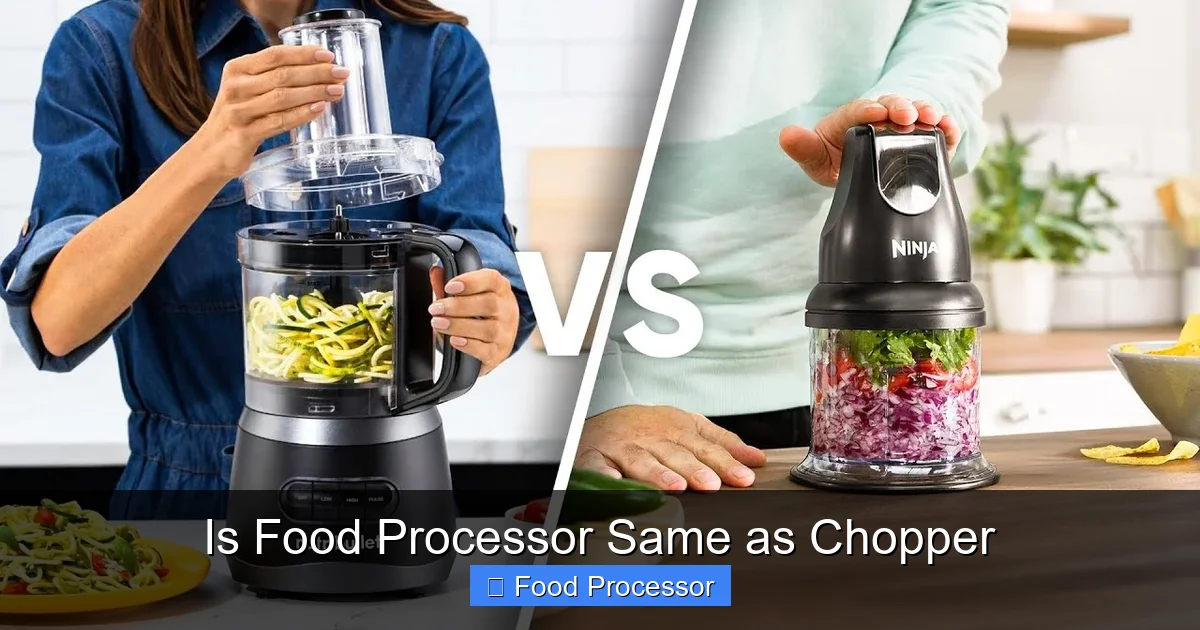
Many home cooks wonder, “is food processor same as chopper?” The simple answer is no, they are not quite the same. While both appliances can chop ingredients, a food processor is a far more versatile and powerful machine designed for a wider range of tasks, including slicing, shredding, kneading, and pureeing. A chopper, often smaller and less powerful, is generally limited to basic chopping and mincing of smaller quantities. Understanding their distinct capabilities helps you choose the right tool for your culinary adventures.
Is Food Processor Same as Chopper? Your Ultimate Guide to Kitchen Appliances
Have you ever stood in the kitchen appliance aisle, scratching your head, wondering, “Is food processor same as chopper?” You’re not alone! This is a common question for many home cooks, both new and experienced. While both gadgets live in the same culinary family and excel at chopping, they are far from identical. Understanding the nuances between a food processor and a chopper can revolutionize your kitchen efficiency and ensure you pick the right tool for your cooking needs. This comprehensive guide will demystify these two popular kitchen appliances. We’ll dive deep into what makes each unique, their primary functions, ideal use cases, and help you decide which one (or both!) deserves a spot on your countertop. Get ready to chop, slice, and dice with confidence!Key Takeaways
- Functionality: A food processor offers extensive versatility, capable of chopping, slicing, shredding, grating, pureeing, and kneading. A chopper is primarily designed for simple chopping and mincing tasks.
- Size and Capacity: Food processors typically have larger work bowls (7-14 cups) suitable for bigger batches, while choppers are much smaller (1-5 cups) and ideal for quick, small-scale prep.
- Power and Motor: Food processors boast more powerful motors, enabling them to handle tougher ingredients and more demanding tasks like kneading dough or crushing ice. Choppers have less powerful motors, suited for softer ingredients.
- Attachments and Blades: Food processors come with a variety of blades and discs for different functions (S-blade, slicing disc, shredding disc, dough blade). Choppers usually only include an S-blade for chopping.
- Cost and Storage: Food processors are generally more expensive and require more storage space. Choppers are budget-friendly and compact, making them easy to store.
- Ideal Use Cases: Use a food processor for large meal prep, complex recipes, and diverse textures. Opt for a chopper for everyday quick tasks like mincing garlic, chopping herbs, or making small amounts of dip.
- Overlap in Function: While distinct, a food processor can perform all the functions of a chopper, but a chopper cannot perform all the functions of a food processor.
Understanding the Basics: What is a Food Processor?
Let’s start with the powerhouse of the kitchen: the food processor. Think of a food processor as your versatile culinary assistant, capable of handling a wide array of prep tasks with speed and precision. It’s designed to save you time and effort, especially when preparing meals for a family or tackling more complex recipes.Key Features and Functions of a Food Processor
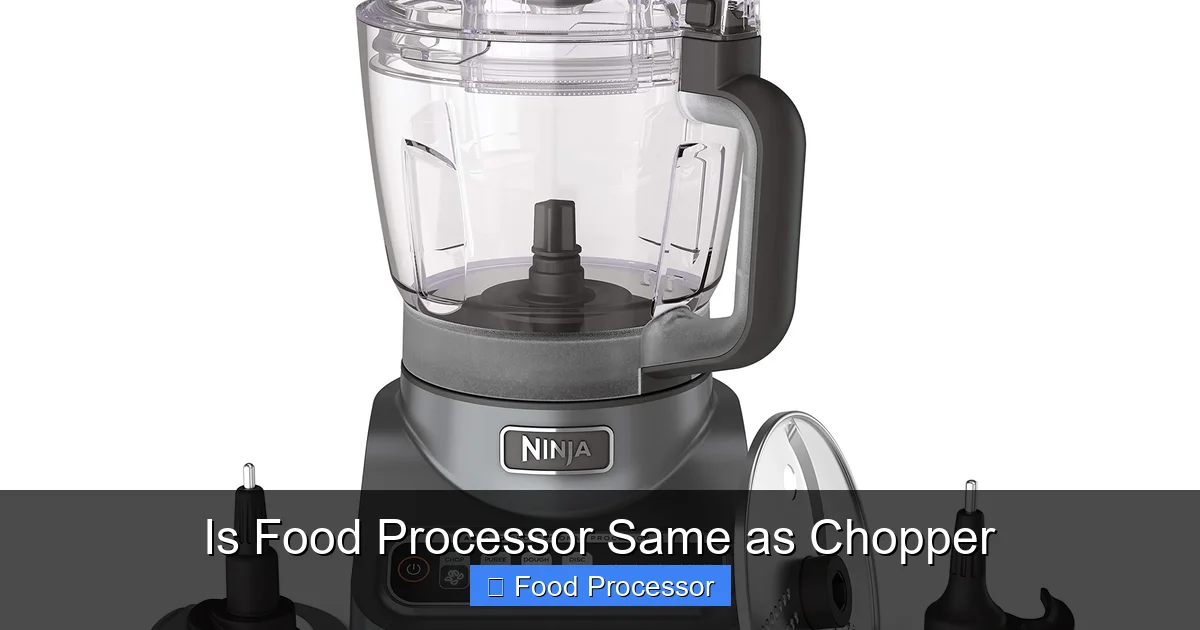
A typical food processor consists of a sturdy motor base, a clear work bowl, a lid with a feed tube, and various interchangeable blades and discs. Its versatility is its greatest asset. With a food processor, you can:- Chop: Dice onions, carrots, bell peppers, nuts, and herbs quickly and evenly. This is where the overlap with a chopper begins, but a food processor can handle much larger quantities.
- Slice: Thinly slice cucumbers, potatoes, or carrots with specialized slicing discs. Imagine preparing a gratin or a large salad in minutes!
- Shred/Grate: Shred cheese, cabbage for coleslaw, or potatoes for hash browns using a shredding disc.
- Puree: Create smooth purees for soups, sauces, baby food, or hummus.
- Knead: Many food processors come with a dough blade, making them perfect for kneading bread dough, pizza dough, or pastry dough.
- Emulsify: Prepare dressings, mayonnaise, or aioli by slowly adding liquids through the feed tube while the machine is running.
- Grind: Some models can grind nuts into nut butter or even grind meat for homemade sausages.
Understanding the Basics: What is a Chopper?
Now, let’s turn our attention to the more focused, often smaller appliance: the chopper. While sometimes referred to as a “mini food processor,” a chopper is generally a simpler machine with a more limited scope of functions.Key Features and Functions of a Chopper
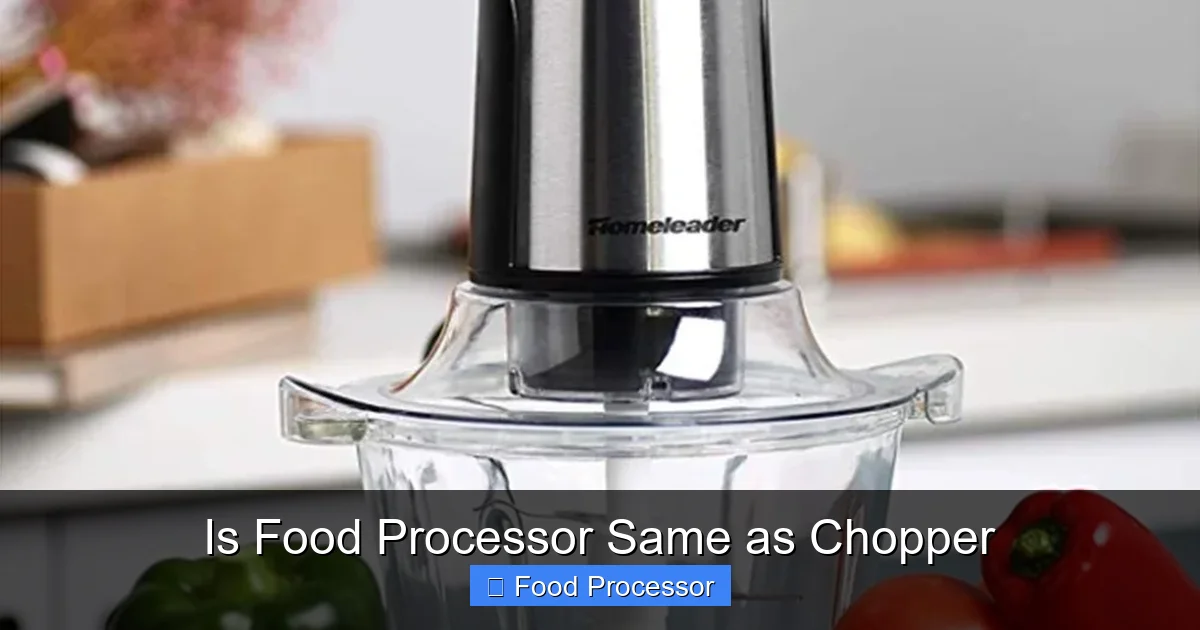
A chopper, whether electric or manual, is primarily designed for one main task: chopping. It typically features a smaller motor base (for electric models), a compact work bowl, a lid, and a single S-shaped blade. Its design prioritizes speed and convenience for small-scale jobs.
Visual guide about Is Food Processor Same as Chopper
Image source: m.media-amazon.com
- Chop: Mince garlic, chop onions, dice herbs, or prepare small amounts of nuts.
- Mince: Achieve very fine textures for ingredients like ginger, chilies, or parsley.
- Puree (small batches): Make small quantities of baby food or a single serving of dip.
Key Differences: Is Food Processor Same as Chopper?
To truly answer “is food processor same as chopper,” let’s break down the core differences that set these two kitchen workhorses apart.Size and Capacity
- Food Processor: These appliances are larger, with bowls ranging from 7 to 14 cups (or even more for commercial models). This larger capacity is perfect for preparing meals for several people, shredding large blocks of cheese, or slicing multiple vegetables at once.
- Chopper: Choppers are significantly smaller, typically with bowls ranging from 1 to 5 cups. They are designed for smaller amounts, such as mincing a couple of garlic cloves or chopping one onion.
Power and Motor Strength
- Food Processor: Equipped with robust motors (often 400-1000+ watts), food processors can handle tough ingredients, knead stiff doughs, and perform continuous, demanding tasks without strain.
- Chopper: Choppers have less powerful motors (usually under 300 watts). While perfectly fine for soft ingredients and quick chops, they can struggle with harder items or prolonged use.
Blades and Attachments
- Food Processor: This is where the food processor truly shines in its versatility. It comes with a variety of blades and discs:
- S-blade (or chopping blade): For chopping, mixing, pureeing.
- Slicing disc: For uniform slices of vegetables and fruits.
- Shredding/Grating disc: For shredding cheese, vegetables like cabbage or carrots.
- Dough blade: For kneading various types of dough.
- Some models even offer whisking attachments or juicers.
- Chopper: Typically, a chopper comes with just one S-blade, which is designed for basic chopping and mincing. Its functionality is focused rather than broad.
Functions and Versatility
- Food Processor: Highly versatile, capable of chopping, slicing, shredding, grating, pureeing, mixing, kneading, and more. It can largely replace many manual kitchen tasks.
- Chopper: Primarily limited to chopping, mincing, and small-batch pureeing. It’s a specialist in its field.
Cost and Storage
- Food Processor: Generally more expensive due to their powerful motors, larger capacity, and multiple attachments. They also require more storage space.
- Chopper: More affordable and compact, making them a great option for budget-conscious cooks or those with limited kitchen space.
Visual guide about Is Food Processor Same as Chopper
Image source: i5.walmartimages.com
When to Use a Food Processor?
You’ve learned the differences, but when does each appliance truly excel? Here’s when to reach for your food processor:1. Large-Batch Preparations
If you’re cooking for a crowd, meal prepping for the week, or making a big recipe, the food processor’s large capacity is invaluable. Shred an entire head of cabbage for coleslaw, slice multiple potatoes for a gratin, or chop several onions without constantly emptying the bowl.2. Complex Recipes Requiring Multiple Textures
When a recipe calls for different cuts—like sliced carrots, shredded cheese, and finely chopped herbs—a food processor can handle it all with different attachments.- Example: Preparing a vegetable lasagna where you need to slice zucchini, shred mozzarella, and finely chop garlic and onions.
- Example: Making a large batch of salsa that requires diced tomatoes, onions, and peppers, plus minced cilantro.
3. Dough and Pastry Making
With its powerful motor and dough blade, a food processor is excellent for kneading bread dough, mixing pie crusts, or preparing cookie dough in minutes. This saves significant manual effort and time.4. Smooth Purees and Nut Butters
The strong motor and S-blade are perfect for achieving ultra-smooth textures for hummus, pesto, baby food, or grinding nuts into creamy butter. If you’re wondering how to use a food processor for chopping vegetables, check out our guide on how to use food processor to chop vegetables.5. Tasks Requiring Consistent Slicing or Shredding
If you need uniform slices for dehydrating fruits or perfectly shredded vegetables for a salad, the specialized discs of a food processor deliver consistent results that are hard to achieve by hand.When to Use a Chopper?
Don’t underestimate the humble chopper! It has its own important place in the kitchen, especially for these situations:1. Small, Quick Chopping Tasks
For everyday cooking when you only need a small amount of an ingredient chopped.- Example: Mincing a clove or two of garlic for a pan sauce.
- Example: Chopping a quarter of an onion for a sandwich or omelet.
- Example: Finely dicing a small amount of herbs like parsley or cilantro.
