

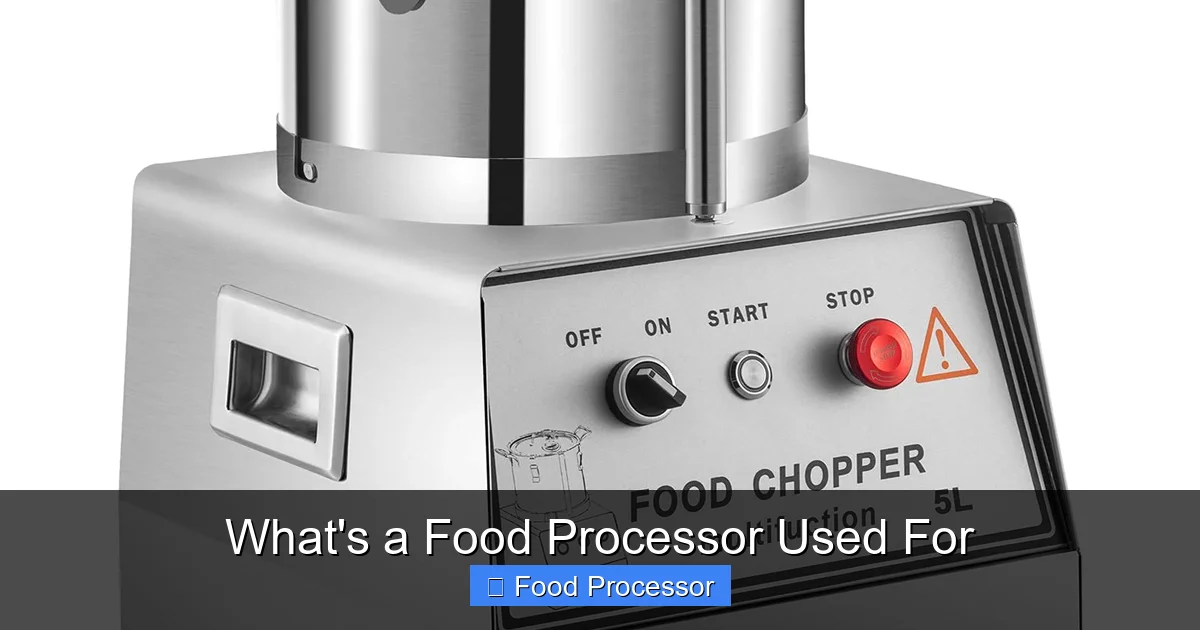
A food processor is an incredibly versatile kitchen appliance designed to significantly cut down prep time. It excels at tasks like chopping, slicing, shredding, pureeing, and kneading dough, making everything from daily meals to elaborate recipes much easier. With its various blades and discs, a food processor can transform ingredients quickly and efficiently, becoming an indispensable tool for any home cook looking to enhance their culinary efficiency and creativity.
What’s a Food Processor Used For
Ah, the food processor! If you’ve ever stared at this mighty kitchen gadget and wondered, “What’s a food processor used for, exactly?” you’re not alone. Many home cooks own one but only scratch the surface of its incredible capabilities. This isn’t just a fancy chopper; it’s a true kitchen workhorse, ready to revolutionize the way you prepare food.
In this comprehensive guide, we’re going to dive deep into the world of the food processor. You’ll learn about its core functions, discover surprising uses, and understand how it can save you precious time and effort in the kitchen. From chopping vegetables in seconds to kneading dough with ease, by the end of this article, you’ll be ready to unleash the full potential of your food processor and become a more efficient, confident cook. Let’s get started!
Key Takeaways
- Versatility: A food processor is a multi-functional kitchen appliance capable of performing numerous tasks, from basic chopping to complex dough kneading, often replacing several manual tools.
- Time-Saving: It dramatically reduces the time spent on meal preparation, allowing you to process large quantities of ingredients quickly and efficiently.
- Multiple Functions: Equipped with various blades and discs, a food processor can expertly chop, mince, slice, shred, puree, grind, and even emulsify ingredients.
- Consistent Results: This appliance delivers uniform cuts and textures, which is crucial for even cooking, professional presentation, and consistent recipe outcomes.
- Effortless Dough Making: Food processors simplify the otherwise laborious process of kneading dough for breads, pies, and pastries, requiring minimal manual effort.
- Promotes Healthy Eating: By making it easier to prepare fresh ingredients, homemade sauces, dips, nut butters, and baby food, it encourages a healthier diet.
- Proper Maintenance: Understanding how to properly assemble, clean, and maintain your food processor is essential for ensuring its safety, longevity, and optimal performance.
Understanding Your Food Processor: The Basics
Before we explore its many uses, let’s quickly review what a food processor is and its main parts. At its heart, a food processor is an electric appliance with a powerful motor that spins various attachments at high speeds within a work bowl. This action allows it to perform a multitude of tasks far quicker and more consistently than manual methods.
Key Components You’ll Find:
- Motor Base: The heavy bottom part that houses the motor.
- Work Bowl: The clear bowl where all the action happens, usually with a capacity ranging from mini (3 cups) to large (16 cups).
- Lid: Secures onto the work bowl, often featuring a feed tube.
- Feed Tube and Pusher: Allows you to add ingredients safely while the machine is running.
- S-Blade (or Chopping Blade): The most common blade, resembling an “S,” used for chopping, mincing, pureeing, and mixing.
- Slicing/Shredding Discs: Flat, round discs that sit on top of the work bowl’s spindle, used for uniform slicing and shredding.
Safety is paramount when using any kitchen appliance, especially one with sharp blades. Always ensure the lid is securely locked in place before turning on your food processor, and never reach into the bowl while the blades are moving. Always refer to your specific model’s manual for detailed safety instructions.
Fundamental Uses: Chopping, Mincing, Dicing
This is arguably the most common and beloved use for a food processor. Say goodbye to tedious knife work and watery eyes from onions!
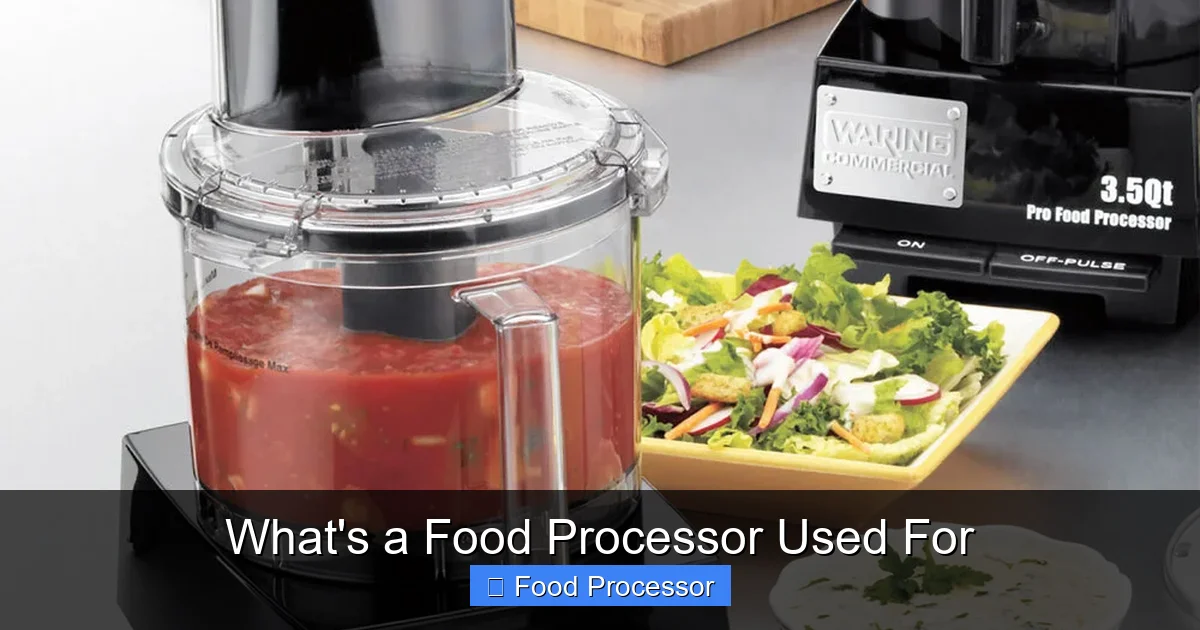
Visual guide about What’s a Food Processor Used For
Image source: cdnimg.webstaurantstore.com
How to Chop Vegetables Quickly:
Whether you need to chop onions, carrots, celery for a soup base, or bell peppers for a stir-fry, the S-blade (also known as the chopping blade) will be your go-to. Cut larger vegetables into 1-2 inch pieces before adding them to the work bowl. Then, use the pulse function in short bursts. Pulsing gives you greater control over the texture, preventing you from accidentally turning your veggies into a puree. For example, to chop an onion, cut it into quarters, place them in the bowl, and pulse 5-10 times until you reach your desired consistency.
Mincing Garlic and Herbs:
Mincing can be incredibly time-consuming by hand. A food processor makes it a breeze. For garlic, simply drop peeled cloves into the bowl with the S-blade and pulse until finely minced. For herbs like parsley, cilantro, or basil, add them with a few pulses until they’re perfectly chopped. You can even add a bit of liquid, like olive oil, to help them process more smoothly and prevent sticking.
Dicing Uniform Pieces:
While a food processor won’t give you perfectly square dice like a chef’s knife, it can create consistently sized chopped pieces, which is excellent for salads, relishes, or any recipe where even cooking is important. Load the ingredients and pulse until the pieces are roughly the same size.
Practical Tip: Don’t overcrowd the work bowl. Process ingredients in batches if necessary to ensure everything gets chopped evenly. For tips on keeping vegetables crisp during prep, check out how to keep vegetables from getting mushy.
Precision Prep: Slicing and Shredding
This is where the various discs come into play, offering incredible efficiency and consistency for a range of tasks.
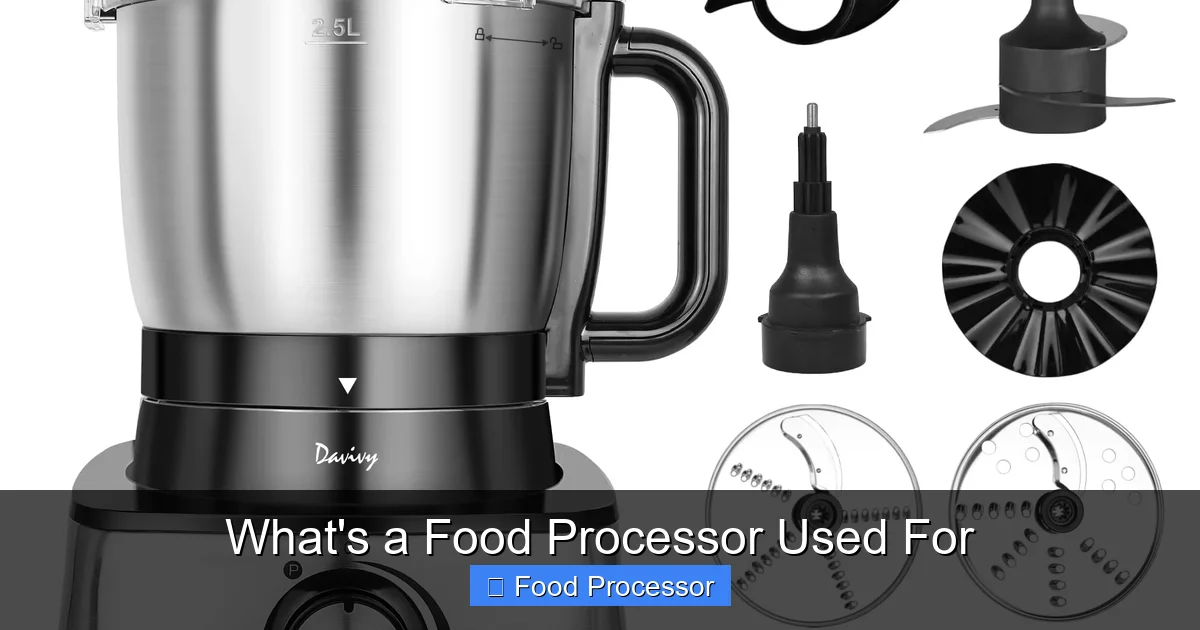
Visual guide about What’s a Food Processor Used For
Image source: m.media-amazon.com
Using the Slicing Disc:
Your food processor likely comes with a reversible slicing/shredding disc or separate discs for each function. The slicing disc is perfect for creating uniform slices of vegetables for gratins, salads, or chips. Think perfectly thin potato slices for scalloped potatoes, cucumber slices for a refreshing salad, or even apple slices for a tart. Simply place the desired slicing disc on the spindle, lock the lid, and feed your ingredients through the feed tube with the pusher. The results are incredibly consistent and fast, far superior to manual slicing.
Using the Shredding Disc:
The shredding disc is a game-changer for dishes requiring grated ingredients. Need shredded cheese for tacos or a casserole? Done in seconds. How about shredded cabbage for coleslaw, carrots for a salad, or zucchini for fritters? The food processor handles it all with ease, saving your knuckles from the grater. Again, use the feed tube and pusher for safe and efficient shredding.
Practical Tip: For best results with slicing and shredding, ensure your ingredients fit snugly but not forcefully into the feed tube. This helps them stay upright for even cuts.
Smooth & Creamy: Pureeing and Blending
While often confused with blenders, food processors excel at creating thick, smooth purees and blends, especially with less liquid-heavy ingredients.
Making Dips, Spreads, and Sauces:
The S-blade is fantastic for creating creamy textures. Homemade hummus? Absolutely! The food processor will transform chickpeas, tahini, lemon juice, and garlic into a smooth, luxurious dip in minutes. Pesto, salsa, tapenade, and various salad dressings also come together effortlessly. Just add your ingredients to the work bowl and process until smooth.
Pureeing Cooked Vegetables for Soups and Sauces:
For velvety smooth vegetable soups, like butternut squash or tomato, a food processor can puree cooked vegetables into a fine consistency. It’s also great for making smooth pasta sauces or pureeing cooked fruits for desserts. If your recipe calls for more liquid, you might transfer it to a blender for a thinner consistency, but for thick purees, the food processor is excellent.
Making Fruit Purees and Baby Food:
Preparing fresh, wholesome baby food is simple with a food processor. Cook fruits or vegetables until soft, then puree them in the food processor until smooth. You have complete control over the ingredients, avoiding additives often found in store-bought options. For a more detailed look at making these types of beverages, you might wonder, can a food processor be used to make smoothies? The answer is yes, especially thicker ones, though blenders are generally preferred for very liquid-heavy blends.
Baking Made Easy: Kneading Dough
One of the more surprising and time-saving uses for a food processor is kneading dough. It takes the hard work out of baking!
For Pie Crusts, Cookies, and Quick Breads:
The S-blade can quickly cut cold butter into flour, creating perfectly flaky pie crusts in seconds. It’s also excellent for mixing cookie doughs and quick bread batters, ensuring ingredients are evenly combined without overmixing. The quick action helps keep butter cold, which is key for tender baked goods.
For Yeast Doughs (Pizza, Bread):
Yes, your food processor can even knead yeast doughs for pizza, focaccia, or even some bread recipes! The powerful motor handles the kneading process efficiently, developing gluten much faster than by hand. Just add your dry ingredients, then stream in the liquid through the feed tube while the machine runs until a ball of dough forms and cleans the sides of the bowl. For those moments when you’re without this handy gadget, it’s good to know what to do if you don’t have a food processor for dough, but for sheer convenience, nothing beats the machine.
Practical Tip: When making dough, always add liquids slowly through the feed tube while the food processor is running. This allows the flour to absorb the liquid gradually and ensures the dough forms correctly.
Beyond Basic: Grinding and Milling
The food processor can also act as a grinder or mill for various ingredients, opening up a world of homemade possibilities.
Grinding Nuts for Flour or Butter:
If you need nut flour for gluten-free baking or want to make your own nut butter, the food processor is excellent. For nut flour, pulse whole nuts until they reach a coarse flour consistency. For nut butter, continue processing the nuts (without adding liquid) until their natural oils release, and they become creamy and smooth. This can take several minutes, requiring occasional scraping down of the sides.
Making Breadcrumbs from Stale Bread:
Don’t throw out stale bread! Cut it into chunks, pop it into your food processor with the S-blade, and pulse until you have fresh breadcrumbs. You can even add herbs and spices for flavored breadcrumbs, perfect for coatings or toppings.
Grinding Spices (Small Batches):
While a dedicated spice grinder is ideal for fine powder, a food processor can handle grinding small batches of whole spices, like peppercorns or cumin seeds, for a fresher flavor in your cooking. Just be mindful not to overload it, and ensure the spices are completely dry. If you’re looking for a model optimized for this task, explore the best food processor for grinding spices.
Homemade Delights: Emulsifying and Whipping
Achieving stable emulsions and light textures is another area where the food processor shines.
Making Mayonnaise and Salad Dressings:
Homemade mayonnaise is incredibly easy and delicious with a food processor. The feed tube is key here. With the S-blade running, slowly drizzle oil into the egg and vinegar mixture. The continuous processing and slow addition of oil create a stable emulsion, resulting in thick, creamy mayonnaise. The same technique applies to various vinaigrettes and creamy salad dressings.
Whipping Cream (Some Models):
While a stand mixer or hand mixer is generally preferred, some powerful food processors can whip small amounts of heavy cream, particularly those with a whipping attachment or a wider work bowl. It’s not its primary function, but it can work in a pinch for lighter tasks.
Specialty Tasks: Unleash Your Creativity
The food processor isn’t just for the basics; it can help you get creative in the kitchen too!
Ricing Cauliflower:
Cauliflower rice has become a popular low-carb alternative. To make it, simply cut a head of cauliflower into florets, place them in the food processor with the S-blade, and pulse until they resemble rice grains. It’s incredibly fast and easy, much quicker than grating by hand.
Making Veggie Burgers:
Homemade veggie burgers often require finely chopping and blending various vegetables, beans, and grains to form a patty mixture. A food processor is perfect for this, ensuring all ingredients are well combined and have the right texture to hold together.
Preparing Nut Butters:
As mentioned before, making your own nut butter is a rewarding experience. From almond butter to peanut butter, the food processor breaks down nuts until they release their natural oils and become a smooth, spreadable consistency. It’s often healthier and more economical than store-bought options.
Why a Food Processor is a Game-Changer for Meal Prep
If you’re serious about saving time and eating healthier, a food processor is an invaluable asset for meal prepping. The advantages of using a food processor for meal prep are clear.
- Time Efficiency: Imagine chopping all the vegetables for a week’s worth of stir-fries, soups, and salads in under 15 minutes. This appliance handles the most time-consuming prep tasks at lightning speed.
- Consistency: Uniformly chopped or sliced ingredients cook more evenly, leading to better results in your final dishes.
- Reducing Waste: It encourages you to use fresh ingredients and allows you to make your own versions of pantry staples, often reducing packaging waste.
- Healthier Choices: With quick prep, you’re more likely to cook fresh meals at home, promoting healthier eating habits.
Choosing and Caring for Your Food Processor
When selecting a food processor, consider the size that best fits your needs (mini, compact, or full-size) and look for sturdy construction and powerful wattage. If you’re in the market for one, it’s wise to consider what to look for when buying a food processor to ensure you get a model that truly meets your culinary demands.
Cleaning Tips:
- Unplug First: Always unplug the appliance before disassembling or cleaning.
- Immediate Cleaning: Clean the work bowl, lid, and blades immediately after use to prevent food from drying on.
- Warm Soapy Water: Most parts are dishwasher safe (top rack), but hand washing with warm, soapy water is also effective, especially for sharp blades. Use a brush to safely clean around blades.
- Wipe Base: Wipe the motor base with a damp cloth; never immerse it in water.
- Storage: Store blades and discs safely, often in their provided storage cases, to prevent accidents.
Troubleshooting Common Food Processor Issues
Even with this versatile tool, you might encounter a few hiccups. Here are some common issues and their solutions:
Food Not Processing Evenly:
- Cause: Overcrowding the bowl, or ingredients are too large.
- Solution: Process in smaller batches. Cut ingredients into uniform, smaller pieces (1-2 inches) before adding them to the bowl. Use the pulse function for better control.
Lid Not Locking/Machine Not Starting:
- Cause: Safety mechanism engaged. The lid or bowl isn’t correctly aligned.
- Solution: Ensure the work bowl is securely twisted onto the motor base and the lid is firmly locked into place. Most food processors have interlock systems that prevent operation unless all parts are correctly assembled.
Motor Overheating/Smelling Burnt:
- Cause: Overloading the motor with too many ingredients, processing tough ingredients for too long, or continuous running without breaks.
- Solution: Turn off the food processor immediately and unplug it. Let it cool down. Reduce the amount of ingredients you’re processing, and take breaks when processing tough items or making nut butters. Some models have thermal cut-offs that will automatically shut down the unit to prevent damage.
Liquids Leaking from the Bowl:
- Cause: Overfilling the bowl with liquid, or the seal around the blade is worn.
- Solution: Do not fill liquids above the maximum fill line indicated on the bowl. If leakage persists with normal use, the seal or blade assembly might need replacement. For persistent issues, see why my food processor not working.
Conclusion
There you have it! From chopping and slicing to kneading dough and making homemade nut butters, a food processor is undeniably one of the most versatile and valuable appliances you can have in your kitchen. It’s a time-saving marvel that empowers you to tackle complex recipes with ease and encourages healthier eating through fresh, homemade ingredients.
By understanding “what’s a food processor used for” beyond just basic chopping, you can unlock its full potential and transform your cooking experience. So, pull out your food processor, experiment with its different blades and functions, and enjoy the efficiency and culinary creativity it brings to your home.
