

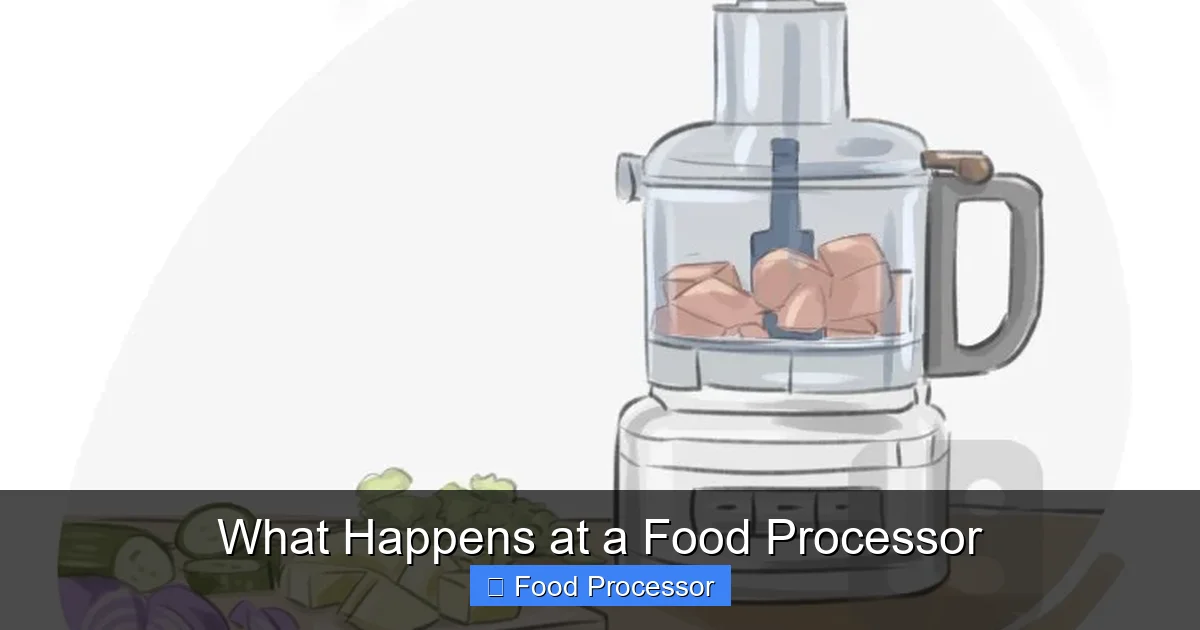
A food processor is a powerful kitchen appliance designed to streamline food preparation. It utilizes a motor to spin various blades and discs at high speeds within a work bowl, transforming ingredients through chopping, slicing, shredding, pureeing, and mixing. Understanding what happens at a food processor empowers you to tackle diverse culinary tasks efficiently and achieve consistent results.
What Happens at a Food Processor
Key Takeaways
- Motor-Driven Mechanics: A food processor works by using a powerful electric motor to rapidly spin interchangeable blades or discs, enabling precise and efficient food transformation.
- Versatile Attachments: The magic lies in its specialized attachments, like the multi-purpose S-blade for chopping and pureeing, and various discs for uniform slicing and shredding.
- Control Through Pulsing: The “Pulse” function is crucial for achieving desired consistencies, allowing short bursts of power to prevent over-processing and ensure even results.
- Beyond Basic Prep: Beyond chopping, a food processor can handle tasks like mixing dough, emulsifying sauces, and creating smooth purees, making it a true kitchen multitasker.
- Safety and Proper Use are Key: Always ensure the lid is securely locked, avoid overfilling, and prepare ingredients appropriately to ensure safe and effective operation.
- Time and Effort Saver: By automating tedious manual tasks, the food processor significantly reduces prep time, allowing you to enjoy cooking more and achieve consistent, professional-looking dishes.
Introduction: Unveiling the Magic Behind the Blades
Ever wondered what really goes on inside that handy kitchen gadget when you press a button? A food processor is more than just a simple mixer; it’s a marvel of engineering designed to make your cooking life easier. From transforming chunky vegetables into a fine dice to kneading dough in minutes, understanding what happens at a food processor unlocks its full potential. In this guide, we’re going to pull back the curtain and explore the fascinating mechanics, functions, and practical applications of this indispensable appliance. You’ll learn how this powerful machine works its magic, what each attachment does, and how to get the best results every time you use your food processor.
The Anatomy of a Food Processor: Parts and Purpose
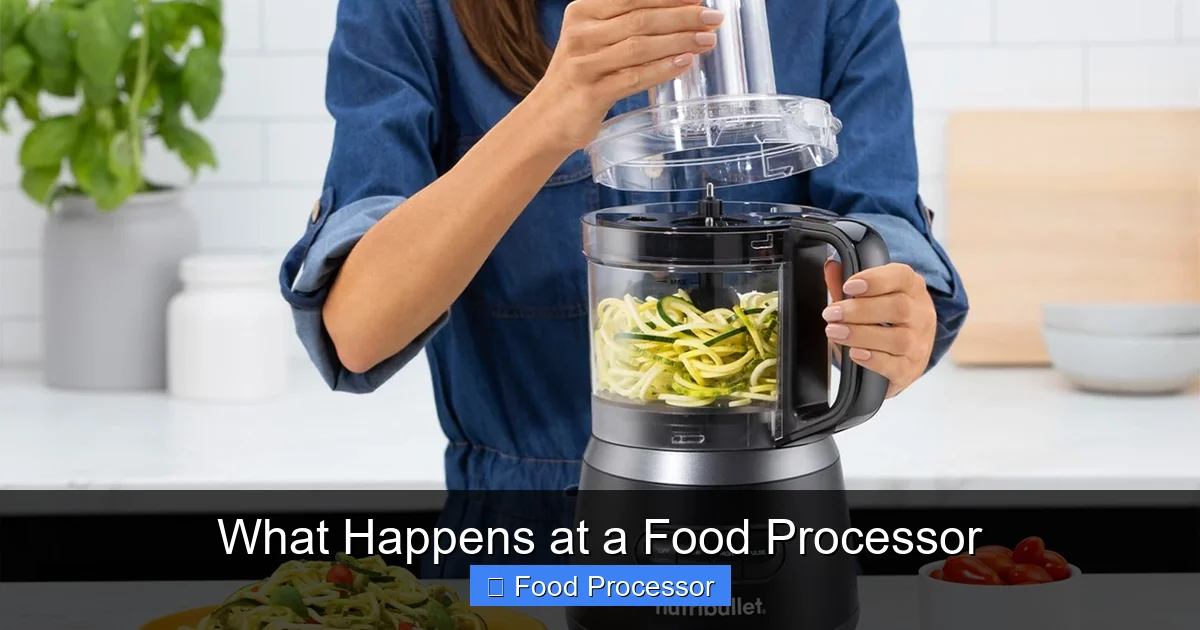
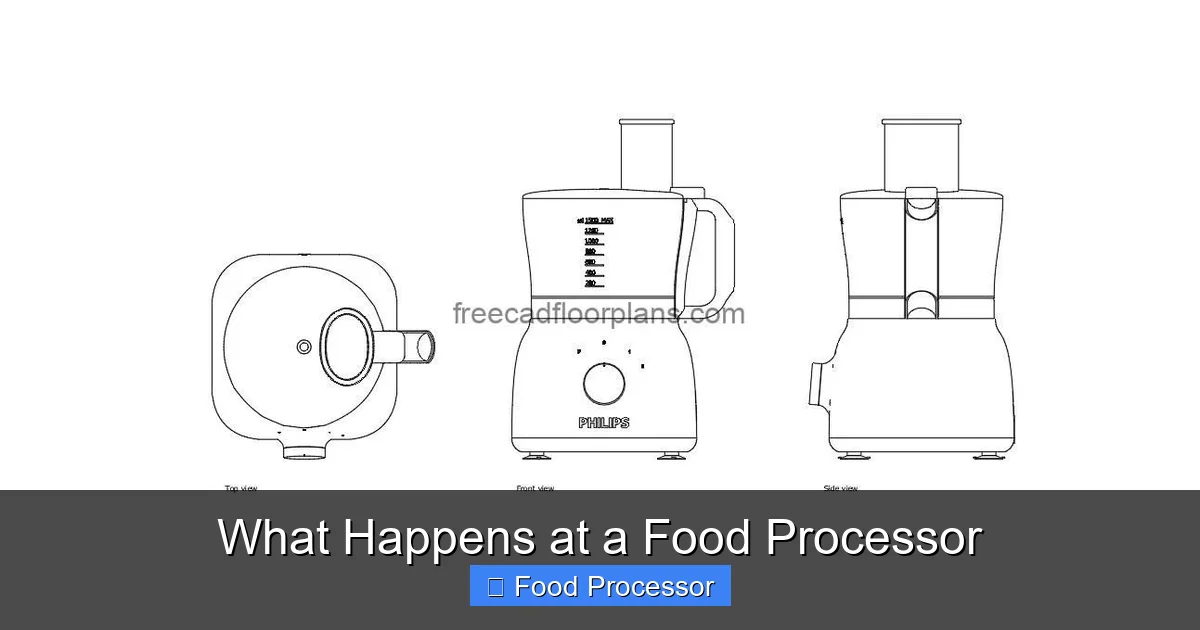
Before we dive into the action, let’s quickly review the main components of a typical food processor. Knowing these parts will help you understand their role in the transformation process.
Visual guide about What Happens at a Food Processor
Image source: storables.com
The Base, Work Bowl, and Lid: The Foundation and Container
The base is the heavy bottom part where the powerful motor resides. It provides stability and houses the control buttons (On, Off, Pulse). The work bowl, usually made of clear, durable plastic, sits on top of the base and is where all the food processing happens. It allows you to observe the ingredients. The lid securely covers the work bowl during operation. Crucially, most food processors feature a safety interlock system; the motor won’t start unless the lid and bowl are correctly locked into place.
The Feed Tube, Pusher, and Central Spindle: Guiding and Connecting
The feed tube is an opening in the lid that lets you add ingredients while the food processor is running, especially useful for continuous slicing or shredding. The pusher helps guide food down this tube. Extending from the motor in the base up through the center of the work bowl is the central spindle (or shaft). This component is vital as it transmits the motor’s rotational power directly to the blades and discs.
The Blades and Discs: The Working Tools of a Food Processor
These are the core tools that perform the actual food transformations. A food processor comes equipped with various interchangeable attachments, each specifically designed for different culinary tasks. These include the versatile S-blade, and a range of slicing and shredding discs, among others. We will explore these in more detail shortly.
The Core Mechanism: How a Food Processor Works its Magic
At its heart, a food processor operates on a simple yet effective principle: a powerful electric motor drives various interchangeable blades or discs at high speeds within a contained work bowl. Here’s a closer look at the sequence of events that make a food processor so effective:
Visual guide about What Happens at a Food Processor
Image source: freecadfloorplans.com
Motor Activation and Blade Rotation
When you plug in your food processor and press the “On” or “Pulse” button, electricity flows to the motor housed in the base. This motor, typically a universal motor, delivers high torque, meaning it has the strength to process tough ingredients. The motor’s rotational energy is then transferred to the central spindle. This spindle engages with your chosen blade or disc attachment, causing it to spin rapidly inside the work bowl. The speed of this rotation is precisely engineered to break down food efficiently.
Food Interaction: The Transformation Process
As the blades or discs spin, they come into contact with the food placed in the work bowl. The specific attachment determines exactly what happens next:
- S-Blade (Chopping Blade): This versatile blade, often made of stainless steel with two or four curved blades resembling an “S,” rotates at the bottom of the bowl. It repeatedly lifts and chops ingredients against the sides of the bowl, breaking them down into smaller pieces. The centrifugal force created by the spinning blade also pushes food outwards, ensuring an even chop as food falls back towards the center to be re-cut.
- Slicing Discs: These flat discs have razor-sharp blades positioned horizontally. When food is fed through the feed tube, the spinning disc shaves off uniform slices. The consistency and precision of these slices are a hallmark of what happens at a food processor.
- Shredding Discs: Similar to slicing discs, shredding discs have a series of holes or grates. As food is pushed against the spinning disc, it’s forced through these holes, resulting in consistently shredded pieces. The size of the holes determines the coarseness of the shred.
The key to understanding what happens at a food processor is recognizing that it’s all about controlled, high-speed interaction between specialized tools and your ingredients.
Blade Magic: Understanding the Food Processor Attachments
The true versatility of a food processor comes from its array of interchangeable blades and discs. Each one is engineered for a specific task, greatly expanding your culinary capabilities.
The Multi-Purpose S-Blade (Chopping Blade)
This is the most common and frequently used attachment for a food processor. Shaped like an “S,” it’s perfect for a wide range of tasks:
- Chopping & Mincing: It quickly breaks down ingredients like onions, garlic, herbs, and nuts into desired consistencies.
- Pureeing: Transforms cooked vegetables into smooth soups, makes creamy hummus, baby food, or smooth sauces.
- Mixing: Blends ingredients seamlessly for batters, dressings, or dips.
- Kneading Dough: Many S-blades, or specialized plastic dough blades, can effectively knead dough for breads and pastries by rapidly mixing and folding the ingredients.
Slicing Discs: Precision and Uniformity
These discs are designed to produce perfectly uniform slices, a task that can be tedious and inconsistent by hand. They typically come in different thicknesses:
- Thin Slicing Disc: Ideal for delicate potato chips, cucumber ribbons, or paper-thin citrus slices.
- Medium/Thick Slicing Disc: Great for preparing vegetables for gratins, stir-fries, or substantial salads.
To use, you insert the slicing disc, secure the lid, and feed ingredients through the feed tube with the pusher. The rapidly spinning blade makes quick work of firm vegetables and fruits, catching the slices in the bowl below.
Shredding Discs: Effortless Grating
Say goodbye to tiresome hand-grating! Shredding discs make quick work of hard cheeses, carrots, cabbage, and more. They also often come in different coarseness levels:
- Fine Shredding Disc: For finely grated cheese, carrots for salads, or zesting citrus.
- Coarse Shredding Disc: Perfect for shredded cabbage for coleslaw, potatoes for hash browns, or block cheese.
Like slicing, shredding involves feeding ingredients through the feed tube against the spinning disc. This allows you to quickly shred larger quantities than you could by hand, making meal prep much faster. Want to know more about the best way to shred cheese in a food processor? We have you covered!
Other Specialized Attachments (Model Dependent)
Some advanced food processor models might include additional blades and discs:
- Dough Blade: A plastic blade specifically designed for kneading dough, often gentler than the S-blade for this purpose.
- Whisk/Emulsifying Disc: Used for whipping cream, egg whites, or making mayonnaise.
- Julienne Disc: Creates thin, matchstick-like strips of vegetables.
Step-by-Step: What Happens for Common Food Processor Tasks
Let’s walk through how a food processor handles some everyday kitchen tasks, detailing what actually happens inside the machine during each process.
1. Chopping and Mincing (Using the S-Blade)
Preparing and Loading the Food Processor
First, ingredients are usually cut into manageable, roughly uniform pieces (e.g., quartering an onion, cutting carrots into 1-inch chunks). This ensures even processing. The S-blade is placed on the spindle, and the prepared food is added to the work bowl. It’s important not to overfill, generally keeping it no more than two-thirds full.
Engaging the Motor and Pulsing for Control
The lid is secured, and the food processor is turned on, typically using the “Pulse” function. When you press “Pulse,” the blade spins for a brief burst and then stops. What happens? The blade spins at high speed, repeatedly lifting and chopping the food. When it stops, gravity pulls the larger pieces back towards the bottom and center, ready for the next chop. This pulsing action prevents over-processing, gives you precise control over the consistency, and helps achieve an even chop without turning everything into a paste.
If you’re looking for more general guidance on using this versatile appliance, you can also learn how to use a food processor step-by-step for various tasks.
2. Slicing (Using Slicing Discs)
Setting Up for Slicing
The S-blade is removed, and the chosen slicing disc is placed on the spindle, resting on the ledge provided in the work bowl. The lid is then secured. Ingredients like cucumbers, carrots, or potatoes are cut to fit snugly into the feed tube. The food processor is then turned on.
Guiding Food for Uniform Slices
As the disc spins rapidly, food is dropped into the feed tube. The pusher is used to gently guide the food down against the spinning blade. What happens? The sharp edge of the spinning disc shaves off perfectly uniform slices as the food is pressed against it. These slices then fall into the work bowl below the disc. This continuous action is where the food processor truly shines for batch slicing, quickly transforming a pile of vegetables into neat, consistent pieces.
3. Shredding (Using Shredding Discs)
Preparing for Effortless Shredding
Similar to slicing, the appropriate shredding disc is placed on the spindle, and the lid is locked. Ingredients like blocks of cheese, carrots, or cabbage wedges are sized to fit the feed tube. The food processor is switched on.
Transforming Food into Shreds
Food is dropped into the feed tube and gently pressed against the spinning shredding disc with the pusher. What happens? The sharp grates or holes on the rapidly spinning disc “tear” or “force” pieces of the food through, creating consistent shreds that fall into the work bowl. This process is incredibly fast and efficient for tasks like grating a large block of cheese for a lasagna or shredding cabbage for coleslaw, saving significant manual effort.
4. Pureeing (Using the S-Blade)
Loading Ingredients for Smooth Results
For pureeing, ingredients (often cooked vegetables or fruits) are placed in the work bowl with the S-blade. A small amount of liquid (broth, water, oil, or cream) is often added to help achieve a smooth consistency and ensure proper circulation of the food.
Continuous Processing for Creaminess
The lid is secured, and the food processor is run continuously (not pulsed) for a longer period. What happens? The S-blade spins at high speed, repeatedly breaking down the ingredients and thoroughly incorporating any added liquid, creating a smooth, uniform paste or liquid. The continuous motion ensures all particles are broken down until the desired creamy, lump-free texture is achieved. This is perfect for baby food, smooth sauces, or creamy soups.
Practical Tips for Optimal Food Processor Use
To get the most out of your food processor and understand exactly what happens inside, keep these tips in mind:
- Cut Food Evenly: For chopping, cut ingredients into similar-sized pieces before adding them to the bowl. This ensures everything processes at the same rate and prevents some parts from being over-processed while others remain chunky.
- Don’t Overfill: Overfilling the work bowl can strain the motor, lead to uneven processing, or even cause the machine to jam. Always adhere to the manufacturer’s recommendations, usually marked on the bowl.
- Utilize the Pulse Function: This is your best friend for chopping, dicing, and mincing! Short bursts give you maximum control, preventing ingredients from turning into a puree or paste too quickly.
- Add Liquids Slowly: When making dressings or mayonnaise, add oil or other liquids in a slow, steady stream through the feed tube while the machine is running. This technique allows for proper emulsification and a smooth, stable mixture.
- Process in Batches: If you have a large quantity of food, process it in smaller batches. This prevents overloading the machine and ensures more consistent and uniform results across all ingredients.
- Clean Immediately: Food residue can dry and become difficult to remove if left for too long. Disassemble and wash the removable parts right after use. Most work bowls, lids, and blades are top-rack dishwasher safe, but always double-check your specific model’s manual for care instructions.
Troubleshooting: When Things Don’t Go as Planned
Even with a good understanding of what happens at a food processor, you might encounter issues. Here are a few common ones and their solutions:
1. My Food Processor Won’t Turn On
This is frequently a simple safety issue. What happens? Most food processors have interlock systems on the work bowl and the lid. Ensure both are securely locked into place according to your model’s instructions. If the bowl or lid isn’t aligned correctly, the machine won’t power on to prevent accidents. Also, always check if it’s plugged in properly. Sometimes, the problem could be more complex, and you might need to investigate what to do if your food processor won’t turn on further.
2. Food isn’t Processing Evenly (Some Chunks, Some Mush)
This usually happens when you either overfill the bowl or don’t use the pulse function effectively. What happens? If the bowl is too full, ingredients at the bottom get processed quickly while those on top remain large due to poor circulation. If you run it continuously for too long, some parts turn to mush while others are still chunky because of inconsistent movement within the bowl.
Solution: Process in smaller batches. For chopping, use the “Pulse” function, allowing food to settle between bursts. If using the S-blade, give the bowl a shake or scrape down the sides with a spatula between pulses to redistribute the food and ensure everything is exposed to the blade.
3. Motor Straining or Loud Noises
A straining motor indicates it’s working too hard. What happens? This often occurs when processing very hard or dense ingredients (like large chunks of raw root vegetables or excessive amounts of tough dough), or when the work bowl is overloaded. Loud, unusual noises could also signal a problem with the motor or a loose component that needs attention.
Solution: Never force the machine. Cut hard ingredients into smaller pieces. Reduce the batch size. If the noise persists or is accompanied by burning smells, turn off and unplug the unit immediately and consult the manufacturer’s guide or a service center.
The Advantages of a Food Processor: Why It Matters
Understanding what happens inside a food processor clearly highlights its incredible utility. The speed, efficiency, and consistency it offers are unparalleled for many tasks. It saves you significant time in the kitchen, making tedious chopping, slicing, and shredding jobs quick and effortless. This allows you to focus more on the creative aspects of cooking rather than the laborious prep work. For more detailed insights into why this appliance is a kitchen powerhouse, explore the many advantages of a food processor.
When considering which model to bring into your home, it’s helpful to know what to consider when buying a food processor to ensure it meets your specific culinary needs and expectations.
Conclusion: Master Your Food Processor
You now have a deep understanding of what happens at a food processor. From the powerful motor and versatile S-blade to the precision of slicing and shredding discs, each component plays a vital role in transforming your ingredients. By knowing how this appliance works, you can confidently tackle a vast array of recipes, saving time, reducing effort, and achieving consistently professional results. So go ahead, unlock the full potential of your food processor and enjoy the seamless efficiency it brings to your culinary adventures!
