

Choosing the right food processor can transform your cooking, making meal prep faster and easier. This comprehensive guide helps you navigate the options, from understanding your cooking habits and desired tasks to evaluating size, power, features, and budget. By focusing on your specific needs, you’ll confidently select a food processor that truly enhances your kitchen experience.
What Food Processor Should I Buy
Thinking about adding a food processor to your kitchen? Great choice! These versatile machines are true game-changers, turning tedious chopping, slicing, and mixing tasks into quick, effortless jobs. But with so many models, sizes, and features out there, figuring out “what food processor should I buy” can feel a bit overwhelming. Don’t worry, you’re in the right place!
This comprehensive guide will walk you through everything you need to know to make an informed decision. We’ll break down the essential factors, help you understand what features truly matter, and ensure you pick a food processor that perfectly fits your cooking style and needs. By the end of this guide, you’ll feel confident in choosing a kitchen companion that will save you time and effort for years to come.
Key Takeaways
- Assess Your Needs First: Before looking at models, decide what tasks you’ll perform most often (chopping, slicing, pureeing, dough) and how frequently you’ll use the appliance. This clarity guides all subsequent choices.
- Choose the Right Size: Food processor bowl capacity is crucial. Mini-choppers (1-5 cups) are for small tasks, mid-size (7-9 cups) for couples, and full-size (10-14+ cups) for families or frequent batch cooking.
- Consider Power and Durability: A higher wattage motor (600W+) is essential for tough jobs like kneading dough or processing hard vegetables. Look for sturdy bases and durable materials, especially for the bowl and blades, to ensure longevity.
- Prioritize Essential Features: While many attachments exist, focus on those you’ll genuinely use, such as S-blades for chopping/pureeing and reversible slicing/shredding discs. A wide feed tube and simple controls enhance user experience.
- Balance Budget with Quality: Food processors range widely in price. Determine a realistic budget, but remember that investing in a reputable brand with good reviews often leads to a more durable and satisfying product in the long run.
- Ease of Cleaning Matters: Look for models with dishwasher-safe parts and minimal nooks and crannies where food can get trapped. Easy assembly and disassembly also contribute to a better overall user experience.
Step 1: Define Your Culinary Needs and Habits
Before you even look at a single model, the most important step is to understand why you want a food processor and what you plan to do with it. This forms the foundation of your decision.
What Will You Mostly Use It For?
Food processors are incredibly versatile, but different tasks demand different features and power levels. Think about the types of recipes you make or want to make more often.
- Basic Chopping and Mincing: Do you just need to quickly chop onions, garlic, herbs, or nuts? Almost any food processor can handle this.
- Slicing and Shredding: Do you often make salads, coleslaw, or gratins that require uniform slicing of vegetables or shredding cheese? Look for models with various slicing and shredding discs. If you often prepare large batches of cabbage or cheese, this feature will be a huge time-saver. For the advantages of using a food processor for such tasks, the efficiency it brings is unmatched.
- Pureeing and Blending: Are you making hummus, pesto, baby food, or smooth sauces? You’ll need a good S-blade and a powerful motor for creamy results. Sometimes people wonder, should I get a food processor or immersion blender? The food processor excels at thick, dense purees, while an immersion blender is great for liquids in their cooking pot.
- Dough and Pastry Making: If you’re into baking and want to make pie crusts, bread dough, or cookie dough, you’ll need a robust motor (at least 600 watts) and a specific dough blade.
- Nut Butters and Heavy Tasks: Making your own almond butter or processing tough ingredients requires significant power and durability.
How Often Will You Use It?
Your usage frequency also dictates the level of investment and durability you should seek.
- Daily/Multiple Times a Week: If it’s going to be a kitchen workhorse, invest in a higher-quality, more durable model from a reputable brand.
- Weekly/Few Times a Month: A good mid-range food processor should suffice, offering a balance of features and reliability.
- Occasionally/Special Projects: A more budget-friendly or basic model might be all you need.
How Many People Do You Cook For?
The number of servings you typically prepare will directly influence the ideal bowl capacity.
- Single or Couple: A compact or mid-size food processor (7-9 cups) is often perfect.
- Small Family (3-4 people): A full-size 10-12 cup model offers enough capacity without being overly bulky.
- Large Family/Entertaining: A 14-cup or even larger food processor will save you from having to process ingredients in multiple batches.
Step 2: Determine the Right Size (Capacity)
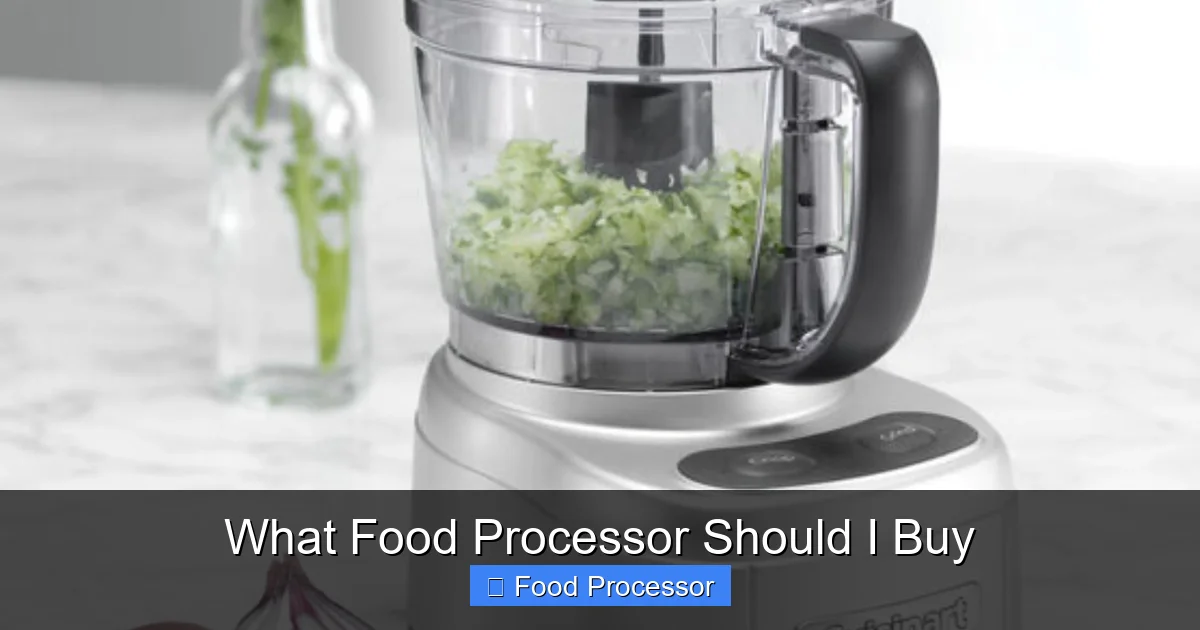
This is one of the most critical decisions when asking “what food processor should I buy?” The capacity of the work bowl dictates how much food you can process at once. Getting this wrong means either frustrating batch processing or an unnecessarily large appliance taking up counter space. For more detailed insights, you can always refer to resources on how to choose the right size food processor.
Visual guide about What Food Processor Should I Buy
Image source: cdn.mos.cms.futurecdn.net
Mini Food Processors (1-5 cups)
- Best for: Small tasks like chopping nuts, mincing garlic and herbs, making small batches of dips (like pesto or mayonnaise), or pureeing baby food.
- Pros: Compact, easy to store, often inexpensive.
- Cons: Limited capacity, usually fewer attachments, less powerful motors.
- Consider if: You have a tiny kitchen, cook mostly for one or two, or only need it for very small, quick jobs.
Compact/Mid-Size Food Processors (7-9 cups)
- Best for: Everyday use for small families or couples. Can handle chopping several onions, shredding a block of cheese, making a standard batch of salsa, or preparing dough for a small pie.
- Pros: Good balance of size and functionality, versatile enough for most common tasks.
- Cons: Might require batch processing for larger recipes.
- Consider if: You cook regularly for 2-4 people and need a capable machine without it dominating your countertop.
Full-Size Food Processors (10-14+ cups)
- Best for: Larger families, frequent entertainers, or serious home cooks who do a lot of batch cooking, meal prepping, or baking. Ideal for kneading bread dough, slicing multiple vegetables for a gratin, or making large quantities of soup.
- Pros: High capacity, more powerful motors, often come with a wider array of attachments.
- Cons: Can be bulky, heavier, and take up more storage space.
- Consider if: You cook for 4+ people, entertain often, or regularly tackle large cooking projects.
Tip: Some full-size models come with smaller nested bowls (mini bowls) that fit inside the main bowl, offering the best of both worlds for different task sizes.
Step 3: Evaluate Power and Motor Strength
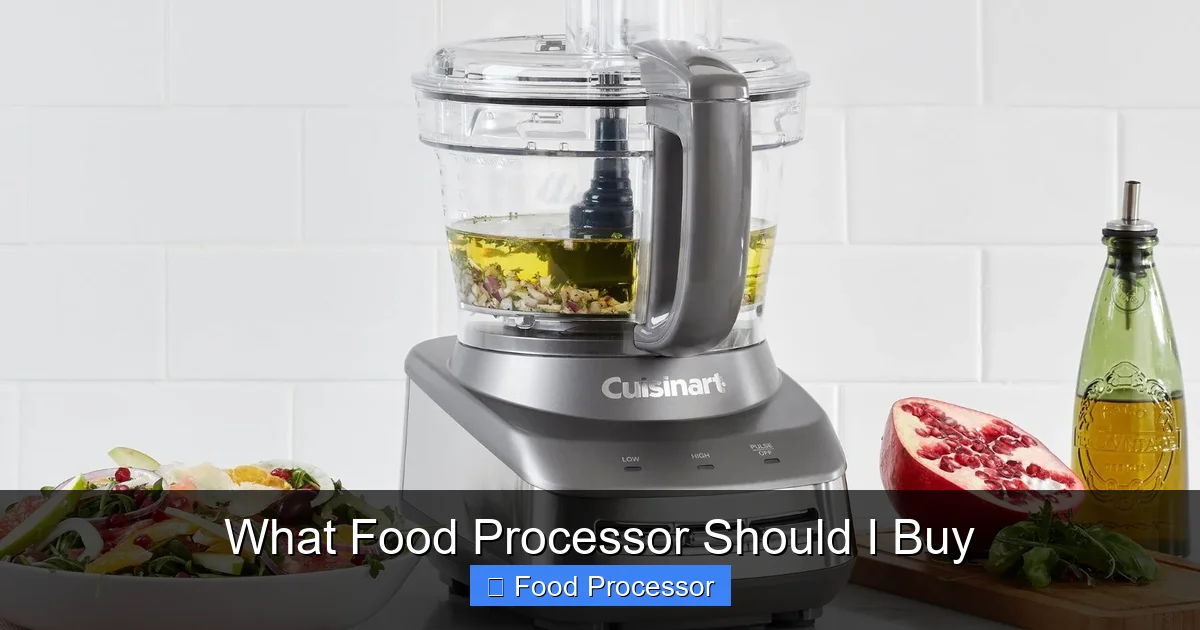
The wattage of a food processor’s motor is a good indicator of its strength and ability to handle tough ingredients without stalling or overheating. This is a key factor when deciding “what food processor should I buy.”
Visual guide about What Food Processor Should I Buy
Image source: cdn.mos.cms.futurecdn.net
Understanding Wattage
- Lower Wattage (300-600 watts): Typically found in mini and compact models. Suitable for basic chopping, mincing, and pureeing soft ingredients. Might struggle with hard vegetables or dough.
- Mid-Range Wattage (600-800 watts): Common in mid-size and some full-size processors. Offers a good balance for most everyday tasks, including slicing hard vegetables and light dough work.
- High Wattage (800+ watts): Essential for full-size, heavy-duty machines. These motors can handle kneading stiff dough, processing tough root vegetables, making nut butters, and continuous operation without bogging down. They are built for serious tasks and longevity.
Tip: A heavier base often indicates a more robust motor and better stability during operation. Look for induction motors, which are generally quieter, more powerful, and more durable than universal motors.
Step 4: Examine Features and Attachments
Beyond the basic chopping blade, food processors can come with a variety of blades and discs that greatly expand their functionality. When considering “what food processor should I buy,” think about which attachments you will genuinely use.
Essential Attachments
- S-Blade (Chopping/Mixing Blade): This is the workhorse blade, used for chopping, mincing, pureeing, mixing, and crumbling. It’s included with every food processor.
- Slicing Disc: Used for uniformly slicing vegetables (cucumbers, potatoes, carrots) and fruits. Look for adjustable slicing discs that allow you to change the thickness.
- Shredding/Grating Disc: Perfect for shredding cheese, carrots, cabbage, or potatoes. Often, these are reversible, offering both fine and coarse shredding options.
Specialized Attachments (Good-to-Haves)
- Dough Blade: A plastic blade designed to mix and knead dough without overworking it. Essential if you plan on baking bread or pastries.
- Julienne Disc: Creates thin, matchstick-like strips of vegetables.
- Grating Disc: For very fine grating, similar to a zester.
- Whisk/Emulsifying Disc: Can be used for whipping cream or egg whites, or emulsifying dressings.
- Citrus Juicer Attachment: Some models offer this for fresh juice.
Other Important Features
- Feed Tube Size: A wide feed tube allows you to process larger items (like whole potatoes or onions) without pre-cutting, saving time. Smaller tubes require more prep work.
- Controls: Look for simple, intuitive controls, typically “On,” “Off,” and “Pulse.” The “Pulse” function is crucial for precise chopping and avoiding over-processing. Some models offer multiple speed settings.
- Safety Mechanisms: Most modern food processors won’t operate unless the bowl and lid are correctly locked in place. This is a standard and important safety feature.
- Storage for Attachments: If a food processor comes with many attachments, consider if it has a built-in storage box or a clever way to keep them organized.
- Durability of Materials: A heavy, sturdy base and a strong, shatter-resistant work bowl (often Tritan plastic) are signs of quality. Metal parts for blades and discs generally indicate better durability.
Step 5: Prioritize Ease of Use and Cleaning
A powerful, feature-rich food processor won’t be used if it’s a pain to assemble or clean. This practical aspect is vital when deciding “what food processor should I buy.”
Assembly and Disassembly
- Look for models where the bowl, lid, and blades fit together easily and securely.
- Clear markings or intuitive designs make operation smoother.
Cleaning Convenience
- Dishwasher-Safe Parts: Most modern food processor bowls, lids, and blades are top-rack dishwasher safe, which is a huge convenience. Always check the manufacturer’s instructions.
- Minimal Nooks and Crannies: Designs with fewer crevices where food can get trapped are easier to hand wash.
- Sealed Bowl/Lid: Prevents leaks, especially when processing liquids.
Noise Level
While food processors are generally louder than some other kitchen appliances, some models are significantly quieter than others. If you’re sensitive to noise, check reviews for mentions of operating volume.
Weight and Stability
A heavier base indicates a more stable machine that won’t “walk” across your countertop during use. Rubberized feet also contribute to stability.
Step 6: Set Your Budget
Food processors range widely in price, from under $50 for basic mini-choppers to several hundred dollars for professional-grade full-size models. When thinking about “what food processor should I buy,” a realistic budget helps narrow down your choices.
Entry-Level (Under $100)
- What to Expect: Usually mini or compact sizes, lower wattage motors, fewer attachments (often just the S-blade and one reversible disc), plastic construction.
- Best for: Occasional light use, basic chopping, small tasks.
Mid-Range ($100-$250)
- What to Expect: Good balance of features, power (600-800 watts), durability, and capacity (7-12 cups). Often include multiple discs and a dough blade. Reputable brands start to appear in this range.
- Best for: Regular home cooking, small to medium families, versatile meal prep.
High-End ($250+)
- What to Expect: Large capacity (12-16+ cups), very powerful and durable motors (800+ watts, often induction), premium materials, a comprehensive set of attachments, and longer warranties.
- Best for: Large families, serious home cooks, frequent entertainers, or those who demand the best performance and longevity.
Tip: Don’t just pick the cheapest option. A slightly higher investment often means better performance, greater durability, and a more satisfying user experience in the long run. Consider it an investment in your cooking efficiency.
Step 7: Read Reviews and Compare Brands
Once you have a clearer idea of your needs, desired size, power, and budget, it’s time to research specific models. This is where you finalize “what food processor should I buy.” You can also explore specific considerations by checking out our guide on what to consider when buying a food processor.
Popular and Reputable Brands
- Cuisinart: Often considered the originator of the home food processor, known for robust motors, durable construction, and a wide range of models.
- KitchenAid: Offers stylish designs and reliable performance, often matching their iconic stand mixers.
- Breville: Known for innovative features, powerful motors, and high-quality materials, often on the higher end of the price spectrum.
- Hamilton Beach, Ninja, Black+Decker: Offer more budget-friendly options, often with decent performance for everyday tasks.
Where to Look for Reviews
- Consumer Reports/Product Review Sites: Offer independent, in-depth testing and comparisons.
- Online Retailer Reviews (Amazon, Best Buy, etc.): Pay attention to consistent feedback, both positive and negative, regarding durability, performance, and ease of cleaning.
- Food Blogs and Culinary Websites: Many food professionals and home cooks share their experiences and recommendations.
Look for consensus: If multiple reviews praise a specific feature or repeatedly highlight a common flaw, pay attention to that feedback.
Troubleshooting Your Buying Decision
Even with careful planning, sometimes you might second-guess your choice or realize you missed something. Here’s how to “troubleshoot” your buying decision before you even hit “checkout.”
What if My Chosen Model is Too Small?
If you find yourself constantly thinking about processing ingredients in batches, or if the bowl overflows with your typical recipes, you might be looking at a food processor that’s too small. Revisit Step 2 and consider sizing up. It’s better to have slightly more capacity than too little, as you can always process smaller amounts in a larger bowl.
What if My Chosen Model is Too Big?
A huge food processor can be a hassle if you have limited counter or storage space. If you mainly cook for one or two and aren’t doing heavy-duty tasks, a large 14-cup model might be overkill. Consider if a 7-9 cup model or even a mini chopper (perhaps in addition to a blender if you need liquid processing) might be a better fit for your actual needs.
What if It Doesn’t Have the Right Attachments?
Before buying, double-check the included accessories list. If you really want to make bread dough, ensure it comes with a dough blade. If slicing is a priority, confirm it has the necessary slicing disc (and ideally, one that’s adjustable). Buying attachments separately can be expensive and sometimes hard to find for specific models, so it’s best to get what you need upfront.
What if I’m Unsure About the Brand’s Reputation?
Stick with well-known brands like Cuisinart, KitchenAid, or Breville for more peace of mind, especially if you’re making a significant investment. For budget-friendly options, rely heavily on recent, positive user reviews to guide you.
Conclusion
Choosing the right food processor doesn’t have to be a daunting task. By systematically evaluating your culinary needs, considering the ideal size and power, prioritizing essential features, and setting a realistic budget, you’re well on your way to making a smart purchase. Remember to read reviews and compare brands to ensure you’re getting a reliable machine that will serve you well.
A good food processor is an investment in your kitchen’s efficiency and your joy of cooking. It simplifies meal prep, encourages healthier eating, and opens up a world of culinary possibilities. So go ahead, arm yourself with this knowledge, and confidently choose the food processor that’s perfect for you. Happy cooking!
