

Knowing how long you can run your food processor is crucial for both its longevity and achieving ideal food preparation results. Over-running can cause motor damage, overheating, and a mushy consistency for your ingredients. This guide will walk you through understanding your appliance’s limits, the importance of pulsing, and practical tips for different tasks to ensure optimal performance and kitchen safety.
How Long Can Food Processor Run
Your food processor is a true workhorse in the kitchen, capable of dicing, slicing, shredding, and pureeing with impressive speed. But like any appliance, it has its limits. Ever wondered, “How long can food processor run safely?” This is a super important question that many home cooks overlook, and understanding the answer is key to both protecting your investment and getting the best results from your recipes.
Running your food processor for too long can lead to several problems. It can overheat the motor, potentially causing permanent damage or shortening its lifespan. It can also over-process your ingredients, turning perfectly chopped veggies into mush, or transforming chunky salsa into a watery puree. Nobody wants that!
In this comprehensive guide, we’ll dive deep into everything you need to know about how long you can safely run your food processor. We’ll cover manufacturer guidelines, practical tips for different tasks, and troubleshooting common issues. By the end, you’ll be a pro at knowing when to start, stop, and rest your trusty kitchen companion. Let’s get cooking!
Key Takeaways
- Consult Your Manual: Always check your food processor’s user manual first for specific run time recommendations and duty cycle information to avoid damage.
- Prioritize Pulsing: For most chopping and mixing tasks, using short, controlled pulses is safer and more effective than continuous running, preventing overheating and over-processing.
- Match Run Time to Task and Food: Harder ingredients and tasks like grinding nuts require shorter bursts or more frequent breaks than softer ingredients or light pureeing.
- Listen and Observe: Pay close attention to your food processor’s motor sounds and any unusual smells (like burning) as indicators of strain or overheating.
- Implement Rest Periods: Allow your food processor to rest for several minutes after extended use (e.g., 60 seconds of continuous running) to prevent the motor from overheating and prolong its lifespan.
- Avoid Overloading: Always respect the maximum fill line to prevent the motor from struggling and potentially shutting down due to overload protection.
Step 1: Consult Your Food Processor’s Manual (The Golden Rule)
Think of your food processor’s user manual as its secret instruction book. It contains vital information tailored specifically to your model, and it’s always the first place you should look for guidance on how long can food processor run.
Check for Specific Run Time Recommendations
Many manufacturers will provide a “maximum continuous run time” in the manual. This might be anywhere from 30 seconds to 2 minutes. Some heavy-duty or commercial models might handle longer, but residential ones usually have shorter limits. Always adhere to these recommendations to prevent motor strain and overheating. Ignoring them is a common cause of premature appliance failure.
Understand “Duty Cycle”
Sometimes, instead of a simple run time, your manual might mention a “duty cycle.” This refers to the ratio of operation time to rest time. For example, a “3 minutes on, 1 minute off” duty cycle means you can run it for three minutes, but then it needs a minute to cool down before you start again. This is especially important for tasks that involve a lot of processing. For a deeper dive into this, you might find our article on how long can you leave a food processor running very helpful.
Step 2: Understand the “Pulsing” Technique
Visual guide about How Long Can Food Processor Run
Image source: kitchenseer.com
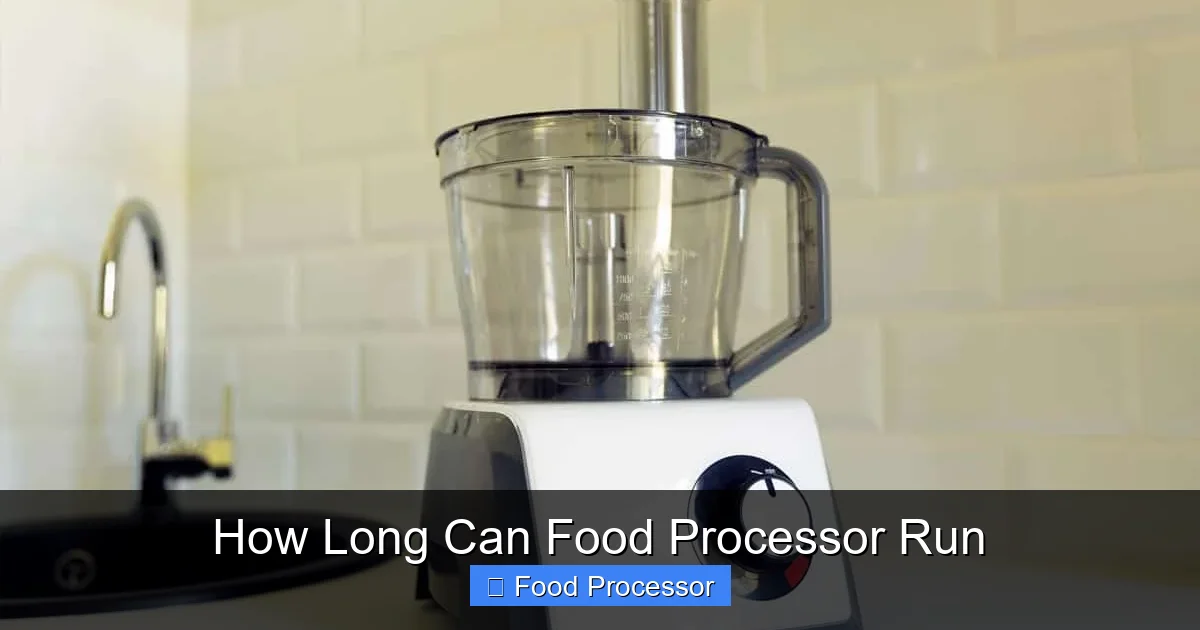
For most home cooks, the “pulse” button is your food processor’s best friend. It’s designed to give you bursts of power rather than continuous operation, and it’s the secret to control and safety.
Why Pulsing is Your Best Friend
Pulsing gives you precise control over the texture of your food. Instead of holding the button down, you press and release it in quick succession. This allows the blades to chop, mix, or blend in short bursts, letting you observe the consistency of your ingredients and stop exactly when desired. More importantly, pulsing allows the motor to rest briefly between rotations, preventing it from overheating, especially when dealing with tough ingredients.
When to Use Continuous Run
While pulsing is king for most tasks, there are times when a continuous run is appropriate. This usually applies to tasks that require a very smooth consistency, like pureeing soups, making smooth nut butter, or emulsifying dressings. Even then, it’s wise to run for short intervals (e.g., 30-60 seconds) and then check the consistency, giving the motor a quick break before continuing if needed.
Step 3: Consider the Food Type and Task
Visual guide about How Long Can Food Processor Run
Image source: windows-cdn.softpedia.com
The kind of food you’re processing and the task at hand greatly influence how long your food processor can run.
Soft vs. Hard Ingredients
Processing soft ingredients like cooked vegetables or soft fruits is less taxing on the motor than hard ingredients like raw carrots, nuts, or ice.
- Soft Ingredients: For pureeing cooked squash or making a smooth sauce, you might run it continuously for 30-60 seconds, with pauses to scrape down the sides.
- Hard Ingredients: When chopping hard vegetables or nuts, stick to short, sharp pulses (5-10 seconds at a time) to avoid straining the motor and to prevent over-processing.
Wet vs. Dry Ingredients
The moisture content also plays a role.
- Dry Ingredients: Grinding dry items like spices or coffee beans can create a lot of friction and heat, so it’s best to use short pulses and allow the motor to cool. If you’re wondering, can you use food processor to grind coffee beans, the answer is yes, but with care!
- Wet Ingredients: Soups or batters might run smoothly for longer, but still, be mindful of the overall run time.
Common Tasks and Their Typical Durations
Here are some general guidelines for specific tasks:
- Chopping (onions, herbs, nuts): 5-20 seconds using pulses. Stop as soon as desired consistency is reached.
- Shredding (cheese, cabbage): 30-60 seconds continuous, or until all ingredients are shredded. For tasks like how to use food processor to shred cabbage, you’ll feed items through the chute, making it a more continuous operation.
- Slicing (cucumbers, potatoes): Very fast, usually 10-30 seconds, feeding items through the chute.
- Pureeing (soups, sauces, baby food): 1-2 minutes, typically in 30-60 second bursts with pauses.
- Dough Kneading: Many food processors can knead dough, but it’s a heavy task. Often 30-90 seconds of continuous running is recommended, but check your manual.
- Grinding (meat, nuts for butter): This is very demanding. Use short bursts (15-30 seconds), then give the motor a 1-2 minute rest between cycles to prevent overheating.
Step 4: Pay Attention to the Motor and Sounds
Your food processor will “talk” to you if it’s struggling. Learning to listen and observe is a critical part of knowing how long your food processor can run.
Listen for Strain
A healthy food processor motor has a consistent hum. If you hear the motor pitch change significantly, struggle, or sound like it’s whining or groaning, it’s a sign that it’s working too hard. This is your cue to stop immediately. The motor might be overloaded, or the ingredients might be too tough.
Overheating Warning Signs
The most obvious sign of overheating is a burning smell. This indicates that the motor is getting too hot and components might be at risk. If you smell anything burning, turn off the food processor immediately, unplug it, and let it cool down completely (at least 30 minutes, or even an hour) before attempting to use it again. You might also feel the motor housing getting excessively hot to the touch.
Step 5: Practice the “Rest and Recover” Method
Just like an athlete, your food processor needs breaks to perform its best and last longer.
The Importance of Breaks
Even if your manual specifies a certain continuous run time (e.g., 2 minutes), it’s a good practice to give the motor a short break every 30-60 seconds, especially for strenuous tasks. This allows the motor to dissipate heat and prevents it from reaching critical temperatures.
How Long to Rest Your Food Processor
For short breaks during a task, even 10-15 seconds of rest can be beneficial. If you’ve run it continuously for its maximum recommended time, or if you notice any signs of strain or heat, let it rest for a minimum of 5-10 minutes, or until the motor housing feels cool to the touch. For significant overheating, a longer break (30 minutes or more) is essential.
Step 6: Avoid Overloading Your Food Processor
Overloading is one of the quickest ways to strain your food processor’s motor and reduce its lifespan.
Respect the Fill Line
Your food processor bowl has a maximum fill line, usually marked on the side. This isn’t just a suggestion; it’s a critical limit. Exceeding this line means the motor has to work harder to move the blades through a denser or larger volume of food, increasing the risk of overheating and damage.
Process in Batches
If you have a large quantity of food to process, resist the urge to cram it all in at once. Instead, divide your ingredients into smaller, manageable batches. This allows the food processor to work efficiently without strain, ensuring even processing and preventing the motor from overworking. It might take a little longer, but it’s much better for your appliance in the long run.
Troubleshooting: When Your Food Processor Acts Up
Even with the best care, sometimes your food processor might misbehave. Here’s what to do if it stops or seems problematic.
What to Do If It Stops Unexpectedly (Overload Protection)
Most modern food processors come with a thermal overload protection feature. If the motor gets too hot or is overworked, the appliance will automatically shut off to prevent damage. If this happens:
- Turn the unit off and unplug it from the wall.
- Remove the bowl and empty its contents.
- Let the food processor cool down completely. This can take 15-30 minutes, or even longer depending on how hot it got.
- Once cooled, plug it back in and try again, but with a smaller batch or less strenuous ingredients.
Dealing with Smoke or Burning Smells
If you see smoke or smell a strong burning odor, immediate action is crucial:
- Turn off and unplug the food processor *immediately*.
- Do NOT attempt to use it again until it has been inspected by a professional, or if the smell dissipates completely after a long cool-down. A burning smell often indicates motor damage, and continued use could be dangerous.
Blade Not Spinning
If your food processor is on but the blade isn’t spinning, check a few things:
- Is the bowl and lid assembled correctly and securely locked into place? Most food processors have safety interlocks that prevent operation if not assembled perfectly.
- Is the blade properly seated on the motor shaft?
- Is there too much food preventing the blade from moving?
- For more detailed help, our guide on how to fix food processor blade not spinning could provide solutions.
Advanced Tips for Optimal Performance
Beyond just knowing how long can food processor run, these tips will help you get the most out of your appliance.
Pre-Cutting Ingredients
Always cut larger ingredients into smaller, uniform pieces before adding them to the food processor. This reduces strain on the motor, ensures more even processing, and generally makes the process faster and more efficient. Think of it as giving your food processor a head start!
Using the Right Blade/Disc
Ensure you’re using the correct blade or disc for the task. The S-blade is for chopping, pureeing, and mixing, while various discs are designed for slicing and shredding. Using the wrong attachment can lead to inefficient processing and unnecessary motor strain. To learn more about getting started, see our article on how do you use a food processor step by step.
Maintaining Cleanliness
Regular cleaning not only keeps your food processor hygienic but also ensures its longevity. Food debris stuck in crevices can hinder performance or even cause motor issues over time. Make sure all removable parts are cleaned after each use.
Conclusion
Understanding how long your food processor can run is not just about avoiding damage; it’s about mastering your kitchen tools to achieve culinary excellence. By consulting your manual, embracing the pulse technique, listening to your appliance, and practicing good habits like batch processing and taking breaks, you’ll ensure your food processor operates efficiently, safely, and lasts for many years to come. So go ahead, process with confidence, and enjoy the convenience your food processor brings to your cooking!
