

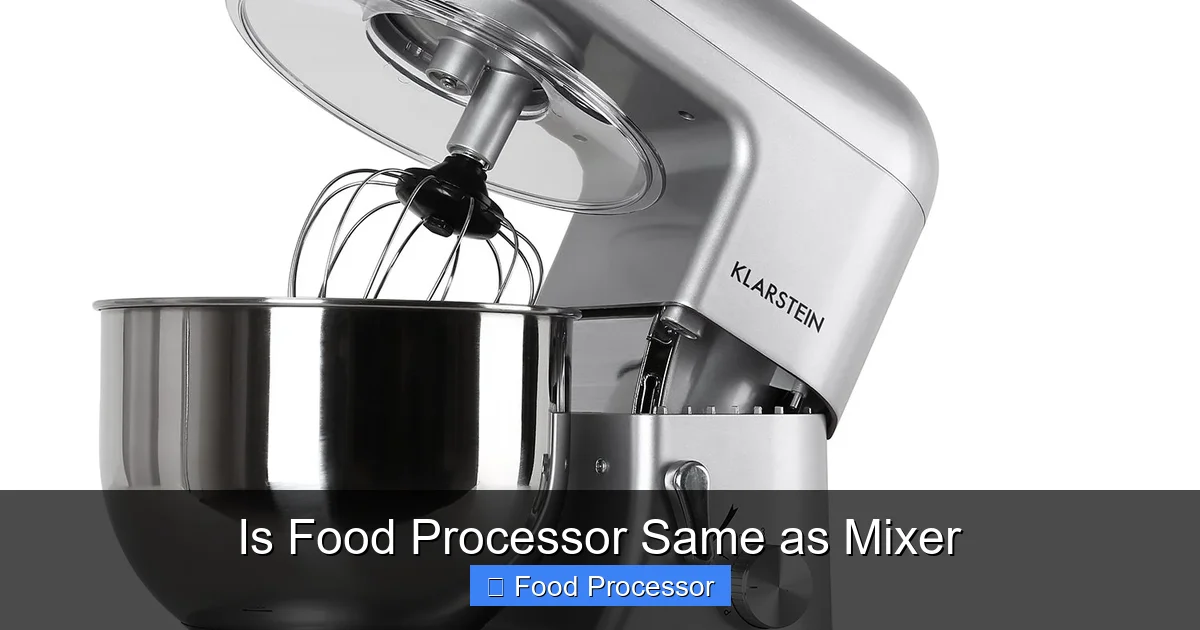
Many home cooks wonder, “Is food processor same as mixer?” The short answer is no; while both are valuable kitchen appliances, they are designed for distinct tasks. A food processor excels at chopping, slicing, shredding, and pureeing, utilizing sharp blades and various discs. Conversely, a mixer, whether hand or stand, is primarily for combining, beating, whisking, and kneading ingredients, using rotating attachments like whisks and dough hooks. Understanding their specific strengths will help you choose the right tool for every culinary endeavor.
Is Food Processor Same as Mixer? A Comprehensive Guide to Kitchen Appliances
It’s a common question that pops up in many home kitchens: “Is a food processor the same as a mixer?” At first glance, both appliances sit on your counter, have bowls, and use motor power to prepare ingredients. However, delving deeper reveals that while they share some superficial similarities, their core functions, mechanisms, and ideal uses are remarkably different. Understanding these distinctions is key to maximizing your culinary efficiency and achieving perfect results every time.
In this comprehensive guide, we’ll demystify the food processor and the mixer. We’ll explore what each appliance does best, highlight their fundamental differences, and discuss situations where one might be used over the other – or even, if cautiously, as a substitute. By the end, you’ll have a clear understanding of these kitchen workhorses and know exactly which tool to reach for.
Key Takeaways
- Distinct Functions: Food processors are designed for chopping, slicing, shredding, and pureeing using sharp blades, while mixers (stand or hand) are for blending, whipping, beating, and kneading using rotating attachments.
- Blade vs. Attachment Action: Food processors use a central blade or discs that cut and process ingredients at high speeds. Mixers use paddle, whisk, or hook attachments that rotate to incorporate air, blend batters, or knead dough.
- Best for Solids vs. Liquids/Batters: Food processors shine with solid ingredients like vegetables, nuts, or cheese. Mixers are ideal for liquid or semi-liquid mixtures, creating fluffy batters, whipped creams, or elastic doughs.
- Limited Interchangeability: While there’s some overlap (e.g., a food processor can sometimes mix dense dough, or a mixer can mash soft ingredients), neither can fully replicate the other’s primary functions effectively.
- Consistency is Key: The food processor produces uniformly chopped or pureed textures, whereas a mixer focuses on even ingredient distribution, aeration, and gluten development.
- Consider Your Needs: Your typical cooking and baking habits should dictate which appliance is more essential or if both are necessary for your kitchen.
- Not a One-to-One Swap: Thinking of them as interchangeable will likely lead to suboptimal results and frustration; they are complementary tools.
Understanding the Basics: What is a Food Processor?
Let’s start by defining what a food processor is and what makes it unique.
What It Is
A food processor is a versatile kitchen appliance designed to automate many repetitive tasks in food preparation. Think chopping, slicing, shredding, grating, pureeing, and sometimes even kneading dough. Its primary strength lies in its ability to process solid and semi-solid ingredients quickly and efficiently.
How It Works
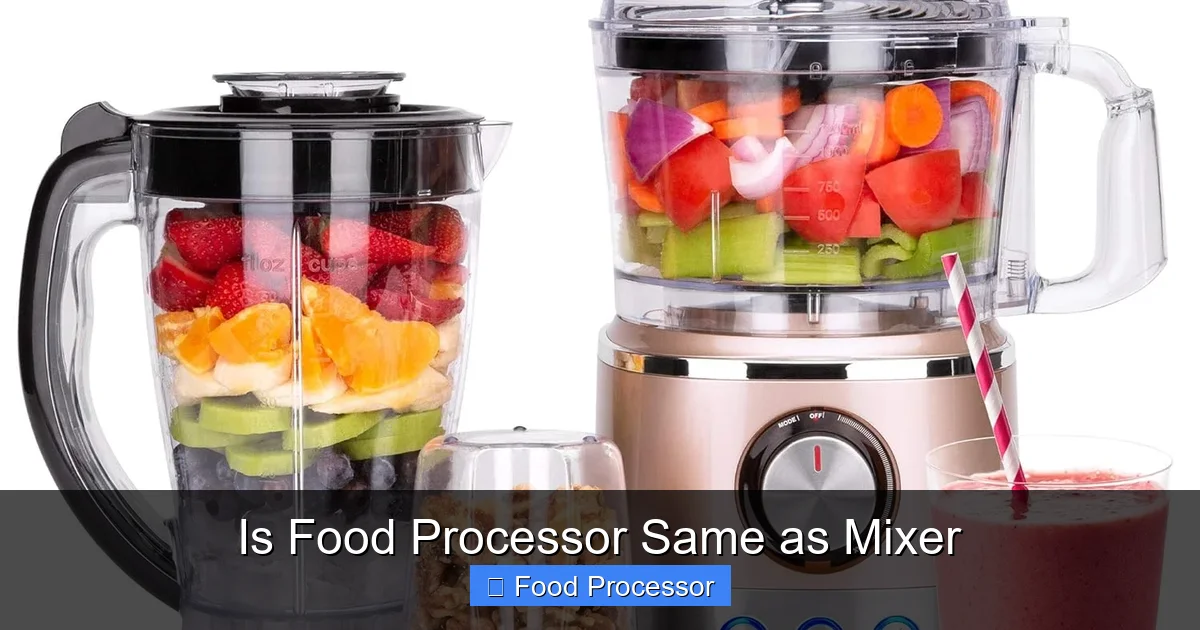
At the heart of a food processor is a powerful motor that drives a central spindle. Onto this spindle, you can attach various blades and discs. The most common attachment is the S-blade (also known as the chopping blade), a sharp, multi-pronged blade that sits at the bottom of the work bowl. Other attachments include slicing discs, shredding discs, and sometimes specialized dough blades or grater discs. Ingredients are dropped into the work bowl through a feed chute, and the rotating blades or discs swiftly cut and process them.
Common Tasks for a Food Processor
- Chopping: Onions, garlic, herbs, nuts, vegetables.
- Slicing: Cucumbers, potatoes, carrots, mushrooms for salads or gratins.
- Shredding/Grating: Cheese, cabbage for coleslaw, carrots.
- Pureeing: Soups, sauces, baby food, hummus, nut butters.
- Dough: Some food processors can knead bread or pastry dough, though often less effectively than a dedicated mixer.
- Crumbing: Breadcrumbs, cookie crumbs.
Understanding the Basics: What is a Mixer?
Now, let’s turn our attention to the mixer, another indispensable kitchen gadget.
What It Is
A mixer is an appliance primarily designed for combining, beating, whisking, and kneading ingredients. Unlike a food processor that cuts, a mixer incorporates ingredients by stirring or beating them together, often aerating them in the process. Mixers come in two main types: hand mixers and stand mixers.
Hand Mixers
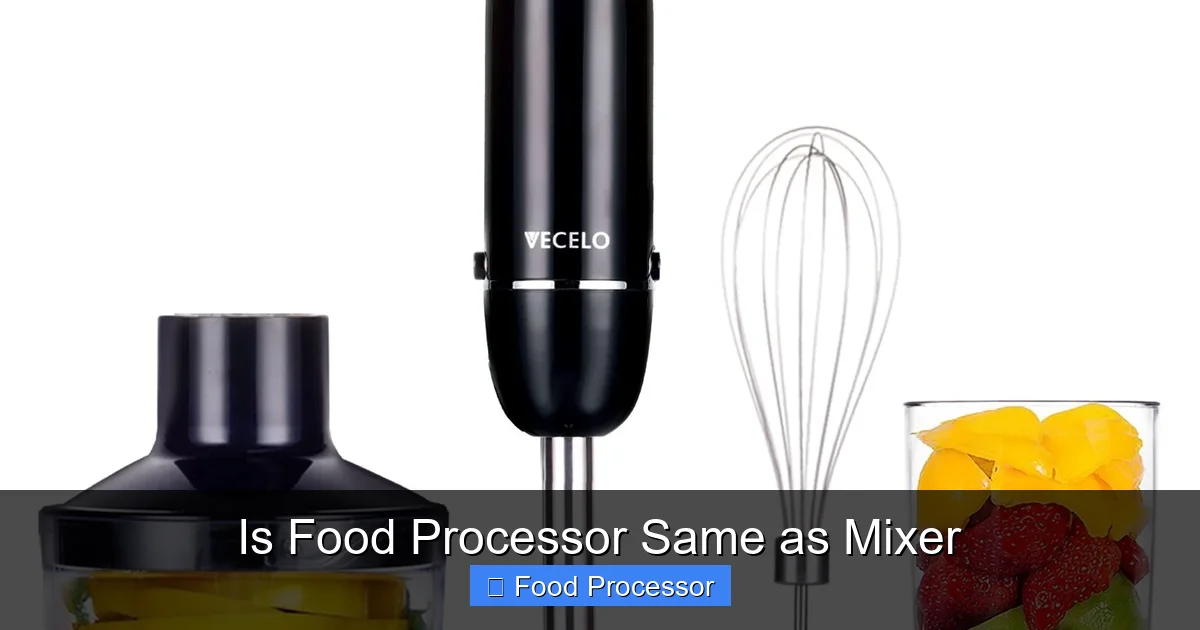
These are portable, handheld devices with two removable beaters. You hold the mixer and move it around a bowl to combine ingredients. They are lighter, more compact, and generally less powerful than stand mixers.
Stand Mixers
A stand mixer is a heavier, more robust appliance with a powerful motor housed in a stationary base. It has a bowl that locks into place and a head that either tilts back or lifts up to allow attachments to be fitted. Common attachments include a flat beater (paddle attachment), a wire whisk, and a dough hook.
How It Works
Mixers work by rotating their attachments at various speeds within a stationary bowl. The attachments stir, whip, beat, or knead ingredients, performing actions like incorporating air, blending wet and dry ingredients, or developing gluten in dough.
Common Tasks for a Mixer
- Whipping: Cream, egg whites for meringues, frosting.
- Beating: Eggs for omelets, cake batters, cookie doughs.
- Creaming: Butter and sugar for baking.
- Blending: Dry and wet ingredients for cakes, muffins, pancakes.
- Kneading: Bread dough, pizza dough (especially stand mixers with a dough hook).
- Mashing: Cooked potatoes or other soft vegetables.
The Core Differences: Food Processor vs. Mixer
This is where the distinction truly comes into play. While both are motor-driven appliances, their fundamental operational philosophies diverge significantly. If you’re pondering what is the difference between food processor and mixer, here are the key points.
1. Mechanism of Action
- Food Processor: Relies on sharp blades or discs that *cut*, *shred*, or *slice* ingredients. The action is primarily about reducing ingredients in size or changing their shape. Think of it as a very fast knife.
- Mixer: Relies on rotating attachments that *combine*, *aerate*, or *knead* ingredients. The action is about blending, incorporating air, or developing structure (like gluten in dough). Think of it as a very fast spoon, whisk, or pair of hands.
2. Primary Purpose
- Food Processor: Best for *processing* solid or semi-solid ingredients. It excels at breaking down ingredients.
- Mixer: Best for *mixing* wet or dry ingredients to form batters, doughs, or creams. It excels at combining and aerating ingredients.
3. Attachments
- Food Processor: Features S-blades, slicing discs, shredding discs, grating discs.
- Mixer: Features beaters (paddle), whisks, dough hooks.
4. Ingredient Consistency
- Food Processor: Handles a wide range of consistencies, from hard vegetables (carrots, potatoes) and nuts to softer items and liquids for purees. It can turn solids into liquids, but often with a thicker, less airy consistency than a blender.
- Mixer: Primarily deals with ingredients that need to be blended, whipped, or kneaded. It’s excellent for creating light, airy textures (whipped cream, meringues) or developing elasticity in dough. It struggles with very hard, dry, or fibrous ingredients.
5. Bowl Design
- Food Processor: Typically has a wider, shallower work bowl with a central spindle and often a feed tube on the lid.
- Mixer: Stand mixers have a deeper, narrower mixing bowl designed to keep ingredients contained as the attachments rotate. Hand mixers use any bowl you choose.
Can a Food Processor Do a Mixer’s Job? (And Vice Versa)
This is where the “grey area” appears, and many people wonder about appliance interchangeability.
Can a Food Processor Be Used as a Mixer?
In some very limited scenarios, yes, but often with compromises.
- Dough: Some food processors come with a plastic dough blade and can handle heavy doughs like bread or pizza dough. However, they tend to develop gluten less effectively than a stand mixer, often resulting in a denser final product. For delicate pastry dough, a food processor can be excellent as it minimizes overworking.
- Mashing: For mashing cooked potatoes or similar soft vegetables, a food processor can work, but it often creates a gluey, over-processed texture rather than the fluffy result of a mixer.
- Creaming Butter and Sugar: A food processor can combine butter and sugar, but it won’t cream them in the same way a mixer does. Creaming requires incorporating air, which the food processor’s blades don’t do effectively, leading to a less airy, denser bake.
- Whipping Cream/Egg Whites: A food processor is generally unsuitable for whipping cream or egg whites to stiff peaks. Its blades will simply chop the ingredients, resulting in a liquid or chunky mess, not the desired airy foam. If you’re wondering, can you use food processor instead of mixer for these tasks, the answer is generally no.
Can a Mixer Be Used as a Food Processor?
Again, with significant limitations.
- Chopping/Slicing/Shredding: A mixer cannot perform any of these functions. It has no sharp blades or discs for cutting.
- Pureeing: A mixer can mash very soft, cooked ingredients, but it cannot puree raw, hard, or fibrous foods into a smooth consistency like a food processor or a blender can.
- Nut Butters/Hummus: A mixer lacks the power and blade design to break down nuts or chickpeas into a smooth butter or hummus.
So, while there might be a rare overlap in tasks like preparing certain doughs (and even then, with varying results), neither appliance can truly replace the other for its primary functions. If you were considering can a food processor be used as a stand mixer, it’s clear they serve different masters.
When to Use Which: Practical Scenarios
Let’s look at specific cooking situations to determine which tool is best.
Reach for the Food Processor When:
-
You Need to Chop or Mince Large Quantities
Making a big batch of salsa? Chopping multiple onions for a soup base? The food processor makes quick work of these tasks, saving you time and tears.
Visual guide about Is Food Processor Same as Mixer
Image source: images-na.ssl-images-amazon.com
Visual guide about Is Food Processor Same as Mixer
Image source: images-na.ssl-images-amazon.com
-
You’re Preparing Firm Vegetables
Shredding cabbage for coleslaw, slicing potatoes for gratin, or grating hard cheese are effortless with a food processor’s specialized discs.
-
You’re Making Dips, Spreads, or Purees
Hummus, pesto, baba ghanoush, or smooth vegetable purees are perfectly suited for the food processor. Its powerful motor and S-blade create smooth, consistent textures.
-
You’re Making Breadcrumbs or Crushing Cookies
Quickly turn stale bread into fine breadcrumbs or cookies into a pie crust base.
-
You’re Making Nut Butters or Grinding Nuts
The food processor can transform roasted nuts into creamy nut butter or finely grind them for flour or toppings.
Reach for the Mixer (Hand or Stand) When:
-
You’re Baking Cakes, Cookies, or Muffins
Blending wet and dry ingredients, creaming butter and sugar, or incorporating eggs into a batter are a mixer’s primary domain. It ensures even distribution and proper aeration.
-
You Need to Whip Air into Ingredients
Making fluffy whipped cream, stiff meringue, or airy frosting requires the whisk attachment of a mixer. It excels at incorporating air for light, voluminous results.
-
You’re Kneading Dough
For most bread or pizza doughs, a stand mixer with a dough hook is invaluable. It efficiently kneads the dough, developing gluten for a chewy texture, saving your arms a strenuous workout.
-
You’re Making Frostings or Icings
From simple buttercream to elaborate Swiss meringue buttercream, a mixer provides the consistent, steady beating required for smooth, well-aerated frostings.
-
You’re Mashing Soft Cooked Ingredients
While a food processor can technically mash, a mixer (especially a stand mixer with the paddle attachment) provides a fluffier, less gluey texture for mashed potatoes, sweet potatoes, or cooked squash.
Choosing the Right Tool for Your Kitchen
Deciding which appliance to buy first, or if you need both, depends on your cooking habits.
* **If you mostly cook savory meals:** You often chop vegetables, make sauces, or prepare dips. A food processor will be your best friend.
* **If you are an avid baker:** You frequently make cakes, cookies, breads, or pastries. A stand mixer is almost a necessity. A hand mixer is a good budget-friendly alternative for lighter baking tasks.
* **If you do a bit of everything:** Many home cooks find that having both a food processor and a stand mixer significantly expands their culinary capabilities and streamlines prep time. They are complementary tools, not interchangeable ones.
Consider your kitchen space, budget, and how often you’ll genuinely use each appliance.
Tips for Maximizing Both Appliances
To get the most out of your food processor and mixer:
1. Read the Manuals: Each appliance has specific instructions, recommended speeds, and care tips.
2. Use the Right Attachment: Always select the correct blade or attachment for the task at hand. Using the wrong one can yield poor results or even damage the appliance.
3. Don’t Overfill: Overfilling bowls can strain the motor and lead to uneven processing or mixing. Work in batches if necessary.
4. Keep Them Clean: Clean components immediately after use to prevent food from drying and sticking, making them harder to clean later.
5. Understand Limitations: Don’t force an appliance to do something it’s not designed for. This prevents frustration and extends the life of your machines.
Troubleshooting Common Misunderstandings
Sometimes, when people try to use a food processor as a mixer or vice versa, they encounter problems.
* “My food processor made my cake batter dense!” This is likely because the food processor’s cutting action doesn’t aerate the batter like a mixer’s beating action would. It also over-processes gluten, leading to toughness. Stick to a mixer for light batters.
* “My mixer can’t chop these carrots!” Correct. Mixers aren’t designed for cutting. You need the sharp blades of a food processor for chopping hard vegetables.
* “My food processor splattered liquid everywhere when I tried to whisk eggs!” Again, the food processor’s high-speed blades will just cut through the liquid, creating a mess and failing to incorporate air. Use a mixer with a whisk attachment for this.
* “My stand mixer just couldn’t make a smooth hummus.” While a stand mixer can combine ingredients, it doesn’t have the sheer power or blade design to break down tough chickpeas into a creamy hummus like a food processor can.
These issues highlight that understanding the fundamental differences in their mechanisms is key to avoiding disappointment and achieving desired results.
Conclusion
In conclusion, to answer the question “Is food processor same as mixer?” definitively: no, they are not. While both are invaluable electric kitchen aids that simplify cooking, they serve distinct purposes. A food processor is your go-to for tasks requiring sharp, fast cutting, slicing, shredding, and pureeing of solid ingredients. A mixer, on the other hand, is the champion for blending, whipping, beating, and kneading, essential for creating airy batters, fluffy creams, and well-developed doughs.
Each appliance fills a unique role in the kitchen, making them complementary tools rather than interchangeable ones. Investing in both, if your culinary pursuits demand it, will undoubtedly enhance your cooking and baking experience, allowing you to tackle a wider range of recipes with ease and confidence. So, understand their strengths, respect their limitations, and enjoy the diverse possibilities each brings to your kitchen counter!
