

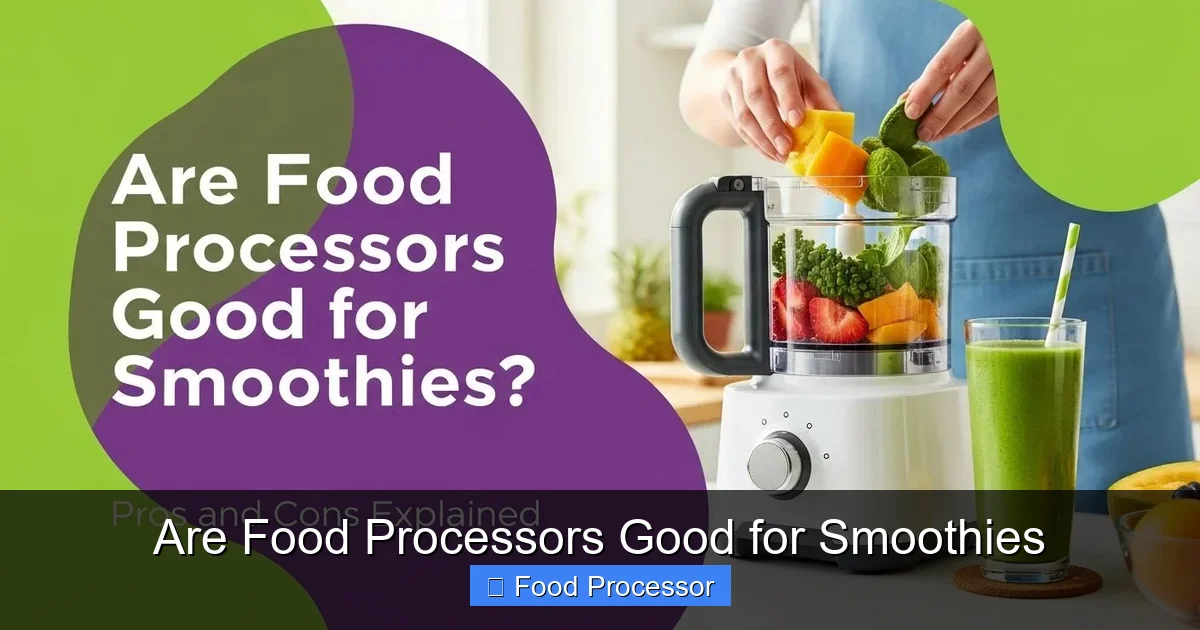
Wondering, “are food processors good for smoothies?” The answer is yes, with some caveats! While blenders are often preferred, a food processor can create delicious, thick smoothies, especially for recipes with less liquid or frozen fruit. Learn the best techniques, what to expect, and how to get great results from your trusty kitchen appliance.
Are Food Processors Good for Smoothies?
Have you ever found yourself craving a delicious, frosty smoothie, only to realize your blender is in the back of the cupboard, or perhaps you don’t even own one? Many home cooks wonder, “are food processors good for smoothies?” It’s a common question, and the good news is, your trusty food processor can absolutely come to the rescue!
While blenders are typically the go-to appliance for making smoothies, food processors offer a surprising level of versatility. They can handle a range of tasks from chopping vegetables to making dough, and yes, even blending up a tasty smoothie. This guide will walk you through everything you need to know about using a food processor for smoothies. We’ll explore the pros and cons, share a step-by-step method, provide expert tips, and help you troubleshoot common issues. By the end, you’ll be a pro at making great smoothies with the machine you already have!
Key Takeaways
- Capability: Food processors can make smoothies, especially thicker varieties or those with less liquid, but they are generally less efficient than blenders for a truly smooth, liquid consistency.
- Texture Expectation: Anticipate a thicker, sometimes chunkier smoothie when using a food processor. This is often ideal for smoothie bowls or recipes heavy on frozen ingredients and nut butters.
- Technique Matters: Proper layering of ingredients, starting with liquid, and utilizing the “pulse” function are crucial for preventing the motor from stalling and achieving the best results.
- Liquid is Key: Food processors typically require more liquid than blenders to create a smooth texture. Adjust your recipes accordingly to help the blades process ingredients effectively and prevent strain.
- Ice Limitations: Many food processors struggle with crushing large amounts of ice smoothly. This can lead to a grainy texture or potentially overworking the motor. Opt for smaller ice cubes or less ice.
- Not for Everyday Liquid Smoothies: If silky-smooth, highly liquid-based smoothies are a daily essential, investing in a dedicated blender is often a better choice. Food processors excel at other tasks, with smoothies being a secondary, albeit capable, function.
- Versatility Advantage: They handle tough, fibrous ingredients well and can be a great alternative if you don’t own a blender, offering significant versatility for various kitchen preparations.
Are Food Processors Good for Smoothies? The Honest Truth
Let’s get straight to the point: Yes, food processors can be good for smoothies, but with certain expectations and techniques. They aren’t designed exactly like blenders, which typically have taller, narrower jars and powerful motors optimized for liquidizing ingredients and creating a vortex. Food processors, on the other hand, have wider bowls and S-shaped blades that are fantastic for chopping, puréeing thick mixtures, and breaking down solids.
This difference in design means that while you can make a smoothie, the consistency might be different from what you’d get from a high-speed blender. Food processors often yield a thicker, sometimes slightly chunkier smoothie, especially if you’re heavy on frozen fruits or vegetables. But for those who love a hearty smoothie bowl or a very thick, spoonable drink, a food processor can be a fantastic tool. If you’re specifically looking to buy an appliance that excels at smoothies, you might want to consider what makes a best food processor for smoothies to ensure it meets your needs.
The Advantages of Using a Food Processor for Smoothies
Visual guide about Are Food Processors Good for Smoothies
Image source: kitchenwaresets.com
Even with the design differences, there are several benefits to using a food processor to make your favorite blended drinks.
They Excel at Thick Consistencies
If you love smoothie bowls or very thick, spoonable smoothies, a food processor is your friend. Its wide base and strong blades are great for handling less liquid, yielding a dense, rich texture that blenders sometimes struggle with unless they are very high-powered.
Handles Tougher Ingredients
Food processors are built to handle tough jobs. This means they can make quick work of fibrous ingredients like spinach, kale, or dates, which might strain a less powerful blender. This capability is one of the general advantages of a food processor, extending to smoothie making.
Versatility in Your Kitchen
One of the biggest advantages is that you might already own one! If you’re not ready to invest in a dedicated blender, your food processor offers a convenient alternative. It’s a multi-tasking champion, capable of so much more than just smoothies.
Great for Small Batches
Many food processors come with smaller work bowls, which can be perfect for single servings or small batches of smoothies, preventing ingredients from splashing around in a large blender jar.
The Limitations and Disadvantages
Visual guide about Are Food Processors Good for Smoothies
Image source: kitchenappliancehq.com
While food processors are capable, they do have some drawbacks when it comes to smoothie making.
Not as Smooth as a Blender
The primary limitation is achieving that perfectly silky-smooth, liquid consistency. Food processors can leave tiny bits of fruit or fibrous greens, especially if you don’t add enough liquid or process long enough.
Struggles with Ice
Many food processors are not ideal for crushing large amounts of ice into a fine consistency. The blades might just push the ice around, or it could lead to a grainy texture. For recipes heavy on ice, you might find yourself disappointed. If crushing ice is a priority for your smoothies, you’d want to look into the best food processor for crushing ice, which might have stronger motors or specific blades.
Requires More Liquid
To get things moving and prevent the motor from stalling, you’ll often need more liquid in a food processor than you would in a blender. This can sometimes dilute the flavor or change the desired consistency.
Risk of Overheating
Since food processors aren’t designed for continuous high-speed blending, prolonged processing of very thick mixtures or hard ingredients can strain the motor and potentially lead to overheating.
Capacity Constraints
While some food processors have large bowls, the effective blending capacity can be less than a comparable blender, especially if you need enough liquid to cover the blades.
When to Choose a Blender vs. a Food Processor for Your Smoothie
Knowing when to reach for which appliance can save you time and frustration.
Choose a Blender if:
- You want a super smooth, liquid consistency without any chunks.
- Your recipe includes a lot of ice or requires finely crushed ice.
- You make smoothies frequently and want minimal effort.
- You prefer very thin, drinkable smoothies.
Choose a Food Processor if:
- You prefer thick, spoonable smoothies or smoothie bowls.
- Your recipe is heavy on frozen fruit, nuts, or tough greens.
- You don’t own a blender or want to use the appliance you already have.
- You’re making a smaller batch and don’t want to dirty a large blender.
- You don’t mind a slightly chunkier texture.
In summary, can a food processor be used to make smoothies? Absolutely. It’s a capable tool, especially if you understand its strengths and weaknesses compared to a dedicated blender.
How to Make a Smoothie with a Food Processor: A Step-by-Step Guide
Ready to whip up some deliciousness? Follow these steps to make a fantastic smoothie using your food processor.
Gather Your Ingredients and Equipment
First, gather everything you need. This includes your food processor (with the S-blade installed), your chosen fruits, vegetables, liquids, and any protein powders or add-ins.
Prepare Your Ingredients
Cut all your solid ingredients into small, uniform pieces. This is crucial for a food processor, as it helps the blades process everything more evenly and efficiently. For example, chop frozen bananas into 1-inch chunks, and tear leafy greens into smaller pieces. Smaller pieces reduce the strain on your food processor’s motor and help achieve a smoother consistency.
Assemble Your Food Processor
Make sure your food processor is properly assembled. Secure the S-blade (also known as the chopping blade) onto the spindle in the work bowl. Then, attach the lid securely, ensuring all safety mechanisms are engaged. Never operate your food processor without the lid locked into place.
Add Ingredients in the Right Order
The order in which you add ingredients is vital for food processors.
- Start with Liquids: Pour in your chosen liquid first (milk, water, juice, yogurt, etc.). This helps lubricate the blades and get things moving.
- Add Softer Ingredients: Next, add softer ingredients like fresh fruit, nut butters, or protein powder.
- Layer in Leafy Greens: If using spinach or kale, add them now, pressing them down gently.
- Finish with Harder/Frozen Ingredients: Place your frozen fruits and any ice cubes on top. This allows the weight of these ingredients to push the softer ingredients down into the blades as they process.
Process Your Smoothie
Now it’s time to turn your ingredients into a smoothie!
Use the Pulse Function
Do not simply turn your food processor on and let it run continuously, especially at first. The “pulse” function is your best friend here. Pulse in short bursts (1-2 seconds at a time) to break down the ingredients. This prevents the motor from overheating and allows you to control the consistency. It also helps redistribute ingredients.
Scrape Down the Sides
After several pulses, you’ll notice ingredients sticking to the sides of the bowl. Stop the food processor, remove the lid, and use a spatula to scrape down the sides, pushing everything towards the blade. Replace the lid and continue pulsing. You might need to do this several times.
Add More Liquid if Needed
If your smoothie is too thick and the blades are just spinning without processing the ingredients, add a tablespoon or two of liquid at a time through the feed tube while pulsing. Be conservative; you can always add more, but you can’t take it away.
Check Consistency and Serve
Once you’ve pulsed and scraped and added liquid as needed, check the consistency. If you’re happy with it, your smoothie is ready! Pour it into a glass or bowl and enjoy immediately. If it’s still too chunky for your liking, continue pulsing until you reach your desired texture.
Tips for Achieving the Best Food Processor Smoothies
With a few smart tricks, you can elevate your food processor smoothie game.
- Use Plenty of Frozen Fruit: Frozen fruit helps create a thick, cold smoothie without needing too much ice. It also gives the food processor something substantial to work on.
- Cut Ingredients Small: We can’t stress this enough. Smaller pieces mean less work for your machine and a smoother result.
- Start with Liquids and Softer Items: Always build your smoothie from the bottom up: liquid, then soft fruit, then greens, then frozen fruit/ice. This gives the blades the best chance to grab and process everything.
- Patience and Scraping: Don’t rush it. The pulse-and-scrape method is key. A food processor might take a bit longer than a blender, but the results are worth the effort.
- Don’t Overfill: Overfilling your food processor bowl will prevent the ingredients from circulating properly and strain the motor. Stick to the maximum fill line, or even a little below for very thick mixtures.
- Consider a Powerful Model: If you plan on making smoothies often with your food processor, a model with a robust motor will handle the task more efficiently and last longer.
- Add Protein or Fiber: Boost your smoothie’s nutritional value by adding protein powder, chia seeds, or flax seeds. These can also help thicken the smoothie slightly.
Troubleshooting Common Food Processor Smoothie Issues
Even with the best tips, you might encounter a few hiccups. Here’s how to fix them.
Smoothie is Too Chunky
This is the most common complaint.
- Solution: Continue pulsing, scraping down the sides often. Add a tablespoon or two more liquid (water, milk, juice) to help the blades catch the ingredients. Ensure all solid ingredients were cut into small pieces initially.
Smoothie is Too Thick/Stalling
If your food processor blades are just spinning and not cutting, or the motor sounds like it’s struggling.
- Solution: Stop the machine immediately to prevent overheating. Add more liquid, 1-2 tablespoons at a time, and pulse again. Use your spatula to move ingredients around, especially from under the blades. Break up any large clumps of frozen fruit.
Smoothie is Too Watery
This happens if you add too much liquid.
- Solution: If you’ve gone overboard, add more frozen fruit or a handful of ice cubes, or even a scoop of rolled oats (which will thicken it over time). If you don’t have frozen fruit, adding a scoop of protein powder or chia seeds can also help thicken it.
Loud Noise/Motor Straining
If your food processor sounds unusually loud or is struggling, it’s a sign of stress.
- Solution: Stop the machine. This usually means the mixture is too thick, or there are pieces too large for the blade to handle efficiently. Add more liquid, break up ingredients, or remove some of the mixture to process in smaller batches.
Cleaning Your Food Processor After Making Smoothies
Cleaning up is just as important as blending. Proper cleaning extends the life of your appliance.
Quick Rinse
As soon as you’ve poured out your smoothie, give the work bowl, lid, and blade a quick rinse under warm running water. This prevents ingredients from drying and sticking, making thorough cleaning much easier.
Disassemble and Wash
Carefully remove the blade and separate all parts. Wash the work bowl, lid, and blade with warm, soapy water. Use a brush for any hard-to-reach areas around the blade and crevices in the lid. Most food processor parts are top-rack dishwasher safe, but always check your manufacturer’s instructions.
Drying
Allow all parts to air dry completely before reassembling or storing. This prevents mold and mildew buildup and keeps your food processor ready for its next task.
Conclusion
So, are food processors good for smoothies? The definitive answer is yes, they certainly can be! While a dedicated blender might offer a silkier, more liquid consistency, your food processor is an excellent alternative, especially if you prefer thicker, more substantial smoothies or smoothie bowls. It’s a fantastic way to maximize the use of an appliance you likely already own.
By understanding the strengths and limitations of your food processor, following the correct ingredient layering technique, and using the pulse function effectively, you can create delicious, healthy, and satisfying smoothies. Don’t be afraid to experiment with different combinations and textures. Enjoy blending up your next culinary creation!
