
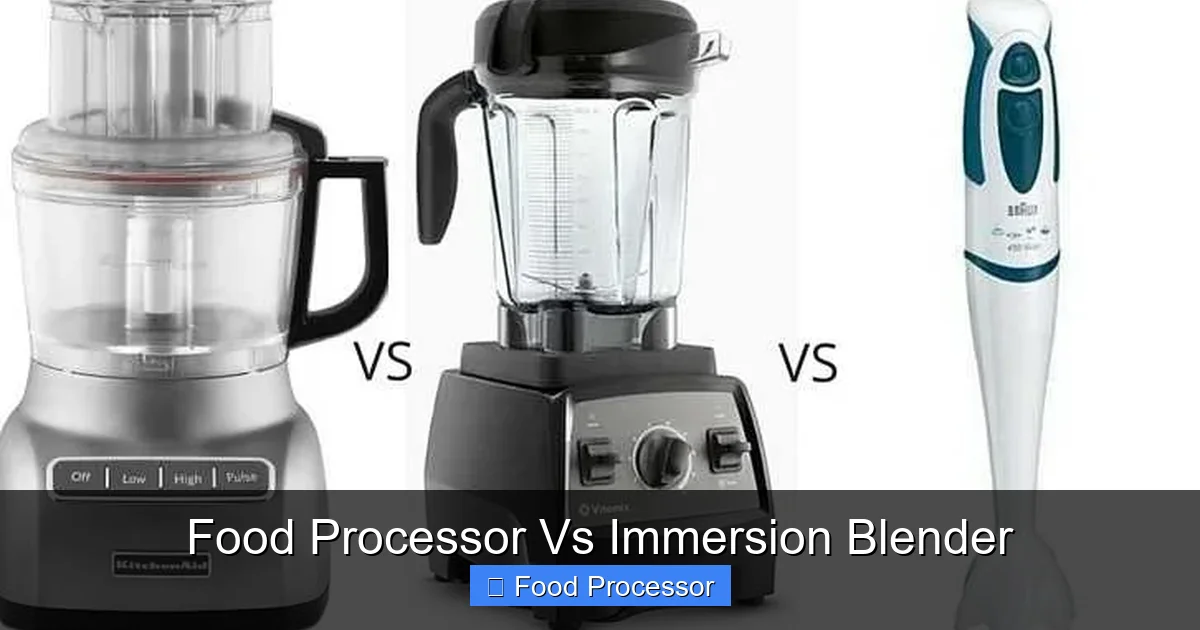
Deciding between a food processor and an immersion blender can be tricky, as both offer unique benefits for your kitchen. A food processor excels at heavy-duty tasks like chopping, slicing, shredding, and kneading dough, handling larger volumes with precision. An immersion blender, on the other hand, is perfect for blending directly in pots, creating smooth soups, sauces, and single-serve smoothies with minimal cleanup. Understanding their specific strengths will help you choose the right tool for every culinary challenge.
Food Processor Vs Immersion Blender
Welcome to the ultimate guide on two of the most popular and versatile kitchen appliances: the food processor and the immersion blender! Have you ever stood in your kitchen, recipe in hand, wondering which gadget to grab? Or perhaps you’re thinking about buying one and can’t decide which best fits your cooking style. You’re not alone! These two powerhouses, while both designed to simplify food prep, have distinct strengths and ideal uses.
In this comprehensive how-to guide, we’ll dive deep into the world of food processors and immersion blenders. You’ll learn exactly what each appliance does best, their key features, and their limitations. We’ll explore common tasks, compare their performance side-by-side, and give you practical tips to get the most out of whichever tool you choose – or even both! By the end, you’ll be a pro at knowing when to reach for your trusty food processor and when an immersion blender is the perfect tool for the job.
Key Takeaways
- Food Processors Excel at Prep: Food processors are ideal for tasks like chopping vegetables, slicing, shredding cheese, making dough, and producing consistent purees in larger batches.
- Immersion Blenders Shine for Blending in Place: Immersion blenders are perfect for blending directly in pots, making smooth soups, sauces, gravies, and small-batch smoothies or salad dressings without transferring ingredients.
- Capacity and Mess Differ Significantly: Food processors typically have larger work bowls and can handle more volume but involve more parts for cleanup. Immersion blenders are compact, versatile for various container sizes, and generally easier to clean for quick tasks.
- Texture Control Varies: Food processors offer more nuanced texture control with pulse functions and various blades/discs for chopping, shredding, or fine pureeing. Immersion blenders primarily create smooth, even textures for liquids and soft foods.
- Consider Your Primary Needs: If you frequently prep large quantities of ingredients, make dough, or need diverse textures, a food processor is your go-to. If you mostly make soups, sauces, or smoothies and value convenience and easy cleanup, an immersion blender is better.
- Complementary, Not Mutually Exclusive: Many home cooks find both appliances invaluable, as they fulfill different roles in the kitchen, often complementing each other for a wide range of recipes.
Understanding the Food Processor
Think of a food processor as your kitchen’s ultimate prep assistant. It’s designed to handle a wide range of tasks, from chopping vegetables to kneading dough, all with impressive speed and efficiency.
What is a Food Processor?
A food processor is an electric kitchen appliance with a powerful motor base, a large work bowl, and various interchangeable blades and discs. It’s built for mechanical food preparation, significantly reducing the manual effort and time typically involved in chopping, slicing, grating, and mixing.
Key Components and Functions
A typical food processor includes:
- Motor Base: The heavy base houses the motor that powers the blades.
- Work Bowl: A transparent bowl (usually 7-14 cup capacity for full-size models) that locks onto the base and holds your ingredients.
- Lid with Feed Tube: The lid seals the work bowl and often includes a feed tube for adding ingredients while the machine is running.
- S-Blade (Chopping Blade): This is the standard blade, shaped like an “S,” used for chopping, mincing, pureeing, and mixing.
- Shredding/Grating Disc: A flat disc with raised holes for shredding cheese, vegetables, or nuts.
- Slicing Disc: A flat disc with a sharp blade for uniformly slicing fruits and vegetables.
- Dough Blade (Plastic Blade): Some models include a blunt plastic blade specifically for kneading dough.
Advantages of a Food Processor
- Versatility: Food processors are incredibly versatile, capable of performing many tasks. They can chop, mince, slice, shred, grate, puree, mix, and even knead dough.
- Speed and Efficiency: They significantly speed up prep time for large quantities, making them invaluable for meal prepping or cooking for a crowd.
- Consistent Results: With various blades and powerful motors, they deliver uniform results, whether you’re slicing potatoes or chopping onions.
- Heavy-Duty Tasks: They can handle tough ingredients like hard cheeses, nuts, and root vegetables with ease.
Disadvantages of a Food Processor
- Size and Storage: Food processors can be bulky and take up significant counter or cabinet space.
- Cleanup: They have multiple parts (bowl, lid, blade, pusher) that need to be washed, which can be more involved than smaller appliances.
- Not Ideal for Liquids: While they can puree, they aren’t designed for blending large volumes of liquid, as they can leak from the lid. They also don’t achieve the same silky-smooth texture for drinks as a dedicated blender.
- Cost: Quality food processors can be a significant investment.
Understanding the Immersion Blender
Also known as a stick blender or hand blender, the immersion blender is a sleek, handheld tool perfect for quick blending tasks directly in your cooking vessel.
What is an Immersion Blender?
An immersion blender is a long, narrow handheld appliance with a motor at one end and a blending shaft with a protected blade at the other. Its key feature is its ability to blend food directly in the pot, bowl, or glass, eliminating the need to transfer hot liquids or large batches of ingredients.
Key Components and Functions
An immersion blender typically consists of:
- Motor Handle: The top part of the appliance, which you grip, contains the motor and control buttons.
- Blending Shaft: A long shaft, often detachable for cleaning, that connects the motor to the blade.
- Blending Head with Blade: At the very bottom of the shaft, a small blade is encased in a protective guard, preventing splashes and protecting your pots.
- Attachments (Optional): Many models come with whisk attachments, mini choppers, or frothing wands, adding to their versatility.
Advantages of an Immersion Blender
- Convenience and Speed: Its greatest advantage is the ability to blend directly in your cooking pot or serving bowl. This means less transferring, less mess, and faster cleanup. This makes it a popular choice when you need to make a smooth soup directly in the pot.
- Compact and Portable: Immersion blenders are slim and easy to store, making them great for small kitchens or for taking on the go.
- Easy Cleanup: Often, you only need to rinse the blending shaft under running water, making cleanup a breeze.
- Ideal for Liquids: They excel at pureeing soups, sauces, gravies, and making smoothies or milkshakes right in a tall glass.
- Portion Control: Great for blending small quantities or single servings.
Disadvantages of an Immersion Blender
- Limited Power and Capacity: While powerful for liquids, they may struggle with very hard ingredients or large, thick batches that a food processor would handle easily.
- Texture Limitations: They primarily create smooth, pureed textures. Achieving coarse chops or perfectly uniform slices is not possible.
- Splatter Risk: If not used carefully or if the blending head isn’t fully submerged, splashing can occur.
- Ergonomics: Holding and operating can sometimes be tiring for extended periods, especially for large batches.
Head-to-Head Comparison: Food Processor Vs Immersion Blender
Now let’s compare these two fantastic kitchen helpers directly across various common kitchen tasks.
1. Chopping, Slicing, and Shredding
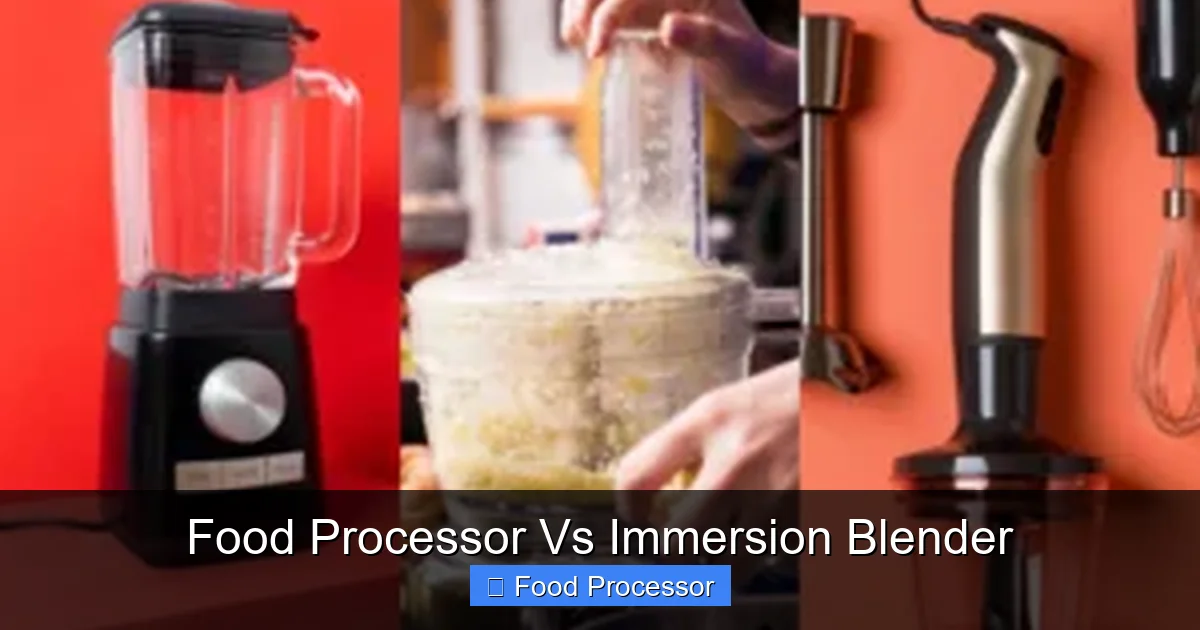
When it comes to precise and uniform chopping, slicing, or shredding, the food processor is the undisputed champion. Its sharp S-blade and various discs make quick work of vegetables, cheese, and nuts, delivering consistent results every time. Need to julienne carrots, shred cabbage for coleslaw, or slice potatoes for gratin? The food processor is your best friend.
Visual guide about Food Processor Vs Immersion Blender
Image source: livingcrunch.com
Visual guide about Food Processor Vs Immersion Blender
Image source: livingcrunch.com
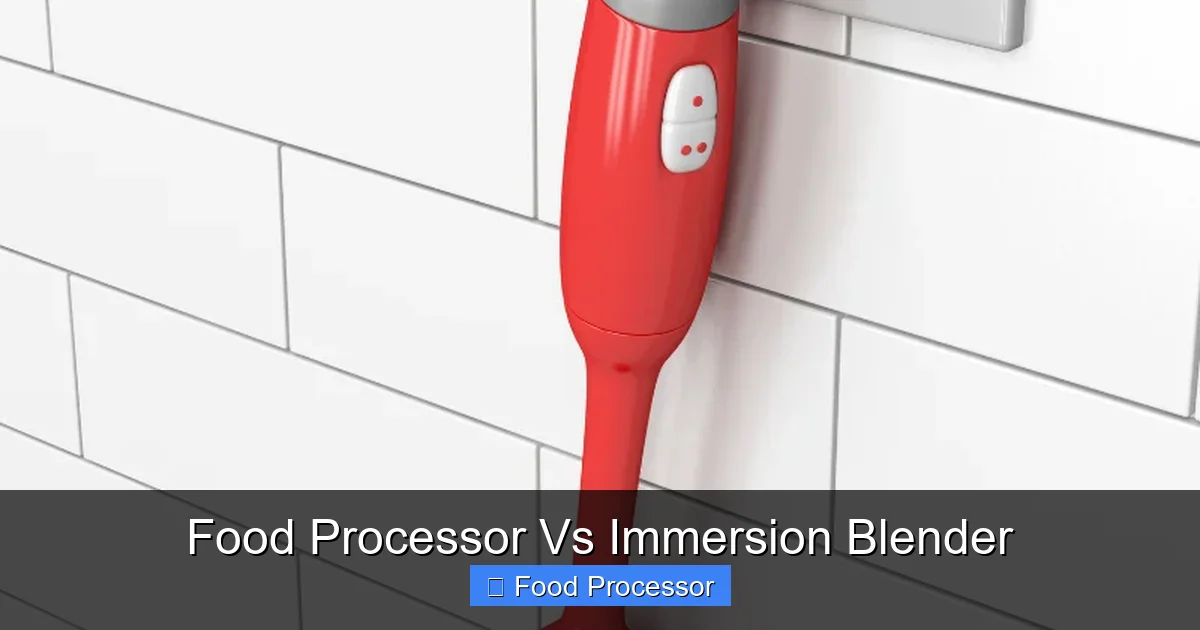
An immersion blender, on the other hand, cannot chop, slice, or shred. Its design is purely for blending and pureeing. If you’re looking for a tool primarily for these prep tasks, a food processor is essential.
2. Pureeing Soups and Sauces
This is where the choice often becomes less clear and depends heavily on your specific needs.
- Immersion Blender: Excels here, especially for hot liquids. You can blend an entire pot of soup directly on the stovetop, achieving a smooth, creamy consistency without any messy transfers. This convenience is a major time-saver. It’s also great for thickening gravies or making smooth sauces in a saucepan.
- Food Processor: Can also puree, but with a few caveats. You’ll need to transfer your soup or sauce in batches to the food processor’s work bowl, which can be cumbersome and messy, especially with hot liquids. While it can achieve a smooth puree, the texture might be slightly different than an immersion blender, and the cleanup is more involved.
3. Smoothies, Shakes, and Drinks
- Immersion Blender: Fantastic for single-serve smoothies or milkshakes made directly in a tall glass or a small pitcher. It’s quick, easy, and cleanup is minimal. However, it might struggle with very hard frozen fruits or large chunks of ice without added liquid.
- Food Processor: Not the ideal tool for most drinks. While it can technically blend ingredients for a smoothie, the work bowl isn’t designed for large volumes of liquid, increasing the risk of leaks. The texture might also be less smooth than a dedicated blender or immersion blender.
4. Making Dough and Batters
- Food Processor: A clear winner for dough. With its powerful motor and often a dedicated dough blade, it can quickly mix and knead bread dough, pie crusts, and cookie batters. This is a task an immersion blender simply cannot perform.
- Immersion Blender: Can handle thin batters like pancake batter or whisking eggs, especially if it has a whisk attachment. But for thick doughs, it’s completely unsuitable.
5. Nut Butters, Hummus, and Dips
For thick, creamy spreads like homemade peanut butter or a perfectly textured hummus, a food processor is the superior choice. Its powerful motor and S-blade are designed to break down nuts and chickpeas into a smooth, consistent paste. If you’re wondering whether to make hummus in a blender or food processor, the food processor generally delivers better results.
An immersion blender might handle very small batches of thinner dips, but it lacks the power and blade design to create the desired consistency for nut butters or robust hummus.
6. Emulsifying
Both appliances can emulsify, but they shine in different contexts.
- Immersion Blender: Excellent for small-batch emulsifications like homemade mayonnaise or salad dressings. Its small blending head and contained action help create a stable emulsion quickly, often right in a measuring cup.
- Food Processor: Can also emulsify larger batches using the S-blade and slowly drizzling in oil through the feed tube. It’s great for dressings or sauces that need more volume.
When to Choose a Food Processor
You should opt for a food processor if your cooking involves:
- Regularly chopping, slicing, or shredding large quantities of vegetables.
- Making homemade dough for bread, pies, or cookies.
- Preparing dips like hummus or pesto, or spreads like nut butter.
- Grating cheese for family meals.
- Need for consistent textures in preparation tasks.
If you’re still weighing your options, exploring whether you should get a food processor or an immersion blender based on your most frequent culinary needs can guide your decision.
When to Choose an Immersion Blender
An immersion blender is the perfect fit if you prioritize:
- Making smooth soups, sauces, and gravies directly in the pot.
- Whipping up single-serve smoothies or milkshakes quickly.
- Preparing small batches of salad dressings or mayonnaise.
- Minimal cleanup and easy storage.
- Blends liquids frequently and values convenience.
Can a Food Processor Be Used as an Immersion Blender?
This is a common question, and the answer is generally no. A food processor cannot be used as an immersion blender. They have fundamentally different designs and functions. An immersion blender is designed to be plunged into liquids, while a food processor’s blades are contained within its work bowl. Trying to use a food processor for tasks meant for an immersion blender would be ineffective and messy, and potentially dangerous. If you’re asking, “Can a food processor be used as an immersion blender?”, the simple answer is no due to their distinct operational mechanisms and safety features. While some food processors come with blending attachments, they do not replicate the ‘immersion’ capability.
Tips for Maximizing Your Appliances
For Your Food Processor:
- Don’t Overfill: Process in batches if necessary to avoid overloading the motor and ensure even processing.
- Use the Pulse Function: For coarse chopping or preventing over-processing, use short pulses instead of continuous blending.
- Cut Ingredients Evenly: For best slicing and shredding results, cut ingredients to fit the feed tube and ensure they are uniform in size.
- Clean Immediately: Food particles can dry and stick, making cleanup harder. Rinse components right after use.
For Your Immersion Blender:
- Submerge Fully: Always ensure the blending head is fully submerged in the liquid to prevent splattering.
- Angle Your Blending: Tilt the blender slightly and move it up and down in the pot to catch all ingredients and create a vortex for smooth blending.
- Start Low, Go Slow: Begin on a lower speed to prevent splashes, especially with hot liquids, and gradually increase as needed.
- Use a Tall Container: For smoothies or individual blends, use a tall, narrow container to minimize splatter and keep ingredients contained.
Troubleshooting Common Issues
Food Processor:
- Uneven Chopping: This usually happens when ingredients aren’t cut to uniform size or the work bowl is overfilled. Process in smaller batches and ensure ingredients are similar in size.
- Blade Not Spinning: Check if the work bowl and lid are correctly assembled and locked into place. Most food processors have safety interlocks that prevent operation if not assembled properly. Also, check for blockages.
- Leaks: If blending liquids, ensure the lid is securely fastened. Avoid filling past the maximum liquid line.
Immersion Blender:
- Splattering: Ensure the blending head is fully submerged before starting, and begin on a low speed. Using a deeper container also helps.
- Struggling with Hard Ingredients: Immersion blenders are not designed for very hard items like whole ice cubes (unless it’s a very high-powered model) or frozen solid fruit without enough liquid. Let frozen items thaw slightly or add more liquid.
- Motor Overheating: If blending for extended periods, especially with thick mixtures, the motor can overheat. Give it a break to cool down.
Conclusion
Both the food processor and the immersion blender are incredibly valuable tools in the modern kitchen, each bringing its own set of strengths to the table. The choice between them, or the decision to own both, ultimately depends on your individual cooking habits, the types of dishes you prepare most often, and your kitchen space.
If you frequently engage in extensive meal prep, bake, or need to tackle tasks like chopping, slicing, shredding, and dough-making for larger quantities, a food processor will be your culinary workhorse. Its robust design and versatile attachments make it indispensable for serious cooking.
On the other hand, if convenience, quick cleanup, and the ability to blend directly in the pot for soups, sauces, and small-batch drinks are your priorities, the compact and efficient immersion blender is a fantastic investment. It simplifies many everyday tasks with minimal fuss.
Many home cooks find that owning both a food processor and an immersion blender provides the ultimate flexibility, allowing them to tackle virtually any kitchen task with ease. They aren’t replacements for each other but rather complementary tools that, when used correctly, can elevate your cooking experience and save you precious time and effort. So, assess your needs, consider the pros and cons, and choose the appliance (or appliances!) that will best empower your culinary adventures!
