

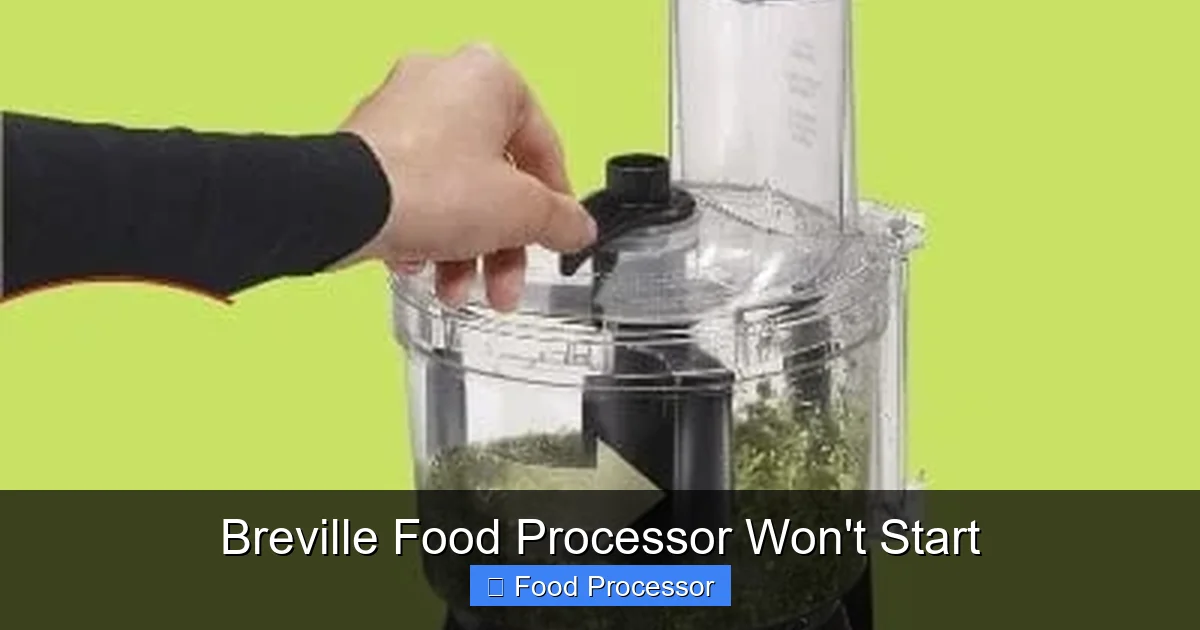
When your Breville food processor won’t start, it’s often due to easily fixable issues. Most problems stem from either a lack of power, incorrect assembly of the bowl and lid, or the motor’s safety overload protection being triggered. This guide will walk you through systematic checks to diagnose and resolve these common causes, helping you get your Breville food processor working again quickly.
Breville Food Processor Won’t Start
There’s nothing quite as frustrating as getting ready to cook, only to find your trusty Breville food processor won’t start. One moment it’s an indispensable kitchen workhorse, the next it’s a silent, stationary object. Don’t worry, you’re not alone. Many times, the issue is simple and can be resolved with a bit of systematic troubleshooting.
Breville food processors are known for their quality and thoughtful design, but like all appliances, they can occasionally encounter hiccups. Most models come equipped with various safety features. These are designed to protect you and the machine, but they can sometimes be the very reason your Breville food processor won’t start. This comprehensive guide will walk you through the most common reasons why your Breville food processor isn’t turning on and how to fix them, step by step. We’ll help you get back to chopping, slicing, and dicing in no time!
Key Takeaways
- Safety First: Always unplug your Breville food processor from the power outlet before performing any inspection or troubleshooting steps to prevent electric shock.
- Check Power Supply: Confirm the power cord is securely plugged in, test the outlet with another appliance, and check your home’s circuit breaker to rule out basic electrical issues.
- Ensure Proper Assembly: Breville food processors have crucial safety interlocks. The work bowl, lid, and food pusher must be correctly aligned and locked into place for the unit to start. This is a very common reason for a Breville food processor not starting.
- Prevent Motor Overload: Overfilling the bowl or processing extremely hard ingredients can trigger the motor’s thermal cut-off switch. Let the unit cool down and reduce the load.
- Inspect for Damage: Carefully examine the power cord, plug, work bowl, lid, and blades for any visible damage, cracks, or obstructions that might prevent proper operation.
- Consult the Manual: Your Breville food processor’s user manual contains specific assembly instructions and troubleshooting tips unique to your model. Always refer to it if you’re unsure.
Safety First: Always Unplug Your Breville Food Processor
Before you begin any troubleshooting or inspection, your absolute first step must be to ensure safety. Always unplug your Breville food processor from the electrical outlet. This prevents any risk of electric shock or accidental activation while you are working with the appliance. Safety is paramount when dealing with electrical devices, especially those with sharp blades.
Step 1: Check the Power Supply
It might seem obvious, but a surprising number of “Breville food processor won’t start” issues trace back to a simple power problem. Let’s make sure your machine is getting the electricity it needs.
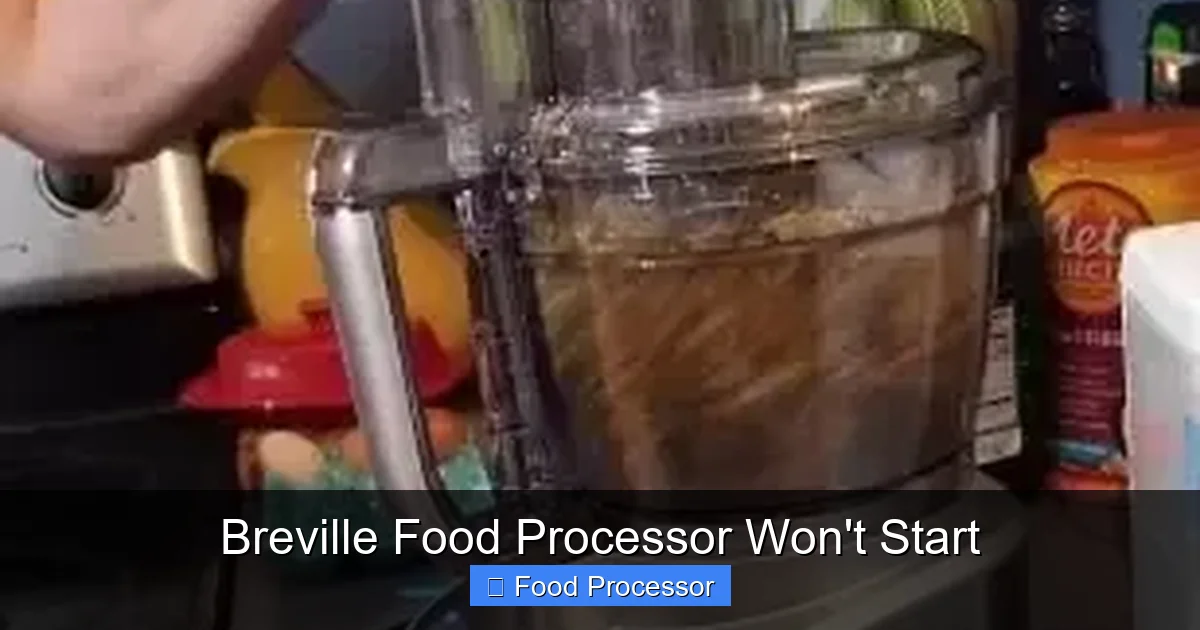
Visual guide about Breville Food Processor Won’t Start
Image source: beautifulkitchenguide.com
Is the Cord Plugged In Securely?
First, double-check that the power cord is firmly plugged into both the back of your Breville food processor and the wall outlet. Sometimes, a loose connection is all it takes to prevent your unit from powering on. Give it a gentle wiggle to ensure it’s snug.
Test the Power Outlet
Next, confirm that the electrical outlet itself is working. You can do this by plugging another small appliance, like a lamp or a phone charger, into the same outlet. If the other appliance doesn’t work either, then the problem isn’t your Breville food processor; it’s the outlet. If it does work, move on to the next check.
Reset Your Circuit Breaker
If the outlet isn’t working, your circuit breaker might have tripped. Go to your home’s electrical panel and look for any tripped breakers (they’ll often be in an “off” or middle position). Flip the breaker completely off and then firmly back to the “on” position. After resetting, go back and test the outlet again. This is a common solution for many kitchen appliance issues.
Step 2: Verify Proper Assembly and Safety Interlocks
Breville food processors are designed with multiple safety interlocks. These mechanisms prevent the motor from running unless all components are correctly assembled and locked into place. This is by far the most common reason why a Breville food processor won’t start. Even a slight misalignment can stop it dead in its tracks.

Visual guide about Breville Food Processor Won’t Start
Image source: beautifulkitchenguide.com
It’s helpful to understand how to assemble food processor step by step correctly, as improper assembly is a frequent culprit. Let’s go through the critical points.
Secure the Work Bowl Correctly
- Base Alignment: The work bowl needs to be placed onto the motor base and rotated clockwise until it securely locks into position. You’ll usually hear a click, and you’ll feel it settle. There are often arrows or indicators on the bowl and base that show correct alignment.
- Check for Gaps: Ensure there are no gaps between the bowl and the motor base. It should sit flush.
Align and Lock the Lid in Place
- Lid Orientation: The lid also has a specific way it must sit on top of the work bowl. Look for alignment arrows or markers on both the lid and the bowl.
- Rotate to Lock: Once placed, rotate the lid clockwise until it locks securely. Again, you should hear a click or feel it engage firmly. The handle of the lid typically aligns with the handle of the work bowl when correctly locked.
- Lid Safety Pin: Many Breville models have a safety pin or tab on the lid that must engage with a switch on the motor base. If the lid isn’t perfectly locked, this pin won’t activate the switch, and the food processor won’t start.
Engage the Food Pusher Properly
Some Breville food processor models require the food pusher (the part that fits into the feeding chute of the lid) to be in place for the unit to start, or at least for certain functions. Ensure it’s inserted fully into the chute. While not all models require this for the initial start, it’s a good practice to ensure all components are in their proper positions.
Ensure the Blade or Disc is Installed Firmly
- Correct Blade Type: Make sure you have the correct blade or disc inserted for the task.
- Shaft Engagement: The blade or disc must be placed onto the center spindle of the work bowl and pushed down firmly until it sits correctly. If it’s wobbling or not fully seated, it might prevent the motor from engaging due to a safety mechanism.
- No Obstructions: Double-check that no food particles or debris are preventing the blade from sitting flush on the spindle or the lid from closing properly.
Step 3: Address Motor Overload Protection
Breville food processors have a built-in safety feature to protect the motor from overheating and damage. If the motor is overworked, it will automatically shut down. This is known as thermal overload protection, and it’s another common reason why your Breville food processor won’t start.
Avoid Overfilling the Work Bowl
Putting too much food into the bowl at once forces the motor to work harder. Always adhere to the maximum fill lines indicated on your Breville food processor’s bowl. Overfilling can quickly lead to an overload shutdown.
Process Hard Ingredients in Smaller Batches
Hard ingredients like root vegetables, ice, or large chunks of cheese require more power to process. Instead of trying to process a large quantity at once, break them down into smaller, manageable batches. This reduces the strain on the motor and helps prevent it from overheating. If you’ve been working with a lot of tough ingredients and your Breville food processor suddenly stops, this is likely the cause.
Allow for Cooling Down and Resetting
If you suspect the motor has overloaded, the solution is simple: give it a break. Unplug the food processor and let it cool down for at least 15-30 minutes. The thermal switch needs time to reset itself. Once it’s completely cooled, plug it back in, ensure all components are properly assembled, and try starting it again with a smaller load. If you’re wondering what to do if your food processor won’t turn on after heavy use, cooling is often the key.
Step 4: Inspect for Physical Damage or Obstructions
Sometimes, a physical issue with the components themselves can be the reason your Breville food processor won’t start. A thorough visual inspection can reveal hidden problems.
Examine the Power Cord and Plug
Look carefully at the entire length of the power cord for any cuts, frays, or exposed wires. Check the plug for bent prongs or signs of scorching. A damaged cord or plug can prevent power from reaching the motor and pose a safety hazard.
Check the Work Bowl, Lid, and Pusher for Damage
Inspect the plastic work bowl, lid, and food pusher for cracks, chips, or warping. Even minor damage, especially around the locking tabs or safety interlock points, can prevent the components from seating correctly. If a crucial safety tab on the lid is broken, for example, the Breville food processor won’t start.
Look for Obstructions Around Blades and Spindle
Remove the blade and check the spindle (the central shaft) on the motor base and inside the work bowl. Ensure there’s no dried food residue, debris, or small objects stuck that could prevent the blade from spinning freely or the bowl from seating properly. Sometimes, a stubborn piece of food can prevent the motor from engaging.
Inspect the Motor Base Vents
Breville food processors have vents, usually on the bottom or sides of the motor base, to allow for air circulation and cooling. Check these vents to ensure they aren’t blocked by dust, food particles, or other debris. Blocked vents can contribute to overheating and trigger the thermal overload protection.
Step 5: Consider Your Breville Food Processor’s Age and Usage
Like any appliance, a Breville food processor has a lifespan. Over time, components can wear out, leading to issues.
Signs of Wear and Tear
If your Breville food processor is several years old and has seen heavy use, internal components such as the motor brushes, switches, or even wiring could be failing. These issues are less common than assembly or power problems but can occur. You might notice inconsistent performance before it completely stops working.
When to Call Breville Support or a Professional
If you’ve gone through all the basic troubleshooting steps and your Breville food processor still won’t start, it might be time to seek professional help. If your unit is still under warranty, contact Breville customer support directly. They can offer specific troubleshooting for your model or arrange for repair or replacement. For out-of-warranty units, a qualified appliance repair technician might be able to diagnose and fix the issue. Sometimes, if your food processor stopped working, how to fix it can be a job for the pros.
Step 6: Cleaning and Maintenance Tips
Proper cleaning and maintenance can prevent many common food processor issues, including those that stop it from starting.
Regular Cleaning Prevents Buildup
After each use, thoroughly clean the work bowl, lid, and blades. Dried food can accumulate in crevices and around the spindle, interfering with proper assembly and the safety interlocks. Always follow your Breville food processor’s cleaning instructions, paying attention to areas where food can get stuck.
Proper Storage
Store your Breville food processor in a clean, dry place. Avoid storing it in environments where it might be exposed to extreme temperatures or moisture, which can damage electrical components over time.
When to Consider a Replacement
After trying everything, if your Breville food processor still won’t start and it’s out of warranty, you might face a decision: repair or replace? If the cost of repair is high, especially for an older unit, buying a new food processor might be more economical in the long run.
Cost of Repair vs. New Appliance
Get an estimate for the repair. Compare this cost to the price of a new Breville food processor. Often, if the repair cost is more than 50% of the price of a new unit, replacement is the more sensible option. Consider what to consider when buying a food processor if you reach this point, looking for features and sizes that best fit your current needs.
Conclusion
It can be disheartening when your Breville food processor won’t start, but many common issues have straightforward solutions. By systematically checking the power supply, ensuring correct assembly, addressing potential motor overload, and inspecting for damage, you can often diagnose and fix the problem yourself. Remember to always prioritize safety by unplugging the unit before starting any troubleshooting. Hopefully, these steps have helped you get your Breville food processor back in action, ready to tackle all your culinary tasks!
