

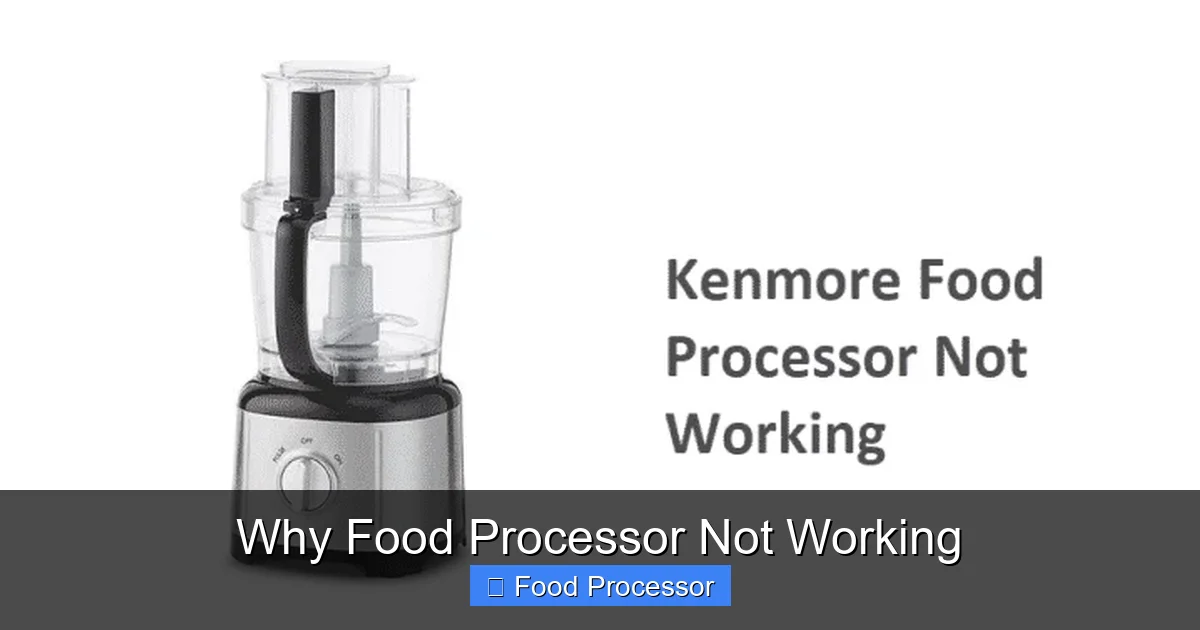
Experiencing a moment of kitchen frustration because your food processor not working can halt your meal prep. This comprehensive guide will walk you through common culprits, from basic power issues and improper assembly to more complex motor or blade problems. Learn simple troubleshooting steps and practical tips to diagnose and fix why your trusty appliance might be refusing to cooperate, helping you get back to chopping and blending in no time.
Oh no! You’re ready to whip up a delicious meal, you plug in your trusty appliance, and… nothing. Your food processor not working can be incredibly frustrating. It’s a vital kitchen tool, saving you tons of time and effort with chopping, slicing, shredding, and pureeing. But when it suddenly decides to take a break, your culinary plans can grind to a halt. Don’t panic just yet! Many common issues that prevent a food processor from working are surprisingly easy to diagnose and fix.
This guide is designed to help you troubleshoot your way back to a working food processor. We’ll go through a step-by-step process, covering everything from the most basic checks to more specific mechanical and electrical problems. By the end, you’ll likely have a good idea of why your food processor isn’t working and what you can do about it. Let’s get your kitchen companion back in action!
Key Takeaways
- Start with the Basics: Always begin by checking the power supply, including the outlet, cord, and circuit breaker, as these are often the simplest reasons why a food processor isn’t working.
- Ensure Proper Assembly: A food processor has multiple safety interlocks. Make sure the bowl, lid, and pusher are correctly aligned and locked into place, or the unit will not power on.
- Beware of Overloading: Overfilling the work bowl or processing overly hard ingredients can trigger the motor’s overload protection, causing the food processor to stop working to prevent damage.
- Inspect the Blade and Drive Shaft: Check if the blade is properly seated and spins freely. A damaged drive shaft or coupling can prevent the blade from rotating, even if the motor hums.
- Listen and Look for Clues: Pay attention to any unusual smells (like burning), sounds (like grinding or clicking), or visible damage to components, which can indicate motor, gear, or electrical issues.
- Consider Professional Help or Replacement: If basic troubleshooting doesn’t resolve the issue, or if you suspect internal electrical problems, it might be safer to consult a professional or consider replacing the appliance, especially if it’s an older model.
1. Check the Power Supply: The First and Easiest Step
It might sound obvious, but a surprising number of “food processor not working” issues stem from simple power problems. This is always the first place to start.
1.1. Is the Food Processor Plugged In Correctly?
First things first, is the plug firmly inserted into the wall outlet? Sometimes, a slight jiggle can loosen it. Wiggle it a little to make sure it’s snug.
1.2. Test the Electrical Outlet
It’s possible the outlet itself isn’t providing power. Try plugging another small appliance, like a lamp or a phone charger, into the same outlet. If that also doesn’t work, you’ve found your culprit! The outlet might be faulty, or it could be connected to a tripped circuit breaker.
1.3. Check Your Circuit Breaker
If the outlet has no power, head to your home’s electrical panel. Look for any tripped breakers (they usually sit in an “off” or middle position). Flip it firmly to the “off” position, then back to “on.” If the breaker trips again immediately, there might be an electrical issue with your home wiring, and you should call an electrician.
1.4. Inspect the Power Cord
Carefully examine the food processor’s power cord for any visible damage. Look for cuts, frayed wires, or bent prongs. A damaged cord is a safety hazard and can prevent your food processor from receiving power. If you find damage, the cord will need to be replaced, which often requires professional help or a new appliance.
2. Ensure Proper Assembly and Safety Interlocks
Food processors are designed with several safety features to prevent accidents. If these aren’t engaged correctly, your food processor simply won’t turn on. This is a very common reason why your food processor not working.
2.1. The Work Bowl is Not Locked
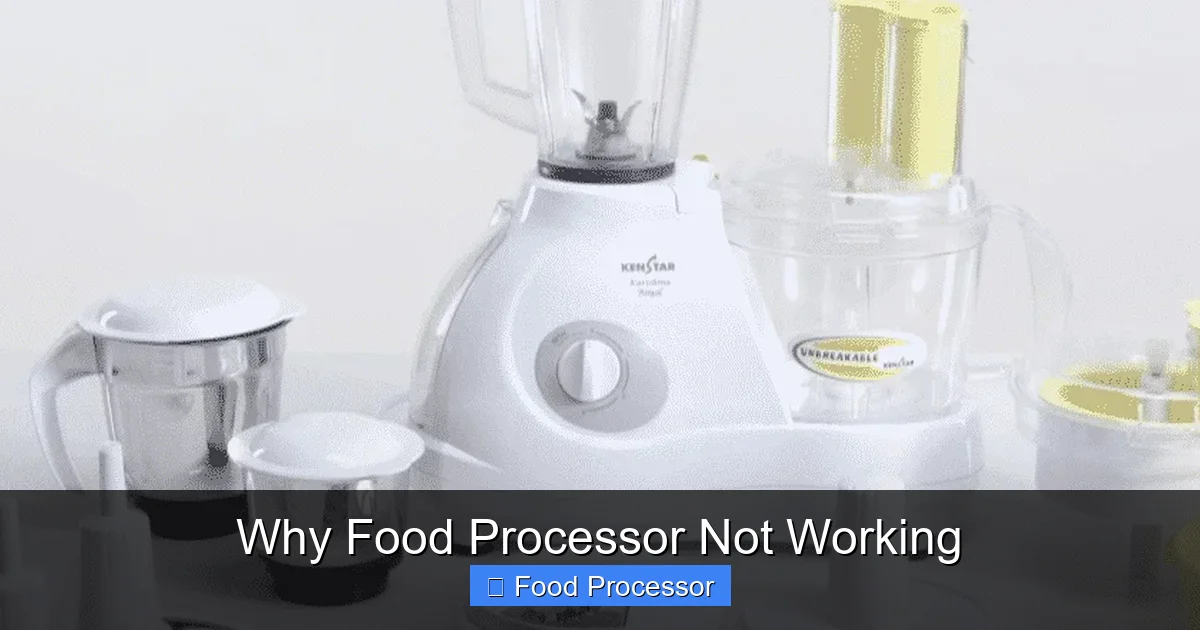
The work bowl must be correctly seated and twisted into place on the motor base. Most models require you to align an arrow or a tab on the bowl with a corresponding mark on the base, then twist until it clicks or locks securely. If it’s even slightly off, the safety mechanism won’t allow power to the motor.
Visual guide about Why Food Processor Not Working
Image source: missvickie.com
2.2. The Lid is Not Securely Fastened
Just like the work bowl, the lid has its own safety interlock. It needs to be placed on top of the bowl and twisted until it locks into position. There’s usually a tab on the lid that slides into a slot on the bowl handle. Check your specific model’s instructions for how to assemble a food processor step by step correctly. If the lid isn’t perfectly aligned, the food processor won’t start.
2.3. The Pusher/Feed Tube Interlock
Some food processors have an additional safety interlock involving the food pusher or the feed tube. Make sure the pusher is inserted into the feed tube correctly. In some designs, the pusher itself helps complete a safety circuit. If it’s missing or improperly inserted, your food processor might not be working.
2.4. Blade/Disc Placement
While less common for preventing power entirely, an improperly seated blade or disc can sometimes interfere with lid closure or cause the machine to struggle. Ensure the blade or disc is firmly placed on the drive shaft before adding food and securing the lid.
3. Overload Protection Activated
Modern food processors have built-in overload protection to prevent the motor from burning out. If you’re wondering why your food processor not working, this could be the culprit after heavy use.
3.1. Too Much Food in the Bowl
Overfilling the work bowl is a common mistake. If the motor senses too much resistance, it will automatically shut off to protect itself. This is especially true for tougher ingredients. Try removing some food and processing in smaller batches.
Visual guide about Why Food Processor Not Working
Image source: kitchenseer.com
3.2. Processing Hard or Frozen Ingredients
Attempting to process extremely hard ingredients (like whole coffee beans, very large chunks of ice, or frozen solid fruits/vegetables) can put immense strain on the motor. The overload protection will kick in. Always cut hard ingredients into smaller, manageable pieces and avoid processing items that are rock-solid frozen.
3.3. Motor Overheat
Continuous use, especially with heavy loads, can cause the motor to overheat. When this happens, the safety mechanism cuts the power. If your food processor suddenly stops and feels warm to the touch, or you notice a slight burning smell, it’s likely overheated. Disconnect it from power and let it cool down for at least 30 minutes, or even an hour, before trying again. Most food processors will reset automatically once sufficiently cooled.
4. Motor and Blade Issues
If the power is fine and assembly is correct, the problem might lie with the internal mechanics. This is where you might wonder, “why is my food processor blade not spinning?”
4.1. Drive Shaft or Coupling Damage
The drive shaft (the part the blade sits on) or the coupling (the connection between the motor and the blade) can become worn, cracked, or broken over time. If the motor hums but the blade doesn’t move, this is a strong indicator. Carefully inspect the base of the blade and the post on the motor base for any signs of damage. A broken coupling often means the motor is running, but the power isn’t being transferred to the blade.
4.2. Stuck Blade
Sometimes, food can get lodged under the blade, preventing it from spinning freely. Unplug the unit, carefully remove the blade, and check for any obstructions. Clean the blade and the inside of the work bowl thoroughly before reassembling. For more specific issues, you might find help in guides on how to fix food processor blade not spinning.
4.3. Worn Motor Brushes (for some models)
Some older food processors, or certain professional models, use carbon brushes that can wear out over time. If your food processor suddenly stops working, or only runs intermittently, and you hear a weak hum, worn brushes could be the cause. Replacing these is usually a job for a service technician, as it involves opening the motor housing.
4.4. Motor Failure
If you hear absolutely nothing when you press the power button, and all external checks (power, assembly) are clear, the motor itself might have failed. This could be due to internal electrical issues, worn gears, or a complete burnout. Motor failure is usually irreversible for a home user and often means it’s time to consider a new appliance. If your Cuisinart food processor not working, specific models can sometimes have known motor issues, so checking brand-specific forums might offer additional insight.
5. Electrical Component Malfunctions
Less common but definitely possible, internal electrical components can fail, causing your food processor not working.
5.1. Faulty On/Off or Pulse Switch
The switches on your control panel can wear out or become faulty. If you press the “On” button and nothing happens, try the “Pulse” button. If one works and the other doesn’t, the switch might be defective. This type of repair usually requires disassembling the unit, which is best left to a professional if you’re not comfortable with electrical work.
5.2. Internal Wiring Problems
Loose or damaged internal wiring can interrupt the power flow to the motor. This is very difficult to diagnose without opening the unit and requires expertise to fix safely. If you suspect internal wiring issues, do not attempt to fix it yourself unless you are qualified. There’s a risk of electric shock.
5.3. Thermal Fuse Blown
Beyond the common overload protection, some food processors have a thermal fuse designed to permanently blow if the motor reaches a critically high temperature, preventing a fire. If this fuse blows, the unit will be completely dead and will not power on again without replacing the fuse. This is a complex repair and often not cost-effective for an older appliance.
6. Troubleshooting Flowchart: Quick Steps to Diagnose
When your food processor not working, follow this quick diagnostic path:
- Is the unit plugged in?
- No: Plug it in firmly.
- Yes: Proceed to next step.
- Is the outlet working?
- No: Test with another appliance, check circuit breaker.
- Yes: Proceed to next step.
- Is the work bowl properly locked onto the base?
- No: Realign and twist until it clicks.
- Yes: Proceed to next step.
- Is the lid properly locked onto the work bowl?
- No: Realign and twist until it clicks.
- Yes: Proceed to next step.
- Is the food pusher fully inserted (if applicable)?
- No: Insert it correctly.
- Yes: Proceed to next step.
- Did you recently process a large amount of hard food or use it for a long time?
- Yes: The motor might be overheated. Unplug and let it cool for 30-60 minutes.
- No: Proceed to next step.
- Does the motor hum but the blade doesn’t spin?
- Yes: Check for obstructions under the blade, inspect drive shaft/coupling for damage.
- No: Proceed to next step.
- Do you hear or see anything unusual (burning smell, grinding noise)?
- Yes: Unplug immediately. This suggests a serious internal issue.
- No: Proceed to next step.
- None of the above worked.
- It’s likely an internal electrical or motor component failure (switch, wiring, motor itself).
When to Call a Professional or Consider Replacement
Sometimes, despite your best efforts, your food processor not working just means it’s time for a more serious intervention.
Safety First
If you suspect any internal electrical issues, exposed wires, or a burning smell, it’s crucial to prioritize safety. Do not attempt complex electrical repairs yourself unless you are a qualified electrician. Continuing to use a faulty appliance can pose a fire or shock hazard.
Cost of Repair vs. Replacement
For significant issues like motor failure, a broken drive shaft, or complex electrical problems, consider the cost of repair. Often, the expense of parts and labor can approach or even exceed the cost of a new food processor, especially for mid-range models. Research online to understand the typical cost of repairs for your specific brand and model.
Warranty Check
If your food processor is still under warranty, contact the manufacturer or retailer. They may offer a repair service or a replacement unit free of charge. Be sure to have your proof of purchase handy.
Age of the Appliance
Appliances have a lifespan. If your food processor is very old and has served you faithfully for many years, it might simply be reaching the end of its useful life. Investing in a new model often comes with improved features, better efficiency, and a fresh warranty.
Specialized Repair Shops
Some areas have small appliance repair shops that can diagnose and fix issues for a reasonable fee. Search locally for such services if you’re keen on repairing rather than replacing.
A completely dead food processor, one that makes no sound or response after all external checks, often points to a serious internal failure. While it’s disappointing when your food processor stopped working, understanding the potential causes empowers you to make an informed decision about repair or replacement. Remember, even with a seemingly minor issue, always prioritize safety by unplugging the unit before inspecting or attempting any fixes.
Conclusion
It can be incredibly frustrating when your food processor not working, especially when you’re in the middle of preparing a meal. However, by systematically going through the troubleshooting steps outlined in this guide, you can often pinpoint the exact reason why your appliance isn’t cooperating. From ensuring proper power and assembly to recognizing signs of overload or motor issues, you now have the knowledge to tackle most common problems.
Remember, safety is paramount. Always unplug your food processor before inspecting or attempting any adjustments. If the issue seems complex, involves internal electrical components, or if you’re simply not comfortable with the repair, don’t hesitate to seek professional help or consider investing in a new food processor. With these tips, we hope you’ll have your food processor humming along and helping you create culinary delights again in no time!
