
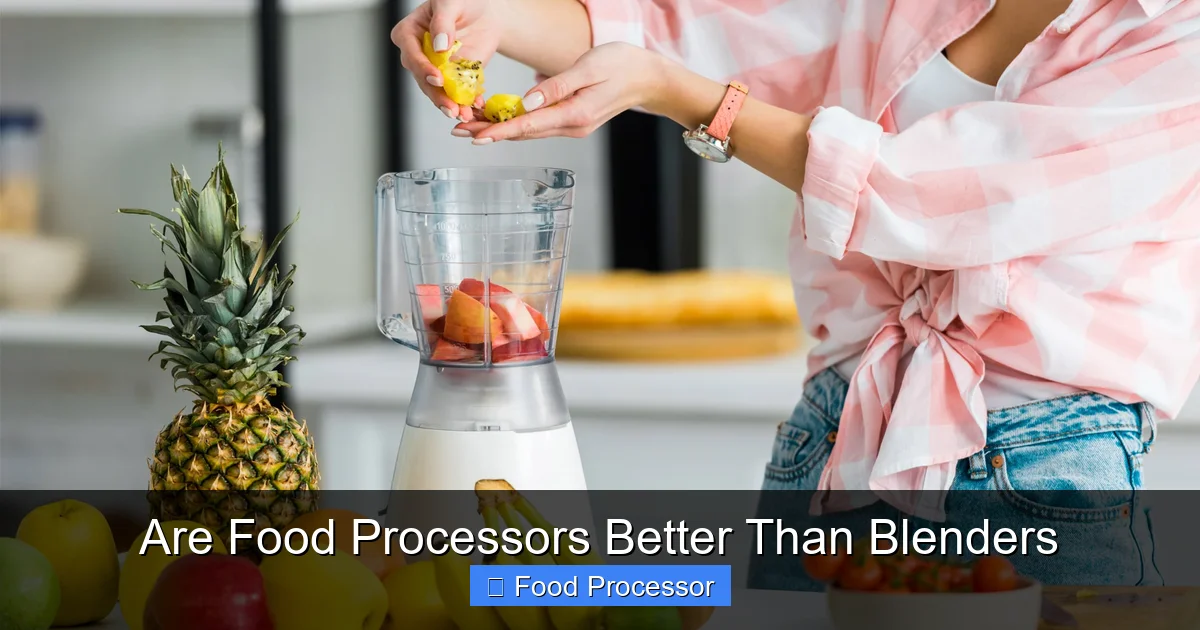
When comparing a food processor versus a blender, the choice often depends on your culinary goals. Food processors excel at precise chopping, slicing, shredding, and kneading dough, handling solids with ease thanks to their diverse blade attachments. Blenders, on the other hand, are designed for creating smooth liquids like smoothies, soups, and sauces, with blades optimized for pulverizing ingredients into a uniform consistency. Understanding their unique strengths will help you determine which appliance best suits your kitchen and cooking style.
Are Food Processors Better Than Blenders?
Ah, the classic kitchen conundrum! You’re standing in the appliance aisle, or perhaps browsing online, and you see them: the sleek blender and the robust food processor. Both promise to make your cooking life easier, faster, and more delicious. But which one is truly “better”? The truth is, it’s not about one being universally superior. Instead, it’s about understanding what each tool is designed to do best. Think of them as specialized chefs in your kitchen, each with their own unique talents.
In this comprehensive guide, we’re going to dive deep into the world of food processors and blenders. We’ll explore their core differences, their ideal uses, and when one truly shines over the other. By the end, you’ll have a crystal-clear understanding of which appliance (or perhaps both!) will best serve your culinary adventures. So, let’s chop, blend, and learn!
Key Takeaways
- Functionality Focus: Food processors are multi-tasking machines for prep work like chopping, slicing, shredding, and kneading, while blenders specialize in creating smooth liquids such as drinks, purees, and sauces.
- Blade Design: Food processors feature sharp S-blades and various discs for different cuts and textures. Blenders typically have duller, angled blades designed to create a vortex and pull ingredients into a smooth liquid.
- Container Shape: Food processor bowls are wide and short, ideal for larger quantities of solids. Blender jars are tall and narrow, perfect for liquid dynamics and preventing splashes.
- Motor Power & Speed: High-speed blenders often have more powerful motors to pulverize tough ingredients into liquid form. Food processors focus more on torque for tasks like dough kneading and consistent chopping.
- Attachments & Versatility: Food processors come with multiple attachments (slicing, shredding discs, dough blade) offering broad versatility for solid food prep. Blenders may have fewer attachments, primarily focusing on blending functions.
- Ideal Use Cases: Choose a food processor for tasks like making salsa, hummus, grating cheese, or dicing vegetables. Opt for a blender for smoothies, creamy soups, nut milks, or crushing ice.
- Consider Your Needs: If your kitchen needs lean towards extensive meal prep and handling solids, a food processor is often superior. For daily smoothies and silky purees, a blender is the clear winner.
Understanding the Basics: What Each Appliance Does
Before we compare, let’s get acquainted with each device.
What is a Food Processor?
A food processor is a versatile kitchen appliance designed for automating repetitive tasks in food preparation. Imagine quickly chopping a mountain of onions, shredding cheese for a crowd, or even kneading dough without breaking a sweat. That’s the food processor’s domain. It typically features a wide work bowl, a set of interchangeable blades and discs, and a powerful motor.
- Main Tasks: Chopping, slicing, shredding, grating, pureeing (thicker mixtures), kneading dough, grinding.
- Key Feature: Multiple attachments for various cutting styles.
What is a Blender?
A blender, on the other hand, is built for one primary purpose: to blend. Its strength lies in transforming ingredients, often with liquid, into smooth, uniform consistencies. From your morning smoothie to creamy vegetable soups, the blender turns solids into sippable, pourable delights. It typically has a tall, narrow pitcher with a fixed blade assembly at the bottom and a motor base.
- Main Tasks: Blending, pureeing (liquids), crushing ice, emulsifying, pulverizing.
- Key Feature: Designed to create a powerful vortex for smooth results.
Core Differences: A Head-to-Head Comparison
The distinction between these two appliances goes beyond just their names. Their fundamental design elements dictate their capabilities.
Visual guide about Are Food Processors Better Than Blenders
Image source: images.herzindagi.info
Blades and Attachments
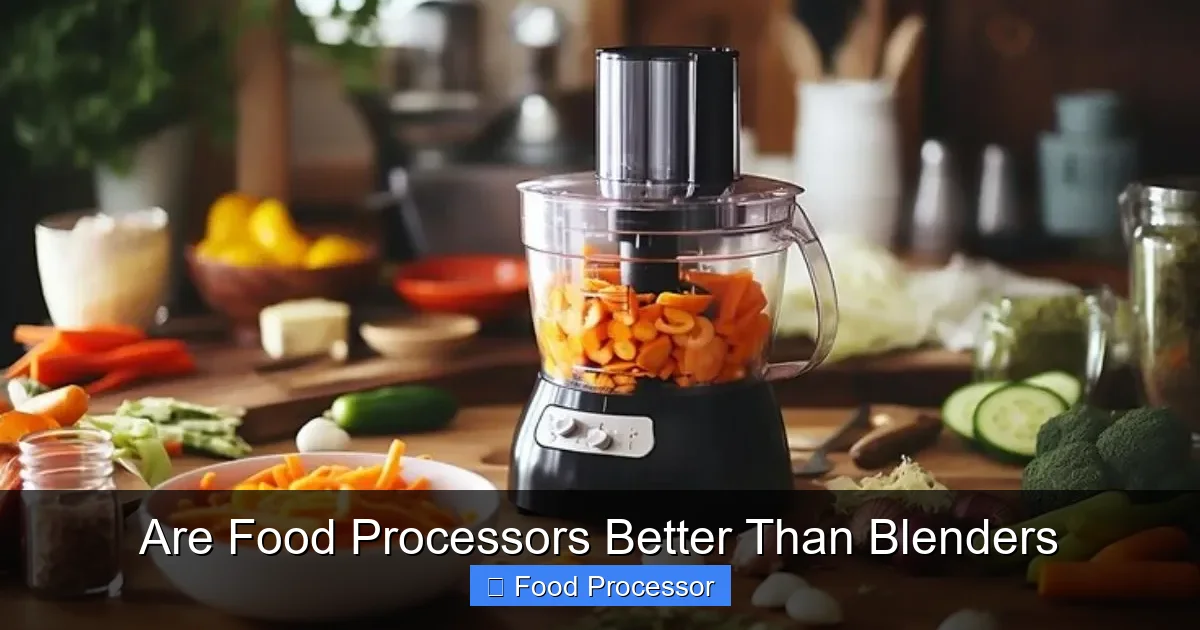
This is perhaps the most significant difference. A food processor is a master of versatility when it comes to blades. It usually comes with an S-shaped chopping blade for mincing, pureeing, and mixing, plus various discs for slicing, shredding, and grating. Some models even include a dough blade for baking. These attachments allow for precise control over texture, from coarse chop to fine shred.
Blenders, conversely, typically have a fixed blade assembly with a few sharp, angled blades at the base of the pitcher. These blades are designed to create a powerful vortex, pulling ingredients down into the cutting path and ensuring a super smooth result, especially with liquids. They aren’t meant for precise cutting or shredding.
Motor Power and Speed
While both have powerful motors, their power is utilized differently. High-end blenders often boast incredibly high RPMs (rotations per minute), generating immense speed to pulverize ice, nuts, and tough fibers into a silky smooth liquid. Think of the sheer force needed to make a perfectly smooth green smoothie.
Food processors, while also powerful, prioritize torque over sheer speed, especially for tasks like kneading dough or consistently chopping hard vegetables. Their motors are designed to handle thicker loads without stalling, ensuring even processing rather than just liquefying.
Container Shape and Size
Food processor bowls are generally wider and shallower. This design is perfect for holding larger quantities of solid ingredients, allowing them to circulate and be evenly processed by the various blades and discs. The wide opening also makes it easier to add ingredients during operation and to scrape down the sides.
Blender jars are typically taller and narrower, often with specific ridges or flutes. This shape is crucial for creating the powerful vortex necessary to draw ingredients down into the blades and blend them thoroughly, especially with liquids. It helps prevent splashing and ensures a consistent blend from top to bottom.
Primary Culinary Uses
Ultimately, the biggest differentiator is what you’ll primarily use them for. If your cooking involves a lot of chopping, slicing, shredding, or making thicker sauces and dips, the advantages of a food processor are clear. It’s a prep powerhouse.
If your daily routine involves smoothies, creamy soups, nut milks, or thin sauces, the blender is your go-to. It excels at turning solid ingredients into a drinkable or pourable consistency.
When a Food Processor Excels: The Prep Master
If you’re wondering why a food processor might be considered better than a blender for certain tasks, it’s all about precision and versatility with solids. Here’s where the food processor truly shines:
Visual guide about Are Food Processors Better Than Blenders
Image source: kitchencuddle.com
Chopping and Slicing Vegetables
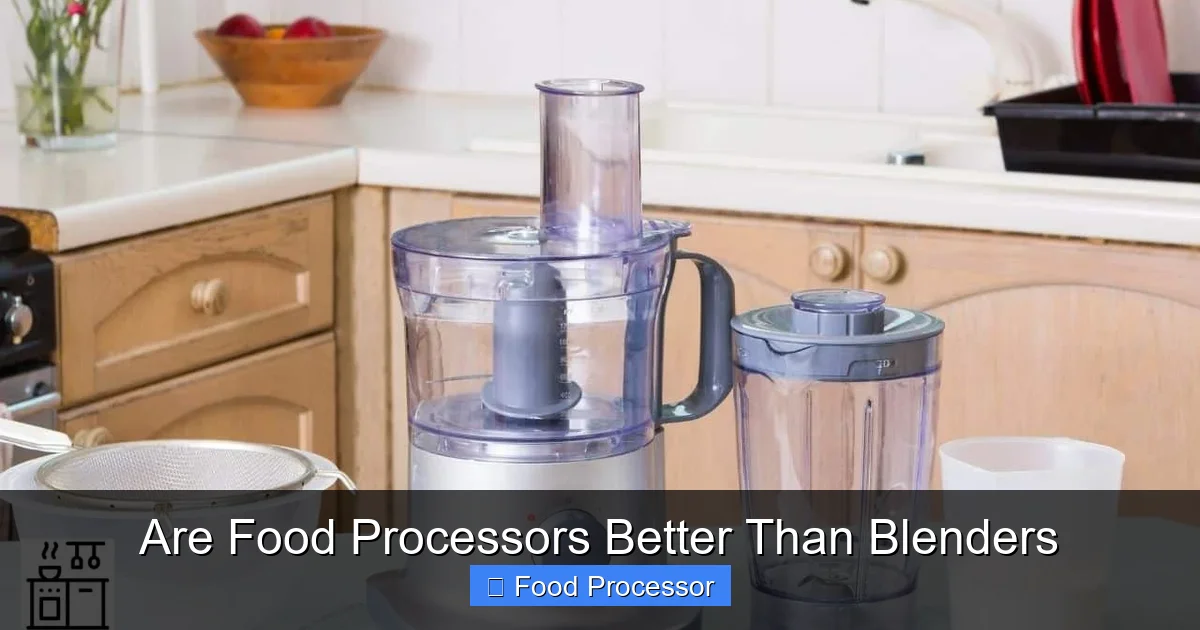
Need perfectly diced onions, uniformly sliced cucumbers, or minced garlic for a recipe? A food processor with its S-blade and various slicing discs can do this in seconds. This saves an incredible amount of time compared to doing it by hand.
- Example: Making a large batch of salsa or stir-fry.
Shredding and Grating
Say goodbye to tired arms from manual grating! A food processor’s shredding disc can shred blocks of cheese, cabbage for coleslaw, or potatoes for hash browns with minimal effort. You can even shred cheese in a food processor effortlessly.
- Example: Quickly preparing shredded carrots for salads or grating potatoes for latkes.
Kneading Dough
Many full-size food processors come with a dedicated dough blade. This allows you to mix and knead bread dough, pizza dough, or pie crusts in minutes, preventing overworking and saving your hands.
- Example: Baking homemade bread or a batch of cookies.
Making Thicker Purees and Pastes
For items that are thick and require some texture, like hummus, pesto, nut butter, or chunky dips, the food processor is ideal. It processes ingredients without liquefying them completely, leaving desirable texture.
- Example: Whipping up a batch of creamy hummus or a fresh basil pesto.
Grinding Nuts and Seeds
If you need finely ground nuts for baking or a nut meal, a food processor can handle it without turning them into a paste (unless you want it to!).
- Example: Making almond flour or grinding seeds for a crust.
When a Blender is Your Best Friend: The Liquid Virtuoso
For all things smooth, pourable, and drinkable, the blender reigns supreme. Its design is optimized for creating seamless liquids.
Smoothies and Shakes
This is the blender’s undisputed champion task. Fruits, vegetables, ice, and liquid are transformed into a perfectly smooth, drinkable consistency in moments. No chunks, just pure refreshment.
- Example: Your daily morning protein shake or a vibrant fruit smoothie.
Creamy Soups
After cooking, many soups benefit from a trip to the blender to achieve that velvety, restaurant-quality texture. It can handle hot liquids (with caution!) and transform chunky vegetables into a smooth bisque.
- Example: Velvety tomato soup or a creamy butternut squash soup.
Sauces and Dressings
For vinaigrettes, marinades, or smooth sauces that require emulsification, the blender does an excellent job of combining oil and other liquids into a stable mixture.
- Example: Homemade Caesar dressing or a smooth fruit coulis.
Nut Milks and Purees (Liquid-Based)
If you’re making homemade almond milk or a very fine fruit puree that’s meant to be liquid, the blender’s power and design will give you the best results.
- Example: Fresh cashew milk or baby food purees.
Crushing Ice
Many blenders, especially more powerful models, are designed to effortlessly crush ice for frozen drinks, cocktails, or slushies.
- Example: Preparing margaritas or iced coffee.
Direct Comparison: Performance by Task
Let’s put them side-by-side for common kitchen tasks.
Chopping Onions/Garlic
- Food Processor: Excellent. Quick, uniform chop. Can mince finely.
- Blender: Poor. Will mostly just smash or liquefy, creating an inconsistent texture or a watery mess.
Making Nut Butter
- Food Processor: Excellent. Transforms nuts from whole to crumbly, then to a smooth butter, requiring occasional scraping down of sides.
- Blender: Good (high-powered blenders only). Can make very smooth nut butter, but often requires more liquid or patience and may put more strain on the motor than a food processor.
Pureeing Soups
- Food Processor: Okay to Good. Can puree chunky soups, but often requires processing in smaller batches and might not achieve the same silky smoothness as a blender.
- Blender: Excellent. Creates incredibly smooth, velvety soups with ease.
Shredding Cheese
- Food Processor: Excellent. Shreds a block of cheese in seconds with minimal effort and uniform results.
- Blender: Impossible. Blades are not designed for this.
Making Smoothies
- Food Processor: Poor to Okay. Will struggle with ice and fibrous ingredients, often leaving chunks. Results are rarely as smooth.
- Blender: Excellent. The absolute best for smooth, well-combined drinks.
Kneading Dough
- Food Processor: Excellent (with dough blade). Quickly mixes and kneads dough for bread, pizza, etc.
- Blender: Impossible. Not designed for dough at all.
Factors to Consider When Choosing
If you can only choose one, or are deciding which to prioritize, consider these points:
Your Primary Culinary Needs
Are you a baker who needs to mix dough and chop nuts? A food processor is probably first. Are you a health enthusiast who makes daily smoothies and protein shakes? A blender is your essential tool.
Kitchen Space
Both appliances require counter or cabinet space. Food processors, especially larger models with multiple attachments, can take up more room. Compact food processors and personal blenders are great space-saving options.
Budget
There’s a wide range of prices for both. Basic models are affordable, while high-end, professional-grade blenders or food processors can be a significant investment. Consider what to consider when buying a food processor to match your budget and needs.
Versatility vs. Specialization
A food processor offers more versatility in terms of prep tasks (chopping, slicing, shredding). A blender is more specialized but performs its core function exceptionally well.
Attachments and Accessories
If you frequently perform tasks like shredding, slicing, or kneading, the array of attachments a food processor offers makes it indispensable. Blenders typically have fewer accessory options, though some high-end models may offer personal blending cups or dry grinding jars.
Can One Replace the Other?
In a pinch, can a food processor act as a blender, or vice-versa? To some extent, yes, but with significant compromises.
Using a Food Processor as a Blender
You can make thicker purees or sauces in a food processor, but it won’t achieve the super-smooth, liquid consistency of a blender. For smoothies, it will likely leave chunks and struggle with ice. For thin soups, it’s not ideal as it can splash and isn’t designed for large volumes of hot liquid.
Using a Blender as a Food Processor
A blender can chop very small quantities of soft items if you use the pulse function carefully, but it will quickly over-process and turn them into a puree or liquid. It cannot slice, shred, or knead dough. Attempting to chop hard vegetables in a blender will likely result in uneven pieces or simply a watery mess at the bottom.
Ultimately, while there’s some overlap in pureeing capabilities, neither can truly replace the other for their primary functions without major drawbacks.
Getting the Most Out of Your Appliance
Regardless of which you choose, here are some tips for optimal performance:
- Don’t Overfill: Both appliances work best when not overloaded. Follow the manufacturer’s guidelines for maximum fill levels.
- Cut Ingredients: For food processors, cut larger ingredients into pieces that fit the feed tube. For blenders, chop tough ingredients into smaller, even pieces to help them blend faster.
- Layer Ingredients: For blenders, add liquids first, then soft ingredients, then harder ones (like ice) on top. This helps create the vortex. For food processors, add items in batches if necessary for even processing.
- Use Pulse Function: This is your best friend on both machines. For food processors, it gives you control over the texture for chopping and mincing. For blenders, it helps break down larger chunks before continuous blending.
- Clean Promptly: Food particles and sticky liquids are much easier to clean immediately after use.
Troubleshooting Common Issues
Even the best appliances can have hiccups. Here’s quick advice:
- Food Processor Not Chopping Evenly:
- Ensure you haven’t overloaded the bowl.
- Process in batches if needed.
- Use the pulse function for better control over chop size.
- Make sure your blade is sharp and correctly assembled.
- Blender Not Blending Smoothly:
- Add more liquid to help create the vortex.
- Stop and stir the ingredients, or use a tamper if your blender has one.
- Cut larger or tougher ingredients into smaller pieces.
- Check if the blades are dull or if there’s an obstruction.
- Appliance Stalls or Overheats:
- You might be overloading it or trying to process something too tough.
- Give the motor a break and reduce the load.
- Ensure proper ventilation around the motor base.
Conclusion
So, are food processors better than blenders? Not necessarily. They are simply different, each designed for specific culinary tasks. A food processor is your ultimate prep assistant for chopping, slicing, shredding, and kneading, making tedious tasks a breeze. A blender is your go-to for achieving perfectly smooth liquids, from refreshing smoothies to creamy soups.
The “better” choice depends entirely on your personal cooking style, the types of meals you prepare most often, and the consistency you’re aiming for. Many avid home cooks find both appliances invaluable, as they complement each other perfectly, covering almost every food preparation need. If you’re just starting out, consider what you’ll use most frequently. With this guide, you’re now equipped to make an informed decision and choose the perfect kitchen companion for your culinary journey!
