
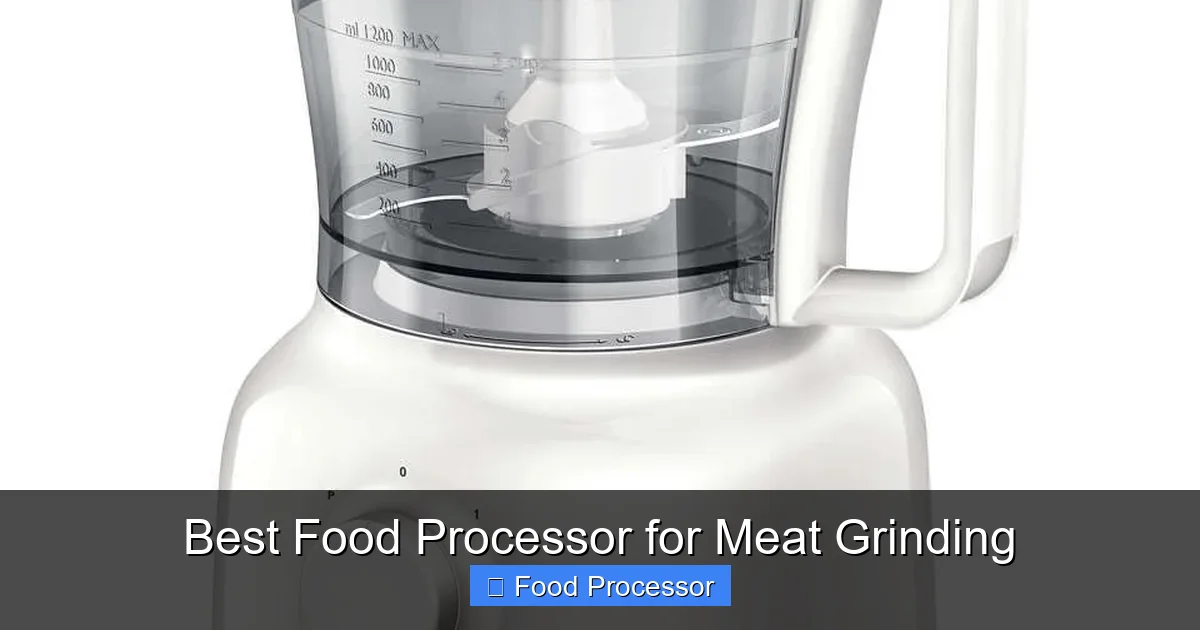
Transforming whole cuts into fresh ground meat at home is easier than you think with the right food processor. This guide helps you select a powerful, high-capacity food processor ideal for the task, emphasizing motor strength, sharp blades, and pulse functionality. You’ll learn essential steps like chilling the meat, proper assembly, and using short pulses to achieve perfect texture, ensuring safe and delicious results.
Welcome to the wonderful world of homemade ground meat! Have you ever wondered how to get that perfect texture, control the fat content, or simply enjoy the freshest possible mince for your burgers, meatballs, or tacos? Grinding your own meat at home is a game-changer, offering superior flavor, freshness, and peace of mind. While dedicated meat grinders exist, you might be surprised to learn that your trusty food processor can do an excellent job too, especially when you know what to look for and how to use it correctly.
In this comprehensive guide, we’re going to dive deep into everything you need to know about using the best food processor for meat grinding. We’ll walk you through selecting the ideal machine, preparing your meat like a pro, executing the grinding process step-by-step, and sharing expert tips to ensure perfect results every time. Get ready to elevate your home cooking!
Key Takeaways
- Chill Your Meat Thoroughly: Always cut your meat into small cubes and chill it in the freezer for 15-30 minutes before grinding. This prevents smearing and ensures a clean, even grind.
- Prioritize Motor Power and Sturdy Blades: The best food processor for meat grinding needs a robust motor (at least 700 watts) and durable, sharp S-blades to handle tough muscle fibers without overheating or struggling.
- Use the Pulse Function Strategically: Avoid continuous blending. Instead, use short, controlled pulses to grind the meat, allowing you to monitor consistency and prevent over-processing into a paste.
- Don’t Overfill the Bowl: Process meat in small batches to ensure uniform grinding and prevent your food processor from getting bogged down. Overfilling can lead to uneven textures and strain the motor.
- Clean Immediately and Thoroughly: Raw meat processing requires diligent cleaning. Disassemble your food processor components and wash them promptly with hot, soapy water to prevent bacterial growth.
- Consider Bowl Capacity: Choose a food processor with a bowl capacity appropriate for your typical batch sizes. Larger bowls (10-14 cups) are generally more efficient for meat grinding tasks.
What Makes a Food Processor Great for Meat Grinding?
Not all food processors are created equal, especially when it comes to the demanding task of grinding meat. You need a machine that’s up to the challenge. Here’s what to look for when choosing the best food processor for meat grinding:
Motor Power and Durability
This is arguably the most critical factor. Grinding raw meat, with its tough fibers and connective tissue, requires significant power. Look for a food processor with a robust motor, ideally 700 watts or higher. A powerful motor ensures smooth operation, prevents the motor from straining or overheating, and makes quick work of the meat. A weaker motor might struggle, leading to an uneven grind or a pasty texture.
Bowl Capacity
Consider how much meat you typically want to grind. While you’ll always work in batches, a larger bowl (10-14 cups) means fewer batches, saving you time. Smaller processors (e.g., 7 cups or less) can still grind meat, but you’ll need to work with tiny portions, which might be less efficient for larger recipes.
Blade Design and Sharpness
The S-blade (also known as the chopping blade) is your primary tool for meat grinding. It needs to be extremely sharp and sturdy, usually made from stainless steel. High-quality blades will slice through meat cleanly, yielding an even texture. Dull blades will tear and smash the meat, resulting in an undesirable, mushy consistency. Some high-end models may even have specialized blades designed for tougher tasks.
Speed Settings and Pulse Function
A good food processor for meat grinding should offer at least a “chop” or “low” speed setting, but the pulse function is your best friend here. Pulsing allows you to control the consistency precisely, giving short bursts of power without continuously processing the meat. This prevents over-processing and helps achieve the desired grind, from coarse to fine.
Overall Construction Quality
Meat grinding puts stress on the entire machine. Look for a food processor with a solid, heavy base that won’t “walk” across your counter. Durable materials for the bowl and lid are also important, ensuring the appliance can withstand repeated use and rigorous cleaning.
Ease of Cleaning
Dealing with raw meat means hygiene is paramount. Choose a food processor with components that are easy to disassemble and clean, preferably dishwasher-safe. Minimal nooks and crannies will make post-grinding cleanup much simpler and more sanitary.
When looking for the ideal machine, consider what makes a great general-purpose food processor, but prioritize raw power and blade quality. If you’re specifically looking for a robust model capable of handling raw ingredients effectively, you might find some useful insights by researching the best food processor for raw meat.
Step 1: Chill Your Meat for Optimal Grinding
Visual guide about Best Food Processor for Meat Grinding
Image source: kitchenvile.com
This initial step is absolutely crucial for successful meat grinding with a food processor. Don’t skip it!
Cut into Small Cubes
Start with fresh, cold meat. Any cut will do, from beef chuck to pork shoulder or chicken thighs. Remove any large bones, gristle, or excessively tough connective tissue. Then, cut the meat into uniform 1-inch (2.5 cm) cubes. Smaller, consistent pieces will help the blades work more efficiently and produce an even grind.
Remove Excess Fat (But Not All of It!)
Trim away any hard, thick pieces of fat, but don’t remove all the fat. A certain amount of fat (typically 10-20%) is essential for flavor and moisture in ground meat. If you want leaner ground meat, simply trim more fat. If you want to achieve a specific fat percentage, you can weigh your meat and fat separately.
Freeze for 15-30 Minutes
Arrange the meat cubes in a single layer on a baking sheet lined with parchment paper. Place the sheet in your freezer for 15-30 minutes. The goal is for the meat to be very cold and firm, but not frozen solid. This chill ensures the meat doesn’t “smear” or turn into a paste during processing. Instead, it will cut cleanly, giving you that distinct ground texture. This technique is a secret weapon for achieving perfect results.
Step 2: Assemble Your Food Processor Correctly

Visual guide about Best Food Processor for Meat Grinding
Image source: m.media-amazon.com
Safety and efficiency start with proper assembly.
Secure the Bowl and Blade
Place the food processor bowl securely onto the base. Then, carefully position the S-blade onto the spindle inside the bowl. Ensure it’s seated firmly and correctly according to your model’s instructions. Always handle the blade by its central plastic hub, never by the sharp edges.
Ensure Lid is Locked
Place the lid onto the bowl and twist or lock it into position. Most food processors have safety interlocks that prevent the motor from running unless the bowl and lid are correctly assembled and locked. Double-check this before plugging in the unit.
Step 3: Begin the Meat Grinding Process
Now for the actual grinding! This is where technique makes all the difference.
Don’t Overfill the Bowl
This is a common mistake. Instead of trying to grind all your meat at once, work in small batches. For most standard 10-14 cup food processors, about 1/2 to 1 pound (225-450 grams) of meat per batch is ideal. Overfilling will overload the motor, lead to uneven grinding, and can strain your machine. If you’re only looking to grind small quantities, there are specialized food processors for small quantities that might be more appropriate for very tiny batches, but for general meat grinding, bigger batches (within limits) are more efficient.
Use the Pulse Function
Add one batch of chilled meat cubes to the food processor bowl. Secure the lid. Now, use the pulse function in short, quick bursts – typically 1-2 seconds per pulse. Do not hold the button down for a continuous run.
Check Consistency Regularly
After 5-10 pulses, remove the lid and check the meat’s consistency. Use a spatula to scrape down the sides of the bowl, redistributing any larger pieces to the bottom. Replace the lid and continue pulsing. You might need to pulse for 15-30 seconds total, depending on the desired texture.
Avoid Over-Processing
The key is to grind until the meat reaches your desired texture – whether coarse, medium, or fine – but stop *before* it becomes a smooth, pasty puree. Over-processing generates heat and breaks down the meat fibers too much, resulting in an unappetizing consistency more like baby food than ground meat. You want distinct particles, not a mash.
Step 4: Handle and Store Your Freshly Ground Meat
Proper handling after grinding is just as important as the grinding process itself for food safety.
Remove from Processor Quickly
Once your meat is ground to perfection, immediately transfer it from the food processor bowl into a separate clean bowl.
Proper Storage
Freshly ground meat is highly perishable. Use it immediately or store it properly.
- Refrigeration: Place the ground meat in an airtight container or wrap it tightly in plastic wrap. Refrigerate it at 40°F (4°C) or below for no more than 1-2 days.
- Freezing: For longer storage, portion the ground meat into meal-sized bags or containers. Flatten the meat in freezer bags to remove air and allow for quicker thawing. Freeze at 0°F (-18°C) or below for up to 3-4 months.
Clean Your Food Processor Thoroughly
As soon as you’ve transferred the meat, disassemble your food processor. Wash all components that came into contact with raw meat (bowl, lid, blade) immediately with hot, soapy water. Pay special attention to the nooks and crannies around the blade and lid. If components are dishwasher-safe, run them through a hot cycle. This meticulous cleaning is vital to prevent bacterial cross-contamination.
Expert Tips for Perfect Homemade Ground Meat
Honing your meat grinding skills with a food processor takes a little practice. These tips will help you achieve consistently excellent results.
Keep Everything Cold
Seriously, we can’t stress this enough. Not just the meat, but if you have room, you can even chill your food processor bowl and S-blade in the freezer for 10-15 minutes before you start. The colder everything is, the better the grind.
Don’t Rush It
Patience is a virtue, especially with pulsing. Take your time, check the consistency often, and avoid the temptation to just “let it run.” Short, controlled pulses are the secret to a great texture.
Know Your Processor’s Limits
While a good food processor can handle meat grinding, it’s not a dedicated meat grinder. Respect its limitations. Don’t push it with overly tough cuts, large batches, or continuous running that could overheat the motor. If your food processor is struggling or making unusual noises, stop, reduce the batch size, and ensure your meat is cold enough.
Experiment with Blends
Grinding your own meat opens up a world of culinary possibilities. You can create unique blends by combining different types of meat (e.g., beef and pork for a richer burger) or by adding varying amounts of fat. This control allows for customized flavor profiles in your dishes.
Troubleshooting Your Meat Grinding Experience
Even with the best intentions, you might encounter a few hiccups. Here’s how to address common issues:
Meat is Smearing or Pasty
This is the most frequent problem.
- Cause: The meat wasn’t cold enough, or it was over-processed.
- Solution: Ensure your meat is very firm and chilled before grinding (freeze for longer if needed). Use only short, deliberate pulses. If it’s already pasty, you might not be able to fully recover the texture, but you can try chilling it again and adding a few fresh, very cold chunks to try and give it more structure with a few more pulses.
Uneven Grinding (Some Chunks, Some Fine)
- Cause: Too much meat in the bowl, or the meat wasn’t cut uniformly.
- Solution: Reduce batch size significantly. Ensure all meat cubes are roughly the same size before chilling. Scrape down the bowl more frequently between pulses to redistribute the meat.
Processor is Struggling or Overheating
- Cause: Overloaded motor, dull blade, or insufficient motor power for the task.
- Solution: Immediately stop the processor. Remove some meat to reduce the load. Check that the blade is sharp. If your processor frequently struggles with meat, it might not have enough power for regular meat grinding. For heavy-duty tasks where you need consistent power without the risk of breakdown, selecting a food processor that does not overheat is crucial, especially for more demanding ingredients.
Conclusion
Grinding your own meat at home with a food processor is a rewarding experience that puts you in control of freshness, quality, and flavor. By understanding what makes the best food processor for meat grinding – primarily strong motor power, sharp blades, and a good pulse function – you’re already halfway there. Remember the critical steps: chill your meat properly, work in small batches, and use short, controlled pulses.
With a little practice and these expert tips, you’ll be creating delicious, custom-ground meat for all your culinary adventures. Say goodbye to store-bought ground meat and hello to a new level of homemade goodness! Happy grinding!
