

Making fresh, homemade nut butter is a rewarding culinary adventure, and the right equipment makes all the difference. This guide will walk you through everything you need to know, from selecting the best food processor for nut butter to perfecting the consistency and flavor of your spreads. You’ll learn essential features to look for, step-by-step processing techniques, and helpful tips to achieve delicious, creamy results every time.
Best Food Processor for Nut Butter
Hello, fellow food enthusiasts! Have you ever dreamed of creating your own delicious, creamy, and wholesome nut butter right in your kitchen? Imagine spreading fresh almond butter on toast, dipping apple slices into homemade cashew butter, or whipping up a batch of rich peanut butter without any added sugars or mystery ingredients. It’s totally possible, and it’s surprisingly simple with the right kitchen companion: a good food processor.
This comprehensive guide is your ultimate resource for mastering homemade nut butter. We’ll dive deep into what makes the best food processor for nut butter beginners and seasoned pros alike, guiding you through the essential features to look for. You’ll learn the step-by-step process of transforming raw or roasted nuts into luscious spreads, complete with practical tips, flavoring ideas, and troubleshooting advice. By the end of this guide, you’ll be confidently churning out a variety of healthy, homemade nut butters that will elevate your snacks and meals.
Let’s get started on your journey to nutty perfection!
Key Takeaways
- Power is Paramount: A food processor with a robust motor (at least 600 watts, ideally 750+ watts) is crucial for efficiently breaking down nuts and releasing their oils without overheating.
- Bowl Capacity Matters: Choose a bowl size (8-14 cups) that suits your batch size, ensuring enough room for nuts to circulate but not so much that they don’t make contact with the blade.
- The S-Blade is Your Friend: The standard S-shaped blade is the only attachment you’ll need for making smooth, creamy nut butter, designed for continuous grinding.
- Patience is Key: Nut butter making is a process of stages – from chopping to meal, to a ball, and finally to liquid. Don’t stop too early; allow the machine to work through each phase.
- Roasting Enhances Flavor: Lightly roasting nuts beforehand deepens their flavor and helps release oils more readily, leading to a richer, creamier butter.
- Scrape Down Frequently: Regularly stopping and scraping down the sides of the bowl ensures all nuts are processed evenly and prevents the motor from straining.
- Listen to Your Machine: If your food processor sounds strained or starts to get very hot, give it a short break to prevent overheating and prolong its life.
Why a Food Processor is Your Nut Butter Hero
When it comes to making nut butter, your food processor isn’t just a convenience; it’s essential. While blenders can work for some tasks, a food processor is specifically designed for the continuous, powerful grinding action needed to break down nuts and release their natural oils.
Here’s why it outshines other appliances for this job:
- Consistent Processing: The wide bowl and S-shaped blade allow nuts to circulate effectively, ensuring an even grind.
- Lower Heat Build-Up: Compared to high-speed blenders that can quickly heat nuts, food processors typically run at lower RPMs for longer, allowing oils to release without excessive heat that can alter flavor.
- Versatility: Once you’re done with nut butter, your food processor can handle countless other kitchen tasks, from chopping vegetables to kneading dough.
- Capacity: Most food processors offer ample capacity for making decent-sized batches of nut butter, saving you time.
Key Features to Look for in a Food Processor for Nut Butter
Choosing the right food processor is the first and most crucial step. Not all food processors are created equal, especially when tackling dense, hard nuts. Here’s what to prioritize:
Motor Power (Wattage)
This is arguably the most important factor. Making nut butter requires significant power to continuously grind nuts until their oils release.
- Minimum Recommendation: Look for at least 600 watts.
- Ideal Power: 750 watts or more is even better, especially if you plan to make nut butter frequently or in larger batches. Higher wattage means less strain on the motor and a faster, smoother process.
Bowl Capacity
The size of the work bowl determines how much nut butter you can make at once.
- Small Batches: An 8-cup food processor can work for small quantities, but you might need to process in smaller increments.
- Most Versatile: A 10- to 12-cup capacity is often the sweet spot for homemade nut butter, allowing you to process 2-3 cups of nuts comfortably.
- Larger Batches: If you plan on making big batches for a family or meal prep, a 14-cup model would be a great investment.
Remember, you need enough space for the nuts to move around and break down, but not so much that the blade can’t effectively catch them.

Visual guide about Best Food Processor for Nut Butter
Image source: m.media-amazon.com
Blade Type
The standard S-shaped blade (sometimes called a universal or chopping blade) is what you’ll use for nut butter.
- Material: Ensure it’s made from durable stainless steel.
- Sharpness: While sharpness helps, it’s the continuous action against the nuts that does the work.
You won’t need grating or slicing discs for nut butter, but a good sturdy S-blade is non-negotiable.
Durability and Build Quality
Nut butter making puts a lot of stress on a food processor’s components.
- Sturdy Base: A heavy, stable base prevents the machine from “walking” across your counter during intense processing.
- Robust Motor Housing: Look for models with a strong build, often metal components, especially in the motor drive.
- Quality Materials: High-quality plastic or even glass bowls will stand up to repeated use better.
Speed Settings & Pulse Function
Most food processors offer a “pulse” and “on” setting, sometimes with multiple speeds.
- Pulse: Useful for initial chopping to break down larger nuts into smaller pieces.
- Continuous “On”: Essential for the long grinding phase where the nuts transform into butter.
Having a high or low continuous speed can offer more control, but a strong single “on” setting usually suffices.
Ease of Cleaning
Nut butter can be sticky! Look for models with dishwasher-safe parts and minimal crevices where butter can get trapped. A wide-mouth chute and easily removable blades are a plus.
Step-by-Step Guide: Making Nut Butter in Your Food Processor
Ready to turn those nuts into glorious butter? Follow these steps!
Step 1: Prepare Your Nuts
Roasting Nuts (Optional but Recommended)
Roasting your nuts before processing them brings out a deeper, richer flavor and makes them easier to break down, as the heat helps release their natural oils.
- How to Roast: Spread nuts in a single layer on a baking sheet. Roast in a preheated oven at 350°F (175°C) for 8-15 minutes, stirring once or twice.
- Watch Carefully: Nuts can burn quickly! Smell is often your best indicator – they should smell fragrant and toasty.
- Cool Completely: Allow roasted nuts to cool completely before processing. Warm nuts can create too much steam and affect the texture.
You can also use raw nuts, but the flavor will be milder and the process might take a little longer.
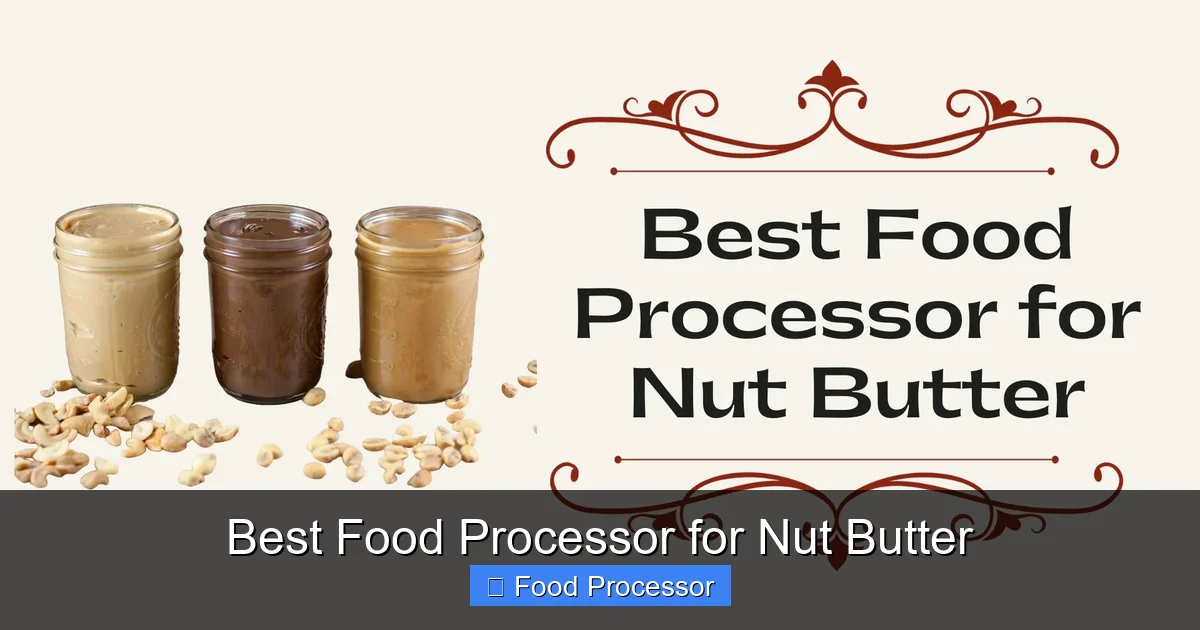
Visual guide about Best Food Processor for Nut Butter
Image source: kitchenthinker.com
Step 2: Load the Food Processor
Quantity Matters
Add your cooled nuts to the bowl of your food processor, fitted with the S-blade.
- Don’t Overload: Fill the bowl no more than two-thirds full. Overfilling can strain the motor and prevent proper circulation.
- Don’t Underload: Too few nuts might not make enough contact with the blade to get a good grind. Aim for at least 1-2 cups of nuts.
Step 3: Begin Processing
This is where the magic happens! The process generally goes through several distinct stages. Be patient and trust your food processor.
Initial Chopping (Rough Texture)
Start by pulsing the nuts a few times to break them down into smaller, uniform pieces. Then, switch to continuous processing.
Grinding into Meal (Finer Texture)
The nuts will transform from rough pieces into a coarse, crumbly meal. This can take about 1-3 minutes. At this stage, it might look like you’re making nut flour, not butter. Keep going!
Forming a Ball (Nuts Clump)
As the processing continues, the oils will start to release, and the nut meal will clump together, forming a ball that rolls around the bowl. This is a good sign! It might look like it’s never going to get smooth, but you’re on your way.
Practical Tip: You might need to stop and scrape down the sides of the bowl a few times during this stage to ensure all nuts are incorporated.
The “Magic” Stage: Becoming Creamy (Oils Release)
Suddenly, the ball will start to break down. The nuts will appear wet and pasty, then slowly transform into a thick, smooth, and creamy liquid. This is the stage where the natural oils are fully emulsifying. This can take anywhere from 5 to 15 minutes in total, depending on the nuts and your food processor’s power.
Achieving Desired Consistency
Continue processing until your nut butter reaches your desired consistency – smooth, extra creamy, or even slightly chunky if you prefer. For a chunkier texture, you can add a handful of chopped nuts back in at the very end and pulse a few times.
Practical Tip: Scrape down the sides of the bowl frequently, every minute or two, to ensure everything gets processed evenly. This also prevents the motor from working too hard on just the bottom layer of nuts.
Step 4: Flavoring and Sweetening (Optional)
Once your nut butter is at the desired consistency, you can customize it!
- Salt: A pinch of sea salt enhances the flavor of almost any nut butter. Add 1/4 to 1/2 teaspoon per cup of nuts.
- Sweetener: For a touch of sweetness, add a drizzle of maple syrup, honey, or a few dates. Start with a small amount and taste.
- Spices: Cinnamon, vanilla extract, or even a touch of pumpkin pie spice can add wonderful depth.
- Other Add-ins: Consider cocoa powder for chocolate nut butter, or even a tiny amount of neutral oil (like grapeseed or coconut oil) if your butter is too thick (though usually not necessary with a good food processor).
Process for another 30 seconds to a minute to fully incorporate any additions.
Step 5: Storing Your Homemade Nut Butter
Transfer your fresh nut butter to a clean, airtight jar or container.
- Storage: Store at room temperature for up to 2 weeks, or in the refrigerator for up to 1 month. Refrigeration can make it firmer, so let it sit out for a few minutes before using if you prefer a softer spread.
- Separation: Natural separation of oils can occur, especially if you haven’t added any stabilizers. Simply stir it well before each use.
Tips for Perfect Nut Butter Every Time
Here are some additional insights to help you get the best results:
- Use Good Quality Nuts: Fresh, high-quality nuts will yield the best flavor and texture. Stale nuts can result in dull-tasting butter.
- Don’t Rush It: The transformation from nuts to butter takes time. Be patient and let your food processor do its job. Stopping too early is the most common mistake.
- Scrape, Scrape, Scrape: We can’t emphasize this enough. Regular scraping ensures all the nuts get processed evenly and prevents the motor from overworking.
- Listen to Your Food Processor: If the motor sounds like it’s straining or gets very hot, turn it off for a few minutes to let it cool down. Overheating can damage the motor.
- Add a Touch of Oil (Rarely Needed): For some very dry nuts, or if you prefer an exceptionally runny consistency, you can add a teaspoon or two of neutral oil (like grapeseed, coconut, or even the nut’s own oil) at the very end. This is usually only necessary if you’re making something like pumpkin seed butter or a very specific blend.
- Experiment with Different Nuts: Almond, cashew, peanut, pecan, walnut, sunflower seed – the possibilities are endless! Each nut has its own processing time and unique flavor. Consider making delicious peanut butter if that’s your favorite.
Troubleshooting Common Nut Butter Issues
Even with the best compact food processor for small cabinets or a full-sized powerhouse, you might encounter a few snags. Here’s how to fix them:
My Nut Butter is Too Dry/Crumbly:
Solution: Keep processing! This is the most common issue. The nuts just haven’t released enough of their natural oils yet. If after significant processing (10-15 minutes total) it’s still too dry and your food processor is running hot, you can add 1-2 teaspoons of a neutral oil (like grapeseed oil) or a bit of the same nut oil to help it along. However, this is rarely needed for most common nuts like almonds or peanuts.
My Food Processor is Overheating:
Solution: Turn it off immediately. Give your machine a break for 10-15 minutes to cool down. Then resume processing. To prevent this, ensure you’re not overloading the bowl and scrape down the sides frequently to help the nuts circulate better.
The Nuts are Stuck to the Sides:
Solution: Stop the machine, remove the lid, and scrape down the sides of the bowl thoroughly with a spatula. Push all the nut material down towards the blade. This is a crucial step to ensure even processing and prevent motor strain.
It’s Taking Forever!
Solution: Again, patience is key. The process can feel long, especially the transition from the “ball” stage to creamy. Ensure your food processor has enough power (at least 600 watts). If you’re using raw nuts, lightly roasting them beforehand can help speed up oil release. Also, double-check that you haven’t overloaded the bowl.
Uneven Texture:
Solution: This usually means you haven’t scraped down the sides enough. Stop the machine, scrape everything down into the blade’s path, and continue processing. Ensure all the nuts are constantly making contact with the blade.
Beyond Basic Nut Butter
Your powerful food processor isn’t just a one-trick pony! Once you’ve mastered basic nut butter, consider these exciting possibilities:
- Nut & Seed Butter Blends: Combine different nuts (e.g., almond-cashew) or add seeds like flax or chia for extra nutrition.
- Flavored Butters: Get creative with additions like chocolate chips (for a “Nutella”-like spread), dried fruits, coconut flakes, or even a swirl of maple syrup and cinnamon.
- Other Food Processor Delights: Your food processor is also perfect for making pesto, hummus, chopping vegetables for salads, or even preparing delicious protein balls.
Conclusion
Congratulations! You’re now equipped with the knowledge to select the best food processor for nut butter and transform simple nuts into incredibly delicious, healthy, and customizable spreads. Making your own nut butter is not only cost-effective but also gives you complete control over the ingredients, avoiding unwanted additives.
Embrace the process, be patient with your machine, and don’t be afraid to experiment with different nuts and flavors. Your kitchen is now a nut butter factory, ready to churn out nutritious and tasty treats for you and your family. Enjoy your homemade creations!
