
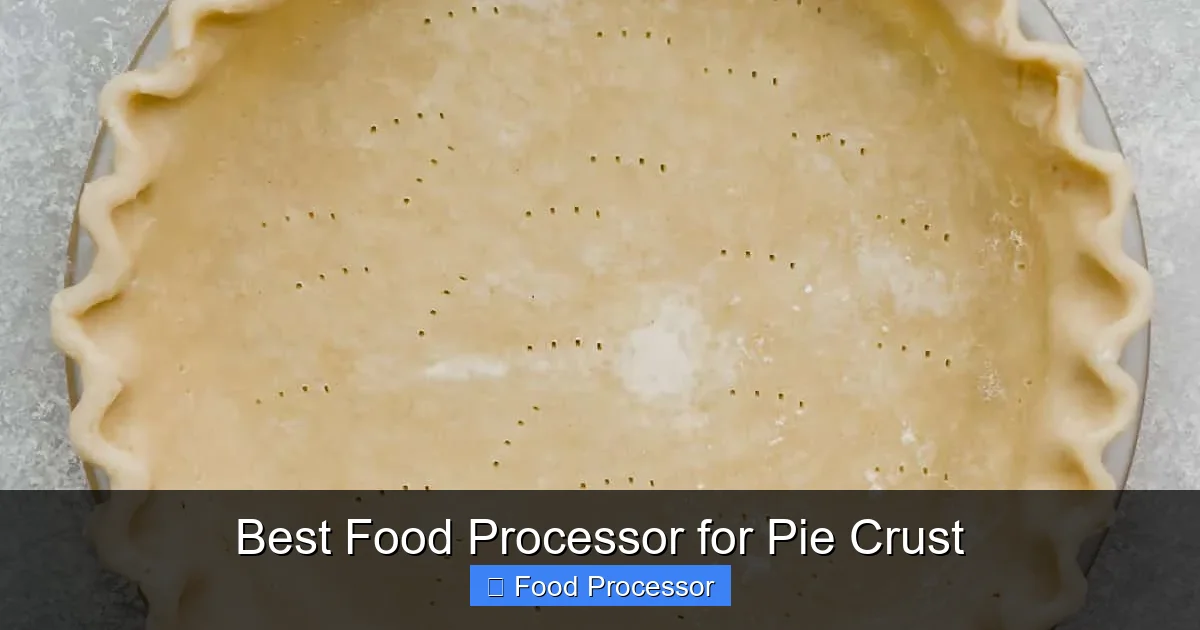
Achieving a flaky, tender pie crust is easier than ever with the right food processor. This guide helps you choose the ideal appliance, focusing on essential features like motor power, bowl capacity, and the crucial pulse function. You’ll learn how to quickly and efficiently make perfect pie dough, saving time and avoiding overworked gluten for truly delicious results.
Welcome, fellow bakers and pie enthusiasts! If you’ve ever dreamt of effortlessly creating a perfectly flaky, tender pie crust, you’ve come to the right place. Making pie crust can sometimes feel like a delicate dance between flour, butter, and patience. But what if there was a kitchen gadget that could simplify this process, making it not just easier, but also more consistent? Enter the food processor!
In this comprehensive guide, we’re going to dive deep into selecting the best food processor for pie crust. We’ll explore the essential features that make a food processor excel at dough-making, provide some general recommendations on what to look for, and then walk you through a step-by-step process to achieve pie crust perfection. By the end, you’ll be well-equipped to choose your ideal appliance and whip up delicious pies that will impress everyone.
Key Takeaways
- Motor Power is Key: Look for a food processor with at least 600-700 watts for efficient processing of cold butter and flour without strain, ensuring even mixing.
- Capacity Matters for Bakers: A 10-14 cup bowl is ideal for most pie crust recipes, allowing ample space for ingredients to be processed without overcrowding.
- The Pulse Function is Crucial: This feature gives you precise control, preventing overmixing and ensuring the butter remains in pea-sized pieces, which is essential for flaky crusts.
- Cold Ingredients are Non-Negotiable: Always use very cold butter and ice water. The food processor’s speed helps maintain this temperature, but starting cold is vital for preventing gluten development.
- Don’t Overmix the Dough: The goal is just to bring the ingredients together until a shaggy dough forms. Overmixing in a food processor can quickly lead to a tough crust.
- Dough Blade vs. S-Blade: While an S-blade works effectively, some food processors offer a specialized dough blade which can be gentler and minimize gluten development.
- Consider Durability and Stability: A sturdy base and high-quality construction mean your food processor can handle the demands of dense dough, lasting longer and operating more safely.
Why a Food Processor is Your Pie Crust’s Best Friend
For generations, pie crusts were made by hand, often using a pastry blender or fingertips to cut butter into flour. While this method certainly works, it comes with its challenges:
- Time-Consuming: It takes effort and time to get the butter evenly distributed.
- Risk of Overworking: Excessive handling warms the butter and develops gluten, leading to a tough, rather than flaky, crust.
- Inconsistent Results: Achieving the perfect pea-sized butter pieces can be tricky every time.
A food processor revolutionizes this process. Here’s why it’s a game-changer for pie crust:
- Speed: It rapidly cuts cold butter into flour in mere seconds, minimizing the risk of warming the butter.
- Consistency: It creates uniform butter pieces, which are crucial for that coveted flaky texture.
- Less Handling: Your hands never touch the dough until it’s ready to be formed, drastically reducing gluten development.
- Efficiency: It simplifies the process, making pie baking less daunting and more enjoyable.
In essence, using a food processor for pie crust takes the guesswork and much of the manual labor out of the equation, letting you focus on the delicious filling!
Key Features to Look for in the Best Food Processor for Pie Crust
Choosing the best food processor for pie crust isn’t about finding the most expensive model, but rather one that has the right combination of features for the job.
Motor Power (Wattage)
This is perhaps the most critical factor. Making dough, especially with cold butter, requires a strong motor.
- Recommendation: Look for a food processor with at least 600-700 watts. Higher wattage (900-1200+ watts) is even better, especially if you plan to make large batches or other thick doughs. A powerful motor ensures the blades can efficiently cut through the cold butter without stalling or overheating. It also contributes to the appliance’s overall durability and longevity. If you frequently handle thick dough recipes, a robust motor is non-negotiable.
Bowl Capacity
The size of the work bowl dictates how much dough you can make at once.
- Recommendation for Pie Crust: For a single pie crust (which typically uses 1 to 1.5 cups of flour), an 8-cup food processor might suffice. However, for double-crust pies, larger recipes, or general versatility, a 10-14 cup capacity is ideal. This size allows enough room for the ingredients to circulate properly without becoming too dense or overpacked, which is essential for even mixing.
Blade Type
Most food processors come with a standard S-shaped blade, also known as a chopping blade. Some models also include a specialized dough blade.
- S-Blade: This is perfectly adequate and effective for pie crust. Its sharp edges quickly cut the butter into the flour.
- Dough Blade: If your food processor includes one, it’s often a plastic S-shaped blade. It’s designed to gently mix and knead dough, minimizing gluten development. While not strictly necessary for pie crust (the pulse function with an S-blade works wonders), it can be a nice bonus.
Speed Settings (The All-Important Pulse Function)
While multiple speed settings are good, the pulse function is absolutely essential for pie crust.
- Pulse Function: This allows you to run the motor in short bursts, giving you ultimate control over the consistency of your ingredients. For pie crust, you want to cut the butter into flour until it resembles coarse meal with some pea-sized pieces remaining. The pulse function lets you achieve this precise texture without continuous blending, which can quickly overmix the dough and warm the butter.
Durability and Stability
A good food processor should feel solid and stable on your countertop.
- Sturdy Base: A heavy, non-slip base prevents the unit from “walking” across the counter during operation, especially when processing dense ingredients.
- High-Quality Construction: Look for durable plastic or stainless steel components that can withstand regular use.
Ease of Cleaning
Let’s be honest, no one wants a difficult cleanup after baking!
- Dishwasher-Safe Parts: Bowls, lids, and blades that are dishwasher-safe make post-baking cleanup a breeze.
- Simple Design: Fewer nooks and crannies mean less food gets trapped, simplifying hand washing if needed.
Top Characteristics of the Best Food Processor for Pie Crust
While we won’t recommend specific brands, based on the features above, the best food processor for pie crust will generally possess these characteristics:
- A robust motor (700+ watts).
- A spacious work bowl (10-14 cups).
- A reliable and responsive pulse function.
- Durable construction that ensures stability during use.
- Easy-to-clean components.
For those with limited counter space, you might want to explore options like the best compact food processor for small cabinets, but ensure it still meets the power and capacity requirements for pie dough.
Step-by-Step: Making Perfect Pie Crust in Your Food Processor
Ready to put your food processor to the test? Here’s how to make a beautiful, flaky pie crust.
Gather Your Ingredients and Tools
You’ll need:
- 2 ½ cups all-purpose flour
- 1 teaspoon salt
- 1 cup (2 sticks) unsalted butter, very cold and cut into ½-inch cubes
- ½ cup ice water (plus a tablespoon or two extra, if needed)
- Your chosen food processor with the S-blade installed.
Tip: Place your flour, salt, and even the food processor bowl (if you have room) in the freezer for 15-20 minutes before starting. This helps keep everything super cold!

Visual guide about Best Food Processor for Pie Crust
Image source: nofrillskitchen.com

Visual guide about Best Food Processor for Pie Crust
Image source: eviltwin.kitchen
Prepare the Food Processor
Ensure your food processor is clean and the S-blade is securely installed in the work bowl. Lock the lid into place.
Pulse Dry Ingredients
Add the flour and salt to the food processor bowl. Pulse 2-3 times to combine them thoroughly. This ensures even seasoning throughout your crust.
Add Cold Butter
Scatter the very cold, cubed butter over the flour mixture in the food processor. Ensure the butter pieces are separated and not clumped together. Starting with extremely cold butter is critical for flaky pie crust, as it creates pockets of steam during baking.
Pulse Until Crumbly
Process the mixture using the pulse function. Press and release the pulse button in short bursts (1-second pulses). Do this about 10-15 times, or until the mixture resembles coarse meal with some pea-sized pieces of butter still visible. It’s okay to have a range of butter sizes; the pea-sized chunks are what lead to flakiness.
Caution: Do not over-process! If you blend continuously, the butter will get too warm and incorporate too much into the flour, leading to a tough, less flaky crust.
Add Ice Water Gradually
With the food processor running on a continuous low speed (or by pulsing rapidly), slowly drizzle the ice water through the feed tube, a tablespoon at a time. Start with ½ cup.
Pulse Until Dough Forms
Continue pulsing or running on low speed only until the dough just begins to come together. The mixture will look shaggy, and some pieces might still appear dry, but it should hold together when pinched. This usually takes another 5-10 pulses after adding the water.
Important: Stop immediately when the dough starts to clump. You do not want a smooth ball of dough forming in the processor. An overworked dough will be tough. If you find yourself in a situation without a food processor, you can still make a great crust by hand, though it requires more effort and attention to temperature control. To learn more about alternative methods, you can read our guide on what to do without a food processor for pie crust.
Remove, Form, Chill, and Roll
- Remove: Carefully transfer the shaggy dough from the food processor to a lightly floured surface or a large piece of plastic wrap.
- Form: Gently gather the dough and divide it into two equal discs (for a double-crust pie) or one larger disc (for a single-crust pie). Flatten each disc slightly. Handle the dough as little as possible to prevent warming and overworking.
- Wrap: Tightly wrap each disc in plastic wrap.
- Chill: Refrigerate the dough for at least 30 minutes, or preferably an hour or two. This chilling period allows the gluten to relax, the butter to firm up, and the flour to fully hydrate, making the dough easier to roll out and preventing shrinkage during baking.
- Roll: Once chilled, your dough is ready to be rolled out and used in your favorite pie recipe!
Tips for Success with Your Food Processor Pie Crust
- Always Use Very Cold Ingredients: This cannot be stressed enough. Cold butter creates steam in the oven, which leads to flakiness. Cold water helps keep the butter cold and inhibits gluten development.
- Dice Butter Evenly: Smaller, more uniform pieces of butter allow for more even distribution in the flour mixture.
- Use the Pulse Button Wisely: It’s your best friend for pie crust. Short, quick pulses prevent overheating and overmixing. Resist the urge to let the machine run continuously.
- Don’t Overmix the Dough: Stop processing as soon as the dough just begins to clump. It should look shaggy, not like a smooth, uniform ball.
- Chill, Chill, Chill: Chilling the dough is crucial. It helps firm up the butter, relaxes the gluten (making it easier to roll), and prevents the crust from shrinking in the oven.
- Avoid Adding Too Much Water: Too much water will make the dough sticky and tough. It’s better to have a slightly crumbly dough that you gently press together than a wet, sticky one. The exact amount of water can vary slightly depending on humidity and flour type.
Troubleshooting Common Pie Crust Issues
Even with the best food processor for pie crust, you might encounter a few hurdles. Here’s how to tackle them:
Crumbly Dough
Problem: The dough is too dry and won’t come together when you try to form a disc.
Solution: You likely didn’t add quite enough water. After chilling, if it’s still too crumbly to roll, sprinkle a tiny bit (half a teaspoon) of ice water over the dough, knead it very gently a few times just until it holds, then re-chill briefly. Be careful not to add too much, as this can lead to toughness.
Tough Crust
Problem: Your baked pie crust is hard, chewy, and not flaky.
Solution: This is almost always due to overworking the dough or adding too much water, which develops too much gluten. Remember to use the pulse function, stop as soon as the dough begins to clump, and handle it minimally when forming discs and rolling. Ensure your water is ice cold.
Sticky Dough
Problem: The dough is very sticky and hard to handle or roll out.
Solution: You might have added too much water. Try adding a tablespoon or two of flour to the dough, kneading it gently until it’s less sticky, then re-chilling thoroughly. A sticky dough can also be a sign that the butter has warmed up too much; chilling will help firm it up.
Shrinking Crust
Problem: Your pie crust shrinks significantly from the edges of the pie plate during baking.
Solution: This often happens if the dough wasn’t properly chilled, allowing the gluten to contract when heated. Ensure you chill your dough for at least 30 minutes, ideally longer. You can also “dock” the dough (prick the bottom with a fork) before blind baking to prevent bubbling and shrinkage. Rolling the dough slightly larger than your pie plate and trimming after fitting can also help.
Conclusion
A food processor is a truly invaluable tool for any home baker, especially when it comes to making pie crust. By understanding the key features like motor power, bowl capacity, and the indispensable pulse function, you can confidently choose the best food processor for pie crust that fits your needs. With the right equipment and the simple techniques outlined in this guide, you’ll be whipping up consistently flaky, tender, and utterly delicious pie crusts in no time. Say goodbye to tough, overworked dough and hello to homemade pie perfection! Happy baking!
