
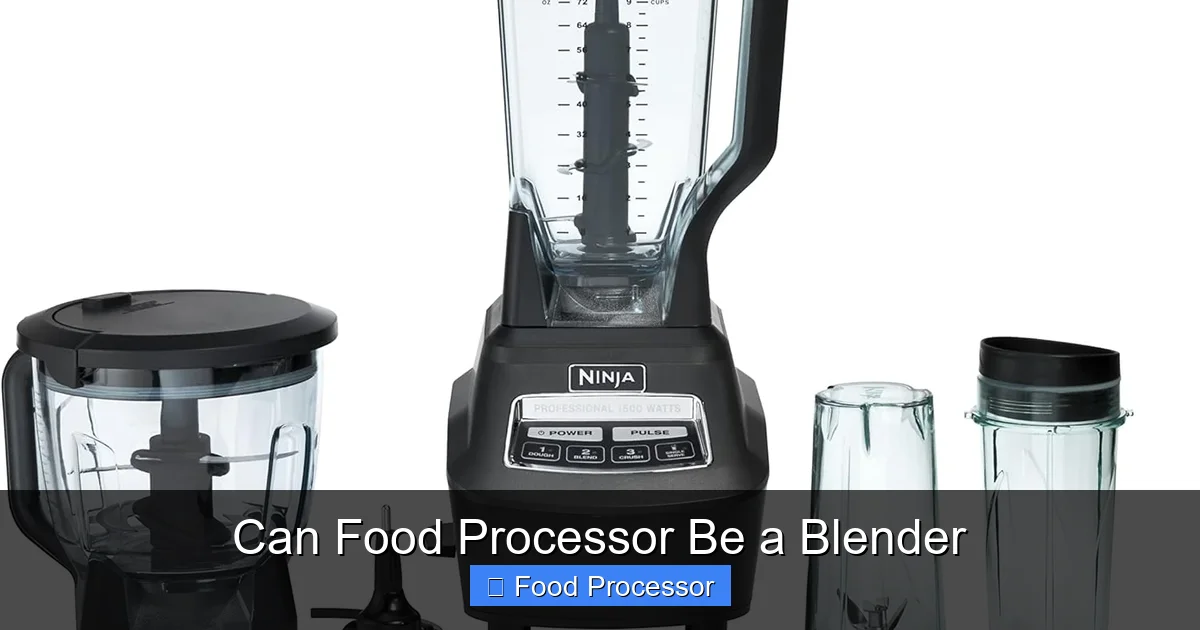
Wondering if your trusty food processor can handle blending tasks? The answer is a nuanced “yes,” but with important caveats. While a food processor can be a blender for thicker purees, sauces, and dips, it often struggles with the silky smooth consistency of traditional blenders, especially for thin liquids or ice. This guide will walk you through the precise steps and considerations to successfully use your food processor for blending, maximizing its versatility in your kitchen.
Can Food Processor Be a Blender
Ever found yourself in the middle of a recipe, needing to blend something, only to realize your blender is in the dishwasher or perhaps you don’t even own one? Many home cooks wonder, “Can my food processor be a blender?” It’s a fantastic question, and one that highlights the desire for versatile kitchen tools. The good news is, in many situations, your food processor can indeed step up to the plate and perform blending tasks quite effectively!
This comprehensive guide will show you exactly how to use your food processor as a blender. We’ll explore its capabilities and limitations, give you step-by-step instructions, and share practical tips to help you achieve the best possible results. By the end of this guide, you’ll be a pro at making your food processor pull double duty, saving you space, money, and time in the kitchen.
Key Takeaways
- Understand the Differences: Food processors excel at chopping, slicing, and shredding with wider, flatter blades, while blenders use strong, multi-tiered blades for smooth liquefying.
- It Depends on the Task: A food processor can be a blender for thick mixtures like hummus, pesto, nut butter, and chunky salsas, but not ideal for smoothies, soups, or crushing ice.
- Use the S-Blade: Always use your food processor’s standard S-blade (chopping blade) for any blending-like tasks, as other blades are designed for different functions.
- Pulse, Don’t Continuously Blend: The pulse function is your best friend. It gives you control, prevents overheating, and helps achieve desired textures without over-processing.
- Add Liquid Gradually: For smoother results, add liquids slowly through the feed tube while the machine is running (or pulsing), especially for thicker recipes.
- Process in Batches: Avoid overfilling your food processor. Processing ingredients in smaller batches ensures more efficient and even blending.
- Manage Expectations: While versatile, a food processor won’t achieve the same super-smooth, aerated consistency as a dedicated high-speed blender.
Understanding the Basics: Food Processors vs. Blenders
Before we dive into how to blend with a food processor, it’s crucial to understand the fundamental differences between these two kitchen workhorses. Knowing what sets them apart will help you decide when your food processor is the right tool for the job.
Food Processors: The Chopping Champions
Food processors are typically designed with a wide bowl and a broad, S-shaped blade (sometimes called a chopping blade). Their powerful motors often operate at lower RPMs than blenders but deliver high torque. This design makes them excellent for:
- Chopping vegetables
- Slicing and shredding (with disc attachments)
- Kneading dough
- Making chunky sauces and dips
- Grinding nuts and seeds
Their strength lies in processing solid foods into various textures, from coarsely chopped to finely minced, and even thick purees. If you’ve ever wondered why is a food processor different from a blender, it really comes down to these core functions and blade designs.
Blenders: The Liquefying Experts
Blenders, on the other hand, usually feature a tall, narrow jar and multi-tiered blades designed to create a powerful vortex. This vortex pulls ingredients down into the blades, resulting in incredibly smooth, often aerated, liquids. Blenders excel at:
- Making smoothies and milkshakes
- Pureeing soups and sauces to a silky consistency
- Crushing ice
- Emulsifying dressings
Their high-speed motors are built to liquefy ingredients, making them ideal for drinks and very fine purees.
When a Food Processor Can Be a Blender (And When It Can’t)
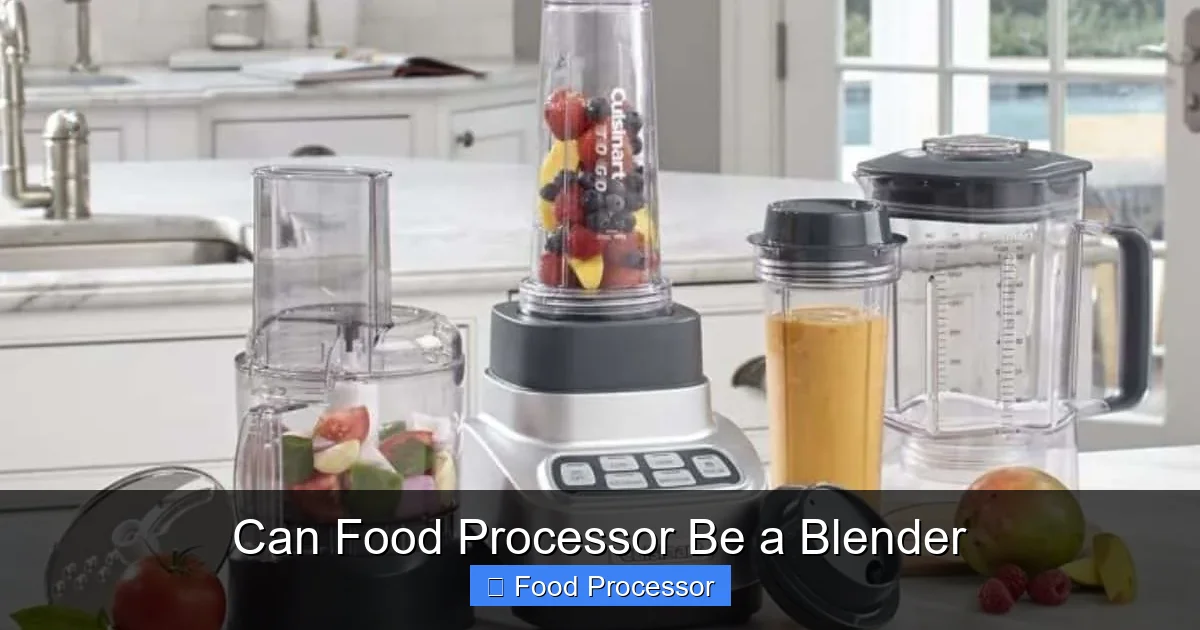
Visual guide about Can Food Processor Be a Blender
Image source: culinaryhill.com
While there are clear differences, there’s also an overlap where a food processor can effectively substitute for a blender.
Tasks Where Your Food Processor Shines as a Blender:
Your food processor is a fantastic choice for blending tasks that require a thicker, more textured consistency. Think about recipes where you want a smooth but not necessarily liquid end product.
- Thick Sauces and Dips: Pesto, hummus, chunky salsa, tapenade, and some salad dressings.
- Nut Butters: Almond butter, peanut butter, or cashew butter benefit from the food processor’s powerful motor and ability to handle dense ingredients.
- Thick Purees: Baby food (especially thicker purees), some fruit sauces, or vegetable purees that don’t need to be extremely thin.
- Crumbing and Mixing: Making breadcrumbs or mixing wet and dry ingredients for things like cookie dough or pie crust.
Many people find their food processor works great for these types of recipes, often asking can a food processor be used in place of a blender for these specific applications.
Tasks Where Your Food Processor Struggles as a Blender:
It’s important to manage your expectations. A food processor won’t always give you the same results as a dedicated blender.
- Smoothies and Shakes: While you *can* make a smoothie, it will likely be thicker and less smooth than one from a blender. Ice may not break down as finely. If your goal is a truly smooth beverage, you might be disappointed. This is why when asked can a food processor be used to make smoothies, the answer usually comes with a caveat.
- Liquefying Large Amounts of Liquid: The wide bowl and S-blade design don’t create the same vortex effect as a blender, meaning liquids can splash more, and ingredients may not be drawn into the blades as efficiently.
- Crushing Large Ice Cubes: While it can handle some ice, it might just chop it into smaller pieces rather than truly crushing it into a fine slush.
- Very Thin Soups: Achieving a completely silky, thin soup can be challenging without a blender’s high-speed liquefying power.
How to Use Your Food Processor as a Blender: Step-by-Step Guide
Visual guide about Can Food Processor Be a Blender
Image source: m.media-amazon.com
Ready to put your food processor to the test? Follow these steps to successfully blend with your food processor.
Step 1: Assess Your Task and Ingredients
Before you begin, consider what you’re trying to achieve and what ingredients you’re working with.
Consider the Consistency
If you need a thick paste, a chunky sauce, or a spread, your food processor is likely a good fit. If you need a perfectly smooth, drinkable liquid, adjust your expectations or consider if you truly need that level of smoothness.
Check Ingredient Volume
Food processors generally have larger bowls than blender jars. However, don’t overfill it when blending. Aim to fill the bowl no more than two-thirds full, especially with liquids, to prevent spills and allow ingredients to circulate properly.
Step 2: Choose the Right Blade
This is critical for blending tasks.
S-Blade for Blending
For any blending or pureeing, you’ll want to use the standard “S-blade” (also known as the chopping blade or processing blade). This is the blade that comes installed for most basic food processing tasks. It’s designed to chop and mix efficiently, which is exactly what you need for blending. Do not use slicing or shredding discs for blending.
Step 3: Prepare Your Ingredients
Proper ingredient preparation can make a big difference in the final texture and efficiency.
Chop Large Pieces
Even though your food processor is powerful, helping it out by chopping larger ingredients into smaller, more manageable pieces (about 1-inch cubes) will make the blending process smoother and faster. This is especially true for harder vegetables or fruits.
Add Liquids Strategically
If your recipe includes liquids, it’s often best to add some liquid first to the bottom of the bowl, followed by the solids. This helps create a base for the blades to work with and reduces the chance of solids getting stuck. For very thick mixtures, you might need to add liquid gradually as you process.
Step 4: Assemble and Process
Safety first! Ensure your food processor is properly assembled before you turn it on.
Secure the Lid
Always make sure the food processor lid is securely locked in place. Most food processors have safety mechanisms that prevent them from operating if the lid isn’t properly attached.
Use the Pulse Function
This is your most important tool when using a food processor to blend. Instead of continuous blending, use short, rapid pulses.
- Press and release the “Pulse” button repeatedly.
- This allows you to control the texture precisely, prevents overheating, and helps push ingredients down towards the blades.
- Start with a few quick pulses, then check the consistency.
Scrape Down Sides
Ingredients, especially thicker ones, tend to stick to the sides of the bowl. After a few pulses, turn off the machine, remove the lid, and use a spatula to scrape down the sides of the bowl. This ensures all ingredients are incorporated evenly and blended to the same consistency. Repeat this step as needed.
Step 5: Achieving Desired Consistency
Patience and observation are key here.
Add More Liquid as Needed
If your mixture is too thick or isn’t blending smoothly, add a small amount of liquid (water, broth, oil, etc.) one tablespoon at a time through the feed tube while the machine is pulsing or running. This will help thin out the mixture and aid the blades in processing.
Process in Short Bursts
Continue pulsing and scraping until you reach your desired consistency. For very smooth results, you might need to process for a bit longer, but always do so in short bursts to avoid overworking the motor.
Practical Tips for Success
To get the most out of your food processor’s blending capabilities, keep these tips in mind:
- Don’t Overfill: As mentioned, filling the bowl more than two-thirds full can lead to uneven blending, splashing, and motor strain. Less is more when aiming for smooth results.
- Pulsing is Key: Seriously, master the pulse button. It gives you control and prevents your ingredients from turning into an over-processed, warm mush.
- Add Liquid First (or with Solids): For optimal circulation, always place some of your liquid ingredients at the bottom of the bowl before adding solids. If you’re starting with mostly solids, add liquid through the feed tube as you pulse.
- Scrape Down Regularly: This cannot be stressed enough. For even blending, regularly stop and scrape down the sides of the bowl.
- Patience Pays Off: Achieving a smooth consistency with a food processor might take a little longer and require more stops and starts than with a blender. Don’t rush it.
- Know Your Machine’s Limits: If your food processor starts to sound strained or gets hot, give it a break. Pushing it too hard can lead to motor damage.
Troubleshooting Common Issues
Even with the best techniques, you might run into some hiccups. Here’s how to address them:
Ingredients Are Stuck on the Sides or Not Blending
This is very common with thicker mixtures.
- Solution: Turn off the machine, scrape down the sides of the bowl with a spatula, and rearrange the ingredients. If it’s still stuck, add a tablespoon or two of liquid (water, oil, broth, etc.) and pulse again.
Mixture Isn’t Smooth Enough
You’re trying to get a smoother consistency, but it’s still chunky.
- Solution: Continue pulsing, scraping down the sides, and adding small amounts of liquid if the mixture is too thick. Ensure all your solid ingredients were chopped into small pieces before you started. The longer you process (with breaks), the smoother it will generally become.
Motor Seems to Be Struggling or Overheating
If your food processor is making unusual noises or feels hot to the touch.
- Solution: Turn off the machine immediately and let it rest for a while. You might have overloaded it or been running it continuously for too long. Process in smaller batches or add more liquid to ease the load on the motor. Check your user manual for recommended continuous run times; some machines are not designed to run for more than 30-60 seconds at a stretch. A general guide for how long you can leave a food processor running can be found in your appliance’s manual.
Specific Recipes Where Your Food Processor Excels as a Blender
Here are a few examples of recipes where your food processor can truly shine as a blending alternative:
- Hummus: The food processor is often the preferred tool for making creamy hummus. It handles chickpeas, tahini, and lemon juice beautifully. If you’ve ever wondered should I make hummus in blender or food processor, many chefs lean towards the food processor for its superior ability to create that perfect, slightly textured but smooth dip.
- Pesto: For vibrant pesto, the food processor chops herbs, nuts, cheese, and garlic while emulsifying the olive oil into a rich sauce.
- Salsa: From chunky pico de gallo to smoother restaurant-style salsa, the pulse function of a food processor gives you ultimate control over the texture.
- Nut Butters: Making homemade peanut butter or almond butter is a lengthy process, but a food processor can handle it, transforming nuts into creamy spreads. Just be patient and scrape often!
- Thick Dressings: Creamy dressings based on yogurt, sour cream, or mayonnaise blend beautifully in a food processor.
Conclusion
So, can a food processor be a blender? Absolutely, for a wide range of tasks! While it may not replace a dedicated high-speed blender for every single job, especially those requiring ultra-smooth, aerated liquids or heavy-duty ice crushing, your food processor is incredibly versatile. By understanding its strengths, knowing when to use the S-blade and the pulse function, and being mindful of proper ingredient preparation and liquid addition, you can successfully use your food processor for numerous blending needs.
Embrace the flexibility of your food processor. It’s a powerhouse appliance that can save you space and money, proving that with a little know-how, one tool can often do the job of two. Happy processing (and blending)!
