

Don’t panic if your Cuisinart food processor doesn’t work! Often, simple checks like power supply, proper assembly, or safety interlock issues are the culprits. This comprehensive guide provides clear, step-by-step instructions to troubleshoot the most common problems. You’ll learn how to identify the cause, perform basic repairs, and get your reliable kitchen helper back in action quickly, making meal prep a breeze once more.
Cuisinart Food Processor Doesn’t Work
There’s nothing quite like the frustration of reaching for your trusty Cuisinart food processor, only to find it won’t work. This essential kitchen appliance makes meal prep so much easier, whether you’re chopping vegetables, pureeing sauces, or kneading dough. When it suddenly stops cooperating, it can throw a wrench into your cooking plans.
But don’t despair! Most of the time, when a Cuisinart food processor doesn’t work, the problem isn’t a major breakdown. Instead, it’s often something simple that you can easily fix yourself. Cuisinart machines are known for their durability and robust safety features, which means they might seem “broken” when they’re just protecting themselves.
This comprehensive guide will walk you through a step-by-step troubleshooting process. We’ll cover everything from basic power checks to intricate assembly issues and motor overload protection. By the end, you’ll have the knowledge to diagnose and fix most common problems, getting your Cuisinart food processor back to full working order in no time.
Key Takeaways
- Start with the Basics: Always check power supply (outlet, cord, circuit breaker) first. Many “Cuisinart food processor doesn’t work” issues stem from simple electrical problems.
- Master Assembly is Crucial: Cuisinart food processors have sophisticated safety interlocks. Ensure the bowl, lid, blade, and pusher are all correctly aligned and locked into place for the unit to operate.
- Understand Overload Protection: If your Cuisinart food processor suddenly stops or won’t start, it might have tripped its internal overload protector due to too much food or a dense ingredient. Allow it to cool and reset.
- Inspect Blades and Spindle: A jammed or improperly seated blade is a common reason for a Cuisinart food processor not working or the blade not spinning. Always ensure the blade is securely in place and free from obstructions.
- Regular Maintenance Prevents Problems: Keeping your food processor clean and storing it correctly can prevent many issues. Avoid overloading the machine to extend its lifespan.
- When to Seek Help: For persistent issues or complex electrical problems, consult your Cuisinart warranty or contact customer service. Sometimes, professional repair or replacement is the best course of action.
1. Start with the Basics: Power and Plug
It might sound obvious, but the simplest solutions are often overlooked. When your Cuisinart food processor doesn’t work, the first place to look is its power source.
Is it Plugged In?
First things first: double-check that your Cuisinart food processor is firmly plugged into a working electrical outlet. Sometimes, the plug can become loose, or you might have simply forgotten to plug it in entirely during a busy cooking session. Ensure it’s pushed all the way in.
Check the Outlet and Circuit Breaker
If the food processor is plugged in but still shows no signs of life, the problem might not be the appliance itself. Test the outlet by plugging in another small appliance, like a phone charger or a lamp. If that device also doesn’t work, you’ve found your culprit: a dead outlet.
- Reset the Circuit Breaker: A tripped circuit breaker is a common reason why an outlet might lose power. Head to your electrical panel (usually in your basement, garage, or utility closet) and look for a breaker that’s flipped to the “off” position or in the middle. Flip it firmly to “off” and then back to “on.”
- GFCI Outlets: Kitchens often have Ground Fault Circuit Interrupter (GFCI) outlets, identifiable by “TEST” and “RESET” buttons. If your Cuisinart food processor is plugged into one, try pressing the “RESET” button. This often restores power if the GFCI has tripped. If your food processor won’t turn on, checking these power sources is crucial.
Inspect the Power Cord
Carefully examine the power cord of your Cuisinart food processor for any visible damage. Look for cuts, frayed wires, or kinks. A damaged cord can prevent power from reaching the motor. If you find any damage, do not use the food processor. A damaged cord is a safety hazard and needs professional repair or replacement of the appliance.
2. Master the Assembly: The Safety Interlock System
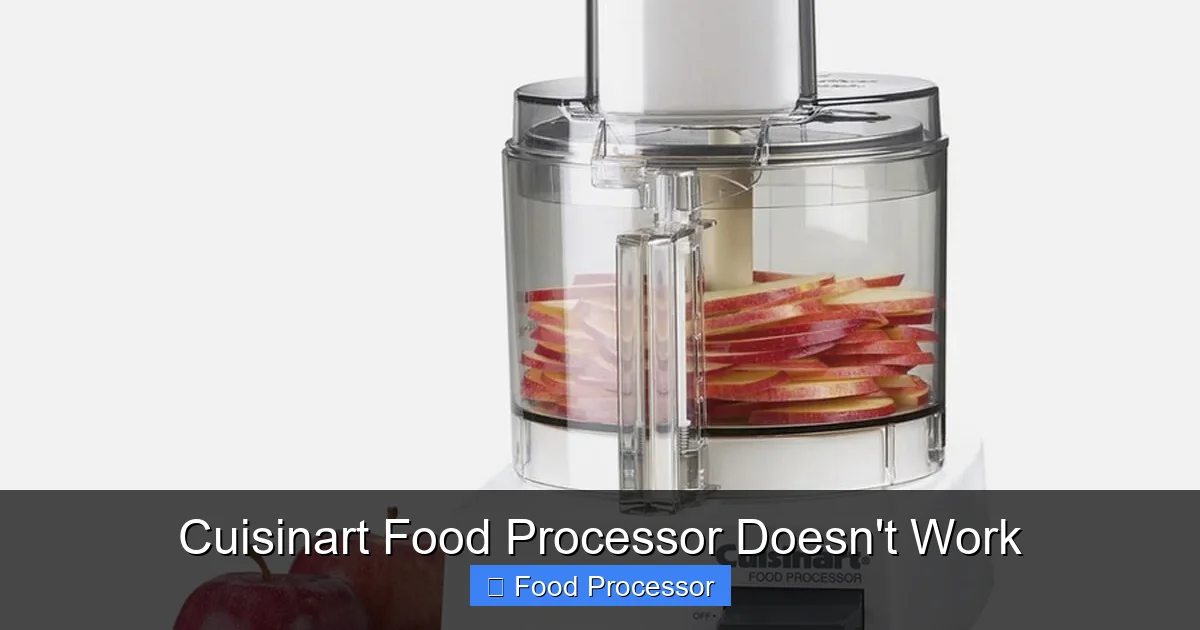
Cuisinart food processors are designed with multiple safety features to prevent accidental operation. These often involve interlocking mechanisms that require all parts to be correctly assembled and locked into place before the motor can engage. This is the most common reason why a Cuisinart food processor doesn’t work, even if it has power.
Visual guide about Cuisinart Food Processor Doesn’t Work
Image source: cuisinart.com
The Bowl and Lid Alignment
Every Cuisinart food processor has a specific way the work bowl and lid must be attached. There are usually alignment arrows or markings that you need to match up. Once aligned, you twist the bowl onto the base, and then the lid onto the bowl until you hear a “click” or feel it securely lock. If the bowl or lid is even slightly misaligned, the safety interlock switch won’t engage, and the processor won’t start.
- Ensure a Firm Twist: Make sure you’re twisting the lid firmly until it clicks into its locked position. Don’t be afraid to apply a little pressure.
- Check for Obstructions: Sometimes food debris can get lodged in the locking mechanism, preventing it from fully closing. Clean around the rim of the bowl and the lid’s locking tabs.
Blade and Stem Placement
Before attaching the bowl and lid, you need to correctly place the blade or disc. The stem or spindle (the central shaft) must be properly seated onto the motor shaft in the base. Then, the blade or disc needs to slide down over the stem and usually lock into place. If the blade isn’t fully seated, it might prevent the lid from closing correctly or prevent the motor from engaging even if the lid is closed.
To ensure proper operation, it’s vital to know how to assemble your food processor parts correctly every time.
The Pusher and Feed Tube
On some Cuisinart models, the food pusher itself can also be part of the safety interlock system. Ensure it’s correctly inserted into the feed tube, sometimes requiring a twist or a firm push for the processor to operate.
Understanding the Safety Mechanism
Imagine your Cuisinart food processor as having tiny switches that need to be pressed down in a specific order for it to work. Each part—the bowl, the lid, and sometimes the pusher—activates one of these switches when correctly assembled. If any switch isn’t activated, the electrical circuit remains open, and the motor won’t receive power. This design prevents injuries by ensuring the blades can’t spin when exposed.
3. Listen to the Motor: Overload and Overheating
Your Cuisinart food processor is a powerful appliance, but even strong machines have limits. Overloading or overheating can trigger safety mechanisms that cause the unit to stop working.
Visual guide about Cuisinart Food Processor Doesn’t Work
Image source: costco97.com
Too Much Food: The Overload Protector
Cuisinart food processors have an internal thermal overload protector. This is a safety feature designed to prevent the motor from burning out. If you try to process too much food at once, or ingredients that are too hard or dense (like a very large batch of stiff dough or rock-hard ice), the motor can strain and overheat. When this happens, the overload protector automatically shuts off the motor.
- How to Reset:
- Unplug the food processor immediately.
- Remove all food from the work bowl and disassemble the unit.
- Let the motor cool down completely. This can take anywhere from 10 to 30 minutes, sometimes even longer for larger models.
- Once cool, reassemble the unit without food.
- Plug it back in and try to start it.
- Prevention: Always process ingredients in smaller batches. For hard foods, cut them into smaller, manageable pieces before adding them to the bowl.
Give it a Break: Overheating
Even without a complete overload, continuous use for extended periods can cause the motor to get too hot. This is common when making nut butters or other recipes that require several minutes of continuous processing. If your Cuisinart food processor stops mid-operation, and you’ve been using it for a while, overheating might be the cause. Follow the same steps as for overload protection: unplug, disassemble, let it cool down, and then try again.
Jammed Blade or Spindle
Sometimes, a piece of food can get wedged beneath the blade or between the blade and the bowl, preventing it from spinning freely. This can cause the motor to hum but not move the blade, or it can trigger the overload protector.
- Careful Inspection: Unplug the unit, remove the lid and bowl, and then carefully remove the blade. Check for any food particles or debris that might be causing a jam.
- Clean Thoroughly: Clean the blade, the spindle, and the bottom of the work bowl. Ensure the spindle on the motor base is clear as well. If your food processor blade isn’t spinning, a jam is a very likely culprit.
4. Examine the Blades and Attachments
The blades and various attachments are crucial for your Cuisinart food processor’s function. Issues here can make it seem like the entire unit isn’t working.
Is the Blade Seated Properly?
As mentioned in the assembly section, the blade must be correctly seated on the motor shaft or stem. If it’s loose, tilted, or not fully engaged, it might wobble, not spin, or prevent the lid from locking properly. Always push it down firmly until it feels secure.
Dull or Damaged Blades
While less common, extremely dull blades or blades with nicks and bends can affect performance. If your Cuisinart food processor seems to be working but isn’t processing food effectively, or if it struggles more than usual, inspect the blade’s condition. Dull blades usually won’t prevent the motor from running, but they can make it sound strained. Damaged blades, however, might cause imbalance or friction, leading to other issues.
Attachments: Are They Right for the Job?
Ensure you’re using the correct attachment for the task. Using a shredding disc for pureeing, for example, won’t yield the desired results and might strain the motor unnecessarily. Refer to your Cuisinart owner’s manual for guidance on which blade or disc to use for different functions.
5. Control Panel and Buttons
Modern Cuisinart food processors often feature electronic control panels. While reliable, these can sometimes be a source of problems.
Sticky Buttons
Food spills or liquid splashes can cause buttons to become sticky or unresponsive. If a button isn’t fully depressing or is stuck, it might prevent the Cuisinart food processor from starting or changing speeds.
- Cleaning: Use a damp cloth (unplugged!) to carefully clean around the buttons. Avoid excessive moisture.
- Jammed Buttons: Gently try to work the button free. If it’s firmly stuck, it might indicate an internal issue.
Model-Specific Controls
Some Cuisinart models have specific start/stop sequences or pulse functions. Make sure you’re operating your particular model correctly. Consult your owner’s manual if you’re unsure about the button functions or sequences.
6. Deep Dive Troubleshooting: Specific Scenarios
Let’s look at some common “Cuisinart food processor doesn’t work” scenarios and their specific solutions.
Cuisinart Food Processor Doesn’t Turn On at All
- Initial Checks: Go back to Section 1 (Power and Plug) and Section 2 (Assembly and Safety Interlock). These are by far the most common reasons for a complete lack of power.
- Thermal Fuse: In rare cases, if the overload protection fails, a thermal fuse might blow. This is an internal component that requires professional repair and typically means the unit needs service or replacement.
Cuisinart Food Processor Turns On But Blade Doesn’t Spin
- Jammed Blade: This is the most likely culprit. Unplug, remove the blade, and thoroughly check for any food lodged underneath or around the spindle. (Refer to “Jammed Blade or Spindle” above).
- Improper Blade Seating: Ensure the blade is fully pushed down onto the spindle and locked.
- Motor Coupler Issues: The motor shaft has a coupler that connects to the blade assembly. If this coupler is stripped or damaged (often plastic), the motor might spin, but the blade won’t. This usually requires replacement of the coupler or the entire motor assembly, which is a job for a professional.
- Overload Protection: Even if it hums, a very heavy load can prevent the blade from spinning and trigger the protector. Unplug and allow it to cool.
Cuisinart Food Processor Makes Noise But Nothing Happens
If you hear a humming or whirring sound but no blade movement, it points to the motor running but not transferring power to the blade. This could be:
- Jammed Blade: As above, the motor is trying to turn, but something is blocking the blade.
- Stripped Motor Coupler/Drive Shaft: The connection between the motor and the blade is broken.
- Loose Blade: The blade is not properly secured to the drive shaft, so the motor spins freely without moving the blade.
Cuisinart Food Processor Stops Mid-Operation
- Overload Protection: You’ve likely overfilled the bowl or are processing a too-dense ingredient. Unplug, remove food, let it cool for 10-30 minutes, then try again with smaller batches.
- Overheating: Continuous use for an extended period can cause the motor to heat up and automatically shut down. Give it a break to cool down.
- Loose Assembly: Vibration from processing can sometimes cause the lid or bowl to loosen slightly, disengaging the safety interlock. Re-secure all parts firmly.
7. Maintenance Tips to Prevent Future Issues
A little regular care goes a long way in keeping your Cuisinart food processor in top condition and preventing it from stopping unexpectedly.
Regular Cleaning
Always clean your food processor parts immediately after use. Food debris, especially sticky or hard bits, can get stuck in crevices, around the blade, or in the safety interlock mechanisms. Use warm, soapy water. Most Cuisinart bowls, lids, and blades are top-rack dishwasher safe, but always check your manual.
Proper Storage
Store your Cuisinart food processor in a clean, dry place. Ensure all parts are fully dry before storing to prevent mildew or corrosion. Keep the parts assembled correctly or in their designated storage areas to avoid damage.
Don’t Overload
Always adhere to the maximum capacity lines on your food processor bowl. Overloading the machine is a primary cause of motor strain and trigger the overload protection. If a recipe calls for a large quantity, process it in smaller batches.
Cut Food Appropriately
For hard or large ingredients, pre-cut them into smaller, more uniform pieces before adding them to the food processor. This reduces the strain on the motor and helps prevent jams.
When to Call for Help or Consider Replacement
Sometimes, despite all your troubleshooting efforts, your Cuisinart food processor just won’t work, or the problem is beyond a simple fix. At this point, it’s time to consider professional help or even a new appliance.
Check Your Warranty
Cuisinart products often come with generous warranties. Check your purchase date and warranty information. If your food processor is still under warranty, contact Cuisinart customer service directly. They may offer free repair, replacement parts, or even a brand-new unit.
Contact Cuisinart Support
Even if your warranty has expired, Cuisinart’s customer support can provide valuable assistance. They might have specific troubleshooting tips for your model, or they can guide you to authorized service centers. Be prepared to describe the problem in detail and have your model number handy.
Professional Repair vs. New Purchase
For more complex issues, like a burnt-out motor, damaged internal wiring, or a stripped drive shaft that you can’t replace yourself, you’ll need to weigh the cost of professional repair against the cost of a new food processor.
Cuisinart food processors can be a significant investment, so a repair might be worthwhile if it’s a high-end model or a relatively minor fix. However, if the repair cost approaches the price of a new unit, especially for an older model, investing in a new one might be more economical in the long run. Consider also factors like Cuisinart Mini Prep Plus Food Processor reviews or a Cuisinart 24 Ounce Mini Food Processor review if you are contemplating a replacement.
Conclusion
It’s undeniably frustrating when your Cuisinart food processor doesn’t work, but as you’ve learned, many common problems have surprisingly simple solutions. From ensuring proper power and meticulous assembly to understanding the safety interlock system and respecting the motor’s limits, most issues can be resolved with a bit of patience and systematic troubleshooting.
By following the steps in this guide, you’re now equipped to handle many of the reasons your kitchen companion might act up. Remember, Cuisinart designs its appliances with your safety in mind, so those “malfunctions” are often just intelligent protective measures. Keep your appliance clean, use it correctly, and don’t be afraid to give it a break, and your Cuisinart food processor will continue to be a reliable workhorse in your kitchen for years to come.
