
Maharashtra offers a fertile ground for food processing businesses due to its diverse agricultural output, strategic location, and robust market. This comprehensive guide will help aspiring entrepreneurs navigate the journey from initial idea generation and in-depth market research to understanding crucial legal compliance, securing funding, and developing effective marketing strategies. Learn how to transform Maharashtra’s rich local produce into profitable, value-added products, ensuring both quality and sustainability for a thriving food processing business.
Food Processing Business Ideas in Maharashtra
Are you dreaming of starting a business that taps into Maharashtra’s rich agricultural bounty? Do you want to create delicious, value-added products and serve a massive consumer market? If so, diving into the world of food processing business ideas in Maharashtra could be your golden ticket! This vibrant state offers incredible opportunities, from abundant raw materials to supportive government policies and a large, diverse consumer base.
This comprehensive guide is designed to walk you through every essential step of launching a successful food processing venture in Maharashtra. We’ll cover everything from finding your unique niche and understanding market demands to navigating legal requirements, securing funding, setting up your infrastructure, and effectively marketing your products. By the end, you’ll have a clear roadmap to turn your entrepreneurial vision into a thriving reality.
The importance of food processing cannot be overstated. It reduces food waste, increases shelf life, creates new products, and adds significant economic value to agricultural produce. Maharashtra, with its diverse climate zones, produces a wide array of fruits, vegetables, grains, and spices, making it a perfect playground for innovative food processing businesses. Let’s get started on exploring these exciting possibilities!
Key Takeaways
- Strategic Location & Resources: Maharashtra provides a rich agricultural base and excellent connectivity, making it an ideal hub for food processing businesses.
- Market Research is Paramount: Thoroughly research the market to identify specific product niches and consumer demands, focusing on value-added products from local produce.
- Navigate Legalities & Funding: Understand and complete all necessary registrations (FSSAI, Udyam, GST) and actively seek out government schemes and subsidies to support your venture.
- Focus on Quality & Hygiene: Implement strict quality control measures, adhere to food safety standards, and invest in appropriate infrastructure and machinery for efficient and hygienic operations.
- Effective Branding & Marketing: Develop compelling branding, smart packaging, and diverse marketing strategies to reach your target audience and build a strong market presence.
- Embrace Innovation & Sustainability: Continuously innovate with new products or processes, adopt sustainable practices, and leverage technology for long-term growth and competitiveness in the food processing sector.
Step 1: Market Research & Idea Generation
Before you invest a single rupee, understanding the market is crucial. You need to know what consumers want, what competitors offer, and where the gaps are.
Identify Niche Products
Maharashtra is famous for many agricultural products. Think about what’s grown locally in abundance in your chosen region. Could it be mangoes, grapes, oranges, pomegranates, tomatoes, onions, or even various grains like jowar and bajra?
- Fruit & Vegetable Processing: Think beyond fresh sales. Jams, jellies, pickles, chutneys, squashes, dehydrated fruits/vegetables (e.g., onion flakes, garlic paste), fruit pulp, ready-to-eat salads, or frozen vegetable mixes are all excellent food processing business ideas in Maharashtra.
- Grain & Cereal Processing: Maharashtrian cuisine uses a lot of local grains. Consider producing traditional flours (like bhakri flour mixes), ready-to-cook breakfast mixes (upma, poha), fortified flours, or even healthy snack bars made from millets.
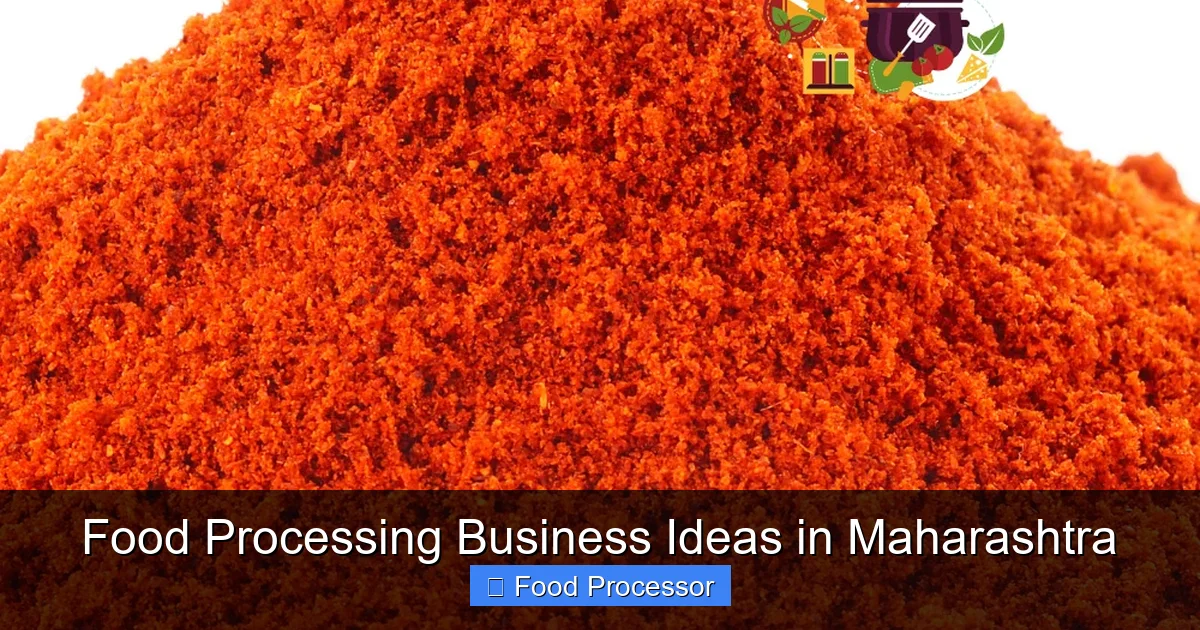
- Spice & Condiment Processing: Grinding, blending, and packaging spices (garam masala, goda masala), preparing pastes (ginger-garlic paste), or making sauces and marinades can be highly profitable.
- Dairy & Milk Products: If you have access to milk, consider paneer, curd, lassi, shrikhand, basundi, or even ice cream manufacturing.
- Snack Foods: Traditional snacks like ‘chivda’, ‘bhakarwadi’, ‘shankarpali’, or modern healthy alternatives using local ingredients have a huge market.
Local Produce Analysis
Focus on the specific crops that thrive in your chosen district. For example, Nashik is known for grapes and onions, Nagpur for oranges, Ratnagiri for mangoes, and Vidarbha for cotton and oranges.
- Seasonal Availability: Understand the harvest seasons. This will help you plan your production cycles and sourcing. You might need to invest in storage or preservation techniques to ensure year-round supply.
- Quantity & Quality: Assess the consistent availability of high-quality raw materials. Building relationships with local farmers is key.
- Value Addition Potential: How can you transform a basic ingredient into a premium product? For instance, turning fresh tomatoes into sun-dried tomatoes, purees, or sauces adds significant value.
Practical Tip: Visit local markets (mandis), talk to farmers, and observe what products are currently lacking or could be improved upon. Attend agricultural fairs to spot trends.
Step 2: Business Planning & Legal Formalities
Visual guide about Food Processing Business Ideas in Maharashtra
Image source: mynewbusinessideas.com
Once you have a solid idea, it’s time to build a robust foundation for your food processing business.
Develop a Robust Business Plan
A well-crafted business plan is your blueprint for success. It should cover:
- Executive Summary: A brief overview of your business idea.
- Company Description: Your vision, mission, and legal structure.
- Market Analysis: Detailed research on your target market, competition, and unique selling proposition.
- Products/Services: What you’ll sell, how it’s processed, and its benefits.
- Marketing & Sales Strategy: How you’ll reach customers.
- Management Team: Who’s involved and their expertise.
- Operations Plan: Production process, supply chain, and facilities.
- Financial Projections: Startup costs, revenue forecasts, break-even analysis, and funding requirements.
Example: If your idea is “Mango Pulp & Pickle Manufacturing in Ratnagiri,” your plan would detail mango sourcing, pulp extraction machinery, pickle recipes, packaging, sales channels (local, online, export), and financial projections for both products.
Registrations and Licenses
This is a critical step for any food processing business in Maharashtra.
- Business Registration: Register your business entity (Proprietorship, Partnership, Private Limited Company, LLP) with the Ministry of Corporate Affairs or relevant authorities.
- FSSAI License: The Food Safety and Standards Authority of India (FSSAI) license is mandatory for all food businesses. The type of license (Basic, State, or Central) depends on your turnover and scale of operations. Strict adherence to FSSAI guidelines for hygiene and quality is non-negotiable.
- Udyam Registration: Register as a Micro, Small, and Medium Enterprise (MSME) to avail various government benefits and schemes.
- GST Registration: Essential for taxation purposes.
- Local Clearances: Obtain necessary permits from your local Gram Panchayat/Municipal Corporation, Factory Inspectorate (if applicable), and Pollution Control Board.
- Trademark Registration: Protect your brand name and logo.
Funding and Schemes
Several avenues and government schemes can help fund your food processing business ideas in Maharashtra.
- Self-Funding/Bootstrapping: Using personal savings.
- Bank Loans: Approach commercial banks for term loans or working capital loans. Prepare a strong business plan to present.
- Government Schemes:
- Pradhan Mantri Kisan Sampada Yojana (PMKSY): Aims to boost food processing by creating modern infrastructure.
- Ministry of Food Processing Industries (MoFPI) Schemes: Offers various grants and subsidies for setting up food processing units, cold chains, and for skill development.
- MSME Schemes: Benefits like credit guarantee schemes (CGTMSE) and interest subsidies.
- State Government Incentives: Maharashtra Industrial Development Corporation (MIDC) and the State government often offer specific incentives for new industries, including those in food processing, like subsidies on capital expenditure, interest, and electricity.
- Venture Capital/Angel Investors: For larger, scalable ventures.
Practical Tip: Connect with industry associations like the Chamber of Commerce or local MSME-specific bodies to learn about applicable schemes and networking opportunities.
Step 3: Infrastructure & Equipment Setup
Visual guide about Food Processing Business Ideas in Maharashtra
Image source: i.pinimg.com
The right infrastructure and machinery are vital for efficient and hygienic operations.
Location Selection
Choose a location that offers:
- Proximity to Raw Materials: Reduces transportation costs and ensures freshness.
- Accessibility: Good road connectivity for inbound raw materials and outbound finished goods.
- Utilities: Reliable supply of water, electricity, and drainage.
- Skilled Labor: Availability of local workforce.
- Regulatory Compliance: Ensure the location is zoned for industrial/commercial use.
MIDC industrial estates in Maharashtra are often excellent choices as they provide developed plots with necessary infrastructure.
Machinery and Technology
The equipment you need will depend heavily on your specific food processing business ideas in Maharashtra.
- Basic Equipment: Weighing scales, cleaning/washing machines, cutting/slicing/peeling machines, grinders, mixers, blenders, cooking vessels.
- Specialized Equipment:
- For fruit/vegetable processing: Pulp extractors, juice extractors, dehydrators, blanchers, sterilizers, pasteurizers, bottling/canning lines.
- For grain processing: Roasters, pulverizers, sieving machines, packaging machines.
- For dairy: Pasteurizers, homogenizers, chillers, fermentation tanks.
- Packaging Machinery: Filling machines, sealing machines, labeling machines.
- Cold Storage: Essential for perishable goods, especially if you plan year-round production from seasonal produce.
Investing in the best food processor for a commercial kitchen can significantly enhance efficiency and versatility in your operations, handling tasks like shredding, slicing, and pureeing large quantities of ingredients. Always prioritize quality, durability, and ease of cleaning when selecting machinery.
Quality Control & Hygiene Standards
Food safety is paramount.
- HACCP & GMP: Implement Hazard Analysis and Critical Control Points (HACCP) and Good Manufacturing Practices (GMP). These are international standards for food safety management.
- Sanitation: Design your facility for easy cleaning and sterilization. Maintain strict personal hygiene for all staff.
- Testing: Regularly test raw materials, in-process products, and finished goods for microbial contamination and quality parameters. Set up an in-house lab or tie up with external testing facilities.
Practical Tip: Train your staff rigorously on hygiene protocols, equipment operation, and waste management.
Step 4: Sourcing Raw Materials & Production
This is where your vision truly comes to life.
Local Sourcing Strategies
- Farmer Producer Organizations (FPOs): Partnering with FPOs can ensure a consistent supply of quality raw materials at competitive prices, while also supporting local farmers.
- Direct Farmer Contracts: Establish direct agreements with individual farmers. This can help with quality control and fair pricing.
- Mandis/Wholesale Markets: Utilize local agricultural markets for spot purchases, though long-term contracts offer more stability.
Ensure your food purchasing, processing, and preservation strategies are well-aligned to maintain product quality and optimize costs.
Production Process Overview
Outline your entire production workflow, from receiving raw materials to dispatching finished products.
- Reception & Inspection: Quality check of incoming raw materials.
- Cleaning & Preparation: Washing, peeling, cutting, blanching, etc.
- Processing: Cooking, grinding, mixing, extracting, dehydrating, fermenting, etc.
- Packaging: Filling, sealing, labeling.
- Storage: Storing finished goods in appropriate conditions (cold storage, dry warehouse).
Example: For tomato puree: receive tomatoes – wash – sort – blanch – pulp extraction – heating – concentration – cooling – aseptic packaging – storage.
Step 5: Packaging, Branding & Marketing
Even the best product needs excellent presentation and visibility.
Effective Packaging
Your packaging needs to be:
- Protective: Preserve freshness, prevent spoilage, and ensure product safety.
- Informative: Clearly display ingredients, nutritional information, FSSAI logo, manufacturing/expiry dates, and batch number.
- Attractive: Stand out on the shelf and reflect your brand’s quality.
- Sustainable: Consider eco-friendly packaging materials where possible.
Practical Tip: Research different packaging types (pouches, bottles, jars, aseptic cartons) and choose what best suits your product, budget, and shelf-life requirements.
Branding and Storytelling
Build a strong brand identity.
- Unique Name & Logo: Memorable and relevant to your product.
- Brand Story: What makes your brand special? Is it about local sourcing, traditional recipes, health benefits, or unique innovation? Tell this story on your packaging and marketing materials.
- Consistency: Ensure your brand message is consistent across all touchpoints.
Sales Channels
Think broadly about how to reach your customers.
- Local Retail: Kirana stores, supermarkets, hypermarkets.
- Online Sales: Your own e-commerce website, popular marketplaces (Amazon, Flipkart, BigBasket), or specialized food delivery apps.
- Wholesale & Bulk: Supplying to restaurants, catering services, hotels, or other food manufacturers.
- Exports: If your product has international appeal, explore export opportunities, especially for products like mango pulp or spices.
- Direct-to-Consumer: Participating in local farmers’ markets, food festivals, or setting up a small storefront.
Practical Tip: Start with a few channels, gather feedback, and then expand. Build strong relationships with distributors and retailers.
Step 6: Operations & Growth
Running a business means continuous management and an eye for the future.
Supply Chain Management
Efficiently manage the flow of raw materials to finished products.
- Inventory Control: Optimize stock levels to avoid wastage and ensure continuous production.
- Logistics: Plan for efficient transportation of both raw materials and finished goods.
Quality Assurance
Maintain the high standards you’ve set from day one.
- Regular Audits: Conduct internal and external audits to ensure compliance with food safety and quality standards.
- Customer Feedback: Actively solicit and respond to customer feedback to continuously improve products and processes.
Expansion Strategies
Once established, consider how to grow your food processing business.
- Product Diversification: Introduce new products based on market demand or seasonal availability.
- Capacity Expansion: Increase production volume to meet growing demand.
- Geographic Expansion: Enter new markets within Maharashtra or other states.
- Technology Upgrades: Invest in automation or more advanced processing techniques.
Troubleshooting Common Challenges
Starting a food processing business in Maharashtra, like any venture, comes with its share of hurdles. Being prepared can make a big difference.
Capital Constraints
Many startups face challenges with initial investment and working capital.
- Solution: Prepare a lean business plan to minimize upfront costs. Actively pursue government subsidies, MSME loans, and state-specific incentives. Consider starting small and scaling up as revenue grows.
Regulatory Hurdles
Navigating the numerous licenses and compliance requirements can be daunting.
- Solution: Seek advice from legal experts or business consultants specializing in the food industry. Start the application process for licenses well in advance. Maintain meticulous records for audits.
Market Competition
The food industry is competitive, with both organized and unorganized players.
- Solution: Focus on a niche, differentiate your product through quality, unique recipes, sustainable practices, or innovative packaging. Build a strong brand identity and leverage digital marketing to stand out.
Manpower & Skill Gaps
Finding skilled labor for food processing can sometimes be difficult.
- Solution: Invest in training programs for local staff. Partner with vocational training institutes. Offer fair wages and a good working environment to attract and retain talent.
Conclusion
Launching a food processing business in Maharashtra offers immense potential for entrepreneurs. With its rich agricultural resources, strategic location, and growing consumer market, the state provides a fertile ground for innovation and growth. By diligently conducting market research, adhering to legal and hygiene standards, securing appropriate funding, and building a strong brand, you can successfully establish and scale your venture. Remember, success in the food processing sector hinges on quality, consistency, and a keen understanding of consumer needs. Take the leap, turn Maharashtra’s produce into palatable profits, and contribute to the state’s thriving agro-economy!
