
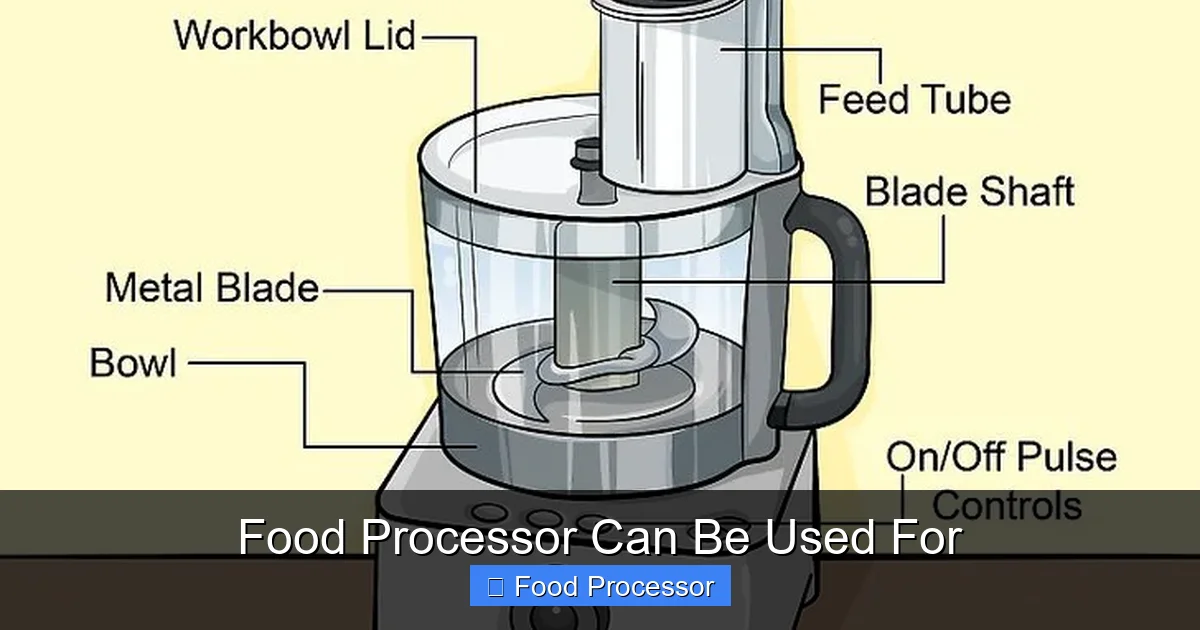
A food processor is a versatile kitchen powerhouse designed to significantly cut down on meal prep time and effort. This guide reveals the vast array of tasks a food processor can be used for, from basic chopping and slicing to more advanced functions like making doughs, nut butters, and purees. By understanding its capabilities and using the right blades and techniques, you’ll discover how a food processor can transform your cooking, making healthy and delicious meals more accessible and enjoyable.
Food Processor Can Be Used For
Welcome to the ultimate guide to unlocking the full potential of your food processor! If you own one of these magnificent kitchen gadgets but mainly use it for chopping onions, you’re in for a treat. This powerful appliance is far more versatile than many realize, designed to be a true workhorse that can save you immense time and effort in the kitchen.
In this comprehensive guide, we’ll explore the myriad ways a food processor can be used for preparing delicious meals, from everyday tasks to more ambitious culinary projects. We’ll cover everything from basic chopping to making intricate sauces, doughs, and even nut butters. You’ll learn the best techniques, essential tips, and how to troubleshoot common issues, transforming your food processor from an occasional helper into an indispensable kitchen companion. Get ready to revolutionize your cooking!
Key Takeaways
- Unmatched Versatility: A food processor excels at a wide range of tasks, including chopping, mincing, slicing, shredding, pureeing, mixing doughs, and grinding.
- Time-Saving Efficiency: It dramatically speeds up repetitive and labor-intensive kitchen tasks, allowing you to prepare meals much faster than by hand.
- Blade Matters: Different blades and discs are designed for specific functions; understanding which one to use is crucial for optimal results.
- Texture Control: With pulse functions and varying processing times, you have precise control over the texture of your ingredients, from coarsely chopped to finely pureed.
- Beyond Basic Prep: Beyond simple vegetable prep, a food processor can be used for making pestos, sauces, nut butters, breadcrumbs, and even grinding meat.
- Consider Limitations: While highly capable, for certain tasks like perfectly smooth liquids or whipping air into ingredients, dedicated appliances (like blenders or stand mixers) might offer superior results.
- Proper Cleaning and Maintenance: Regular cleaning and correct assembly are essential to ensure the longevity and safe operation of your food processor.
Chopping, Mincing, and Dicing Vegetables and Herbs
This is probably the most common use for a food processor, and for good reason! It makes quick work of tedious knife tasks.
How to Chop Vegetables
For uniform chopping, cut larger vegetables like onions, carrots, bell peppers, or celery into 1-2 inch pieces first. This helps them process more evenly.
- Insert the S-Blade: This is your standard chopping blade.
- Add Ingredients: Place your pre-cut vegetables into the work bowl. Donosn’t overfill it; aim for about two-thirds full for best results.
- Pulse: Use the “pulse” button in short bursts (1-2 seconds each). This gives you control over the texture. Continue pulsing until your desired chop size is reached.
- Scrape Sides: Occasionally stop and scrape down the sides of the bowl with a spatula to ensure even processing.
Practical Tip: For very fine mincing, like garlic or ginger, process them by themselves or with a small amount of liquid (like oil or water) to help them move around the blade. For herbs, ensure they are dry to prevent clumping. You can also add a few ice cubes for very delicate herbs to keep them from bruising and help them chop cleanly.
Shredding Cheese and Vegetables
Say goodbye to grated knuckles! The shredding disc is a game-changer for anything from cheese to coleslaw.
How to Shred with a Food Processor
Food processors come with various disc attachments, including a shredding disc (often reversible for fine or coarse shredding).
Visual guide about Food Processor Can Be Used For
Image source: appliancesforlife.com
- Attach the Shredding Disc: Place the appropriate shredding disc onto the central spindle, ensuring it’s securely in place.
- Prepare Ingredients: Cut hard cheeses (like cheddar or mozzarella) into pieces that fit comfortably into the feed tube. For vegetables like carrots, cabbage, or zucchini, cut them into lengths that fit the feed tube.
- Turn On: Start the food processor (usually on continuous mode for shredding).
- Feed Ingredients: Place the ingredient into the feed tube and use the food pusher to gently guide it down onto the spinning disc. Apply even, gentle pressure.
- Empty Bowl: Stop the processor once the work bowl is full and empty it before continuing.
Practical Tip: For best results when shredding cheese, make sure the cheese is cold and firm. Softer cheeses can become gummy. If you’re wondering, yes, a food processor can be used to shred cheese wonderfully, making taco night or lasagna prep a breeze!
Slicing Fruits and Vegetables Evenly
Achieve perfectly uniform slices for gratin, salads, or dehydrated snacks with minimal effort.
How to Slice with a Food Processor
Similar to shredding, slicing requires a specific disc attachment.
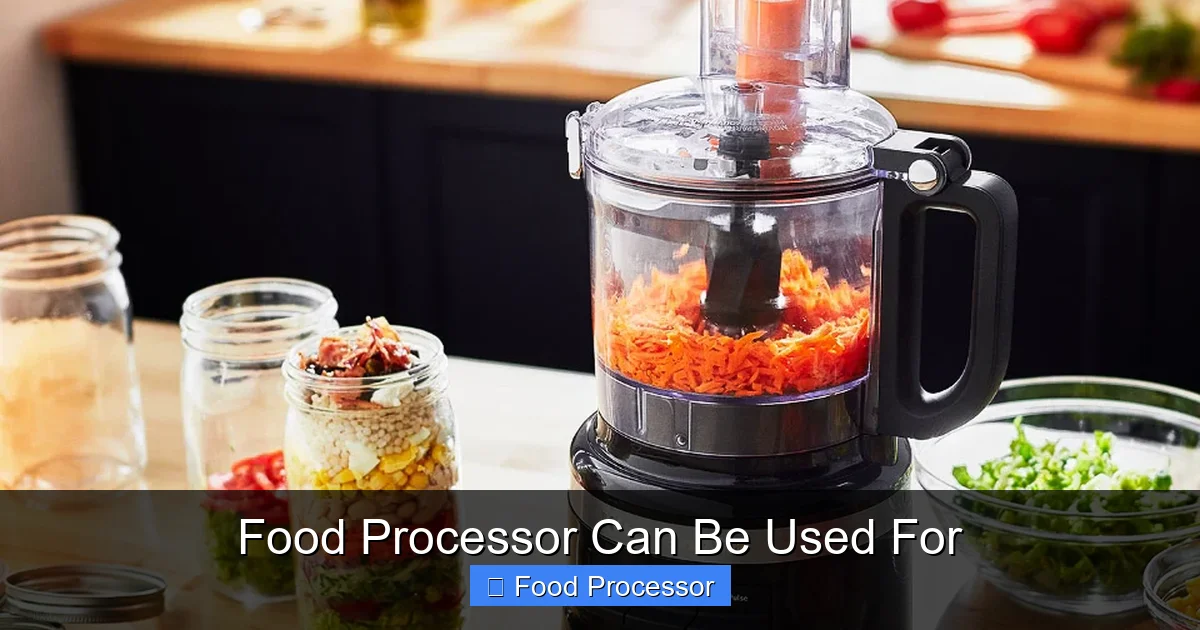
Visual guide about Food Processor Can Be Used For
Image source: images.ctfassets.net
- Attach the Slicing Disc: Choose your desired slicing disc (thin, medium, or thick, if your model has options) and secure it.
- Prepare Ingredients: Trim fruits and vegetables to fit the feed tube. For round items like potatoes or tomatoes, you might want to slice off a small piece to create a flat side for stability, or choose an appropriate orientation for your desired slice shape.
- Turn On: Start the food processor.
- Feed Ingredients: Place the item into the feed tube. For consistent slices, apply even, gentle pressure with the food pusher.
Practical Tip: For delicate items like tomatoes or very ripe fruits, a sharper slicing disc is essential, and often a very light touch on the food pusher yields better results. For firmer vegetables like potatoes, consistent pressure is key for even thickness.
Pureeing Soups, Sauces, and Dips
From smooth hummus to creamy vegetable soups, the food processor is excellent for creating silky textures.
How to Puree Ingredients
The S-blade is your tool for pureeing.
- Add Ingredients: Place cooked vegetables, fruits, or ingredients for sauces/dips into the work bowl. If pureeing hot liquids, ensure they are cooled slightly or only fill the bowl halfway, and open the feed tube to allow steam to escape to prevent pressure buildup.
- Process Continuously: Unlike chopping, pureeing usually requires continuous processing. Turn the food processor on and let it run until your desired smooth consistency is achieved.
- Add Liquid: If the mixture is too thick, gradually add small amounts of liquid (broth, water, oil, lemon juice) through the feed tube while the machine is running, until you reach the desired consistency.
Practical Tip: When making hummus, adding ingredients in a specific order (tahini and lemon first, then chickpeas, then water/oil) can help achieve an extra smooth texture. For creamy soups, a food processor can be used for this task efficiently, but be mindful of the heat. For very hot liquids, it’s safer to let them cool or use an immersion blender.
Making Doughs and Batters
Many food processors come with a dough blade (often plastic) or use the S-blade for quick dough and batter mixing.
How to Make Dough in a Food Processor
This is fantastic for pie crusts, cookie doughs, and even some bread doughs.
- Insert Dough Blade (or S-blade): Use the plastic dough blade if you have one; otherwise, the S-blade works for many doughs.
- Add Dry Ingredients: Place flour, sugar, salt, and leavening agents into the work bowl and pulse a few times to combine.
- Add Fat (for pastries): If making pastry dough, add cold, cubed butter or shortening. Pulse in short bursts until the fat is cut into pea-sized pieces.
- Add Liquid: With the food processor running, gradually add cold liquid (water, milk, eggs) through the feed tube until the dough just comes together. Be careful not to overmix, as this can make the dough tough.
Practical Tip: A food processor can be used for kneading dough much faster than by hand, but it’s important not to over-knead. For yeast doughs, process only until the dough forms a ball and cleans the sides of the bowl, then finish by hand for a minute or two. While a food processor can perform some tasks a stand mixer can, it’s not a direct replacement, as detailed in discussions like can a food processor be used as a stand mixer.
Grinding Nuts, Seeds, and Spices
Freshly ground ingredients make a huge difference in flavor.
How to Grind with a Food Processor
The S-blade is perfect for grinding.
- Add Ingredients: Place nuts, seeds, or whole spices into the dry, clean work bowl. Ensure there’s enough volume for the blade to catch them; small amounts might not work well without a mini food processor or a special grinding attachment.
- Pulse: Use short pulses initially to break down the ingredients. For coarser grinds, less pulsing is needed.
- Process Continuously: For finer grinds (like nut flours or spice powders), process continuously, stopping to check consistency periodically.
Practical Tip: When making nut flours, be careful not to over-process, or you’ll end up with nut butter! For coffee beans, while a food processor can be used to grind coffee, it generally doesn’t provide as consistent a grind as a dedicated coffee grinder. However, in a pinch, you can use a food processor to grind coffee beans, but aim for a coarse to medium grind.
Making Breadcrumbs
Homemade breadcrumbs are superior to store-bought and reduce food waste.
How to Make Breadcrumbs
- Prepare Bread: Use day-old or slightly stale bread. Cut it into 1-2 inch cubes. You can use any type of bread – white, whole wheat, sourdough, etc.
- Insert S-Blade: Place the bread cubes in the work bowl.
- Pulse and Process: Pulse a few times to break them down, then process continuously until you reach your desired crumb size.
Practical Tip: For seasoned breadcrumbs, add herbs, garlic powder, or Parmesan cheese along with the bread during processing.
Emulsifying Dressings, Mayonnaise, and Sauces
Achieve perfectly stable emulsions with ease.
How to Emulsify
- Insert S-Blade: Ensure all ingredients are at room temperature.
- Combine Base Ingredients: Place egg yolks, mustard, vinegar, or other base ingredients in the bowl. Process briefly to combine.
- Slowly Add Oil: With the food processor running on continuous, slowly drizzle the oil through the small hole in the food pusher or feed tube. This slow addition is crucial for creating a stable emulsion.
Practical Tip: If your mayonnaise or dressing breaks (separates), sometimes adding a tablespoon of hot water or another egg yolk to the mixture and reprocessing slowly can help bring it back together.
Making Nut Butters
From peanuts to cashews, homemade nut butter is incredibly fresh and customizable.
How to Make Nut Butter
- Roast Nuts (Optional): Roasting nuts beforehand enhances their flavor and releases their natural oils, making processing easier. Let them cool completely.
- Insert S-Blade: Add nuts to the dry work bowl.
- Process Continuously: This requires patience! Process continuously. The nuts will go through several stages: first coarse crumbs, then finer crumbs, then a sticky ball, and finally a smooth, creamy butter. Stop occasionally to scrape down the sides. This can take 5-15 minutes depending on the nuts and your processor.
Practical Tip: Don’t add oil initially unless your nuts are extremely dry. The nuts release their own oils. If after a long time it’s still too dry, add a tiny bit of neutral oil (like grapeseed or coconut oil) very sparingly. Be patient – the transformation truly happens!
Processing Cooked Meats
Shred cooked chicken or grind raw meat for various recipes.
How to Process Meat
- For Cooked Meat (Shredding): Cut cooked chicken breasts or thighs into 1-2 inch pieces. Use the S-blade and pulse in short bursts until shredded. Do not over-process, or it will turn into a paste.
- For Raw Meat (Grinding): Cut raw meat (like chicken, pork, or beef) into 1-inch cubes and partially freeze them for about 20-30 minutes until very firm but not solid. This prevents smearing. Use the S-blade and pulse in short bursts, scraping down sides frequently. Process in batches if necessary.
Practical Tip: While a food processor can be used for grinding meat, it’s important to note that it often creates a finer, more uniform grind than a traditional meat grinder. If you’re looking for a coarser texture, a dedicated meat grinder might be better. Still, for many recipes, a food processor can be used as a meat grinder effectively.
Troubleshooting Common Food Processor Issues
Even with a powerful appliance, sometimes things don’t go as planned.
Uneven Chops or Purees
- Issue: Some pieces are finely chopped while others are still large.
- Solution:
- Don’t overfill the bowl. Process in smaller batches.
- Cut ingredients into roughly equal sizes before adding them to the bowl.
- Use the pulse function instead of continuous processing for chopping, allowing ingredients to fall back down to the blade.
- Scrape down the sides of the bowl frequently.
Processor Won’t Turn On
- Issue: The food processor is plugged in but not operating.
- Solution:
- Check that the work bowl and lid are correctly assembled and locked into place. Most food processors have safety mechanisms that prevent operation if not properly assembled.
- Ensure the power cord is fully inserted into the outlet and the machine.
- Check your circuit breaker.
Overheating Motor
- Issue: The motor smells hot or shuts off during use.
- Solution:
- You might be processing too large a batch or very dense ingredients (like stiff dough or very hard nuts) for too long.
- Process in smaller batches.
- Give the motor a break. Unplug it and let it cool down for 15-30 minutes before resuming.
Blade Getting Stuck or Not Cutting Effectively
- Issue: Ingredients are stuck under the blade, or the blade isn’t cutting.
- Solution:
- Ensure you’re using the correct blade for the task.
- Don’t overload the bowl.
- Cut ingredients into smaller pieces before processing.
- For liquid-heavy tasks, ensure there’s enough liquid for the ingredients to circulate.
Conclusion
Your food processor is an incredibly versatile appliance that truly deserves a permanent spot on your kitchen counter. From tackling mundane chopping tasks to inspiring creative culinary adventures, the possibilities for what a food processor can be used for are nearly endless. By understanding its various attachments, mastering the pulse function, and practicing a few key techniques, you’ll find yourself reaching for it more and more.
Embrace the efficiency and convenience it offers. Experiment with new recipes, try different functions, and discover how this powerful tool can simplify your meal prep, expand your cooking repertoire, and make your time in the kitchen more enjoyable. Happy processing!
