
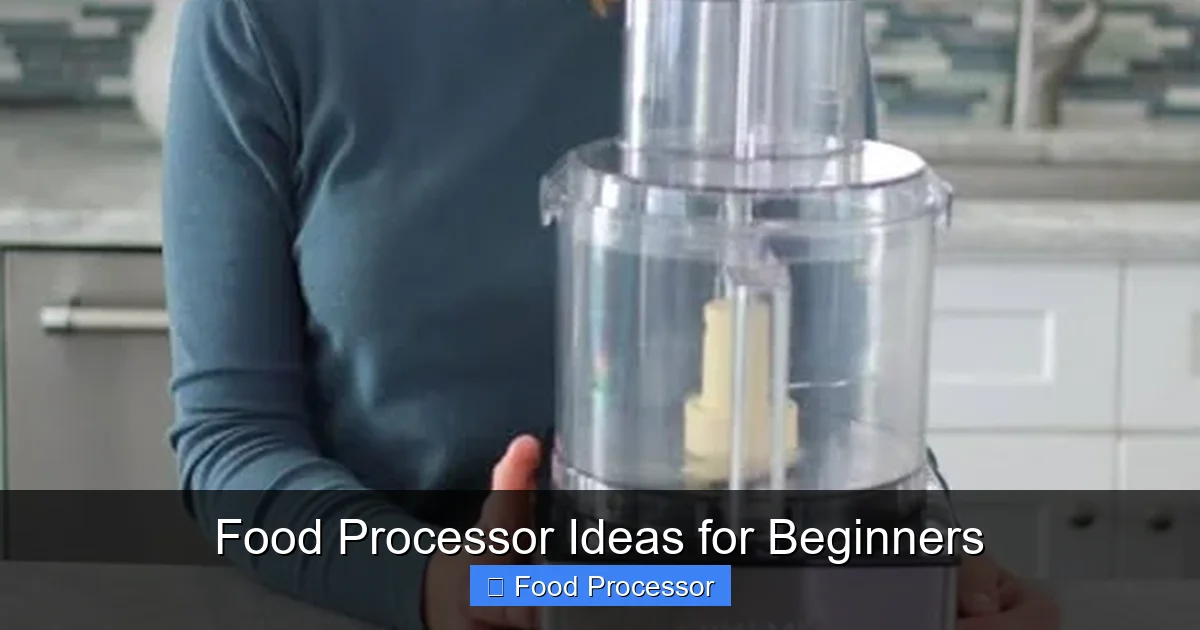
Embark on your culinary journey with a food processor! This guide provides fantastic food processor ideas for beginners, showing you how to simplify meal prep, create quick dips, and even make fresh nut butters. Learn essential safety tips, basic techniques, and practical recipes to maximize your kitchen appliance and boost your confidence in the kitchen.
Welcome to the wonderful world of food processors! If you’ve recently acquired this versatile kitchen gadget, or it’s been sitting in its box gathering dust, you’re in for a treat. A food processor can be a game-changer, turning tedious chopping, slicing, and mixing tasks into quick and easy endeavors. It’s truly one of the best kitchen appliances to simplify your cooking, especially for beginners.
This comprehensive guide is designed specifically for you – the beginner – to unlock the full potential of your food processor. We’ll walk you through essential safety measures, introduce you to basic functions, and share an abundance of practical food processor ideas for beginners. From simple vegetable prep to whipping up delightful dips and spreads, you’ll gain the confidence to use your food processor regularly and effortlessly. Let’s get chopping!
Key Takeaways
- Start Simple: Begin with basic tasks like chopping vegetables or making easy dips to build confidence with your food processor.
- Understand Your Blades: Familiarize yourself with the S-blade for chopping and pureeing, and the slicing/shredding discs for uniform results.
- Prioritize Safety: Always ensure the lid is securely locked and keep hands clear of the blades. Unplug the unit before assembling or disassembling.
- Pulsing is Your Friend: Use the pulse function for better control over texture, especially when chopping or mincing, to avoid over-processing.
- Don’t Overfill: Process ingredients in batches if necessary to achieve even results and prevent straining your food processor.
- Clean Up Quickly: Clean your food processor immediately after use to prevent food from drying and sticking, making maintenance much easier.
- Explore Versatility: Once comfortable, explore more advanced food processor ideas like making doughs, nut butters, or even baby food purees.
Understanding Your Food Processor: The Basics
Before diving into exciting recipes, it’s crucial to understand the main components and how they work. While models vary, most food processors share common parts.
The Core Components
- Motor Base: The heavy bottom part that houses the motor. Always place it on a stable, dry surface.
- Work Bowl: The clear bowl that sits on the motor base, holding your ingredients.
- Lid: Fits securely onto the work bowl, often with a feed tube for adding ingredients while processing.
- Pusher: Used to push ingredients down the feed tube when using discs. Never use your fingers!
- S-blade (Chopping Blade): This is your primary blade, shaped like an “S,” used for chopping, mincing, pureeing, and mixing.
- Slicing/Shredding Discs: Flat, round blades used for uniformly slicing vegetables, shredding cheese, or grating other ingredients. They sit at the top of the work bowl.
Safety First: Essential Rules for Beginners
Food processors are powerful tools, so safety is paramount. Always follow these guidelines:
- Read Your Manual: Every food processor is slightly different. Your owner’s manual has specific instructions for assembly, operation, and cleaning.
- Secure Everything: Ensure the work bowl and lid are securely locked into place before turning the machine on. Most models have safety interlocks that prevent operation if not properly assembled.
- Hands Off Blades: The blades are extremely sharp. Always handle them with care, holding them by the plastic hub. Never touch the sharp edges.
- Unplug When Handling Blades: Before assembling, disassembling, or cleaning the blades, always unplug the food processor.
- Use the Pusher: When using the feed tube with slicing/shredding discs, always use the food pusher, never your fingers or other utensils.
- No Hot Liquids: Avoid processing very hot liquids or ingredients, as the steam can build up pressure and cause the lid to open, potentially splashing hot contents.
Getting Started: Your First Steps with a Food Processor
Let’s make some simple, common tasks incredibly easy. These are perfect food processor ideas for beginners to build confidence.
Visual guide about Food Processor Ideas for Beginners
Image source: thekitchencommunity.org
1. Assembling Your Food Processor
This is usually quite straightforward:
- Place the motor base on a clean, stable counter.
- Carefully place the work bowl onto the motor base, twisting it until it locks into place (check your manual for the correct direction).
- Insert the S-blade onto the spindle inside the work bowl. Make sure it sits firmly.
- Place the lid onto the work bowl and twist until it locks. The feed tube should be positioned conveniently for you.
- If using a slicing or shredding disc, place the spindle first, then the disc, then the lid. The S-blade is not used with discs.
2. Adding Ingredients Safely
- For the S-blade: Add ingredients directly into the work bowl before placing the lid on.
- For Discs: Place ingredients into the feed tube, making sure they fit without forcing. You might need to pre-cut larger items.
3. Mastering the Pulse Function
The “Pulse” button is your best friend when you’re just starting out. It allows you to have greater control over the texture of your food. Instead of continuous processing, which can quickly turn ingredients into mush, pulsing gives you short bursts of power.
- How to Pulse: Press and release the “Pulse” button repeatedly. Observe the texture of your food between pulses.
- When to Pulse: Use it for chopping onions, mincing garlic, making breadcrumbs, or creating coarse salsa.
Easy Food Processor Ideas for Beginners: Practical Applications
Now for the fun part! Here are some fantastic food processor ideas for beginners to get you cooking with ease.
Visual guide about Food Processor Ideas for Beginners
Image source: i.pinimg.com
1. Chopping & Mincing Vegetables
Say goodbye to teary eyes and tedious knife work. The food processor makes quick work of common vegetables.
Chopping Onions
This is perhaps the most beloved function for many beginners. Roughly quarter an onion and place it in the work bowl with the S-blade. Pulse a few times until chopped to your desired consistency. Be careful not to over-process, or you’ll end up with onion paste!
Pro Tip: For perfect, tear-free chopped onions every time, check out how the right food processor can make chopping onions without tears a reality.
Mincing Garlic & Herbs
Peel a few garlic cloves and toss them in. Pulse until finely minced. For fresh herbs like parsley or cilantro, strip them from their stems, add to the bowl, and pulse until finely chopped. This is excellent for dressings, marinades, or garnishes.
Dicing Carrots & Celery
Cut carrots and celery into 1-inch pieces. Add to the work bowl and pulse until finely diced. This is perfect for mirepoix for soups, stews, or a quick salad base.
2. Slicing & Shredding with Discs
Using the slicing and shredding discs provides perfectly uniform results, which is hard to achieve by hand.
Slicing Vegetables
Insert the slicing disc. Cut vegetables like cucumbers, zucchini, or potatoes to fit the feed tube. Turn on the food processor and feed them through with the pusher. You’ll get perfectly even slices in seconds, ideal for gratins, salads, or pickling.
Consider investing in a food processor that excels at this task. Many models are specifically designed to be the best food processor for slicing vegetables with precision and speed.
Shredding Cheese
Tired of grating cheese by hand? Use the shredding disc. Cut blocks of cheddar, mozzarella, or Gruyere to fit the feed tube. Feed them through and watch perfectly shredded cheese pile up in the bowl. This is much faster and less messy than a box grater.
3. Making Dips & Spreads
The S-blade is brilliant for creamy, smooth textures.
Classic Hummus
Combine canned chickpeas (drained and rinsed), tahini, lemon juice, garlic, and a touch of olive oil in the work bowl. Process until smooth, scraping down the sides as needed. Add a little water if you need a thinner consistency. Homemade hummus is far superior to store-bought!
Fresh Pesto
In the work bowl, combine fresh basil leaves, pine nuts, garlic, and Parmesan cheese. Pulse until roughly chopped. Then, with the food processor running, slowly drizzle in olive oil through the feed tube until you reach a smooth, emulsified pesto. Season with salt and pepper.
Quick Salsa
Chop tomatoes, onions, jalapeños, cilantro, and a squeeze of lime juice in the food processor. Use the pulse function to control the chunkiness. This fresh salsa is perfect for tacos, chips, or grilled chicken.
4. Dough & Crumb Making
The food processor can also handle some baking tasks with surprising ease.
Pie Crust & Pastry Dough
Add flour, salt, and cold butter (cut into cubes) to the work bowl with the S-blade. Pulse until the mixture resembles coarse crumbs. Then, with the machine running, slowly drizzle in ice water through the feed tube until the dough just comes together. This method prevents overworking the dough, resulting in a tender crust.
Homemade Breadcrumbs
Have stale bread? Tear it into chunks and place in the work bowl with the S-blade. Pulse until you have fresh, coarse breadcrumbs. These are much better than store-bought and can be flavored with herbs and garlic powder.
5. Homemade Nut Butters
While it takes a bit of patience, making your own nut butter is incredibly rewarding and a great way to use your food processor.
Peanut Butter or Almond Butter
Add roasted, unsalted nuts (peanuts, almonds, cashews) to the work bowl with the S-blade. Process continuously, scraping down the sides every minute or two. The nuts will go through several stages: coarse crumbs, fine meal, a pasty ball, and finally, smooth, creamy butter. This can take 5-15 minutes, depending on your food processor and the type of nut. A high-powered food processor will make this task much easier and quicker; you might even want to specifically look into the best food processor for nut butter beginners if this is a primary interest.
Mastering Techniques for Best Results
Beyond the recipes, knowing a few general tips will elevate your food processor game.
Proper Loading of the Bowl
- Don’t Overcrowd: Process ingredients in batches if the bowl seems too full. Overfilling leads to uneven processing and can strain your motor.
- Size Matters: Cut ingredients into uniform, manageable pieces (1-2 inches) before adding them. This ensures even processing and prevents some pieces from being missed by the blade.
- Layering for Efficiency: When combining multiple ingredients, place harder, denser items at the bottom and lighter, softer items on top.
Pulsing vs. Continuous Processing
- Pulse for Control: As mentioned, pulse for chopping, mincing, and coarse textures.
- Continuous for Smoothness: Use continuous processing for pureeing, making nut butters, or incorporating liquids into a smooth mixture.
Scrape Down the Sides
Regularly stop the food processor and use a spatula to scrape down any ingredients clinging to the sides of the bowl. This ensures everything is incorporated and processed evenly.
Cleaning and Maintenance
Clean your food processor immediately after use. Most work bowls, lids, and blades are dishwasher safe (top rack), but always check your manual. For hand washing, be extremely careful with the sharp blades. A small brush can help dislodge food particles.
Troubleshooting Common Beginner Hurdles
Don’t get discouraged if things don’t go perfectly the first time. Here are solutions to common beginner issues.
Uneven Chopping or Processing
- Cause: Overfilling the bowl, not cutting ingredients to uniform sizes, or not pulsing correctly.
- Solution: Process in smaller batches. Ensure ingredients are cut to similar sizes. Use short, consistent pulses, and scrape down the sides frequently.
Food Stuck Under the Blade
- Cause: Too little liquid, ingredients are too large, or the bowl is too full.
- Solution: Unplug, remove the blade (carefully!), and clear the jam. Cut ingredients smaller. Add a little liquid if needed, especially for purees.
Over-processing (Turning to Mush)
- Cause: Processing continuously when pulsing was needed, or pulsing for too long.
- Solution: Rely heavily on the pulse function for chopping. Use short bursts and check the texture frequently. It’s easier to process more than to fix something that’s already mush.
Food Processor Won’t Start
- Cause: Safety interlocks are not engaged, or the unit isn’t plugged in.
- Solution: Ensure the work bowl and lid are securely locked into place according to your manual’s instructions. Check the power cord.
My Food Processor Shakes or Walks on the Counter
- Cause: Overloaded, uneven distribution of heavy ingredients, or not on a stable surface.
- Solution: Reduce the batch size. Ensure the food processor is on a flat, stable counter. Distribute heavy ingredients more evenly if possible.
Learning how to effectively use a food processor for meal prep can truly revolutionize your time in the kitchen. Many beginners find that once they master these basic techniques, it becomes an indispensable tool for daily cooking. If you’re serious about making cooking easier, exploring the best food processor for meal prep beginners can make a significant difference in your culinary journey.
Conclusion
Congratulations! You’re now equipped with a wealth of food processor ideas for beginners and the knowledge to start using this fantastic appliance with confidence. From effortlessly chopping vegetables to crafting homemade dips, and even exploring more complex tasks like nut butters, your food processor is ready to become your best kitchen helper.
Remember to always prioritize safety, start with simple recipes, and don’t be afraid to experiment. With practice, you’ll discover countless ways your food processor can save you time and effort, making cooking more enjoyable and accessible. Happy processing!
