

Is your Cuisinart food processor refusing to turn on or spin? Don’t worry! This guide provides simple, step-by-step solutions to diagnose and fix common problems, from power issues to assembly errors. You’ll learn how to quickly get your appliance back to peak performance, saving you time and frustration in the kitchen.
Food Processor Not Working Cuisinart
Few things are as frustrating in the kitchen as reaching for your trusted Cuisinart food processor, only to find it unresponsive. Whether it won’t turn on, the blade isn’t spinning, or it suddenly stopped mid-task, a food processor not working Cuisinart can throw a wrench into your meal prep plans. But before you panic or consider buying a new one, take a deep breath. Many Cuisinart food processor issues are surprisingly simple to diagnose and fix right at home.
This comprehensive guide will walk you through a series of logical, step-by-step troubleshooting tips. We’ll cover everything from basic power checks to intricate assembly concerns, motor issues, and common pitfalls that prevent your Cuisinart from working. Our goal is to empower you with the knowledge to identify the problem and get your versatile kitchen helper back to chopping, slicing, and dicing in no time. Let’s get your Cuisinart food processor working again!
Key Takeaways
- Prioritize Safety: Always unplug your Cuisinart food processor before attempting any inspection or troubleshooting to prevent electrical shock.
- Check Power Supply: Verify the power outlet is working, the cord is undamaged, and the circuit breaker hasn’t tripped.
- Ensure Proper Assembly: The most common issue is incorrect assembly of the bowl, lid, and pusher, which prevents the safety interlock from engaging.
- Inspect Blade and Coupling: Confirm the blade is correctly seated, and the motor coupling or drive shaft isn’t obstructed or damaged.
- Address Overheating: If the motor feels hot or smells burnt, give the unit ample time to cool down before trying again, and avoid overloading.
- Look for Obstructions: Food stuck in the blade area or within the motor housing can prevent proper operation; clear any blockages carefully.
- When to Seek Professional Help: If basic troubleshooting fails, or you suspect internal damage, it’s best to contact Cuisinart customer support or a qualified technician.
Step 1: Safety First – Unplug Your Cuisinart
Before you touch anything inside your food processor, the very first and most crucial step is to ensure your safety. Electricity and water (or food residues) do not mix, and you want to prevent any accidental activation while you’re inspecting the unit.
Unplug the Appliance
Always unplug your Cuisinart food processor from the wall outlet. This cuts off all power, making it safe to handle and examine without risk of electric shock or injury from moving blades. Never perform any troubleshooting or cleaning with the appliance still plugged in.
Step 2: Check the Power Source
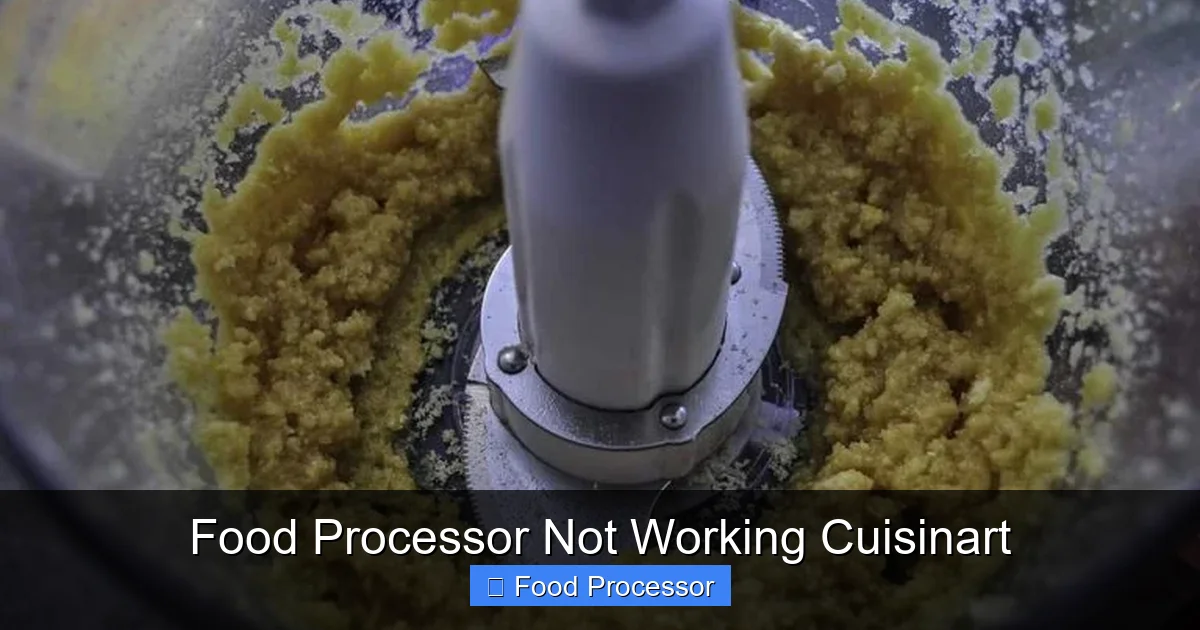
Sometimes the simplest solutions are the most overlooked. If your Cuisinart food processor is not working at all – no lights, no sound – the problem might not be with the appliance itself, but with its power supply.
Visual guide about Food Processor Not Working Cuisinart
Image source: howdykitchen.com
Test the Outlet
Plug another small appliance (like a lamp or a phone charger) into the same wall outlet your Cuisinart uses. If the other appliance also doesn’t work, the outlet is likely the problem. This could be due to a tripped circuit breaker or a faulty outlet. Try moving your Cuisinart to a different, known-working outlet.
Inspect the Power Cord
Carefully examine the power cord of your Cuisinart food processor. Look for any visible damage such as cuts, fraying, kinks, or areas where the insulation might be exposed. A damaged cord can prevent power from reaching the motor and pose a safety hazard. If you find any damage, the cord will need to be replaced, which usually requires professional service.
Reset the Circuit Breaker
If the outlet is dead, check your home’s circuit breaker box. Locate the breaker corresponding to your kitchen or the specific outlet and see if it has “tripped” (usually halfway between “on” and “off” or fully “off”). Flip it firmly to the “off” position, then back to “on.” This often restores power to the outlet. If the breaker trips repeatedly, there might be a larger electrical issue that requires an electrician.
Step 3: Ensure Proper Assembly – The Safety Interlock System
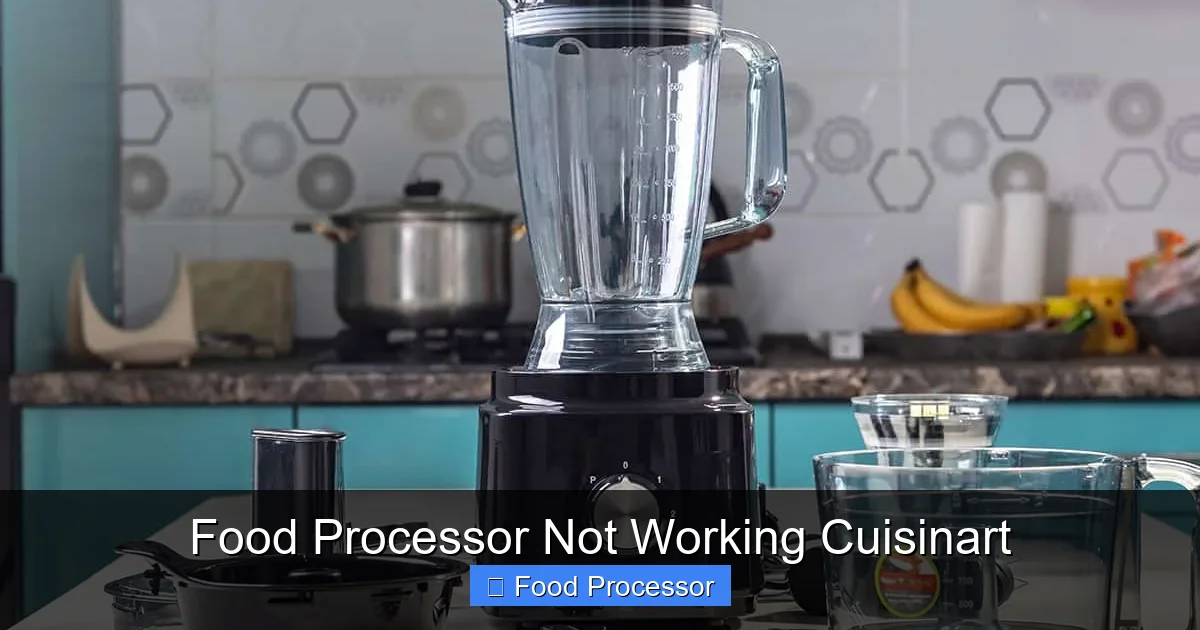
Cuisinart food processors, like most modern appliances, feature a robust safety interlock system. This system prevents the motor from running unless all components are correctly assembled and locked into place. This is by far the most common reason why a food processor not working Cuisinart issue arises. Even a tiny misalignment can prevent your unit from turning on.
Visual guide about Food Processor Not Working Cuisinart
Image source: howdykitchen.com
The Bowl and Base Connection
The work bowl must be securely locked onto the motor base. For most Cuisinart models, you place the bowl on the base and then twist it clockwise until it clicks firmly into place. If it’s not fully engaged, the safety interlock won’t allow the power to flow to the motor.
- Tip: Ensure there’s no debris or food particles stuck between the bowl and the base that might prevent a proper seal.
The Lid and Safety Interlock
After the bowl, the lid is the next critical component for the safety interlock. The lid also needs to be placed on the bowl and twisted clockwise until it locks securely. Many Cuisinart models have a small tab or “interlock pin” on the lid that must align with a switch on the bowl’s handle. This switch completes the circuit, allowing the motor to run. If the lid is even slightly ajar, your Cuisinart food processor won’t start.
- Tip: Listen for the distinct “click” that indicates the lid is properly locked. If it doesn’t click, gently wiggle it or lift and reseat it, ensuring it’s level. This is a common point where your Cuisinart food processor might stop working.
The Pusher and Feed Tube
Some Cuisinart models have an additional safety feature involving the food pusher. In these designs, the pusher must be inserted into the feed tube, sometimes rotated, to engage another safety switch. Check your specific model’s manual to see if this applies. If the pusher isn’t in place or correctly inserted, the unit might remain off.
- Tip: While less common for preventing initial startup, ensuring the pusher is correctly aligned is always a good practice.
Step 4: Inspect the Blade and Motor Coupling
If your Cuisinart food processor turns on but the blade isn’t spinning, or if you hear a humming sound but no action, the issue might be with the blade assembly or the connection to the motor. For more detailed information, you can read our guide on How To Fix Food Processor Blade Not Spinning.
Blade Placement
The processing blade (or disc) must be correctly seated on the central spindle within the work bowl. If it’s loose, tilted, or not fully dropped onto the spindle, it won’t engage with the motor’s drive shaft. Remove the lid and bowl, then carefully place the blade onto the spindle, ensuring it sits flush and stable.
- Tip: Always handle blades with extreme caution as they are very sharp.
Central Spindle and Motor Coupler
The central spindle in the bowl connects to a “motor coupler” or “drive shaft” on the motor base. This coupler is typically a small, raised plastic or metal piece that engages with the blade. Inspect both the spindle and the coupler for any visible damage, cracks, or wear. If the coupler is stripped or broken, the motor will run, but it won’t be able to transmit power to the blade.
- Obstructions: Sometimes, food particles or debris can get lodged around the spindle or in the motor coupling mechanism, preventing proper engagement. Carefully clear any blockages.
Overloading the Cuisinart Food Processor
If you’re processing a very large quantity of dense or sticky ingredients, your Cuisinart food processor might struggle to spin the blade. Overloading can cause the motor to seize or activate an internal thermal overload switch (see Step 5). Reduce the amount of food in the bowl and try again. Process in smaller batches, especially with tough ingredients like dough or hard vegetables.
- Tip: Listen to the motor. If it sounds strained or hums without the blade moving, it’s likely overloaded.
Step 5: Address Overheating Issues
Most Cuisinart food processors have a built-in thermal overload protector. This safety feature automatically shuts off the motor if it gets too hot, preventing damage to the appliance. Overheating can occur due to continuous long-term use, processing very tough ingredients, or overloading.
Allow for Cooling
If your Cuisinart food processor suddenly stops working mid-task and feels warm or hot to the touch, it has likely overheated. Unplug the unit and let it cool down for at least 20-30 minutes, or even up to an hour. Once it has completely cooled, re-check assembly and try running it again with a smaller batch of ingredients.
- Tip: Do not try to force it to work while it’s still hot. You risk burning out the motor.
Check Ventilation
Ensure the vents on the motor base are not blocked. These vents allow air to circulate and cool the motor. If they’re covered by cloths, other appliances, or food debris, the motor can overheat more quickly.
Step 6: What if the Motor Hums but Doesn’t Spin?
This specific issue usually points to a problem with the blade, the drive shaft, or an obstruction, rather than a complete power failure. If your Cuisinart food processor is not working and just hums, it means the motor is receiving power, but the mechanical parts aren’t turning.
Clear Obstructions
Unplug the unit. Remove the bowl and blade. Carefully inspect the area around the motor’s drive shaft (the part that sticks up from the base). Sometimes, small pieces of food can get wedged here, preventing the shaft from rotating. Use tweezers or a small brush to remove any visible debris.
Check for Jammed Parts
Sometimes, the internal mechanism can become jammed. With the unit unplugged, try to gently rotate the drive shaft on the motor base by hand. It should move with some resistance but not be completely stuck. If it’s completely jammed, or if there’s resistance when the blade is engaged, there might be a more significant internal issue.
Step 7: Advanced Troubleshooting and When to Seek Help
If you’ve gone through all the above steps and your Cuisinart food processor is still not working, it might be time for more advanced diagnostics or professional assistance. For general issues where a food processor stopped working, how to fix it often involves these deeper checks.
Examine the Drive Shaft (More Closely)
The drive shaft is the critical link between the motor and the blade. If it’s visibly worn, stripped, or broken, the motor might run fine, but the blade will never spin. Replacing this part can sometimes be done by a handy individual, but it often requires disassembling the motor base, which voids warranties and can be complex.
Consider Internal Damage
If you hear unusual grinding noises, smell burning plastic or an electrical odor, or see smoke, immediately unplug the unit. These are signs of internal motor damage, worn gears, or electrical faults. Continuing to use the appliance in this condition is dangerous and could lead to further damage or fire.
Contact Cuisinart Support or a Qualified Technician
If your Cuisinart food processor is still under warranty, contact Cuisinart’s customer service. They can provide specific troubleshooting steps for your model or arrange for repair or replacement. Have your model number and purchase date ready. If it’s out of warranty, you might consider taking it to an appliance repair shop. Weigh the cost of repair against the cost of a new food processor, especially for older models. You can also explore articles like How To Fix A Food Processor That Is Not Turning On for more insights.
- Before Calling: Make sure you’ve tried all the basic troubleshooting steps mentioned above. This will help customer service assist you more efficiently.
Conclusion
A Cuisinart food processor not working can be a real headache, but as we’ve seen, many common problems have straightforward solutions. By methodically checking the power source, ensuring proper assembly, inspecting the blade and motor coupling, and addressing overheating, you can often get your appliance back up and running. Remember to always prioritize safety by unplugging the unit before any inspection.
Don’t let a minor glitch derail your culinary adventures. With a bit of patience and this guide, you’re well-equipped to tackle most issues. If, after all your efforts, your trusty Cuisinart still isn’t performing, remember that customer support or a professional repair technician are there to help. Happy processing!
