
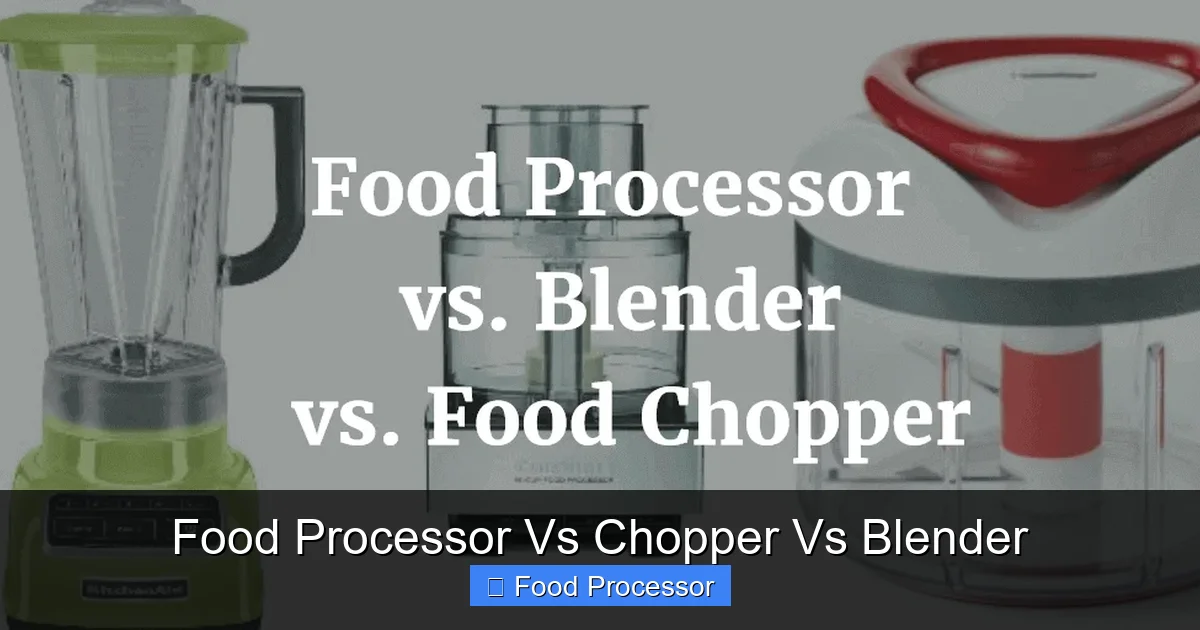
Navigating the world of kitchen gadgets can be tricky, especially when choosing between a food processor, chopper, and blender. This comprehensive guide will clarify their distinct functions, helping you understand what each appliance does best. You’ll learn the key differences in their design, power, and ideal uses, ensuring you select the perfect tool for your culinary adventures whether you’re pureeing, chopping, or blending.
Food Processor Vs Chopper Vs Blender
Welcome to the ultimate guide to demystifying your kitchen appliances! Have you ever stood in front of a counter full of gadgets, wondering if you really need a food processor, a chopper, and a blender? Or perhaps you’re just starting your culinary journey and need help deciding which one to buy first. You’re not alone! Many home cooks find themselves confused by the similar yet distinct roles these three popular kitchen tools play.
This guide is designed to cut through the confusion. We’ll dive deep into the world of the food processor vs chopper vs blender, exploring what each appliance is, what it does best, and when you should reach for one over the others. By the end of this read, you’ll have a clear understanding of their unique capabilities, helping you make informed decisions for your cooking needs. Let’s get chopping, blending, and processing!
Key Takeaways
- Food Processors are Versatile Workhorses: They excel at heavy-duty tasks like chopping, slicing, shredding, kneading dough, and making thick purees, thanks to their robust motors and multiple blade attachments.
- Choppers are Compact & Convenient: Ideal for small, quick tasks such as mincing garlic, chopping herbs, or nuts. They offer simplicity and save space compared to larger appliances.
- Blenders Master Liquids and Smoothness: Designed with tall jars and powerful, high-speed blades, blenders are perfect for creating silky-smooth purees, drinks, sauces, and crushing ice.
- Primary Distinction Lies in Texture and Volume: Food processors handle solids and semi-solids with various textures; blenders specialize in liquids and very smooth consistency; choppers are for small-batch, quick, coarse chopping.
- Consider Your Cooking Needs: Your choice between a food processor, chopper, or blender should depend on the types of dishes you prepare most often and the tasks you need assistance with.
- Combination Units Offer Convenience: Some appliances combine the functions of a food processor and blender, which can be an excellent space-saving solution for versatile kitchens.
Understanding Each Appliance
To truly grasp the differences, let’s first get to know each contender individually.
The Food Processor: Your Kitchen’s Multi-Tasker
A food processor is arguably the most versatile of the three. It’s designed to handle a wide range of tasks beyond just chopping. Think of it as a robust helper for prepping various ingredients.
What It Is
A typical food processor consists of a sturdy base housing a powerful motor, a work bowl with a central spindle, and a lid with a feed tube. It comes with a variety of interchangeable blades and discs.
Key Features
- Powerful Motor: Capable of handling tough ingredients and dense mixtures.
- Wide Work Bowl: Designed to process larger quantities and accommodate different blade types.
- Multiple Attachments: Includes an S-blade for chopping, pureeing, and mixing, as well as various slicing, shredding, grating, and even kneading discs.
- Pulse Function: Allows for precise control over the texture, preventing over-processing.
Best Uses for a Food Processor
The food processor truly shines when it comes to hands-on prep work.
- Chopping and Mincing: Onions, garlic, herbs, nuts, and vegetables.
- Slicing and Shredding: Cheese, carrots, potatoes, cabbage with ease. This is a huge time-saver!
- Making Dough: From pie crusts to bread dough, many food processors come with a dough blade.
- Pureeing Thick Ingredients: Hummus, pesto, nut butters, and thick sauces. For recipes like hummus, where texture is key, you might ask should I make hummus in a blender or food processor? Typically, a food processor is the preferred tool for a consistently smooth yet thick dip.
- Grinding: Meat, breadcrumbs, spices (though some blenders are better for fine grinding).
Pros of a Food Processor
- Extremely versatile with multiple functions.
- Handles large quantities.
- Saves significant prep time.
- Creates consistent textures for solid and semi-solid ingredients.
Cons of a Food Processor
- Can be bulky and take up counter or storage space.
- More parts to clean compared to a chopper or basic blender.
- Not ideal for making completely smooth, thin liquids like smoothies.
The Chopper: Your Quick Prep Sidekick
Often referred to as a mini food processor, a chopper is a smaller, more compact version designed for specific, smaller tasks.
What It Is
A chopper has a smaller motor, a compact work bowl (usually 1-5 cups), and a single S-shaped blade. It’s essentially a stripped-down food processor, focusing primarily on chopping.
Key Features
- Compact Size: Takes up minimal counter space.
- Simple Operation: Usually a single button or pulse function.
- Basic S-blade: Designed for chopping, mincing, and light pureeing.
- Smaller Capacity: Ideal for single servings or small batches.
Best Uses for a Chopper
When you have a small job, a chopper is your best friend.
- Mincing: Garlic, ginger, shallots.
- Chopping: Small onions, herbs, nuts.
- Making Dressings: Small batches of vinaigrettes or sauces.
- Baby Food: Quick pureeing of small portions of cooked vegetables or fruits.
Pros of a Chopper
- Small and easy to store.
- Simple to use and clean.
- Perfect for small, quick tasks.
- More affordable than a full-sized food processor.
Cons of a Chopper
- Limited capacity and functionality.
- Cannot perform tasks like slicing, shredding, or kneading dough.
- May struggle with larger, tougher ingredients.
The Blender: The Master of Smooth
A blender is built with a singular purpose: to transform ingredients into smooth, pourable liquids.
What It Is
A blender features a tall, narrow jar (often glass or durable plastic) with a set of sharp, high-speed blades at the bottom. The motor in the base is usually very powerful, designed to create a vortex that pulls ingredients down into the blades.
Key Features
- Powerful, High-Speed Motor: Essential for pulverizing ingredients and crushing ice.
- Tall, Narrow Jar: Promotes circulation of liquids, ensuring a smooth blend.
- Fixed Blades: Usually designed to stay in place, creating a strong blending action.
- Multiple Speed Settings: Often includes pulse, ice crush, and smoothie presets.
Best Uses for a Blender
If you’re aiming for a silky-smooth consistency, a blender is the way to go.
- Smoothies and Shakes: Its primary and most famous function.
- Soups and Sauces: Creating creamy, lump-free textures for hot or cold recipes.
- Crushing Ice: For cocktails, iced drinks, or sorbets.
- Nut Milks: Efficiently blends nuts with water to make homemade dairy-free milks.
- Baby Purees: Creates very smooth, lump-free baby food.
Pros of a Blender
- Excels at making extremely smooth liquids.
- Great for crushing ice and processing frozen fruits.
- Many models are relatively easy to clean (just add soap and water and blend!).
- Essential for a healthy lifestyle focused on smoothies and fresh juices.
Cons of a Blender
- Poor at dry chopping or dicing; often turns solids into a paste or liquid.
- Cannot slice, shred, or knead dough.
- Can be noisy, especially high-powered models.
- Cleaning can be tricky if food gets stuck under the blades.
Key Differences: Food Processor Vs Chopper Vs Blender
Now that we’ve met the players, let’s pit them against each other in a direct comparison. The core difference between a food processor and a blender lies in their design and intended primary use. While a chopper often resembles a smaller version of a food processor, there is a distinct difference between a food processor and a chopper, primarily in capacity and versatility.
1. Motor Power & Design
- Food Processor: Features a powerful, often geared motor designed for torque. This allows it to push through tough ingredients and knead dough without overheating. Its power is geared for consistent, controlled processing.
- Chopper: Has a smaller, less powerful motor. It’s designed for quick bursts of power for chopping small, softer ingredients.
- Blender: Also boasts a powerful motor, but it’s optimized for high speed. The focus is on rapidly pulverizing ingredients, creating a strong vortex for smooth liquids.
2. Bowl/Jar Shape & Capacity
- Food Processor: Comes with a wide, squat work bowl. This design allows ingredients to spread out, making it ideal for even chopping, slicing, or shredding. Capacities typically range from 7 cups to 14 cups or more.
- Chopper: Small, compact bowl, usually 1-5 cups. The design is similar to a food processor but miniaturized.
- Blender: Features a tall, narrow jar. This shape, combined with the blade design, is crucial for creating the swirling vortex needed to achieve perfectly smooth liquid mixtures. Capacities generally range from 4 cups to 8 cups.
3. Blade & Disc Variety
- Food Processor: Its main selling point is the array of interchangeable blades and discs: an S-blade, dough blade, slicing disc, shredding disc, grating disc, etc. This versatility is unmatched.
- Chopper: Typically comes with just one S-blade for basic chopping.
- Blender: Has a fixed blade assembly at the bottom of the jar. These blades are designed for high-speed pulverization and liquid blending, not for dry chopping or slicing.
4. Primary Functions & Textures Achieved
- Food Processor: Excels at tasks requiring varied textures from coarse chop to thick puree. It’s built for “processing” solids: chopping, slicing, shredding, kneading, and coarse pureeing.
- Chopper: Best for quick, small-batch coarse chopping or mincing.
- Blender: The undisputed champion for achieving ultra-smooth, liquid consistency. Perfect for smoothies, purees that need to be pourable, and crushing ice. Many wonder if a food processor can truly replace a blender, especially models like the Ninja with various attachments. While some food processors offer blender-like functions, it’s crucial to understand whether a Ninja food processor can be used as a blender for all tasks. Generally, for truly silky smooth results, a dedicated blender performs better.
Choosing the Right Appliance for Your Needs
Deciding which appliance (or appliances!) you need boils down to your personal cooking habits and culinary ambitions.
Consider Your Cooking Habits
- Do you often bake? A food processor with a dough blade can be a lifesaver.
- Are you a smoothie enthusiast? A blender is non-negotiable.
- Do you frequently chop small amounts of garlic, herbs, or nuts? A chopper will make quick work of these tasks and save you from pulling out a bigger machine.
- Do you cook for a crowd or meal prep? The larger capacity and diverse functions of a food processor will be invaluable for tasks like shredding cheese or slicing vegetables for a big salad.
Think About the Types of Recipes You Make Most Often
- If your recipes involve a lot of slicing, shredding, and dough making, a food processor is your best bet.
- If you’re constantly making creamy soups, sauces, or daily protein shakes, a blender is essential.
- For quick garnishes, small batches of dips, or mincing aromatics, a chopper is incredibly convenient.
Space and Budget Considerations
- Space: Choppers are the smallest, followed by blenders, and then food processors, which can be quite bulky. Consider your kitchen counter and storage space.
- Budget: Choppers are generally the least expensive, while high-end food processors and blenders can be significant investments.
When to Use Which: Practical Examples
Let’s look at some common kitchen scenarios to illustrate the best choice.
1. For Perfectly Diced Vegetables (e.g., for a stir-fry or salsa)
- Use a Food Processor: Its S-blade can quickly chop vegetables like onions, bell peppers, and carrots into uniform pieces. For salsa, a food processor helps you achieve the perfect texture, whether chunky or a bit smoother.
- Avoid a Blender: It will turn your vegetables into a watery puree, not a dice.
- Avoid a Chopper: Too small for a significant amount of vegetables.
2. For Silky Smooth Soups or Baby Food
- Use a Blender: Its powerful, high-speed blades and narrow jar are designed to create the smoothest possible consistency from cooked vegetables and liquids.
- Avoid a Food Processor: While it can puree, it often leaves a slightly coarser texture and struggles with large volumes of hot liquid.
- Avoid a Chopper: Far too small and not designed for this consistency.
3. For Quick Mincing of Garlic, Ginger, or Herbs
- Use a Chopper: This is where the chopper truly shines. It minces small quantities efficiently without making a mess or requiring you to pull out a larger appliance.
- Also acceptable (but overkill): A food processor, if you’re already using it for other tasks.
- Avoid a Blender: Will likely create a paste rather than a mince, and tiny bits might get stuck.
4. For Homemade Hummus or Nut Butter
- Use a Food Processor: The robust motor and wide bowl are ideal for breaking down chickpeas or nuts into a thick, creamy consistency. It allows you to scrape down the sides easily and achieve the desired texture without overheating.
- Avoid a Blender: It might struggle with the thickness and require excessive liquid, changing the recipe.
- Avoid a Chopper: Too small for these tasks.
5. For Slicing or Shredding Cheese or Vegetables
- Use a Food Processor: With its dedicated slicing and shredding discs, a food processor can prep large quantities of ingredients in minutes, making tasks like shredding a block of cheese or slicing cucumbers for a salad incredibly fast.
- Avoid a Blender or Chopper: Neither appliance has the capability to slice or shred.
Combination Appliances: The Best of Both Worlds?
For those with limited kitchen space or a desire for ultimate versatility, exploring what is the best food processor and blender combo can be a game-changer. Many brands offer units with interchangeable bases or separate attachments that allow one motor base to power both a food processor bowl and a blender jar. These can be excellent solutions if you need both functions but want to minimize clutter. However, sometimes a dedicated appliance for each task might offer superior performance.
Tips for Optimal Use
No matter which appliance you choose, a few tips can help you get the best results:
Don’t Overload
Resist the urge to fill your food processor, chopper, or blender to the brim. Overloading can strain the motor, lead to uneven processing, or cause leaks. Process in batches if necessary.
Cut Ingredients Evenly
Especially for food processors, cutting larger ingredients into roughly uniform sizes helps ensure even processing.
Utilize the Pulse Function
The pulse button is your best friend. It gives you precise control over the texture and prevents over-processing, which can quickly turn chopped ingredients into mush or a paste.
Clean Promptly
Wash components immediately after use to prevent food from drying and sticking, making cleanup much easier.
Troubleshooting Common Issues
Even with the right tool, you might encounter issues.
Uneven Chopping in Food Processor or Chopper
This often happens if the bowl is too full or if ingredients are not cut into similar-sized pieces before processing. Remove some ingredients, cut larger pieces, or use shorter pulses.
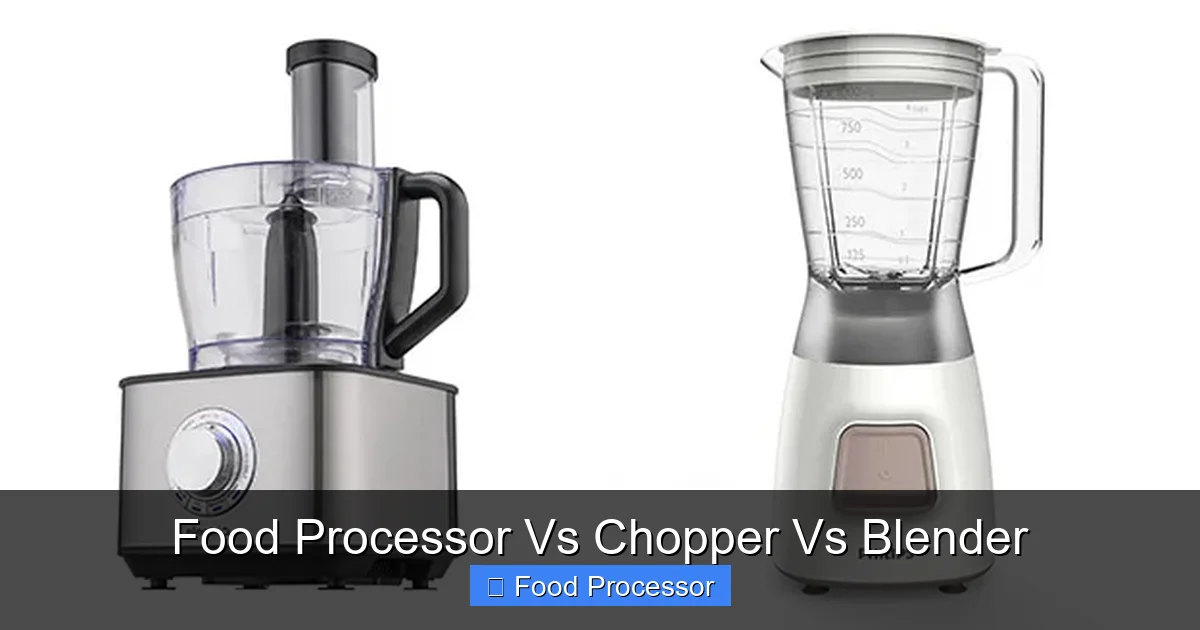
Visual guide about Food Processor Vs Chopper Vs Blender
Image source: kimzhouse.com
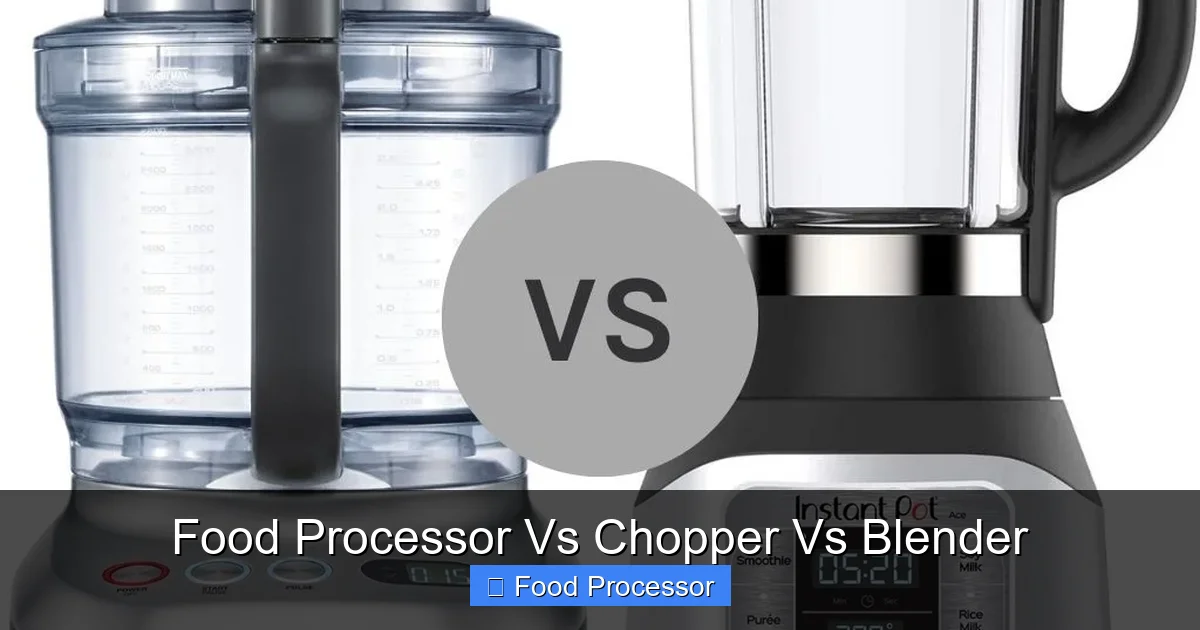
Visual guide about Food Processor Vs Chopper Vs Blender
Image source: twosleevers.com
Motor Straining or Appliance Overheating
This usually indicates overloading the appliance or trying to process ingredients that are too hard or too thick. Reduce the quantity, add a bit of liquid for blenders, or stop and let the motor cool down.
Liquids Leaking from Food Processor
Food processors are generally not designed to hold large amounts of very thin liquid, especially when processing. If you need to blend thin liquids, a blender is the correct tool.
Conclusion
Choosing between a food processor vs chopper vs blender doesn’t have to be a daunting task. Each appliance has its own strengths and ideal uses, designed to make specific kitchen tasks easier and more efficient.
The **food processor** is your versatile workhorse, perfect for heavy-duty prep, from slicing and shredding to kneading dough and making thick purees. The **chopper** is the convenient, compact solution for small, quick jobs like mincing garlic or herbs. And the **blender** is the undisputed champion for achieving perfectly smooth liquids, ideal for smoothies, soups, and sauces.
By considering your typical cooking routines, the types of ingredients you handle most, and the desired final textures, you can confidently select the right tool for the job. Investing in the right appliance can truly transform your cooking experience, saving you time and effort while opening up a world of culinary possibilities. Happy cooking!
