
Understanding “how many watts food processor” needs is crucial for making the right purchase. This guide breaks down the importance of wattage, explaining that higher watts generally mean more power for tough tasks like kneading dough or making nut butter, while lower watts suffice for lighter jobs. You’ll learn how to match a food processor’s wattage to your cooking habits, ensuring optimal performance and efficiency, and ultimately, choosing the best food processor for your kitchen.
How Many Watts Food Processor
Welcome to the ultimate guide on understanding food processor wattage! Choosing a food processor can feel a bit like decoding a secret language, especially when you start looking at technical specifications. One of the most common questions people ask is: “How many watts food processor do I really need?” It’s a fantastic question, and getting the answer right can make all the difference in your kitchen experience.
In this comprehensive guide, we’re going to demystify food processor watts. We’ll break down what wattage means for your appliance, explore the different wattage ranges available, and help you figure out exactly how many watts your ideal food processor should have based on your cooking habits and needs. By the end of this article, you’ll be able to confidently select a food processor that’s powerful enough for all your culinary adventures, without overspending or feeling underpowered.
Let’s dive in and learn all about food processor power!
Key Takeaways
- Wattage Equals Power: A food processor’s wattage directly indicates its motor’s power. Higher wattage machines can handle tougher ingredients and more demanding tasks with ease, reducing strain on the motor.
- Match Wattage to Your Needs: Don’t just pick the highest wattage. Assess your typical kitchen tasks. Light users might be fine with 200-400 watts, while frequent users or those tackling heavy-duty recipes need 600-1200+ watts.
- Common Wattage Ranges: Compact food processors often fall between 200-400 watts, mid-range models are typically 500-800 watts, and full-size or professional units can range from 900 to 1200+ watts.
- Consider Task Complexity: For simple chopping and slicing of soft foods, lower wattage is sufficient. For kneading dough, grinding nuts, or processing dense vegetables, a higher wattage (700W and above) is highly recommended.
- Wattage isn’t the Only Factor: While important, wattage works in conjunction with motor quality, blade design, and overall build. A well-engineered 600-watt food processor can outperform a poorly built 800-watt model.
- Check Product Specifications: Always refer to the product’s specifications or manual to find the exact wattage. This information helps you compare models accurately and make an informed decision.
Understanding What Watts Mean for Your Food Processor
Think of watts as the muscle power of your food processor. In simple terms, a watt is a unit of electrical power. When you see a wattage rating on an appliance, it tells you how much electrical power the motor consumes and, by extension, how much brute force it can exert.
A higher wattage rating generally means a more powerful motor. This power translates directly into the food processor’s ability to handle tough ingredients and demanding tasks without struggling, overheating, or stalling. Imagine trying to knead a stiff dough by hand versus using a powerful stand mixer. The principle is similar for food processors.
Why Wattage Matters
The wattage of your food processor is crucial for several reasons:
- Performance: Higher wattage motors can spin blades faster and maintain that speed even when processing dense or large quantities of food. This leads to more efficient and consistent results.
- Durability: A food processor with adequate wattage for its intended tasks will experience less strain on its motor. This reduces wear and tear, potentially extending the life of your appliance.
- Versatility: More powerful motors open up a wider range of tasks you can accomplish. If you dream of making your own nut butter or grinding tough meats, you’ll need a higher watt food processor.
- Speed: Powerful motors often process ingredients more quickly, saving you time in the kitchen.
Now that we know *why* wattage matters, let’s look at the different categories.
Step 1: Identify Your Food Processor Usage Needs
Visual guide about How Many Watts Food Processor
Image source: mahboula.grandhyper.com
Before you even think about specific watt numbers, take a moment to consider how you plan to use your food processor. This is the most critical step in determining how many watts food processor will be right for you. Are you a casual cook or a culinary enthusiast?
H3: Occasional, Light-Duty Use
If you only need a food processor for light tasks a few times a month, such as chopping onions, mincing garlic, making salad dressings, or pureeing cooked vegetables for a quick soup, you don’t need the most powerful machine on the market.
H3: Regular, Medium-Duty Use
Many home cooks fall into this category. You might use your food processor several times a week for a variety of tasks like slicing and shredding vegetables, making breadcrumbs, blending dips (like hummus), or preparing components for everyday meals. You might also want to occasionally make cookie dough or lighter pastry dough.
H3: Frequent, Heavy-Duty Use
This category is for serious home cooks, bakers, or anyone who plans to use their food processor extensively for challenging tasks. This includes kneading stiff bread dough, making nut butters from scratch, grinding hard cheeses, processing large batches of tough vegetables like carrots or potatoes, or even making baby food in bulk. If you’re serious about your cooking and want to tackle any recipe, you’ll need a robust machine.
Step 2: Explore Common Food Processor Wattage Ranges
Visual guide about How Many Watts Food Processor
Image source: microadia.net
Food processors come in a wide range of wattages, typically starting from around 100 watts for mini choppers and going up to 1500 watts or more for commercial-grade machines. For home use, you’ll generally find models ranging from 200 to 1200 watts.
H3: Low Wattage Food Processors (100-400 Watts)
- What they are good for: These are usually compact food processors or mini choppers. They are perfect for small, quick tasks like chopping herbs, nuts, garlic, or making a small batch of dressing. They excel at processing soft foods and small quantities.
- Limitations: They will struggle with large quantities, hard ingredients, or thick doughs. Trying to force them to do heavy-duty tasks can lead to motor strain and premature failure.
- Ideal user: Someone with limited kitchen space, who cooks infrequently, or only needs assistance with very basic prep tasks. If you’re wondering how to choose the right size food processor, these often align with smaller capacities.
H3: Medium Wattage Food Processors (500-700 Watts)
- What they are good for: This is a very common range for full-size food processors (8-12 cup capacity). They offer a good balance of power and versatility for most everyday cooking needs. They can handle general chopping, slicing, shredding (e.g., how to use food processor to chop vegetables or shred cabbage), pureeing, and mixing lighter doughs.
- Limitations: While versatile, they might still groan a bit with very stiff doughs or large quantities of hard ingredients like dense carrots or ice. Repeated heavy use might test their limits.
- Ideal user: Most home cooks who prepare meals regularly and want a reliable workhorse for a variety of tasks without breaking the bank.
H3: High Wattage Food Processors (800-1200+ Watts)
- What they are good for: These are the powerhouses of the home kitchen. They are designed to tackle almost any task you throw at them. Think kneading heavy bread dough, grinding meat, making thick nut butters, processing large quantities of hard vegetables, or even crushing ice. They provide consistent performance and excellent results under heavy loads.
- Limitations: The main ‘limitation’ is often the price point, as these machines tend to be more expensive. They can also be larger and heavier.
- Ideal user: Avid cooks, bakers, those who do a lot of meal prep, or anyone who wants a professional-grade experience and demands maximum power and durability from their appliance. If you’re looking for the best food processor for peanut butter, this wattage range is essential.
Step 3: Matching Wattage to Specific Tasks
Now, let’s get specific. Here’s a breakdown of common food processor tasks and the recommended wattage for each:
H3: Light Chopping, Mincing, Pureeing Soft Foods
- Examples: Onions, garlic, herbs, cooked tomatoes, soft berries, making baby food from steamed vegetables.
- Recommended Wattage: 200-500 watts. Even a mini chopper in the 250-watt range can handle these with ease.
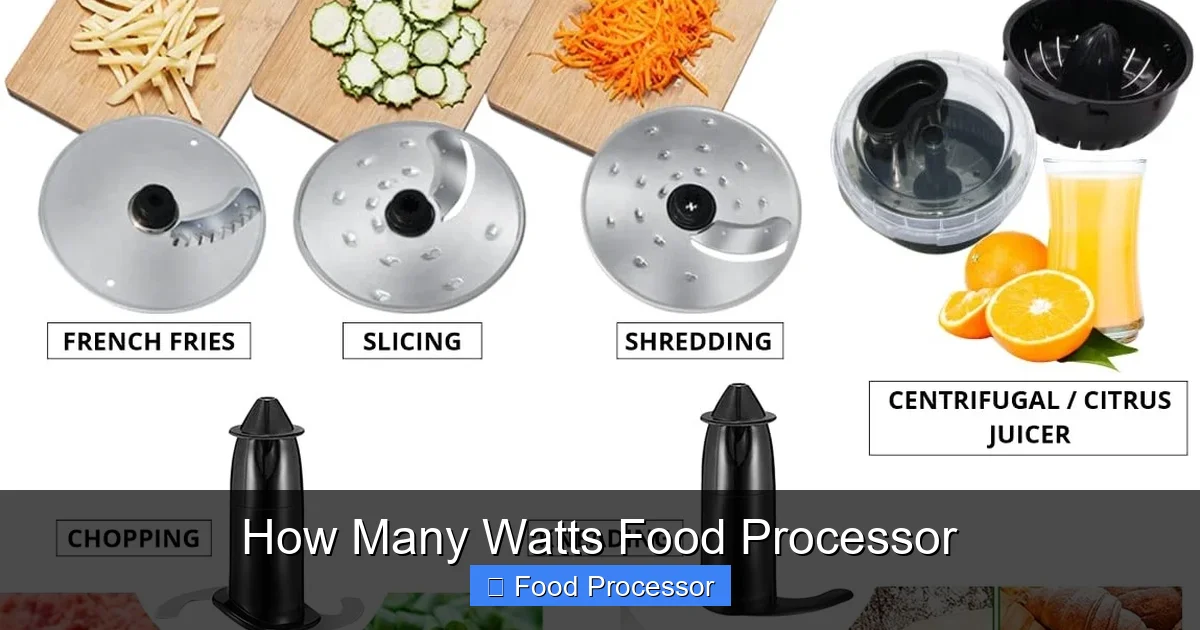
H3: Slicing, Shredding, General Chopping (Medium Density)
- Examples: Slicing cucumbers, carrots, potatoes; shredding cheese, cabbage, zucchini; chopping raw vegetables like bell peppers or broccoli.
- Recommended Wattage: 500-700 watts. This range offers enough power to process these ingredients efficiently without bogging down.
H3: Mixing Doughs, Batters, Pureeing Thicker Consistencies
- Examples: Cookie dough, pie crusts, light bread dough, hummus, thick sauces, pureeing raw carrots or apples for baking.
- Recommended Wattage: 600-900 watts. While some 500W models might manage, a higher wattage will handle these tasks more smoothly and with less strain on the motor. For bread dough, especially, aim for the higher end of this range.
H3: Heavy-Duty Tasks (Kneading Stiff Dough, Grinding Nuts/Meat, Crushing Ice)
- Examples: Kneading dense bread dough (sourdough, whole wheat), making nut butters (almond, peanut), grinding hard cheeses (Parmesan), processing raw meat for burgers or sausages, crushing ice for drinks.
- Recommended Wattage: 900-1200+ watts. These tasks require significant power to prevent the motor from seizing or overheating. Investing in a high-wattage model for these jobs will ensure longevity and consistent results.
Step 4: Other Factors to Consider Beyond Wattage
While how many watts food processor has is a major factor, it’s not the only one. A food processor is a sum of its parts.
H3: Motor Type and Quality
Some manufacturers use high-quality induction motors that are more durable and efficient, even if their listed wattage isn’t the absolute highest. A good motor, combined with strong blades and a sturdy drive shaft, can sometimes outperform a higher-wattage unit with lesser quality components. Always look at reviews and brand reputation.
H3: Blade Design and Sharpness
The effectiveness of a food processor also depends heavily on its blades. Sharp, well-designed blades can cut through ingredients more easily, reducing the load on the motor. Dull blades will make even a high-wattage machine struggle.
H3: Bowl Capacity
The size of the food processor’s bowl often correlates with its motor power. Larger capacity food processors (10-14 cups) typically have more powerful motors to handle the larger volumes of ingredients they are designed for. Smaller choppers (3-5 cups) naturally require less power. This is why knowing how to choose the right size food processor is also important.
H3: Build Quality and Materials
A robust base, durable housing, and high-quality plastics or stainless steel components contribute to the overall resilience and performance of the appliance. A well-built machine, even at a moderate wattage, will generally last longer and perform better than a cheaply made, high-wattage alternative.
H3: Speed Settings
Some food processors offer multiple speed settings, which can give you more control over the processing. A powerful motor combined with variable speeds allows you to gently process delicate items or power through tough ones.
Step 5: How to Find the Wattage of a Food Processor
Finding the wattage information for a food processor is usually quite straightforward:
- Product Specifications: When shopping online or in-store, look for the “Specifications” or “Tech Specs” section. The wattage will almost always be listed there.
- Product Manual: If you already own a food processor, check its user manual. The specifications section will contain the wattage.
- Appliance Label: Most electrical appliances have a label, usually on the bottom or back, that lists important electrical information, including voltage (V) and wattage (W).
- Online Reviews and Comparisons: Reputable review sites and comparison charts will almost always include the wattage as a key point of comparison.
Troubleshooting: When Wattage Isn’t Enough
Sometimes, even with a seemingly appropriate wattage, your food processor might struggle. Here are a few common issues and tips:
H3: Overloading the Bowl
Even the most powerful food processor has a limit to how much it can process at once. Overfilling the bowl forces the motor to work harder, which can lead to overheating or stalling. Always process ingredients in batches, especially for dense items.
H3: Incorrect Blade or Technique
Ensure you’re using the correct blade for the task. For example, using the S-blade to “slice” large, firm items won’t work as well as using a dedicated slicing disc. Also, don’t just hold the pulse button down indefinitely; use short pulses to control consistency and prevent overheating.
H3: Dull Blades
As mentioned, dull blades make the motor work harder. If your food processor feels less powerful over time, check the sharpness of your blades. Some can be sharpened, or you might need replacements. If your food processor blade is not spinning, it might indicate a different issue, but dull blades can contribute to poor performance.
H3: Processing Very Hard or Frozen Items
While high-wattage food processors can handle some hard or frozen items, pushing them too hard can still be an issue. Always cut ingredients into smaller, manageable pieces before processing. For extremely hard items, a blender or a different tool might be more appropriate.
The Energy Efficiency Aspect
You might be wondering about the energy consumption of a higher wattage food processor. While a 1200-watt food processor uses more electricity when it’s running than a 300-watt one, food processors are generally used for very short periods. The total energy consumed for a typical recipe is usually quite low compared to appliances that run for extended times (like ovens or refrigerators).
In fact, a more powerful motor might process ingredients faster, meaning it runs for less time overall for the same task, potentially using a similar or even less total energy for a given batch. For those interested in minimizing power usage, exploring options for the best energy efficient food processor for home can be a wise choice.
Conclusion
Choosing the right food processor with the appropriate wattage is a vital step toward a more efficient and enjoyable cooking experience. By understanding how many watts food processor requires for different tasks and considering your personal cooking style, you can make an informed decision that will serve you well for years to come.
Remember, it’s not always about having the highest wattage, but rather having the *right* wattage for your specific needs. Combine that understanding with a consideration for overall build quality, blade design, and motor type, and you’re well on your way to selecting the perfect culinary companion. Happy cooking!
