
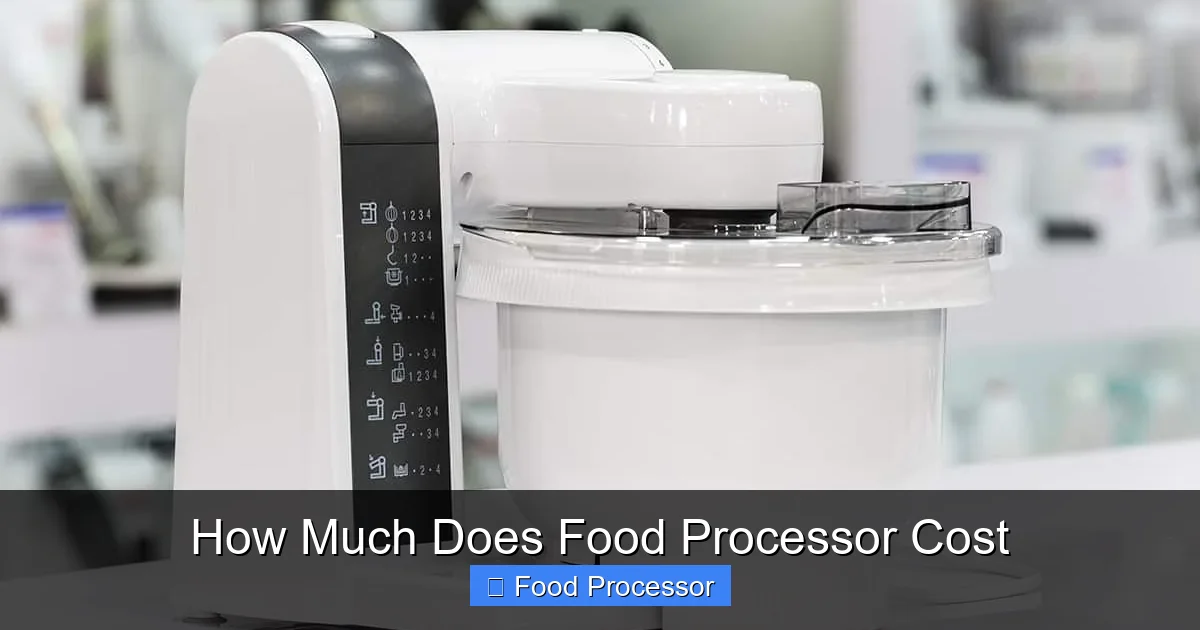
Figuring out how much a food processor costs can feel like a puzzle, but this guide helps you decode it. Prices vary widely, typically ranging from under $50 for basic choppers to over $600 for high-end professional models. Key factors influencing the price include brand reputation, motor power, bowl capacity, included attachments, and build quality. By understanding these elements, you can make an informed decision and find a food processor that perfectly fits both your culinary ambitions and your budget.
How Much Does Food Processor Cost
Thinking about buying a food processor but feeling a bit overwhelmed by all the options and prices out there? You’re not alone! It’s a common question: “how much does food processor cost?” The answer isn’t always straightforward because these handy kitchen gadgets come in a huge variety of sizes, brands, and feature sets, each with its own price tag.
This guide is designed to demystify the cost of food processors. We’ll explore the main factors that influence pricing, break down what you can expect to pay at different budget levels, and give you practical tips for finding the best value. By the end, you’ll have a clear understanding of the market and feel confident in choosing the perfect food processor for your kitchen and your wallet. Let’s dive in!
Key Takeaways
- Price Range Varies Greatly: Food processors can cost anywhere from under $50 for small, basic choppers to over $600 for large, premium, or commercial-grade models.
- Key Factors Influence Cost: The primary drivers of a food processor’s price are its brand reputation, motor wattage, bowl capacity, the number and quality of attachments, and overall build materials.
- Budget vs. Mid-Range vs. High-End: Categorize food processors into budget (<$100), mid-range ($100-$300), and high-end ($300+) to align with your needs and expectations regarding durability and features.
- Consider Your Usage Needs: Evaluate how often you’ll use it and for what tasks. Occasional users might be fine with a budget model, while frequent cooks benefit from a more powerful, feature-rich machine.
- Don’t Forget Sales & Refurbished Options: To save money, always look for seasonal sales, holiday discounts, or consider purchasing a certified refurbished model from a reputable retailer.
- Brand Matters for Value: While some budget brands offer good starting points, investing in well-known brands often means better warranty, customer support, and long-term durability, justifying a higher upfront cost.
Understanding the Factors That Influence Food Processor Cost
The price of a food processor isn’t just pulled out of thin air. Several key elements come together to determine its final cost. Knowing these factors will help you understand why some models are budget-friendly while others carry a premium price tag.
Brand Reputation and Recognition
Just like cars or electronics, the brand name plays a significant role in how much a food processor costs. Well-established brands with a long history of quality and innovation often command higher prices. You’re paying not just for the appliance itself, but for the company’s reputation, warranty, and customer support. For instance, many people wonder how much does a Cuisinart food processor cost because it’s a widely recognized and respected name in kitchen appliances. Other premium brands include Breville and KitchenAid, while Hamilton Beach and Ninja often offer more budget-friendly options.
Motor Power (Wattage)
The motor is the heart of your food processor. A more powerful motor (measured in watts) can handle tougher ingredients like dense doughs, hard cheeses, or large batches of vegetables without bogging down.
- Lower Wattage (250-600W): Typically found in smaller, more affordable models. Good for basic chopping, pureeing, and lighter tasks.
- Mid-Range Wattage (600-1000W): Common in mid-sized, versatile models. Can tackle most everyday kitchen tasks with ease.
- High Wattage (1000W+): Reserved for larger, professional-grade or premium home models. Excellent for heavy-duty tasks, large quantities, and continuous use. Higher wattage usually means a higher food processor cost.
Bowl Capacity
Food processors come in various sizes, and the capacity of the work bowl directly impacts its price.
- Mini Choppers (1-4 cups): These are very basic and designed for small tasks like mincing garlic or making a quick sauce. They have the lowest food processor cost, often under $50.
- Compact Food Processors (5-7 cups): A step up, good for smaller households or light meal prep. They offer more versatility than mini choppers. When considering how to choose the right size food processor, capacity is a key differentiator in price.
- Full-Size Food Processors (8-14 cups): The most popular size for general home use. Ideal for families and regular cooking tasks. This category has the widest price range.
- Large/Commercial Food Processors (16 cups+): Designed for large families, entertaining, or commercial kitchens. These are the most expensive options.
Included Features and Attachments
A basic food processor might only come with a standard S-blade. More expensive models often include a variety of useful attachments, which adds to the overall food processor cost:
- Multiple Blades and Discs: Slicing, shredding, grating, julienne, and French fry discs.
- Dough Blade: For kneading bread or pizza dough.
- Whisk/Emulsifying Disc: For whipping cream or making mayonnaise.
- Citrus Juicer: An integrated juicing attachment.
- Storage Boxes: For organizing all the accessories.
- Advanced Features: Such as pulse settings, different speed controls, wider feed tubes, or even integrated scales.
Material Quality and Durability
The materials used in construction also affect the price.
- Plastic Bowls and Bases: Common in budget-friendly models. Generally durable but might not withstand heavy-duty use or last as long as premium materials.
- BPA-Free Plastics: A standard for most modern food processors, but still plastic.
- Stainless Steel Accents/Bases: Higher-end models often feature brushed stainless steel, offering better aesthetics and durability.
- Heavy-Duty Motors and Gears: More expensive models use robust motors and metal gearing designed for longevity.
Cost Breakdown: What to Expect at Different Price Points
Let’s break down “how much does food processor cost” by typical budget categories. Keep in mind these are general ranges, and prices can fluctuate with sales or specific retailers.
Entry-Level/Budget Food Processors (Under $100)
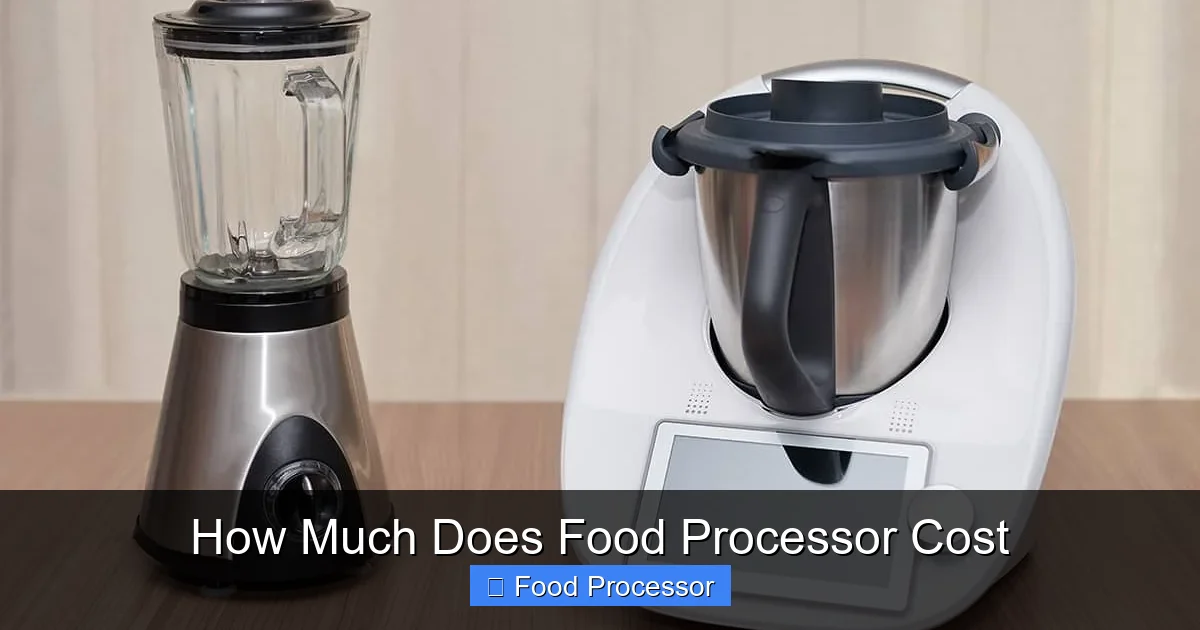
If you’re looking for a simple, affordable option for basic tasks, this is your starting point. You’ll find many compact choppers and smaller food processors in this range.
Visual guide about How Much Does Food Processor Cost
Image source: howdykitchen.com
- Typical Features: Smaller capacity (1-7 cups), lower wattage motors (250-600W), limited attachments (usually just an S-blade and maybe a reversible slice/shred disc). Made primarily of plastic.
- Best For: Occasional cooks, individuals, or small households who need to chop onions, mince garlic, make small batches of pesto, or prepare baby food.
- Examples: Hamilton Beach, Black+Decker, some smaller Ninja models. You might find some excellent deals in this range if you’re checking stores like how much does a food processor cost at Walmart or other big-box retailers.
- Expectations: Don’t expect these to handle heavy doughs or large quantities repeatedly. They’re great for light-duty, quick tasks.
Mid-Range Food Processors ($100 – $300)
This is where most home cooks will find a great balance of features, power, and durability. The mid-range offers a lot of versatility.
- Typical Features: Medium to large capacity (8-14 cups), robust motors (600-1000W), multiple attachments (slicing, shredding, dough blades), sturdier construction, often with stainless steel accents.
- Best For: Regular home cooks, families, those who enjoy meal prepping, and anyone needing a versatile machine for a variety of tasks like making hummus, shredding cheese, slicing vegetables, or kneading bread dough.
- Examples: Cuisinart (many popular models fall here), KitchenAid, Breville (some entry-level models), Ninja Foodi systems.
- Expectations: These machines are built to last longer and perform more consistently than budget models. They handle most common kitchen tasks with ease.
High-End/Premium Food Processors ($300 – $600+)
For serious home chefs, frequent entertainers, or those who demand top-tier performance and durability, high-end food processors are an investment.
- Typical Features: Large capacity (12-16 cups), powerful motors (1000W+), heavy-duty construction (often with more metal components), a comprehensive suite of specialized attachments, advanced safety features, and often longer warranties. Some may include smart technology.
- Best For: Avid cooks, large families, those who use their food processor almost daily, or anyone who values professional-grade results and long-term reliability.
- Examples: High-end Cuisinart models, Breville Sous Chef, professional-grade KitchenAid models.
- Expectations: Exceptional performance, quiet operation, and superior durability. These machines are designed for heavy use and intricate tasks.
Commercial Food Processors ($500 – $2000+)
While not typically for home use, it’s worth mentioning that commercial food processors exist for restaurants and industrial kitchens. These are extremely durable, high-capacity, and powerful, built for continuous, heavy-duty operation, and their cost reflects that.
How to Determine Your Budget for a Food Processor
Now that you know the different price points, how do you decide how much you should spend? It all comes down to your needs and priorities. Before you even think about the price tag, it’s wise to consider your specific needs. Understanding what to consider when buying a food processor will help you narrow down your choices and, ultimately, your budget.
Step 1: Assess Your Usage Frequency and Needs
Be honest with yourself about how often you’ll truly use the food processor and for what tasks.
Visual guide about How Much Does Food Processor Cost
Image source: kitchenseer.com
- Occasional User (once a month or less): A budget-friendly compact model (under $100) might be perfectly adequate for simple chopping and pureeing.
- Regular User (once a week): A mid-range full-size model ($100-$300) will offer the versatility and power you need for most recipes.
- Daily/Frequent User (meal prepping, baking, large family): Consider a high-end model ($300+) for its durability, power, and wide range of functions.
Step 2: List Your Must-Have Features
Do you absolutely need a dough blade for baking? Or are slicing and shredding discs essential for your meal prep? Make a list of features you can’t live without. This will help you rule out basic models and focus on ones that meet your specific requirements. Each extra feature often adds to the food processor cost.
Step 3: Research Brands and Read Reviews
Once you have an idea of your needs and desired features, start looking at brands that fit those criteria. Read user reviews and expert comparisons. This will give you insights into real-world performance and durability, which can help justify a higher food processor cost for a more reliable machine.
Step 4: Compare Prices Across Retailers
Once you’ve identified a few models you like, compare their prices at different stores, both online and brick-and-mortar. Prices can vary, especially with sales and promotions. Don’t forget to factor in shipping costs if buying online.
Tips for Finding the Best Value
Saving money doesn’t always mean buying the cheapest option. Sometimes, paying a little more upfront for quality can save you money in the long run. Here are some smart tips:
Look for Sales and Promotions
Major sales events like Black Friday, Cyber Monday, Amazon Prime Day, or end-of-season clearances are excellent times to snag a food processor at a discounted price. Keep an eye on appliance sections of department stores and online retailers.
Consider Refurbished Models
Many reputable manufacturers and retailers offer certified refurbished food processors. These are typically returns that have been inspected, repaired (if needed), and tested to work like new, often with a significant discount and a warranty. This can be a great way to get a higher-end model for a lower food processor cost.
Check Warranty and Customer Service
A good warranty (1-5 years is common for motors) provides peace of mind. Excellent customer service can be invaluable if you encounter any issues. Sometimes, paying a bit more for a brand with a strong reputation for support is worth it.
Factor in Long-Term Durability
A very cheap food processor might save you money initially, but if it breaks down after a year and needs to be replaced, you haven’t really saved anything. Investing in a mid-range or high-end model known for its durability can be more cost-effective in the long run.
Evaluate the Included Accessories
Sometimes, a food processor that seems slightly more expensive includes a wider array of useful attachments (like extra slicing discs or a spatula) that you might otherwise have to buy separately, making it a better value overall.
Troubleshooting: Avoiding Hidden Costs
While “how much does food processor cost” mainly refers to the purchase price, there can be hidden costs or issues that arise from choosing poorly.
Frequent Replacements
If you buy a very inexpensive food processor that struggles with your regular tasks, you might find yourself replacing it more often than you’d like. The motor might burn out, or plastic parts could break. This cycle of buying cheap replacements ultimately costs more than investing in a more durable unit from the start.
Lack of Replacement Parts
For some budget brands, finding replacement blades or bowls if they get lost or damaged can be difficult or impossible. This means a minor issue could render your entire appliance useless, forcing you to buy a whole new one. Reputable brands usually have parts available for purchase.
Inefficiency and Time Costs
A food processor that is underpowered or has insufficient capacity for your needs can lead to frustration and take longer to complete tasks. You might have to process ingredients in multiple small batches, which is a waste of your valuable time. Consider the value of your time when assessing a food processor’s efficiency.
Conclusion
Deciding “how much does food processor cost” for your specific needs is a journey of understanding your culinary habits, your budget, and the features that matter most to you. From basic choppers under $50 to premium, heavy-duty machines over $600, there’s a food processor for every kitchen and every cook.
By considering factors like brand, motor power, bowl capacity, and included attachments, you can make an informed decision. Remember, the best food processor isn’t always the most expensive one, but rather the one that offers the best value for your specific needs, lasts for years, and makes your time in the kitchen more enjoyable and efficient. Happy cooking!
