
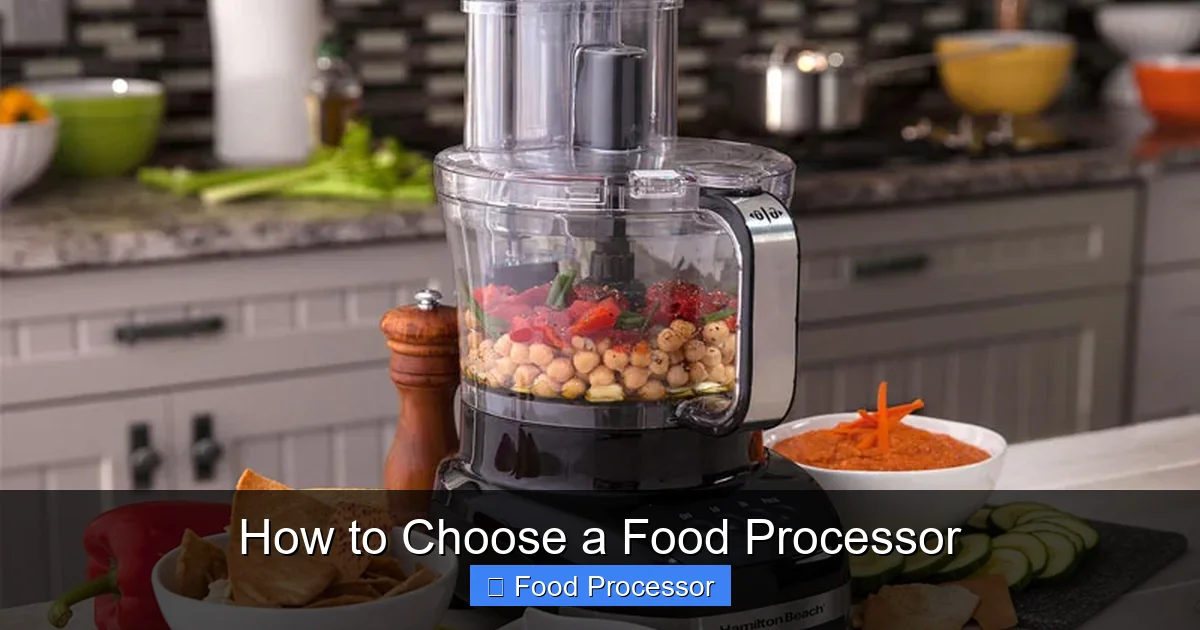
Choosing the right food processor can transform your cooking, making prep tasks easier and faster. This comprehensive guide walks you through essential considerations like bowl capacity, motor power, blade versatility, and ease of cleaning. By understanding your specific kitchen needs and budgeting wisely, you’ll be able to confidently select a food processor that truly works for you, ensuring countless culinary successes.
How to Choose a Food Processor
Welcome, home cooks and culinary enthusiasts! Are you tired of tedious chopping, endless slicing, and sore hands after preparing meals? A food processor is a true kitchen workhorse, designed to make your life easier and your cooking more efficient. It can chop, dice, slice, shred, puree, and even knead dough in mere seconds. But with so many models, sizes, and features available, choosing the right food processor can feel a bit overwhelming.
Don’t worry! This comprehensive guide is here to simplify the process. We’ll walk you through everything you need to know, step by step, to help you confidently select the perfect food processor that fits your cooking style, kitchen space, and budget. By the end, you’ll be ready to make an informed decision and enjoy countless hours of effortless meal preparation.
Key Takeaways
- Assess Your Needs First: Before anything else, define what you’ll primarily use the food processor for (chopping, slicing, kneading) and how often you’ll use it to guide all other decisions.
- Size Matters for Capacity: Match the food processor’s bowl size (mini, compact, full-size) to your typical cooking volume. Too small means multiple batches; too large wastes counter space.
- Prioritize Motor Power: Higher wattage generally means better performance and durability, especially for tougher tasks like kneading dough or processing hard vegetables. Don’t skimp on power if you plan heavy-duty use.
- Evaluate Blade & Disc Attachments: A versatile set of blades and discs (S-blade, slicing, shredding) expands the machine’s utility. Check if included attachments meet your desired tasks.
- Consider Design and Ease of Use: Look for features like a wide feed chute, intuitive controls, a stable base, and most importantly, parts that are easy to assemble, disassemble, and clean (ideally dishwasher-safe).
- Set a Realistic Budget: Food processors range widely in price. Determine your budget but remember that investing a bit more upfront often leads to a more durable, powerful, and satisfying appliance in the long run.
Step 1: Understand Your Culinary Needs and Habits
Before diving into technical specifications, the very first and most crucial step is to reflect on how you cook and what you expect from a food processor. This personal assessment will guide all your subsequent choices.
What Will You Mostly Use It For?
Think about the tasks you dread most or want to speed up.
- Chopping & Mincing: Do you frequently chop onions, garlic, herbs, or nuts? Almost all food processors excel at this.
- Slicing & Shredding: Do you often slice vegetables for salads, gratins, or shred cheese and cabbage? You’ll need good slicing and shredding discs. If you often wonder how to use food processor to shred cabbage or cheese, this feature is key.
- Pureeing & Blending: Making smooth sauces, hummus, baby food, or nut butters? A powerful motor and a good S-blade are essential.
- Kneading Dough: Are you a baker who wants to simplify bread or pie crust making? You’ll need a food processor with a robust motor and a dedicated dough blade.
- Grinding: Do you plan to grind meat, coffee beans (check if the specific model supports this), or spices? High power and strong blades are a must.
How Often Will You Use It?
Your frequency of use impacts the durability and features you should prioritize.
- Daily/Multiple Times a Week: If you’re a serious home cook or prepare meals frequently, invest in a durable, powerful model that can withstand constant use.
- Weekly/Occasionally: For lighter, less frequent use, a mid-range model might be perfectly adequate.
How Many People Do You Cook For?
This directly relates to the optimal bowl size for your food processor. Are you cooking for just yourself, a small family, or hosting large gatherings? Knowing this will prevent you from buying a unit that’s either too small (requiring multiple batches) or unnecessarily large.
Step 2: Determine the Right Size (Bowl Capacity)
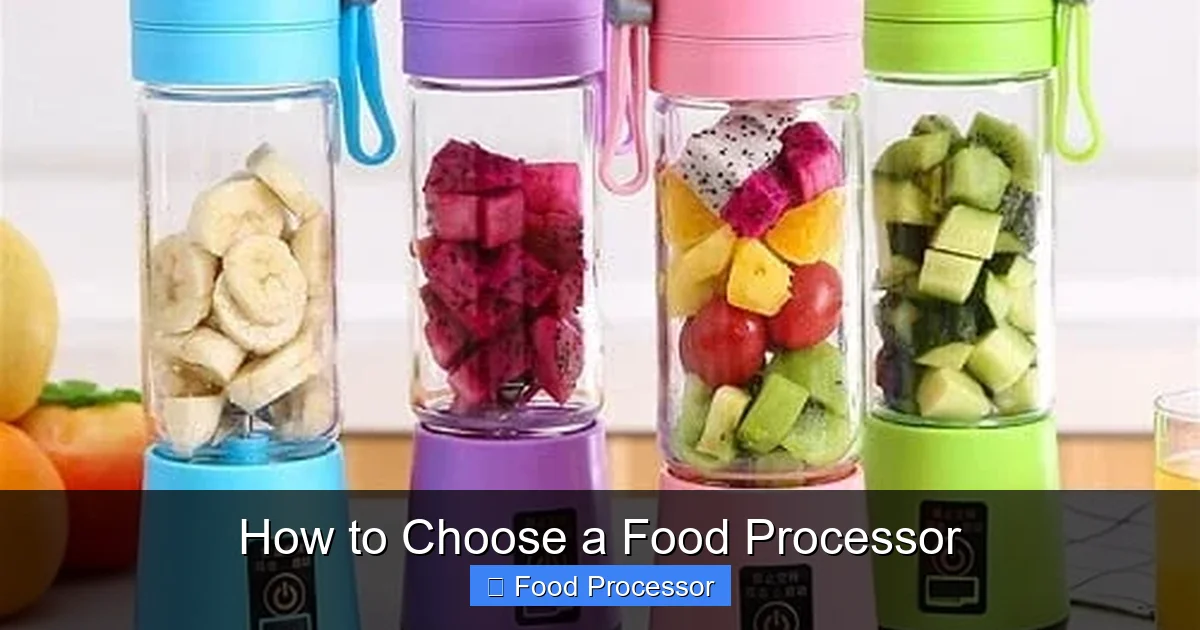
Food processors come in various sizes, measured by the capacity of their work bowl in cups. Matching the bowl size to your typical cooking volume is essential for efficiency and convenience. This is one of the most important aspects when you what to consider when buying a food processor.
Full-Size Food Processors (10-14+ Cups)
These are the workhorses for larger families (4+ people), avid cooks, or those who frequently entertain. They are ideal for:
- Preparing large batches of dough for bread or pizza.
- Shredding significant amounts of cheese or vegetables for salads and casseroles.
- Making big batches of soups, sauces, or purees.
- Meal prepping for the week.
They take up more counter space but offer maximum versatility. If you often find yourself needing to process large quantities, don’t shy away from a 12-cup or even 14-cup model. For more detailed guidance, consider checking out our article on how to choose the right size food processor.
Visual guide about How to Choose a Food Processor
Image source: buykitchenstuff.com
Compact/Mid-Size Food Processors (7-9 Cups)
Perfect for small families (2-4 people) or individuals who cook regularly but don’t need to process huge quantities.
- Great for everyday tasks like chopping onions, making pesto, or slicing a few vegetables.
- They strike a good balance between capacity and counter footprint.
- Often come with a good range of attachments for various tasks.
Mini Food Choppers (1-4 Cups)
These are smaller, simpler machines, sometimes called “mini choppers.”
- Best for single servings or very small tasks like mincing garlic, chopping herbs, making dressings, or small batches of baby food.
- They take up minimal counter space and are often more affordable.
- Not suitable for heavy-duty tasks or large volumes.
Step 3: Evaluate Motor Power (Wattage and Durability)
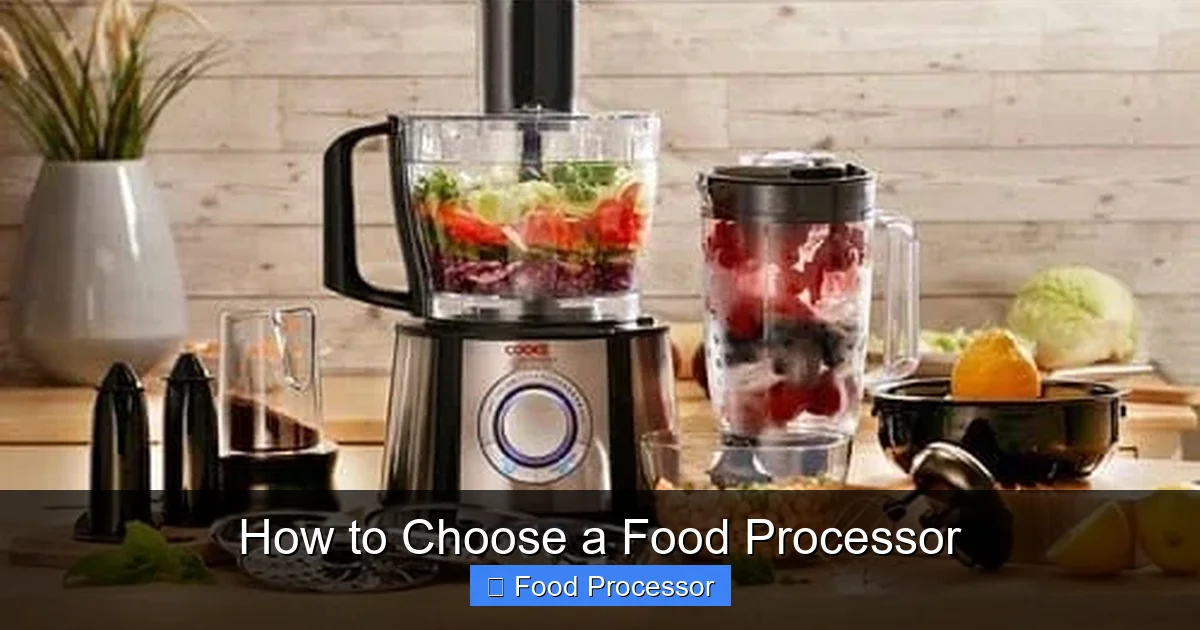
The motor is the heart of your food processor. Its power, measured in watts, dictates how efficiently and smoothly it can handle different ingredients. A more powerful motor generally means a more durable and versatile machine.
Light-Duty Tasks (300-600 Watts)
Found in most mini choppers and some entry-level compact food processors.
- Sufficient for basic chopping, mincing herbs, nuts, and making light sauces.
- May struggle with tougher ingredients or large volumes, potentially leading to motor burnout over time with heavy use.
Visual guide about How to Choose a Food Processor
Image source: buykitchenstuff.com
Medium-Duty Tasks (600-1000 Watts)
Typical for mid-range and many full-size food processors.
- Capable of handling most everyday tasks: slicing hard vegetables, shredding cheese, pureeing cooked ingredients.
- A good balance of power for general home cooking.
Heavy-Duty Tasks (1000+ Watts)
Common in high-end, full-size food processors.
- Essential for demanding tasks like kneading stiff dough, grinding meat, or processing hard root vegetables.
- These motors are designed for longevity and consistent performance under stress.
- Often feature induction motors, which are quieter and more durable than universal motors.
Tip: Don’t just look at wattage; consider the motor type. Induction motors are generally superior for heavy-duty, long-term use.
Step 4: Assess Blade and Disc Attachments (Versatility)
The versatility of your food processor largely depends on the blades and discs it comes with. Most models include a standard set, but some offer an impressive array of specialized tools.
S-Blade (Chopping Blade)
This is the most common and essential blade. It’s used for:
- Chopping: Onions, garlic, herbs, nuts, vegetables.
- Mincing: Meat, fish.
- Pureeing: Soups, sauces, baby food, hummus.
- Mixing: Cake batters, pie crusts.
Slicing Disc
Used for uniformly slicing vegetables and fruits.
- Fixed thickness: Some models have discs that only slice one thickness.
- Adjustable thickness: Higher-end models offer adjustable slicing discs, allowing you to choose thin or thick slices without changing discs. This is a highly desirable feature for precision.
Shredding Disc (Grating Disc)
For shredding cheese, cabbage, carrots, potatoes, and other firm foods.
- Most often comes with two sides: one for fine shredding and one for coarse shredding.
Dough Blade (Plastic Blade)
A plastic S-blade designed for mixing and kneading dough without overworking it or heating it up, which can happen with a metal blade. If you bake, this is a must-have.
Emulsifying Disc/Whipping Disc
Often a plastic disc with a central shaft or a specialized attachment. It’s used for:
- Whipping cream or egg whites.
- Making mayonnaise or dressings that require emulsification.
Other Specialty Discs
Some premium models offer additional discs for specific tasks:
- Julienne disc for matchstick cuts.
- French fry disc.
- Paring disc.
Consider which attachments are genuinely useful for your cooking habits. More attachments often mean a higher price and more storage space needed.
Step 5: Consider Design and Features (User Experience)
Beyond capacity and power, several design elements and additional features can significantly impact your food processor’s usability and convenience.
Feed Chute Size
- Wide Feed Chute: Allows you to process larger pieces of food (e.g., whole potatoes, tomatoes) without pre-chopping. This saves time and effort.
- Narrow Feed Chute: Requires more pre-chopping, but can be better for slowly adding liquids or smaller items. Many models offer both a wide and a narrow pusher for versatility.
Controls
Look for intuitive controls that are easy to understand and operate.
- Buttons: Simple “On,” “Off,” and “Pulse” buttons are common.
- Dials: Some models use dials for speed control or pulse function.
- Pulse Function: Essential for precise control, preventing over-processing, and achieving desired textures. Ensure it’s easy to access and use.
Durability of Construction
- Base Material: A heavy, sturdy base (often metal or heavy-duty plastic) indicates better stability and durability. Lighter bases can “walk” on the counter.
- Bowl Material: Most bowls are made from clear, BPA-free plastic (polycarbonate). Look for thick, robust plastic that won’t easily crack or stain.
- Blade Material: Stainless steel blades are standard. Ensure they feel sturdy and sharp.
Noise Level
Food processors can be noisy, especially with powerful motors or when processing hard ingredients. If you’re sensitive to noise, look for reviews that specifically mention quiet operation. Induction motors tend to be quieter.
Stability
A heavy base and rubberized feet or suction cups are important to keep the food processor from moving or vibrating excessively during operation.
Storage
Consider how you’ll store the unit and its accessories.
- Cord Wrap: A convenient feature for neat storage.
- Accessory Storage: Some models come with a dedicated box or in-bowl storage for blades and discs, which is a huge plus for organization and safety.
Step 6: Prioritize Ease of Cleaning and Assembly
A food processor is only useful if you’re willing to clean it. A difficult-to-clean machine will quickly end up gathering dust in your cupboard.
Dishwasher-Safe Parts
Most bowls, lids, and blades are advertised as dishwasher-safe. Always verify this in the product manual or specifications. Being able to toss these parts into the dishwasher is a huge time-saver. Be mindful of hand-washing sharp blades for safety.
Simplicity of Assembly/Disassembly
A good food processor should be easy to put together and take apart. Complicated interlocking mechanisms or fiddly parts can be frustrating. Look for models with clear markings or intuitive designs. If you’re new to food processors, you might find our guide on how to assemble a food processor step by step helpful.
Crevices and Hard-to-Clean Areas
Examine the lid and bowl for intricate crevices where food can get trapped. Simpler designs are generally easier to clean.
Step 7: Set Your Budget and Explore Brands
Food processors range widely in price, from budget-friendly mini choppers to professional-grade machines. Setting a realistic budget will help narrow down your options.
Entry-Level ($50-$100)
These are typically smaller (mini to compact) or offer basic functionality. Good for occasional use or simple tasks. They might have less powerful motors and fewer attachments.
Mid-Range ($100-$250)
This category offers excellent value, with many full-size models providing good power, a decent range of attachments, and solid construction. Most home cooks will find a great option here.
High-End ($250+)
These are premium machines, often with heavy-duty induction motors, superior build quality, advanced features (like adjustable slicing discs), and a full suite of accessories. They are an investment but are built to last and handle anything you throw at them. For example, if you’re looking at specific brands, you might want to know how much does a Cuisinart food processor cost as they offer models across all these price ranges.
Reputable Brands
Some well-regarded brands known for their food processors include:
- Cuisinart: Often considered the pioneer in home food processors, known for durability and performance.
- KitchenAid: Offers stylish designs and reliable performance, often matching their stand mixers.
- Breville: Known for innovative features, powerful motors, and premium build quality.
- Magimix: A French brand known for extremely durable, quiet induction motors and long warranties.
- Ninja: Popular for multi-function kitchen systems that often include a food processor attachment.
Always read reviews from multiple sources to get a balanced perspective on specific models you’re considering.
Common Pitfalls to Avoid When Choosing a Food Processor
Even with all this information, it’s easy to fall into common traps. Here are a few things to watch out for:
- Buying Too Small: The most frequent mistake! It’s frustrating to process ingredients in multiple tiny batches. When in doubt, go slightly larger than you think you need.
- Underestimating Power Needs: If you plan to knead dough or process tough ingredients regularly, an underpowered machine will struggle and likely burn out prematurely.
- Ignoring Ease of Cleaning: A powerful machine with all the bells and whistles is useless if you dread cleaning it. Prioritize dishwasher-safe parts and simple designs.
- Prioritizing Price Over Quality: While budgeting is important, going for the absolute cheapest option often means compromising on power, durability, and features you’ll eventually miss.
- Not Checking Reviews: Always look at recent customer reviews to understand real-world performance, common issues, and how durable the specific model truly is.
Conclusion
Choosing the right food processor doesn’t have to be a daunting task. By systematically evaluating your needs, considering size, power, attachments, design, and ease of cleaning, you can make an informed decision that will bring efficiency and joy to your kitchen for years to come.
A good food processor is an investment in your culinary journey. It frees up your time, expands your cooking capabilities, and makes healthy eating more accessible. Take your time, do your research, and soon you’ll be enjoying effortless chopping, slicing, shredding, and pureeing with your perfect kitchen companion. Happy cooking!
