
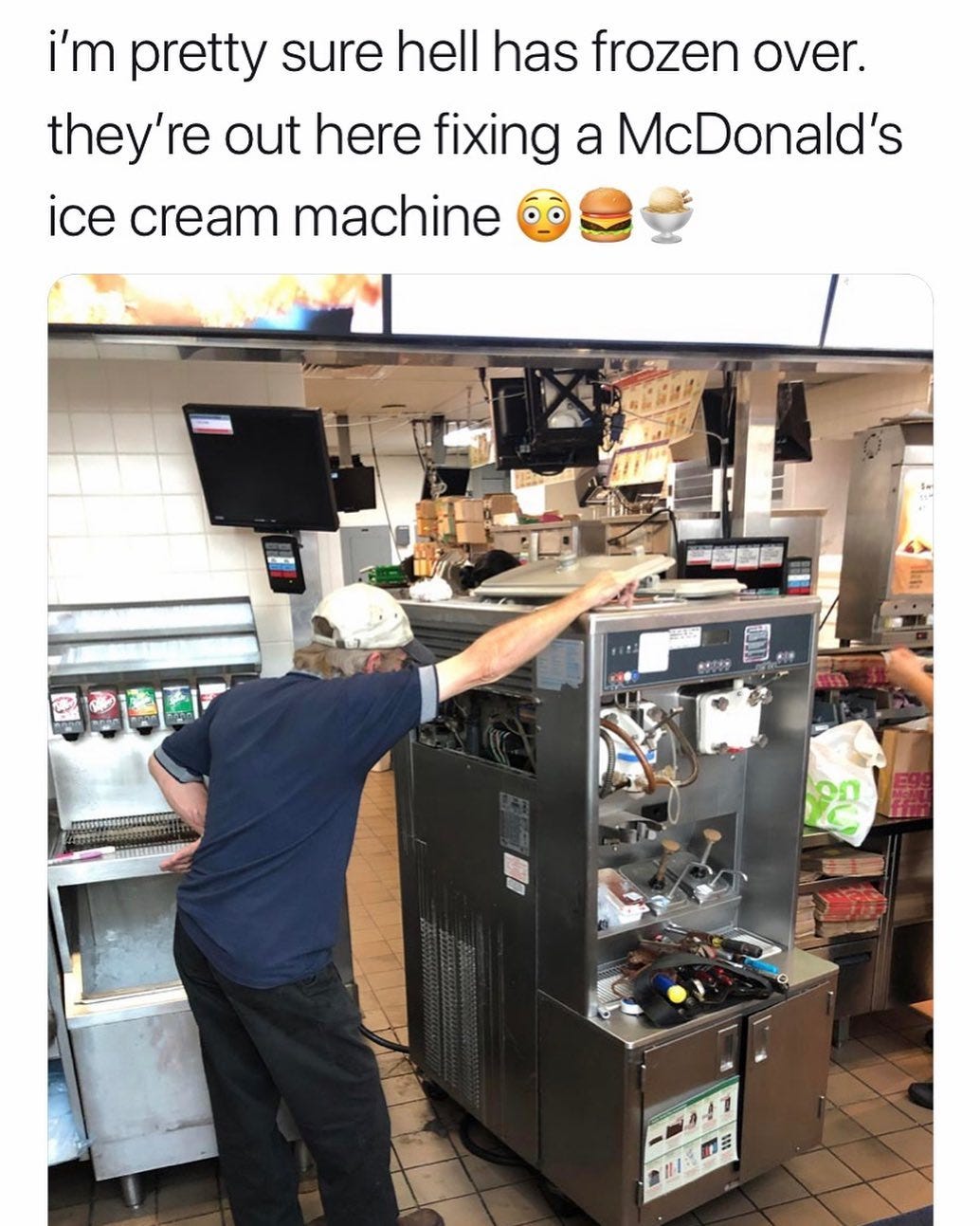
Fixing an ice cream maker that won't freeze usually means checking the bowl, recipe, and cooling system first.
I have fixed dozens of home ice cream makers and commercial machines. I will show clear, practical steps for how to fix ice cream maker not freezing. This guide blends hands-on tips, common causes, and simple tests so you can find the real problem fast and get back to creamy, cold ice cream.

Common causes of an ice cream maker not freezing
Ice cream makers fail to freeze for a few repeatable reasons. Most problems are easy to spot and fix at home. Knowing the likely causes helps you diagnose faster. Here are the main issues I see again and again.
• Bowl not fully pre-frozen or damaged.
• Wrong recipe or warm mix.
• Overfilling or poor chilling time.
• Paddle not engaging or loose.
• Compressor or motor failures on electric models.
• Blocked vents, failed thermostat, or bad wiring on compressor units.
:max_bytes(150000):strip_icc()/mcdonalds-ice-cream-AdobeStock_416594102_3x2-2000-8043034499a347a3991153c9947b850b.jpeg)
Quick checklist to run before troubleshooting
Use this short checklist to save time. Do these quick checks before opening the machine.
• Is the freezer bowl fully frozen per the manual? Check at least 12–24 hours.
• Is the ice cream mix cold before churning? Chill in fridge for a few hours.
• Did you add too much mix or heavy add-ins? Remove some if needed.
• Are vents clear and the unit level? Move away from walls for airflow.
• Is the paddle or dasher installed correctly and tight? Re-seat it.
Step-by-step fixes for bowl-type (frozen bowl) machines
Most home models use a freezeable bowl. These steps helped me fix several broken batches.
-
Check freeze time
Keep the empty bowl in the freezer for 12 to 24 hours. If it warms quickly when taken out, the coolant layer may be damaged. Replace the bowl if it no longer stays cold. -
Test bowl coldness
Pour some ice water into the bowl and watch if it starts to freeze within 10 minutes when the paddle runs. If not, the bowl is not cold enough. -
Chill the mix
Always chill the ice cream base until very cold. A warm mix raises the freezing point and prevents firming. -
Avoid overfilling
Fill no more than two-thirds. More mix slows freezing. I learned this the hard way with a rocky, soft batch after overfilling. -
Check paddle fit and drive
Tighten or re-seat the paddle. If the paddle slips, it may not scrape the bowl and let mix freeze evenly. -
Try batch technique
Freeze the bowl longer. Use smaller batches. Often these steps solve the issue without parts work.

Step-by-step fixes for compressor or electric ice cream makers
Compressor machines act like a small fridge. They are more complex but still fixable for many problems.
-
Check power and settings
Confirm power is on. Use a different outlet or breaker. Reset any electronics per the manual. -
Listen for the compressor and fan
If you hear the compressor and fan run but the bowl stays warm, check for refrigerant leaks or a broken thermostat. If it is silent, the compressor may be dead. -
Clean vents and condenser
Dust blocks airflow and reduces cooling. Unplug and vacuum vents and condenser fins carefully. This often restores normal cooling. -
Check thermostat and sensors
Faulty sensors or thermostats give wrong readings. A multimeter can test continuity. Replace parts if readings are out of spec. -
Inspect wiring and fuses
Loose wires or blown fuses stop the compressor. Look for burnt smells, discoloration, or loose connectors. Replace fuses and tighten connectors. -
When to seek professional help
If the compressor loses refrigerant or needs sealed-system work, call a certified technician. Compressor repair is a trade job and may require recovery of refrigerant.

Common recipes and mix tips that help freezing
A great mix freezes better. Small recipe changes can fix repeated soft batches.
• Use more fat or sugar carefully
Fat adds creaminess but also lowers freezing point. Balance is key. Follow trusted recipes.
• Reduce alcohol or liquid sweeteners
Alcohol and some liquid sweeteners can prevent freezing. Limit them or reduce amounts.
• Add stabilizers if needed
Small amounts of dry milk powder, cornstarch, or egg yolk improve structure. Try tested ratios.
• Fully chill the base
Cold base gives your machine a head start. I always chill the base overnight when testing new recipes.

Preventive maintenance to avoid future freezing failures
A little care keeps machines working and saves money. I learned to clean units after every season.
• Clean and dry after each use
Wipe bowls, paddles, and housings. Prevent mold and residue that stress motors.
• Store freezer bowls flat
Keep bowls in a level place so coolant stays evenly distributed.
• Keep compressor vents clear
Place the machine with space around it. Clean vents every 3 months.
• Run test cycles before heavy use
If you plan a party, run a test batch a day before to confirm the machine chills properly.

Parts, tools, and replacement hints
Knowing the small parts to check saves time and money.
• Tools to have
Multimeter, soft brush, vacuum, basic screwdrivers, and a torque wrench for some paddles.
• Parts often replaced
Freezer bowl, paddle/dasher, drive coupling, thermostat, fan motor, and seals.
• Buying used parts
Match model numbers. Avoid generic bowls that don’t have the right coolant mass. I replaced a bowl once with a mismatched part and cooling was poor.
• Warranty and manuals
Check manufacturer warranty before you open sealed units. Manuals often list troubleshooting and part numbers.

When to replace the ice cream maker or call a pro
Sometimes repair costs more than a new unit. Here is how I decide.
• Replace if the compressor is dead and the machine is old.
• Repair if it is a simple motor, fan, or thermostat replacement.
• Call a pro for refrigerant leaks or sealed-system work.
• Consider a new machine if you want better capacity or faster freezing.

Real-life fixes and lessons learned
I once had a compressor model that would run but not freeze. The issue was a clogged condenser coil. After cleaning, it worked like new. Another time a frozen-bowl model failed because the bowl had frozen and thawed many times. The inner coolant layer broke and it never chilled properly again. Those two repairs taught me to test coldness and keep vents clean.
Frequently Asked Questions of how to fix ice cream maker not freezing
Why is my ice cream maker not freezing after I follow the recipe?
A warm mix or under-frozen bowl is often the cause. Chill the mix fully and ensure the freezer bowl or compressor is working correctly.
How long should I freeze the removable bowl for?
Freeze the bowl 12 to 24 hours as per the manual. If the bowl warms quickly when removed, it may be damaged.
Can too much sugar prevent freezing?
Yes. Too much sugar lowers the freezing point. Use tested recipes or cut sugar slowly and test texture.
What if the compressor unit runs but the mix stays soft?
Clean the condenser and vents, confirm the fan runs, and check the thermostat. If cooling is still weak, a sealed-system issue or refrigerant loss may be present.
Is it safe to fix the compressor myself?
No. Compressor and refrigerant work is hazardous and regulated. Hire a certified technician for sealed-system repairs.
Can adding alcohol keep my ice cream soft?
Yes. Alcohol lowers freezing point and keeps mix soft. Use small amounts or avoid if you want a firm freeze.
How do I know if the bowl is dead or just needs longer freeze time?
Do an ice water test. If the bowl does not begin to freeze ice water in ten minutes with the paddle running, the bowl is likely no longer effective.
Will stabilizers help a weak freezer machine?
Stabilizers can improve texture but will not replace poor cooling. Use stabilizers to help body and melt resistance, not to fix cooling failures.
How often should I clean vents and coils?
Clean vents and condenser coils every 3 months or more often if the unit is in a dusty kitchen. Proper airflow supports reliable cooling.
Can I use a freezer bowl in a warm kitchen?
Yes, but pre-freeze the bowl fully and keep the kitchen cooler if possible. High ambient heat slows freezing time.
Conclusion
You can fix most cases of how to fix ice cream maker not freezing with simple checks and steps. Start with the bowl and mix, then move to drive parts and vents, and finally check compressors or electronics. If a sealed-system or refrigerant issue appears, call a pro. Try the tips in this guide, run a quick test batch, and tweak recipes or maintenance habits. If this helped, leave a comment, share your repair story, or subscribe for more appliance tips and recipes.
