
Choosing the right ingredients is key to achieving evenly cooked meals in your slow cooker. This guide shows you how to select ingredients with similar cooking times, textures, and flavors. With these tips, you’ll create delicious, well-balanced dishes every time.
Key Takeaways
- Understand ingredient cooking times: Know how long different foods take to cook to plan your ingredients accordingly.
- Group ingredients by texture and density: Combine ingredients with similar textures to ensure even cooking.
- Cut ingredients uniformly: Chop vegetables and meats into similar sizes for consistent cooking.
- Layer ingredients properly: Place denser, longer-cooking items at the bottom of the slow cooker.
- Use appropriate liquids: Ensure enough liquid for all ingredients to cook evenly without burning.
- Adjust cooking times based on ingredients: Modify times for ingredients that cook faster or slower than usual.
- Practice and experiment: Learn from experience by noting which combinations work best for even cooking.
Introduction
Cooking in a slow cooker is a fantastic way to prepare delicious, tender meals with minimal effort. However, one common challenge is ensuring that all ingredients cook evenly. Sometimes, parts of your dish might be overdone while others are undercooked. The secret lies in selecting the right ingredients and understanding how they cook. In this guide, you’ll learn how to pick ingredients that cook evenly together, resulting in perfectly balanced dishes every time.
Step 1: Understand the Cooking Times of Common Ingredients
Identify ingredient cooking durations
Before you start cooking, it’s essential to know how long different ingredients take to cook in a slow cooker. For example:
- Meats: Chicken breasts (2-3 hours on low), beef stew meat (6-8 hours on low)
- Vegetables: Carrots and potatoes (3-4 hours on low), zucchini (1-2 hours)
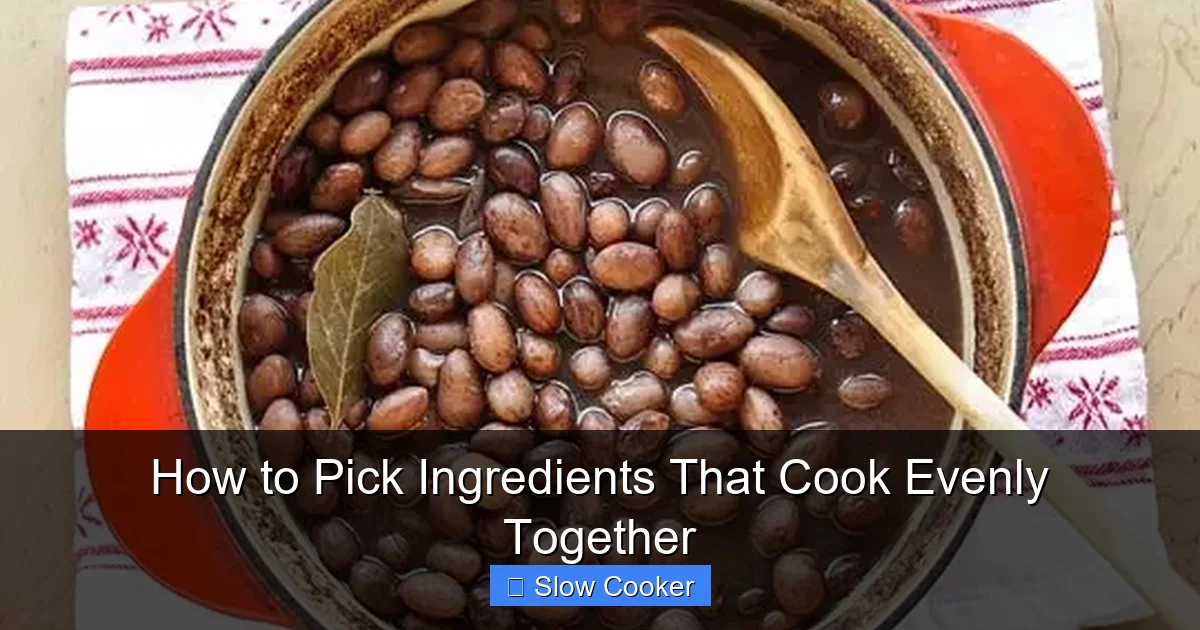
- Legumes: Lentils (3-4 hours), beans (6-8 hours)
By understanding these times, you can choose ingredients that align closely in cooking durations, ensuring nothing gets overcooked or undercooked.
Step 2: Group Ingredients by Similar Texture and Density
Match ingredients with comparable textures
Ingredients with similar textures tend to cook evenly. For example:

Visual guide about How to Pick Ingredients That Cook Evenly Together
Image source: mir-s3-cdn-cf.behance.net
- Soft ingredients: Zucchini, spinach, mushrooms
- Harder, denser ingredients: Carrots, potatoes, root vegetables
Combine soft vegetables with other quick-cooking items and denser ingredients with longer cooking times. This prevents softer ingredients from overcooking while denser ones are still firm.
Step 3: Cut Ingredients Uniformly
Standardize sizes for consistent cooking
The size of your ingredients impacts how evenly they cook. Smaller pieces cook faster, while larger chunks take longer. To ensure even cooking:
Visual guide about How to Pick Ingredients That Cook Evenly Together
Image source: cdn.apartmenttherapy.info
- Chop vegetables into uniform sizes—say, 1-inch cubes.
- Trim meats to similar thicknesses or sizes.
- Avoid large, uneven pieces that cook at different rates.
Practical tip: Use a sharp knife and a ruler if needed to keep pieces uniform.
Step 4: Layer Ingredients Strategically
Place ingredients based on cooking time and density
Layering is crucial in a slow cooker. Place denser, longer-cooking ingredients at the bottom, where heat is more direct. Lighter, quicker-cooking ingredients should go on top. For example:
- Put root vegetables and tough meats at the bottom.
- Add softer vegetables and quick-cooking ingredients on top.
This method ensures everything cooks evenly without overdoing some parts while undercooking others.
Step 5: Use Appropriate Liquids and Cooking Settings
Ensure proper moisture and heat levels
Adding enough liquid prevents ingredients from drying out and helps ingredients cook evenly. For most slow cooker recipes, a liquid level of about halfway up the ingredients is sufficient. Also, choose the right setting:
- Low setting: Ideal for even, slow cooking over several hours.
- High setting: Faster cooking, but requires careful ingredient selection to prevent overcooking.
Adjust the cooking time based on your ingredients’ nature and thickness.
Step 6: Adjust Cooking Times for Fast or Slow Cooks
Modify times based on ingredient specifics
If you include ingredients that cook significantly faster or slower than typical, adjust your cooking time accordingly:
- Fast-cooking ingredients: Add these later in the cooking process or use shorter cook times.
- Slow-cooking ingredients: You might need to extend cooking times or start cooking them earlier.
Practical tip: Use a timer or note the cooking progress to prevent overcooking or undercooking.
Step 7: Practice, Experiment, and Learn
Refine your method over time
Every slow cooker, ingredient brand, and recipe can behave differently. Keep a cooking journal to record what works well. Experiment with different combinations, cut sizes, and layering techniques. Over time, you’ll develop an intuitive sense of how to pick ingredients that cook evenly together.
Troubleshooting Common Issues
- Uneven cooking: Check ingredient sizes, layering, and whether you’re using the correct cooking setting.
- Overcooked softer ingredients: Add quick-cooking items later or reduce cooking time.
- Ingredients not tender enough: Extend cooking time or add a bit more liquid to maintain moisture.
Conclusion
Cooking in a slow cooker is easy once you understand how ingredients behave. By considering cooking times, textures, sizes, and layering, you can ensure your ingredients cook evenly and your dishes turn out perfect every time. Practice makes perfect, so don’t hesitate to experiment and find what works best for your favorite recipes. With these tips, you’ll create consistently delicious, well-balanced slow cooker meals that everyone will love.
Happy Cooking!
Remember, the key to perfectly cooked slow cooker meals is thoughtful ingredient selection and preparation. Enjoy your cooking journey!
