
Don’t let a faulty Magimix food processor slow down your kitchen! This comprehensive guide provides step-by-step instructions to diagnose and repair common issues, from power problems to a blade that won’t spin. Learn how to safely troubleshoot your appliance, identify worn parts, and perform practical fixes to get your Magimix food processor back to perfect working order, saving you time and money.
How to Repair Magimix Food Processor
Hey there, home chef! Is your trusty Magimix food processor suddenly acting up? We know how frustrating it can be when a key kitchen appliance decides to take a break, especially when you’re in the middle of preparing a delicious meal. Magimix food processors are renowned for their quality and durability, but even the best machines can encounter a hiccup or two over time. Instead of rushing out to buy a new one or spending a fortune on professional repairs, you might be surprised at how many common issues you can fix yourself with a little guidance.
This comprehensive guide is here to walk you through the process of diagnosing and repairing your Magimix food processor. We’ll cover everything from simple troubleshooting steps to more involved fixes for common problems like a machine that won’t turn on, a blade that refuses to spin, or even pesky leaks. By the end of this article, you’ll have the knowledge and confidence to tackle many Magimix food processor repairs, saving you money and extending the life of your beloved appliance. Let’s get your Magimix food processor back in action!
Key Takeaways
- Safety First: Always unplug your Magimix food processor before any inspection or repair to prevent electrical shock.
- Diagnose the Problem: Carefully observe symptoms (e.g., no power, blade not spinning, unusual noises, leaks) to pinpoint the underlying issue.
- Check Simple Fixes First: Often, issues stem from improper assembly, overloaded bowls, or tripped thermal cutouts, which are easy to resolve.
- Essential Tools: Gather basic tools like screwdrivers, a multimeter, and replacement parts to effectively tackle most repairs.
- Documentation is Key: Take photos or notes during disassembly to ensure correct reassembly of your Magimix food processor.
- Preventative Maintenance: Regular cleaning and proper usage can significantly extend the life of your Magimix food processor and prevent future breakdowns.
- Know Your Limits: For complex electrical or motor problems, or if you’re uncomfortable, consider seeking professional help to ensure safe and effective repair.
Safety First: Always Unplug Your Magimix Food Processor
Before you even think about inspecting or repairing your Magimix food processor, your absolute first step is to ensure it’s completely disconnected from the power supply. Always unplug the appliance from the wall outlet. This is not just a recommendation; it’s a critical safety measure to prevent electrical shock or accidental activation. Your safety is paramount.
Tools You’ll Need for Magimix Food Processor Repair
Having the right tools makes any repair job easier and safer. For most Magimix food processor repairs, you’ll likely need:
- Screwdriver Set: A variety of Phillips head and flathead screwdrivers, possibly Torx bits for some models.
- Multimeter: Useful for testing electrical continuity in cords, switches, and motors.
- Needle-Nose Pliers: Handy for gripping small wires or components.
- Small Brush or Compressed Air: For cleaning out debris.
- Safety Glasses: Protect your eyes from dust or small flying parts.
- Gloves: To protect your hands, especially from sharp blades.
- Camera (Phone Camera Works Fine): Take photos at each stage of disassembly. This is incredibly helpful for remembering how to put everything back together.
- Replacement Parts: If you’ve already diagnosed a faulty part, having the replacement on hand will save you time.
Understanding Your Magimix Food Processor’s Basic Components
Before diving into repairs, it helps to know the main parts of your Magimix food processor:
- Motor Base: The heavy part that houses the motor and electronics.
- Bowl: Sits on the motor base.
- Lid: Sits on top of the bowl and contains safety interlocks.
- Pusher/Feeder Tube: Used to push ingredients into the bowl.
- Blades/Discs: Various attachments for chopping, slicing, shredding.
- Drive Shaft/Spindle: The part that connects the motor to the blade assembly.
- Safety Interlocks: Mechanisms (usually in the lid and base) that prevent the machine from operating unless all parts are correctly assembled.
Common Magimix Food Processor Problems and Solutions
Let’s tackle the most frequent issues you might encounter with your Magimix food processor.
1. Magimix Food Processor Won’t Turn On
This is a very common and often frustrating problem. Don’t panic! It’s usually something simple. If your Magimix food processor refuses to start, here’s what to check:
H3.1.1. Check the Power Supply
First, make sure the appliance is properly plugged into a live electrical outlet. Try plugging another small appliance into the same outlet to confirm it’s working. If the outlet is dead, check your home’s circuit breaker and reset it if necessary. Also, inspect the Magimix food processor’s power cord for any visible damage like cuts or frayed wires. A damaged cord needs to be replaced immediately.
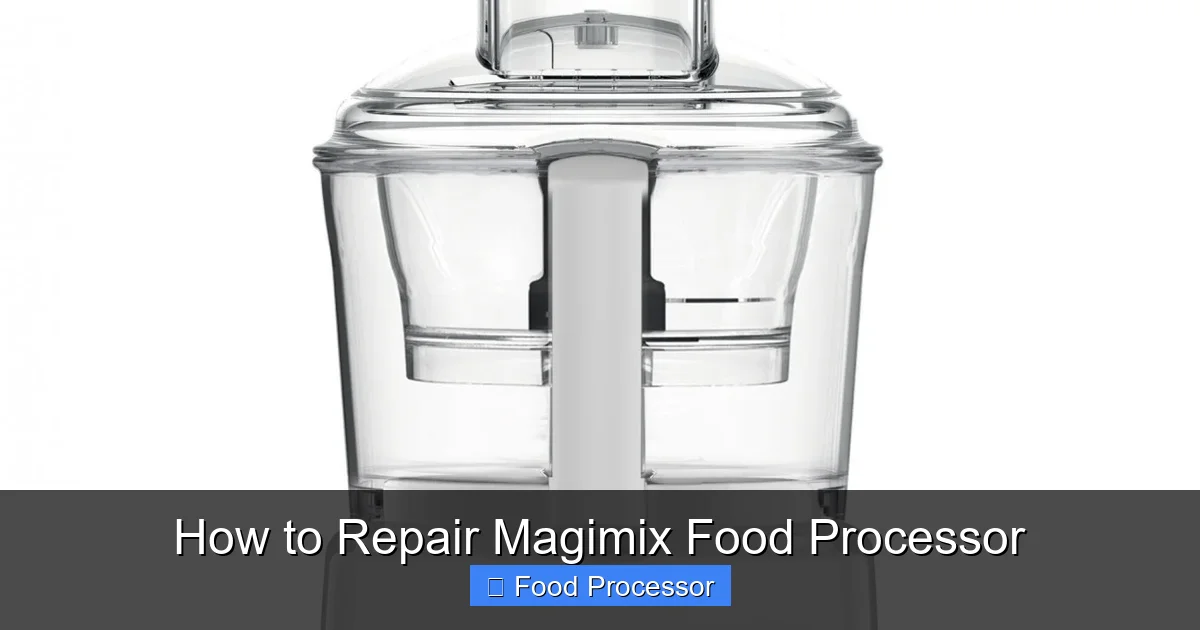
Visual guide about How to Repair Magimix Food Processor
Image source: magimix.co.uk
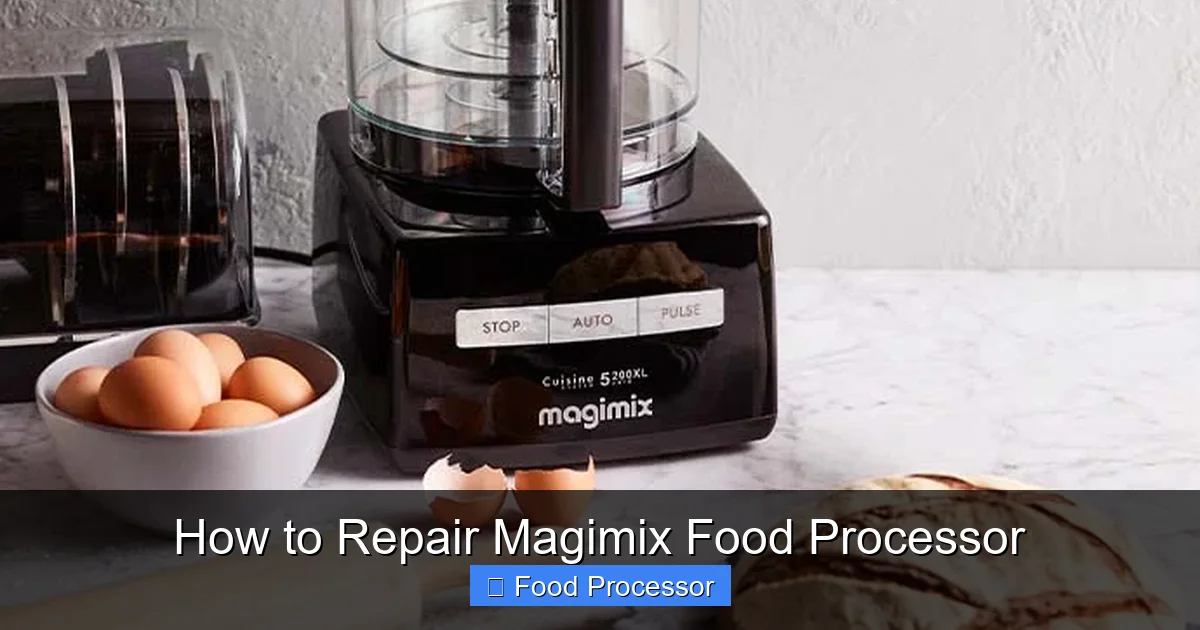
Visual guide about How to Repair Magimix Food Processor
Image source: magimix.com
H3.1.2. Verify Lid and Bowl Assembly (Safety Interlocks)
Magimix food processors have safety features that prevent them from operating unless the bowl and lid are correctly locked into place. Make sure the bowl is firmly seated on the motor base and rotated until it clicks. Then, ensure the lid is properly aligned and twisted clockwise until it also locks into position. If these components aren’t perfectly aligned, the safety interlock switch won’t engage, and your machine won’t turn on. Learning how to assemble a food processor step by step can greatly help here, ensuring all safety mechanisms are engaged.
H3.1.3. Examine the Thermal Cutout
If your Magimix food processor was running and suddenly stopped, it might have overheated. Many models include a thermal cutout switch that automatically shuts off the motor to prevent damage from overheating. Unplug the unit, let it cool down for at least 30 minutes, and then try turning it back on. Make sure the vents on the motor base aren’t blocked, as this can lead to overheating.
H3.1.4. Test the Safety Interlock Switch
The safety interlock switch (sometimes multiple switches) can wear out or become faulty. These are usually located in the motor base where the bowl sits and/or in the lid.
- Access: You’ll need to carefully open the motor base to access the wiring. Remember to take photos!
- Testing: Use a multimeter set to continuity mode. With the Magimix food processor unplugged, test the continuity across the switch’s terminals when it’s supposed to be engaged (i.e., when the bowl and lid are locked). If there’s no continuity, the switch is faulty and needs replacing.
H3.1.5. Inspect the Motor Brushes (Older Models)
Some older Magimix models might use carbon motor brushes that wear down over time. If your Magimix food processor has been used extensively and isn’t turning on, worn brushes could be the culprit.
- Access: This usually involves disassembling the motor base to get to the motor.
- Inspection: The brushes are small carbon blocks held in spring-loaded housings. If they’re shorter than about 1/4 inch or appear chipped, they need replacement.
For more detailed assistance on this issue, you can consult our guide on how to fix a food processor that is not turning on.
2. Magimix Food Processor Blade Not Spinning
When the motor hums but the blade remains stationary, it’s usually a mechanical issue rather than an electrical one.
H3.2.1. Check for Overload or Jamming
The most common reason for a blade not spinning is an overloaded bowl or food getting jammed. If you’ve put too much food in, especially tough ingredients, the motor might struggle or seize. Remove some ingredients and try again. Also, make sure no large pieces of food are physically blocking the blade’s rotation.
H3.2.2. Inspect the Drive Coupling/Spindle
The drive coupling is the part that connects the motor’s shaft to the blade assembly. On Magimix food processors, this is typically a very robust design, but wear can occur.
- Motor Base Coupling: Look at the part that protrudes from the motor base where the bowl sits. Is it damaged, chipped, or stripped?
- Blade Assembly Coupling: Inspect the bottom of your blade or disc holder. Is the part that engages with the motor base coupling damaged?
- Replacement: If either part is worn or stripped, it won’t be able to transmit power to the blade, and you’ll need to replace the damaged component.
H3.2.3. Test the Motor
If the couplings are fine, but the blade still doesn’t spin, the motor itself might be the problem.
- Listen: Does the motor make any sound? A hum without blade movement often points to a coupling issue, while no sound at all (assuming power) points to a motor or switch issue.
- Multimeter Test: With the Magimix food processor unplugged and disassembled, you can use a multimeter to test the motor’s continuity. This is more advanced and might require professional help if you’re uncomfortable.
We have a dedicated article that goes deeper into how to fix a food processor blade that is not spinning, which could provide additional insights.
3. Magimix Food Processor Leaking
Leaks are messy and annoying, often ruining your countertop.
H3.3.1. Check the Bowl and Lid Seals
Magimix food processors rely on silicone or rubber gaskets to create a watertight seal.
- Bowl Gasket: Examine the gasket around the bottom of the bowl or on the drive shaft assembly for cracks, tears, or signs of wear.
- Lid Seal: Check the rubber seal around the lid. If it’s stiff, cracked, or misaligned, it won’t seal properly.
- Replacement: If you find any damage, these gaskets are typically replaceable.
H3.3.2. Inspect for Cracks in the Bowl
Accidental drops or impacts can cause hairline cracks in the plastic bowl that aren’t immediately obvious. Fill the bowl with water and observe if any drips appear. Even small cracks can lead to significant leaks during operation. A cracked bowl needs to be replaced.
H3.3.3. Avoid Overfilling
Sometimes, the simplest solution is the best. If you overfill your Magimix food processor beyond its maximum liquid line, even a perfect seal might not prevent spills when the machine is running. Always respect the fill lines marked on your bowl.
4. Magimix Food Processor Making Unusual Noises
A healthy Magimix food processor should have a consistent, powerful hum. Any grinding, clunking, or excessively loud noises signal a potential problem.
H3.4.1. Loose Parts or Foreign Objects
Before panicking, check for loose components. Is the blade properly seated? Is the lid securely locked? Have any small pieces of food or utensils accidentally fallen into the mechanism? A thorough visual inspection can often reveal the culprit.
H3.4.2. Worn Motor Bearings
If you hear a persistent grinding or screeching sound from the motor base, especially when the motor is running without the blade engaged, it could indicate worn motor bearings. This is a more complex repair, often requiring motor disassembly and specialized tools. For most home users, replacing the motor or the entire unit might be more practical if this is the issue.
H3.4.3. Blade Rubbing
Ensure the blade is correctly installed and not bent. If the blade is slightly bent or installed improperly, it might rub against the inside of the bowl, causing a grating sound. Replace a bent blade immediately as it can damage the bowl or spindle.
5. Magimix Food Processor Smells Like Burning
A burning smell is a serious warning sign and should never be ignored.
H3.5.1. Overheating Motor
Similar to the “won’t turn on” issue, an overheating motor can emit a burning smell. This often happens after prolonged use or when processing very dense or tough ingredients. Unplug the Magimix food processor immediately, let it cool down for at least 30 minutes in a well-ventilated area, and ensure no vents are blocked. Try running it again with lighter loads. If the smell persists, there might be internal motor damage.
H3.5.2. Motor Burnout
A strong, acrid burning smell, often accompanied by smoke, usually indicates that the motor has burned out. This is generally not repairable by a home user and requires motor replacement or a new appliance. Continuing to use a Magimix food processor with a burned-out motor is unsafe.
6. Buttons or Controls Not Responding
If your buttons are sticky or the machine isn’t responding to your commands.
H3.6.1. Sticky Buttons/Debris
Over time, food debris or liquids can seep under the buttons, causing them to stick or become unresponsive. Try carefully cleaning around the buttons with a damp cloth or a cotton swab. For deeper cleaning, gentle use of compressed air might help, but avoid spraying directly into electrical components. Be very gentle to avoid pushing debris further in.
H3.6.2. Control Panel Fault
If cleaning doesn’t work, the control panel itself might be faulty. This could be due to a loose connection, a damaged circuit board, or a failing switch behind the button. Replacing the control panel or its associated circuit board usually requires careful disassembly of the motor base and good technical skills. If you suspect this, refer to your Magimix food processor’s manual for replacement part numbers and consider professional help.
General Disassembly and Reassembly Tips
When you need to open up your Magimix food processor’s motor base:
Document Everything
As mentioned, take photos at every stage of disassembly. This is your best friend when putting things back together, especially for complex wiring or screw placements.
Organize Screws and Parts
Use small containers or a magnetic mat to keep track of screws and other small parts. Note which screws came from where.
Handle with Care
Plastic components can be brittle, especially older ones. Apply gentle, steady pressure when separating parts. Wires can be delicate; avoid tugging on them.
Test as You Go (Safely)
If you’re replacing a component, sometimes you can test the functionality before fully reassembling the entire unit, ensuring you’ve fixed the problem. Always re-plug and test with extreme caution, keeping hands clear of moving parts, and only for brief moments.
When to Call a Professional for Your Magimix Food Processor
While many Magimix food processor issues are DIY-friendly, some are best left to the experts:
- Complex Electrical Issues: If you’re dealing with internal wiring, circuit boards, or motor problems beyond simple brush replacement and are uncomfortable with electrical work.
- Motor Replacement: Unless you have experience, replacing an entire motor can be tricky.
- Warranty: If your Magimix food processor is still under warranty, attempting a DIY repair will likely void it. Contact Magimix customer service first.
- Lack of Confidence: If at any point you feel unsure or unsafe, it’s always better to consult a qualified appliance repair technician.
Generally, if your food processor stopped working and you’ve exhausted simple checks, professional help might be the next step.
Preventative Maintenance for Your Magimix Food Processor
A little care goes a long way in preventing future breakdowns:
- Clean Regularly: Wash the bowl, lid, and blades immediately after use. Wipe down the motor base.
- Avoid Overloading: Stick to the recommended capacities to prevent strain on the motor.
- Proper Storage: Store your Magimix food processor in a clean, dry place.
- Inspect Gaskets: Periodically check seals and gaskets for wear and replace them if necessary.
- Read the Manual: Reacquaint yourself with your specific Magimix model’s user manual for cleaning and maintenance tips.
Conclusion
Congratulations! You’ve taken the first step towards becoming a Magimix food processor repair guru. By following this guide, you now have the knowledge to diagnose and fix many common problems, from a non-starting motor to a leaking bowl. Remember, safety is always your top priority. Take your time, be patient, and don’t hesitate to take photos as you go. With a bit of effort, you can extend the life of your valuable Magimix food processor, keep your kitchen running smoothly, and enjoy the satisfaction of a job well done. Happy cooking!
