
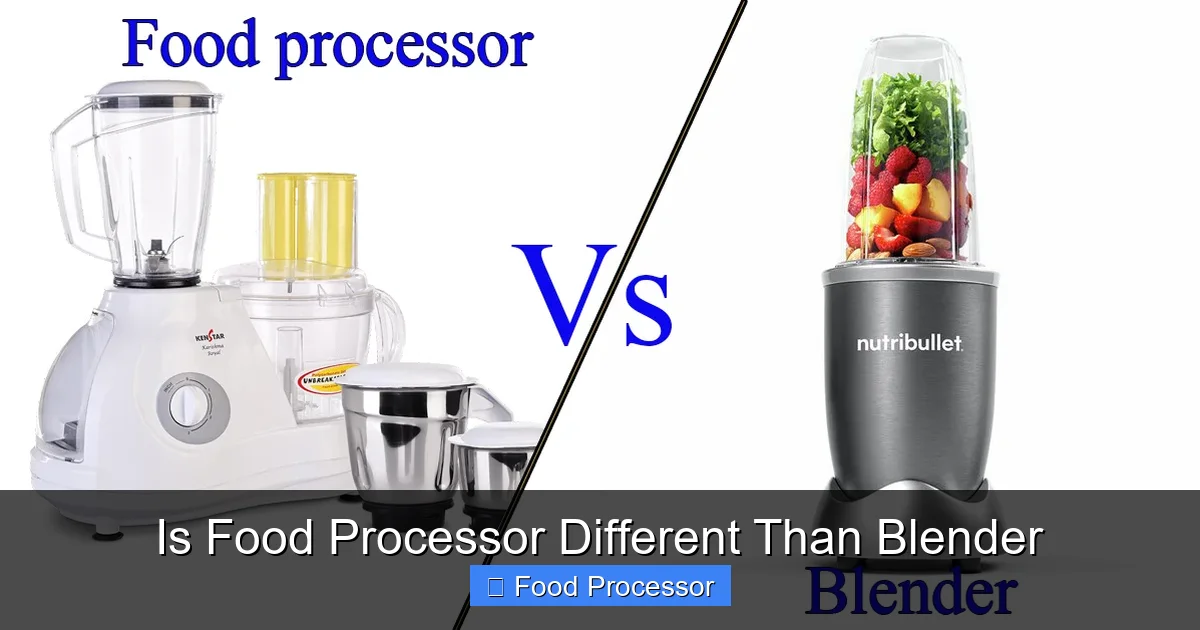
Ever wondered, is food processor different than blender? While both kitchen appliances help with food prep, they are designed for distinct tasks. A food processor excels at chopping, slicing, shredding, and kneading solid ingredients with its versatile blades, while a blender is built to pulverize liquids, create smooth purees, and crush ice, using its specialized upright pitcher and blade system. Understanding these core differences will help you pick the perfect tool for your culinary adventures.
Is Food Processor Different Than Blender? Understanding Your Kitchen Appliances
Have you ever stood in your kitchen, looking at your food processor and your blender, wondering which one to grab for your recipe? Perhaps you’ve asked yourself, “Is food processor different than blender, or are they pretty much the same?” It’s a common dilemma! Many people get these two powerful kitchen appliances confused because they both seem to chop and mix. However, despite some similarities, food processors and blenders are designed for very different purposes and excel at distinct tasks.
This comprehensive guide will clear up any confusion you have. We’ll dive deep into the unique characteristics of each appliance, explore their core functions, and help you understand exactly when to use a food processor and when a blender is the better choice. By the end, you’ll be able to confidently choose the right tool for any culinary challenge, making your cooking more efficient and enjoyable.
Key Takeaways
- Blade Design and Function: Food processors feature multiple interchangeable blades (S-blade, slicing/shredding discs) for varied tasks like chopping, slicing, and shredding solids. Blenders typically have a fixed, sharp blade assembly designed to create a vortex for liquidizing ingredients into smooth consistencies.
- Container Shape and Material: A food processor uses a wide, shallow work bowl that allows ingredients to circulate freely for even processing. Blenders use a tall, narrow pitcher that helps direct ingredients down towards the blades, optimizing for liquid-based mixtures.
- Primary Use Cases: Food processors are ideal for tasks involving solid or semi-solid foods, such as chopping vegetables, shredding cheese, kneading dough, or making dips like hummus. Blenders are best suited for creating smooth liquids like smoothies, pureed soups, sauces, or crushing ice.
- Texture Achieved: With a food processor, you can achieve various textures from coarse chop to fine mince, or perfectly sliced and shredded items. Blenders are designed to produce exceptionally smooth, uniform, and liquid textures.
- Power and Speed: While both have powerful motors, blenders often have higher RPMs (revolutions per minute) to create that liquid vortex. Food processors focus more on torque to handle tough, solid ingredients and may offer pulse functions for better control over texture.
- Versatility vs. Specialization: Food processors are generally considered more versatile due to their range of attachments and functions beyond just blending. Blenders are specialized for liquid-heavy tasks, though high-powered models can tackle thicker mixtures.
- Can You Substitute? While some overlap exists for specific tasks (like making a thick soup or a chunky salsa), a food processor cannot fully replace a blender for smoothies, and a blender struggles with tasks like shredding or kneading dough.
Understanding the Basics: What is a Food Processor?
A food processor is a versatile kitchen appliance designed to automate many repetitive tasks in food preparation. Think of it as your extra pair of hands for chopping, slicing, shredding, grating, pureeing, and even kneading dough.
Its Core Design and Components
At its heart, a food processor consists of a motor base, a work bowl (usually wide and relatively short), a lid with a feed tube, and a set of interchangeable blades and discs. The S-shaped blade, often called the “chopping blade,” is the most common and sits at the bottom of the work bowl. However, what really makes a food processor shine is its array of other attachments:
- S-Blade (Chopping Blade): Used for chopping, mincing, pureeing, and mixing. It’s excellent for things like making pesto, hummus, or finely chopping onions.
- Slicing Disc: A flat disc with a sharp blade that consistently slices vegetables like cucumbers, potatoes, or carrots.
- Shredding Disc: Designed with sharp holes to shred cheese, cabbage, or carrots quickly and uniformly.
- Dough Blade: A plastic blade, often duller than the S-blade, specifically designed for kneading dough without overworking it.
The wide work bowl allows ingredients to circulate effectively, ensuring even processing. The feed tube on the lid lets you add ingredients safely while the machine is running, which is particularly useful when slicing or shredding.
Primary Functions of a Food Processor
The food processor excels at handling solid and semi-solid ingredients. Its power and blade design are optimized for:
- Chopping and Mincing: Onions, garlic, herbs, nuts, and meat are no match for a food processor. It makes quick work of tedious knife tasks.
- Slicing and Shredding: With its specialized discs, it can uniformly slice vegetables for salads or gratins and shred cheese or cabbage in seconds.
- Pureeing Thick Mixtures: While it can puree, it’s best for thicker purees like hummus, dips, or baby food, where a very smooth, liquid consistency isn’t the primary goal. You might even wonder should I make hummus in blender or food processor, and generally, the food processor is preferred for its texture.
- Kneading Dough: Many food processors come with a dough blade, making them perfect for quickly kneading bread or pastry dough.
- Making Nut Butters: The strong motor and S-blade can break down nuts into creamy homemade nut butter.
Understanding the Basics: What is a Blender?
A blender is another indispensable kitchen tool, but its primary focus is on liquidizing and emulsifying ingredients. It’s your go-to for anything that needs to be perfectly smooth and drinkable.
Its Core Design and Components
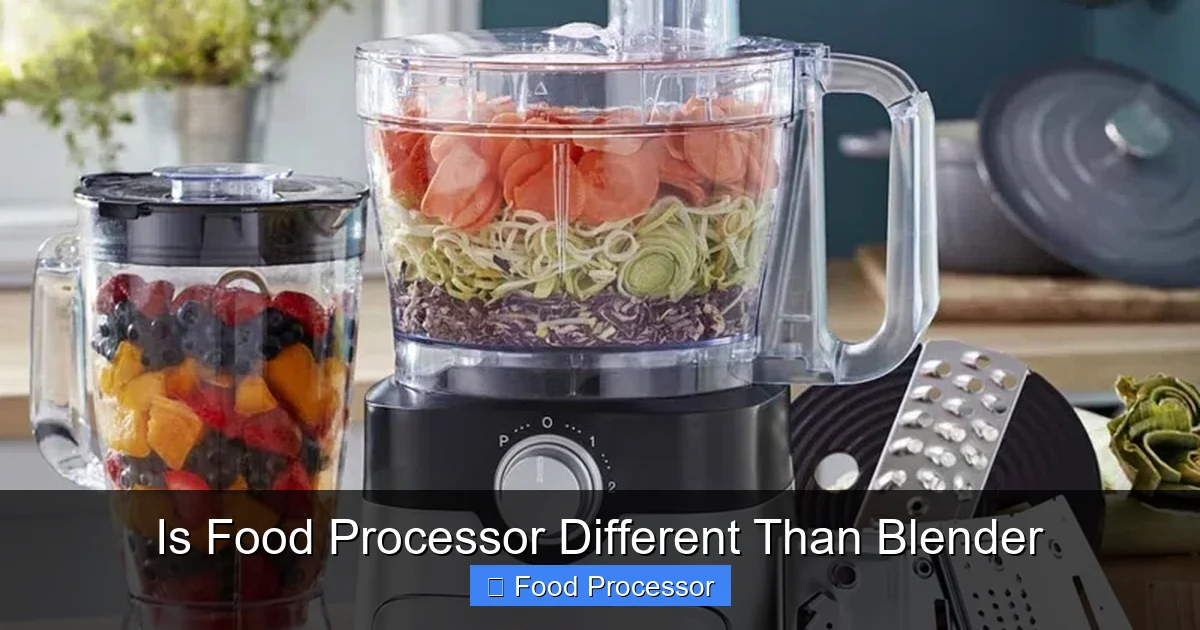
A blender typically consists of a motor base and a tall, narrow pitcher (or jar) with a lid. Unlike a food processor, the blades in a blender are usually fixed at the bottom of the pitcher. These blades are often sharp but are also designed to create a powerful vortex that pulls ingredients down towards them, ensuring thorough blending.
Visual guide about Is Food Processor Different Than Blender
Image source: secure.img1-fg.wfcdn.com
Blender pitchers are usually made of glass or heavy-duty plastic, designed to withstand the vigorous mixing of liquids and ice. Some blenders also come with tamper tools, which help push down thicker ingredients towards the blades without stopping the machine.
Primary Functions of a Blender
Blenders are champions of liquid-based recipes, optimized for:
- Smoothies and Shakes: This is arguably the most common use. Blenders effortlessly combine fruits, vegetables, liquids, and ice into silky-smooth beverages.
- Pureed Soups and Sauces: For creamy, lump-free soups (like tomato or butternut squash soup) or smooth sauces, a blender is ideal.
- Crushing Ice: Its powerful motor and blade design are perfect for turning ice cubes into crushed ice for drinks or frozen desserts.
- Emulsifying Dressings and Batters: Blenders can create perfectly emulsified salad dressings or lump-free pancake and waffle batters.
- Grinding Coffee or Spices: While not their primary function, some powerful blenders can grind small amounts of coffee beans or spices.
Key Differences: A Side-by-Side Comparison
Now that we’ve looked at each appliance individually, let’s directly compare them to understand precisely why why is a food processor different from a blender.
Blade Design and Action
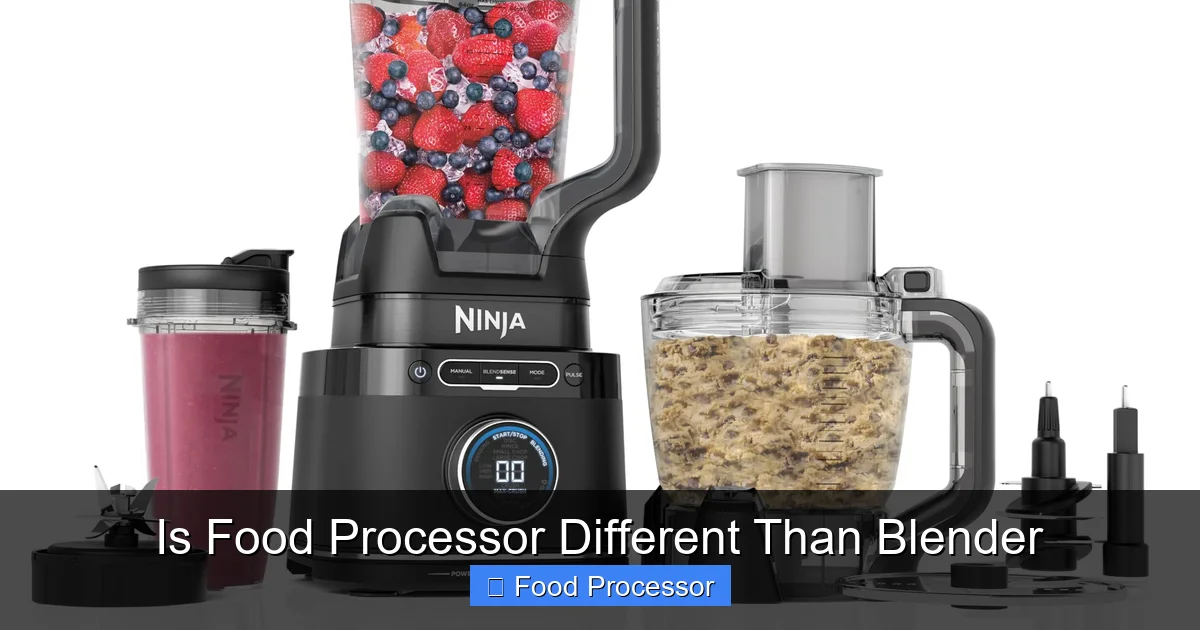
This is perhaps the most significant difference. A food processor’s S-blade chops and cuts with sharp edges, rotating at the bottom of a wide bowl. Its action is more about “processing” ingredients by repeatedly cutting them into smaller pieces. The specialized discs, meanwhile, perform specific slicing or shredding actions.
Visual guide about Is Food Processor Different Than Blender
Image source: m.media-amazon.com
A blender’s blades, while also sharp, are designed to create a powerful vortex. This vortex pulls ingredients from the top of the pitcher down to the bottom, ensuring everything is pulverized and liquidized. The blades are fixed and generally not interchangeable, focusing on one primary action: creating a smooth, uniform liquid.
Container Shape and Material
The containers reflect their intended uses. A food processor’s wide, low work bowl is perfect for handling larger quantities of solid ingredients, giving them room to tumble and be processed evenly by the S-blade or passed through discs. The bowls are typically made of durable plastic.
A blender’s tall, narrow pitcher is designed to facilitate the vortex action, ensuring that liquids and solids are drawn into the blades for a smooth consistency. Pitchers are often made of glass or sturdy plastic to handle hot liquids (in some models) and the force of ice crushing.
Power and Speed Settings
Both appliances have powerful motors, but their power delivery differs. Blenders often emphasize higher RPMs (revolutions per minute) to generate the speed needed for smooth liquid blending and ice crushing. Many blenders have a range of speed settings and often a “pulse” function.
Food processors, while also offering variable speeds and pulse, tend to prioritize torque. This higher torque is essential for pushing through tough, dense ingredients like raw vegetables, nuts, or dough without stalling the motor. The pulse function is especially crucial in a food processor, giving you precise control over the texture, from coarse chop to fine mince, preventing over-processing.
Primary Uses and Consistencies Achieved
As highlighted, their primary uses diverge significantly. A food processor excels at tasks where you want to retain some texture or transform solids into various forms (sliced, shredded, chopped, minced, thick puree). It’s not about liquidizing. Blenders, on the other hand, are all about creating smooth, homogenous liquids without any chunks.
Attachments and Versatility
Food processors generally win in terms of sheer versatility due to their range of interchangeable blades and discs. This allows one machine to perform many different kitchen prep tasks. Blenders, while versatile within their niche of liquid blending, usually have fewer distinct attachments, although some advanced models might include personal blending cups or specialized smoothie settings.
When to Use a Food Processor
Knowing when to reach for your food processor can save you a lot of time and effort. Here are its ideal applications:
Chopping and Mincing
Need to chop a large onion, a head of garlic, or a bunch of herbs for a recipe? The food processor does it in seconds. This is where it really shines for tasks like making mirepoix or finely mincing meat for meatballs.
Slicing and Shredding
Preparing a big batch of coleslaw? Want perfectly uniform potato slices for a gratin? The slicing and shredding discs make these tasks incredibly fast and consistent. You can even shred cheese in a food processor in moments, far quicker than doing it by hand.
Kneading Dough
If you enjoy baking but dread the manual kneading, your food processor with a dough blade is a game-changer. It can quickly bring together and knead various doughs, from bread to pie crusts.
Making Nut Butters and Dips
For creamy homemade peanut butter, almond butter, or thick dips like hummus and pesto, the food processor is the superior choice. Its powerful motor can break down nuts and chickpeas into wonderfully textured spreads.
Preparing Vegetables for Meals
From ricing cauliflower to preparing vegetables for stir-fries, the food processor makes prepping large quantities of produce much faster and more consistent. If you need to how to use food processor to chop vegetables, it’s the perfect tool.
When to Use a Blender
When a smooth, liquid consistency is your goal, the blender is your best friend.
Smoothies and Shakes
This is the classic blender task. Whether it’s a breakfast smoothie, a protein shake, or a fruity frozen drink, the blender will give you that perfectly smooth, no-lump consistency.
Soups and Sauces (Smooth)
For velvety smooth cream soups or sauces like marinara, the blender will yield a superior, restaurant-quality texture compared to a food processor, which might leave some small chunks.
Crushing Ice
Making crushed ice for cocktails or slushies is a job for the blender. Its powerful blades and vortex action efficiently break down ice cubes.
Making Batters
For pancake batter, waffle batter, or even some cake batters, a blender can quickly combine ingredients and remove lumps, ensuring a smooth mixture.
Can You Use a Food Processor Instead of a Blender (and vice versa)?
While there is some overlap in function, it’s generally best to use the right tool for the job. Can a food processor be used in place of a blender? Sometimes, but with limitations. A food processor can make thicker purees, like a chunky salsa or a thick vegetable dip, but it will struggle to create the perfectly smooth, airy texture of a smoothie or a completely liquid soup. Adding too much liquid to a food processor can also lead to leaks from the lid or feed tube, as its seal isn’t designed for high volumes of thin liquids.
Conversely, a blender can handle some food processor tasks, especially powerful high-speed blenders. They can chop small amounts of nuts or make thick purees. However, a blender won’t be able to shred cheese, slice vegetables, or knead dough. Its tall, narrow pitcher isn’t suitable for processing large quantities of solid ingredients, and its blades are optimized for liquids, not for cleanly chopping or slicing. If you try to chop vegetables in a blender, you’re more likely to end up with an uneven mush at the bottom and large chunks at the top. For a deeper dive into this, check out can a food processor be used in place of a blender.
The Rise of Combo Units
Recognizing the need for both appliances, many manufacturers now offer “food processor and blender combo” units. These appliances typically feature a single motor base with interchangeable attachments: a blender pitcher and a food processor work bowl with various blades. These can be a great space-saving solution for smaller kitchens or for those who want the best of both worlds without buying two separate machines. To learn more about these versatile options, explore what is the best food processor and blender combo.
Choosing the Right Appliance for Your Kitchen
Deciding which appliance (or both!) is right for you boils down to your cooking habits and needs.
Assess Your Culinary Needs
- If you frequently make smoothies, pureed soups, or crush ice: A blender should be your priority. A good quality blender will excel at these tasks.
- If you often chop vegetables, shred cheese, make dips, or bake: A food processor will be an invaluable tool. It significantly speeds up prep time for solid ingredients. In many ways, for solid food prep, why is a food processor better than a blender becomes clear.
- If you do both regularly: Consider investing in both appliances if space and budget allow, or opt for a high-quality combo unit.
Consider Space and Budget
Both appliances take up counter or cabinet space. Combo units can save space but might not always offer the same high performance as two dedicated machines. Prices vary widely, so consider what features and power levels are important to you.
Think About Future Use
Are you planning to get more into baking? A food processor will be a great help. Want to start a healthy smoothie habit? A blender is essential. Consider your aspirational cooking goals.
Maintenance and Cleaning Tips
Proper care ensures the longevity of both your food processor and blender.
For Food Processors:
- Disassemble Completely: Always take apart the bowl, lid, and blade/disc components before cleaning.
- Hand Wash Blades: The S-blade and other discs are very sharp. Hand washing is often safer and prevents dulling. Use a brush to get into crevices.
- Dishwasher Safe Parts: Many bowls and lids are dishwasher safe (top rack), but always check your manual.
- Wipe Base: Clean the motor base with a damp cloth; never immerse it in water.
For Blenders:
- Immediate Rinse: Rinse the pitcher immediately after use to prevent food from drying and sticking.
- Self-Cleaning Method: For quick cleaning, fill the pitcher halfway with warm water and a drop of dish soap, then run it on high for 30 seconds. Rinse thoroughly.
- Remove Gasket (if applicable): Some blender blades detach, allowing you to remove the gasket for thorough cleaning to prevent mold buildup.
- Wipe Base: Similar to a food processor, wipe the motor base with a damp cloth.
Troubleshooting Common Issues
Even with the right appliance, you might encounter minor hiccups. Here are some quick tips:
Appliance Not Turning On
- Check Power: Ensure it’s properly plugged into a working outlet.
- Safety Lock: Both food processors and blenders have safety interlocks. Make sure the bowl/pitcher and lid are correctly assembled and locked into place. Refer to your manual for specific locking mechanisms.
- Overload Protection: If you’ve been processing tough ingredients, the motor might have overheated and triggered a thermal cut-off. Unplug the appliance and let it cool down for 15-30 minutes before trying again.
Food Not Processing Evenly
- For Food Processors:
- Don’t Overfill: Process in smaller batches.
- Cut Ingredients Evenly: Start with ingredients cut into roughly similar sizes for best results.
- Use Pulse: Short pulses give you more control and prevent over-processing.
- Scrape Sides: Stop occasionally and scrape down the sides of the bowl.
- For Blenders:
- Add Liquid First: For smoothies, liquids help create the vortex.
- Don’t Overfill: Leave room for ingredients to move.
- Use a Tamper: If your blender has one, use it to push ingredients down towards the blades, especially for thicker mixtures.
- Increase Liquid: If the mixture is too thick, add a little more liquid to help it blend.
Conclusion
So, is food processor different than blender? Absolutely! While both are indispensable kitchen tools that simplify food preparation, they are fundamentally distinct in design, function, and the types of tasks they excel at. The food processor is your workhorse for solid ingredients, offering unmatched versatility for chopping, slicing, shredding, and kneading. The blender, on the other hand, is the master of liquids, delivering silky-smooth purees, drinks, and sauces.
Understanding these key differences empowers you to make smarter choices in the kitchen, ensuring you always grab the right appliance for the job. Whether you decide to invest in one, the other, or a convenient combo unit, knowing their unique strengths will elevate your cooking and make your time in the kitchen more efficient and enjoyable. Happy cooking!
