
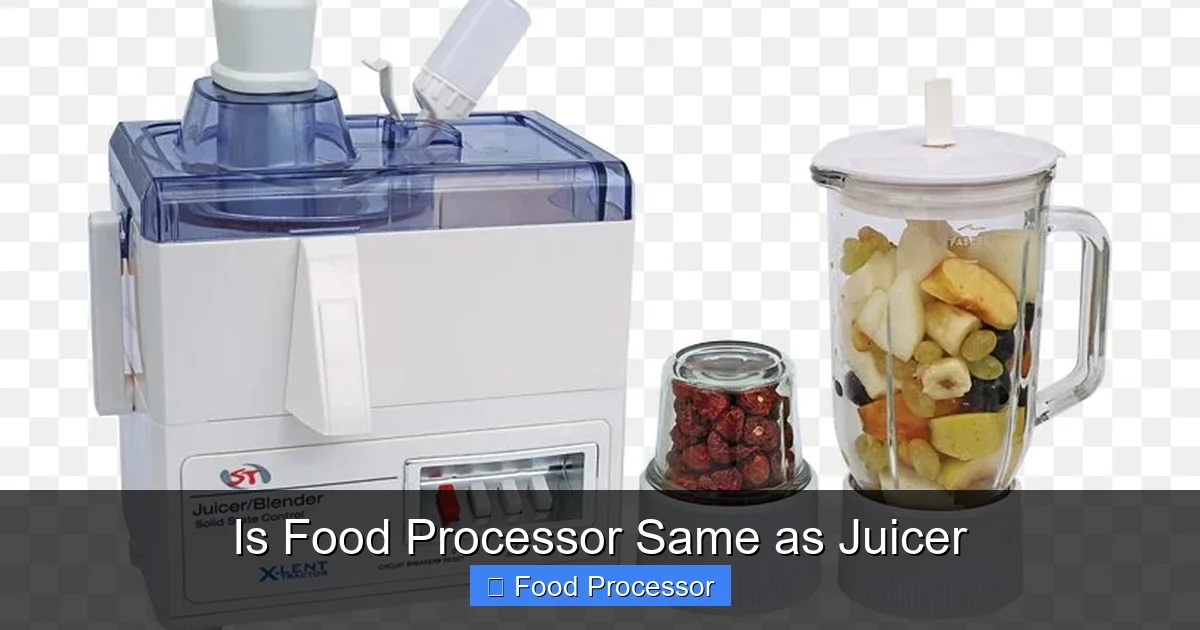
Many home cooks wonder, “is food processor same as juicer?” The simple answer is no. While both are kitchen appliances, a food processor is designed to chop, slice, shred, and puree, keeping all the fiber. A juicer, on the other hand, specifically extracts liquid from fruits and vegetables, separating it from the pulp. Understanding their unique functions will help you choose the right tool for your culinary needs and achieve your desired results.
Is Food Processor Same as Juicer?
Have you ever stood in your kitchen, eyeing your appliances, and wondered, “Is food processor same as juicer?” It’s a common question, especially when you’re aiming for healthier eating habits or trying new recipes. Many people confuse these two fantastic kitchen gadgets, or hope one can do the job of the other. While both are designed to help you prepare fruits and vegetables, they perform very different functions and produce distinctly different results.
In this comprehensive guide, we’re going to clear up the confusion once and for all. You’ll learn the core differences between a food processor and a juicer, understand how each appliance works, and discover what they excel at. We’ll also explore whether your trusty food processor can *really* make juice, and when it’s best to reach for one over the other. By the end, you’ll be a pro at knowing which tool to use for every culinary task, ensuring you get the perfect outcome every time. Let’s dive in!
Key Takeaways
- Distinct Functions: A food processor chops, slices, shreds, and purees whole foods, retaining all the fiber, while a juicer extracts liquid, separating it from the solid pulp.
- End Product: Food processors yield thick purees, sauces, or finely chopped ingredients with a high fiber content. Juicers produce a clear, pulp-free liquid drink.
- Fiber Retention: Food processors keep all the dietary fiber in your ingredients, which is beneficial for digestion and satiety. Juicers remove most of this fiber.
- Limited Juicing Capability: While a food processor can create a thick “juice” that then needs manual straining, it cannot perform the efficient separation of juice and pulp like a dedicated juicer.
- Versatility vs. Specialization: Food processors are highly versatile for many kitchen tasks beyond drinks. Juicers are specialized for one primary function: making juice.
- Consider a Blender for Smoothies: If you want a thick, fiber-rich drink, a blender is often a better tool than trying to make “juice” in a food processor, as blenders are designed for smooth, drinkable consistencies.
Understanding the Food Processor
A food processor is a multi-purpose kitchen appliance that simplifies a wide array of food preparation tasks. Think of it as your personal sous chef, ready to chop, slice, shred, grind, puree, and even knead dough with speed and efficiency. It typically consists of a motor base, a work bowl, a lid with a feed tube, and various interchangeable blades and discs.
What a Food Processor Does Best
The primary function of a food processor is to *process* food into different textures, while keeping all the original ingredients together. It works by using rapidly spinning blades or discs to cut, pulverize, or combine food within its bowl. This means that when you process vegetables, fruits, or nuts, you retain all the fiber, skin, and pulp – everything that went in comes out, just in a different form.
Here are some of the tasks where a food processor truly shines:
- Chopping: Quickly dices onions, garlic, herbs, and other vegetables. For instance, learning how to use a food processor to chop vegetables can save you a lot of time.
- Slicing: Uniformly slices cucumbers, potatoes, and carrots with specific slicing discs.
- Shredding: Grates cheese, cabbage, and carrots much faster than by hand.
- Pureeing: Creates smooth purees for sauces, soups, hummus, and baby food.
- Grinding: Can grind nuts into flour or even make nut butter.
- Dough Kneading: Some models come with a dough blade for quick bread or pastry dough.
The output from a food processor is always a solid or semi-solid form, whether it’s finely chopped, shredded, or a thick, chunky puree. This appliance is all about *texture* and *incorporation*.
Understanding the Juicer
A juicer is a specialized kitchen appliance designed with one specific purpose: to extract the liquid from fruits and vegetables, separating it from the pulp and fiber. Unlike a food processor, a juicer’s goal is to produce a clear, smooth drink that is rich in vitamins and minerals but low in fiber.
How Juicers Work and What They Excel At
There are several types of juicers, but they all operate on the principle of separating liquid from solids:
Visual guide about Is Food Processor Same as Juicer
Image source: chefstravels.com
- Centrifugal Juicers: These are the most common and often most affordable. They use a rapidly spinning metal blade with a strainer to shred fruits and vegetables, then centrifugal force to separate the juice from the pulp, pushing the pulp into a separate container. They are fast but can introduce heat and air, potentially reducing some nutrient content.
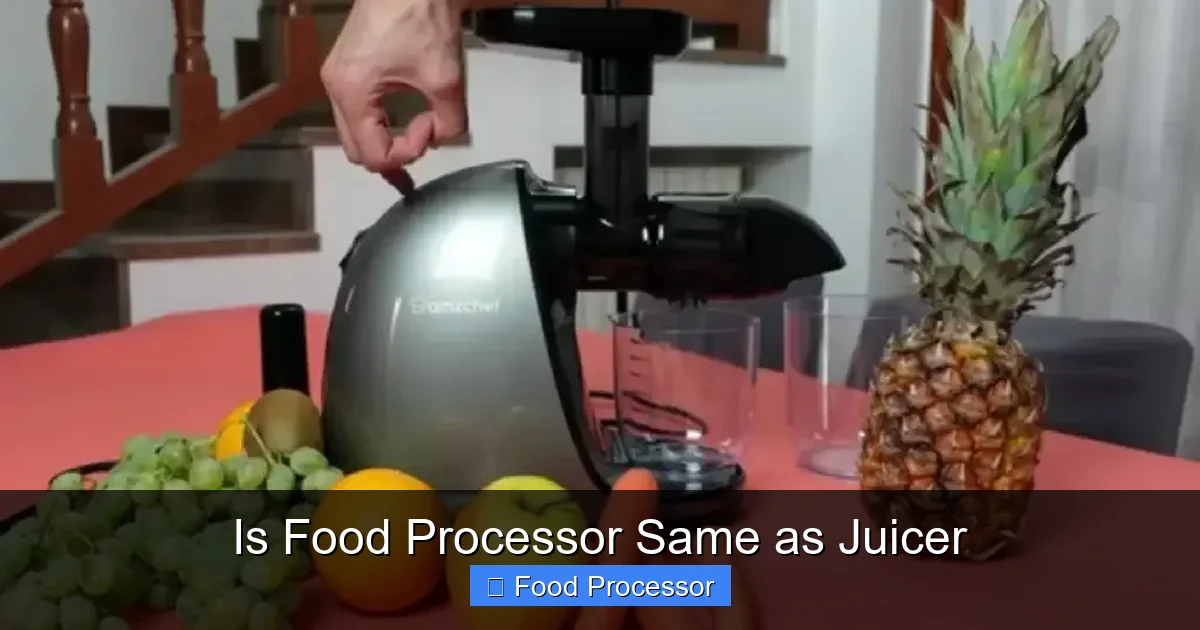
- Masticating (Slow) Juicers: Also known as cold-press juicers, these work by crushing and pressing produce slowly, squeezing out the juice. This method minimizes heat and oxidation, leading to a higher yield of juice and potentially better preservation of nutrients. They are quieter and more efficient for leafy greens.
- Triturating Juicers: These are twin-gear juicers, which are similar to masticating juicers but use two intermeshing gears to grind and press produce even more thoroughly, extracting maximum juice and nutrients. They are typically the most expensive.
The result from any juicer is a liquid drink, often with minimal to no pulp. The remaining pulp is typically discarded, though it can sometimes be repurposed for composting or baking.
Key Differences: Food Processor vs. Juicer
To truly answer “is food processor same as juicer?”, we need to highlight their fundamental distinctions:
Visual guide about Is Food Processor Same as Juicer
Image source: images-na.ssl-images-amazon.com
1. Functionality
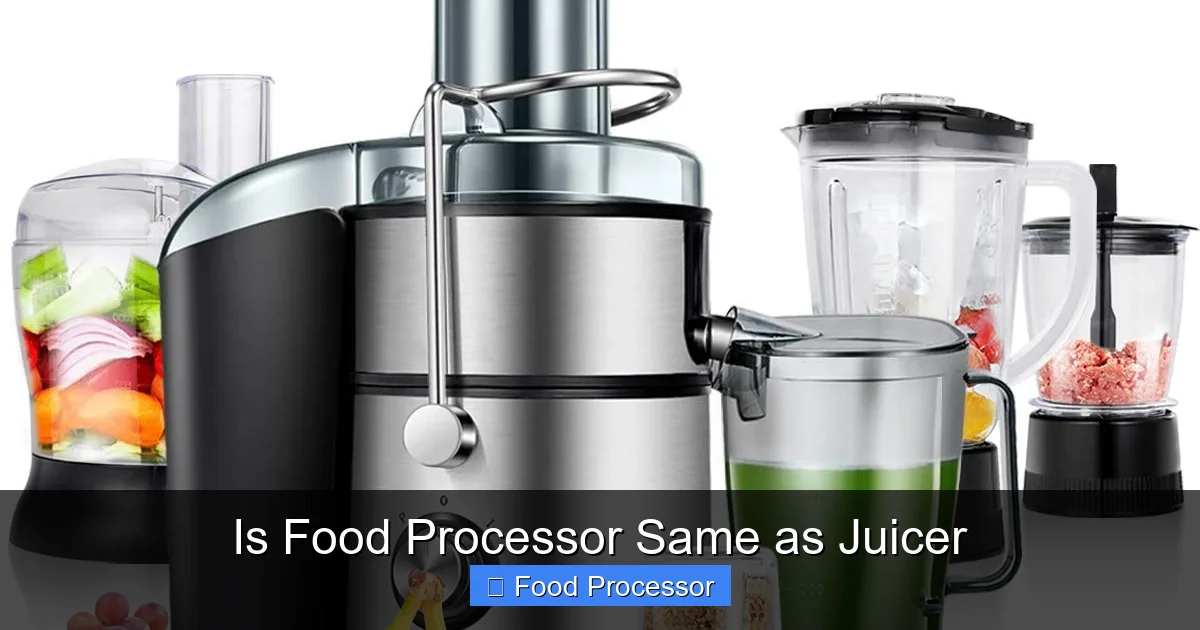
- Food Processor: Cuts, chops, shreds, slices, purees. It’s about breaking down ingredients to prepare them for cooking or eating, keeping all components together.
- Juicer: Extracts liquid. It’s about separating the liquid from the solid matter of fruits and vegetables.
2. End Product
- Food Processor: Produces solids or thick, pulpy purees (e.g., hummus, chunky salsa, finely grated cheese).
- Juicer: Produces a liquid beverage with minimal to no pulp (e.g., apple juice, carrot juice, green juice).
3. Fiber Content
- Food Processor: Retains all the dietary fiber from the ingredients, which is important for digestion and feeling full.
- Juicer: Removes most of the insoluble fiber, leaving a nutrient-dense liquid.
4. Waste
- Food Processor: Virtually no food waste, as all processed ingredients remain in the bowl.
- Juicer: Generates “dry” pulp as a byproduct, which is the fibrous material separated from the juice.
5. Versatility
- Food Processor: Highly versatile for a vast range of cooking and baking tasks.
- Juicer: Highly specialized for one task: making juice.
If you’re still wondering about common kitchen appliance distinctions, you might find it helpful to read about the exact difference between a food processor and a juicer in more detail.
Can a Food Processor Make Juice? (The “How-To”)
This is where the “how-to” aspect comes in. Can a food processor *make juice*? The answer is: *not in the traditional sense*, but it can help you create a very thick, pulpy drink that you can then manually strain to get something resembling juice. It will not be as efficient, clear, or pulp-free as juice from a dedicated juicer, and it will involve an extra step of manual straining.
Here’s how you can try to “juice” with a food processor:
Step 1: Prepare Your Ingredients
- Wash and Peel: Thoroughly wash all fruits and vegetables. Peel anything with tough skins (like carrots or beets) or rinds you wouldn’t eat (like oranges or pineapples).
- Chop into Small Pieces: Cut your produce into small, manageable pieces that will fit easily into your food processor’s feed tube and process efficiently. Remove any hard seeds or pits.
Step 2: Process Until Pureed
- Load the Food Processor: Place the prepared fruits and vegetables into the food processor bowl. Do not overfill.
- Process: Pulse the machine a few times, then run it continuously until the ingredients are completely broken down into a very smooth, thick puree. You might need to add a splash of water (1-2 tablespoons) if the mixture is too thick to move around, but add as little as possible.
- Scrape Down Sides: Stop the machine and scrape down the sides of the bowl with a spatula to ensure all pieces are processed evenly. Continue processing until there are no visible chunks.
Step 3: Strain the Pulp
This is the crucial step that a food processor cannot do on its own. You need to separate the liquid from the thick puree.
- Set Up Your Straining System: Place a fine-mesh sieve or colander over a large bowl. Line the sieve with cheesecloth (several layers thick) or a nut milk bag.
- Add the Puree: Pour the fruit and vegetable puree from the food processor into the lined sieve/bag.
- Press and Squeeze: Allow the liquid to drip naturally into the bowl. Then, gather the edges of the cheesecloth or nut milk bag and twist them tightly. Squeeze firmly to extract as much liquid as possible from the pulp. This will require some effort!
Step 4: Serve and Enjoy
- Chill: Once you’ve extracted all the liquid, pour your “food processor juice” into a glass. You can chill it in the refrigerator for a crisp, refreshing taste.
- Adjust: Taste and adjust if necessary. You might want to add a little more water if it’s too concentrated, or a squeeze of lemon juice for brightness.
Pros and Cons of Making “Juice” with a Food Processor
Pros:
- No Extra Appliance: You don’t need to buy a dedicated juicer.
- Retains More Fiber (in puree form): If you skip the straining, you get a thicker, fiber-rich smoothie-like drink (though this is technically blending, not juicing).
Cons:
- Inefficient: Much slower and more labor-intensive than using a juicer.
- Lower Yield: You won’t extract as much liquid as a juicer would.
- Pulpier Result: Even after straining, the “juice” might still be cloudier and have more fine pulp than traditional juiced drinks.
- Messy: The straining process can be messy.
- Lost Nutrients: The vigorous processing and straining can potentially expose the produce to more air and heat than a slow juicer, which *could* impact some delicate nutrients, although for most home use, this is a minor concern.
Can a Juicer Act as a Food Processor?
In short, no. A juicer is highly specialized. It cannot chop, slice, shred, or puree whole ingredients in the way a food processor does. Its mechanism is designed *only* to separate liquid from solids. Trying to process solid foods like nuts for butter, or vegetables for salsa, in a juicer would not only be ineffective but could also damage the appliance.
When to Choose Which Appliance
Knowing when to use your food processor versus a juicer is key to kitchen efficiency and success.
Choose a Food Processor When You Want To:
- Make dips like hummus or pesto.
- Prepare pie crusts or cookie dough.
- Chop vegetables for stir-fries, soups, or salads.
- Shred cheese for tacos or casseroles.
- Create breadcrumbs from stale bread.
- Make homemade nut butter.
- Puree cooked vegetables for baby food or smooth soups.
In general, choose a food processor when you need to change the texture of solid food while keeping all the components. If you’re encountering issues like why your food processor blade isn’t spinning, it’s good to troubleshoot before your next recipe.
Choose a Juicer When You Want To:
- Extract clear, pulp-free liquid from fruits and vegetables for a refreshing drink.
- Make shots of ginger or wheatgrass juice.
- Incorporate concentrated nutrients into your diet quickly.
- Prepare juice for recipes where pulp would interfere with the texture (e.g., certain cocktails or clear sauces).
Consider a Blender (A Worthy Alternative)
It’s worth mentioning blenders here, as they often get confused with both food processors and juicers. A blender’s primary job is to create a smooth, liquid consistency by *blending* all ingredients together. This is perfect for smoothies, milkshakes, and creamy soups. Unlike a juicer, a blender keeps all the fiber, much like a food processor, but aims for a drinkable consistency. If you want a thick, fiber-rich fruit and vegetable drink, a high-speed blender is often a better and more efficient choice than trying to use a food processor to make and then strain “juice.” Some modern appliances even offer a food processor and blender combo, providing great versatility.
Tips for Maximizing Your Appliances
To get the most out of your kitchen tools, remember these tips:
- Read the Manual: Always check your specific appliance’s manual for proper assembly, usage, and cleaning instructions.
- Clean Promptly: Wash parts immediately after use to prevent food from drying and sticking, making cleanup much easier.
- Proper Storage: Store attachments and blades safely to prevent damage and accidents.
- Don’t Overload: Whether it’s a food processor or a juicer, respect its capacity limits to ensure efficient operation and prevent motor strain.
- Cut Ingredients Correctly: For both machines, cutting produce into appropriate sizes can improve performance and reduce wear and tear.
Troubleshooting Common “Juicing” Issues with a Food Processor
If you’re trying the food processor “juicing” method, you might run into a few snags:
- Too Chunky/Not Smooth Enough: Ensure you’re adding just a tiny bit of liquid (like water or a bit of apple juice) to help the blades catch the food. Process for longer than you think you need to.
- Difficulty Straining: If your puree is too thick, try adding a little more liquid before straining. If the cheesecloth clogs, use more layers or a nut milk bag, which often has a better weave for straining.
- Low Juice Yield: This is an inherent limitation of the food processor method. You’ll never get as much pure liquid as with a dedicated juicer. Accept that this method is for occasional use or when a juicer isn’t available.
- Blade Issues: If you notice your food processor blade not spinning, check for proper assembly, ensure the lid is securely latched, and that the bowl is correctly seated on the motor base.
Conclusion
So, is a food processor the same as a juicer? Absolutely not. While both are invaluable kitchen tools, they serve fundamentally different purposes. A food processor is your versatile workhorse for chopping, slicing, shredding, and pureeing, retaining all the fiber and creating textured food. A juicer is your specialized machine for extracting nutrient-dense liquid, separating it from the pulp.
While you *can* use a food processor to create a thick puree that you then manually strain to get a “juice-like” beverage, it’s not efficient, nor does it yield the same clear, pulp-free result as a dedicated juicer. For true juicing, invest in a juicer. For fiber-rich smoothies, a blender is ideal. And for all your chopping, slicing, and pureeing needs, your food processor is the champion. Understanding these distinctions empowers you to choose the right tool for the job, making your time in the kitchen more effective and enjoyable.
