
Deciding “is a food processor worth buying” hinges on your cooking habits and needs. This comprehensive guide helps you assess whether this versatile kitchen tool will truly simplify your meal prep, save time, and expand your culinary repertoire. We’ll explore its advantages, potential drawbacks, and key features, empowering you to make an informed decision and determine if a food processor is a valuable investment for *your* kitchen.
Is Food Processor Worth Buying?
Ah, the food processor. It sits there, gleaming on many a kitchen counter, promising culinary magic and effortless meal prep. But for many home cooks, especially those just starting their kitchen journey, the question looms large: “Is a food processor worth buying?” It’s a significant investment in both money and countertop real estate, and nobody wants a gadget that just gathers dust.
You’re not alone in wrestling with this decision. This guide is designed to cut through the confusion, helping you understand exactly what a food processor does, its incredible potential, and its few drawbacks. By the end, you’ll have a clear roadmap to decide if a food processor is truly worth buying for *your* unique cooking style and kitchen. We’ll walk through assessing your needs, understanding its capabilities, and even what to look for if you decide to take the plunge. Let’s get cooking!
Key Takeaways
- Assess Your Cooking Habits: The primary factor in deciding if a food processor is worth buying is how often you cook, what you cook, and if you dislike tedious tasks like chopping or shredding.
- Consider Time and Effort Savings: Food processors excel at speeding up repetitive tasks like chopping vegetables, shredding cheese, or pureeing sauces, significantly reducing meal prep time and manual effort.
- Understand Its Versatility: Beyond basic chopping, a food processor can handle slicing, shredding, kneading dough, making dips, nut butters, and more, offering a wide range of culinary possibilities.
- Weigh Pros Against Cons: Evaluate the advantages (time-saving, consistency, versatility) against potential drawbacks (countertop space, cost, cleaning effort) specific to your lifestyle and kitchen setup.
- Distinguish from a Blender: A food processor is designed for processing solids and thick mixtures, while a blender is best for liquids and smooth purees. They are not interchangeable for all tasks.
- Size and Features Matter: If you decide to buy, choose a size (mini, compact, full-size) and features (motor power, blade variety) that align with your typical cooking volume and desired functions.
- It’s a Personal Investment: Ultimately, whether a food processor is a worthy investment depends on how much you value efficiency, convenience, and expanding your home cooking capabilities.
Understanding the Food Processor: What Exactly Is It?
Before we dive into whether a food processor is worth buying, let’s clarify what this kitchen workhorse actually is. At its core, a food processor is an electric kitchen appliance used to facilitate repetitive tasks in the preparation of food. Think of it as your kitchen’s dedicated assistant for chopping, slicing, shredding, grinding, and pureeing.
It typically consists of a motor base, a clear work bowl with a lid, and various interchangeable blades and discs. Unlike a blender, which is primarily designed for liquids and creating smooth purees, a food processor excels with solids and thick mixtures. It handles everything from chunky salsas to finely shredded cheese with ease, making it a highly versatile tool for many kitchens.
Step 1: Assess Your Culinary Habits and Needs
The first and most crucial step in deciding if a food processor is worth buying is to take an honest look at your current cooking habits and what you *want* your kitchen experience to be.
How Often Do You Cook?
If you rarely cook at home, relying mostly on takeout or pre-made meals, then a food processor might not offer enough value to justify its cost and space. However, if you cook several times a week, or even daily, the time-saving benefits could be substantial.
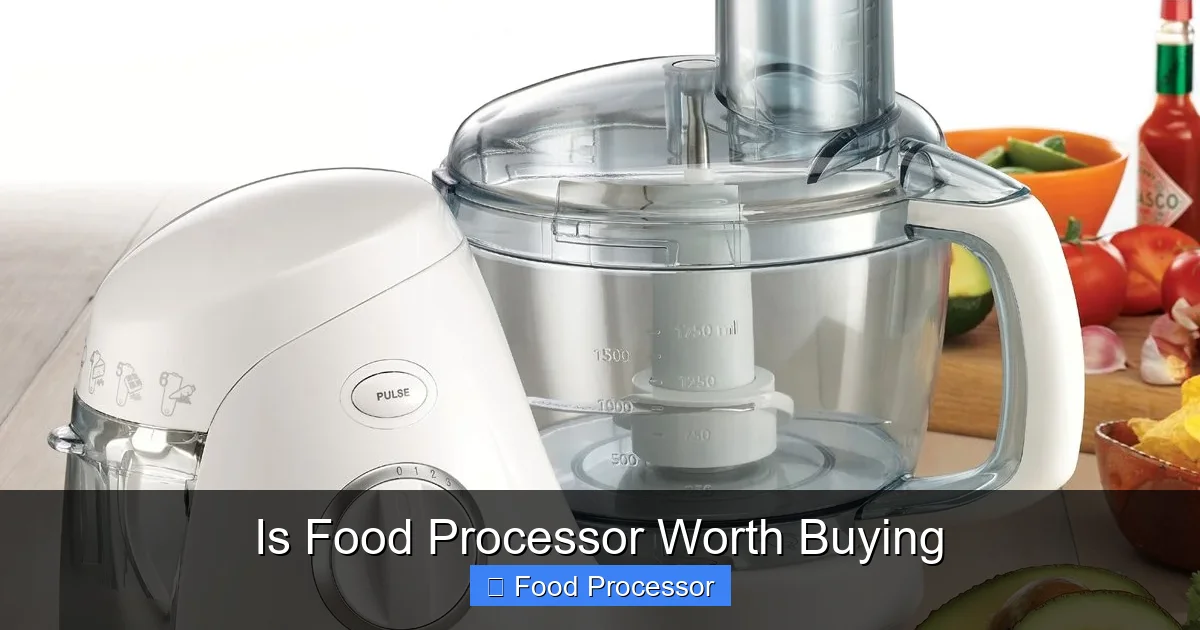
Visual guide about Is Food Processor Worth Buying
Image source: s3.appliancesonline.com.au
What Kinds of Meals Do You Prepare?
Consider the typical ingredients and preparation methods in your cooking. Do your recipes frequently call for:
- Chopping large quantities of vegetables (onions, carrots, celery)?
- Shredding cheese for casseroles or pizzas?
- Slicing vegetables for salads or gratins?
- Making homemade dips, sauces, or pestos?
- Kneading dough for bread, pizza, or pies?
- Grinding nuts for baking or making nut butters?
If you find yourself nodding “yes” to many of these, a food processor could be a game-changer.
Do You Enjoy Batch Cooking or Meal Prep?
For those who love to cook in advance for the week ahead, a food processor becomes an indispensable ally. Imagine prepping all your vegetables for stir-fries, shredding a large block of cheese, or whipping up a big batch of hummus in a fraction of the time it would take manually. If meal prep is your jam, then a food processor is definitely worth buying.
Are There Specific Tasks You Dread?
Everyone has kitchen tasks they dislike. Is it the endless chopping of onions that brings tears to your eyes? Or the tiresome grating of carrots? Perhaps kneading dough by hand feels like a workout. A food processor can eliminate these pain points, making cooking more enjoyable and less of a chore.
Step 2: Weigh the Advantages of Owning a Food Processor
Now, let’s explore the compelling reasons why many cooks find their food processor to be an absolutely essential appliance. Understanding these advantages will help you decide if a food processor is worth buying for your specific situation. Many of these benefits highlight what makes it a highly valuable kitchen tool. You can learn more about what are the advantages of a food processor by checking out our detailed guide.
Time-Saving Marvel
This is arguably the biggest selling point. A food processor can accomplish tasks in seconds that would take minutes of tedious manual labor. Chopping an onion takes literally 5 seconds. Shredding a block of cheese? Under a minute. This efficiency drastically reduces your overall meal preparation time, freeing you up for other things.
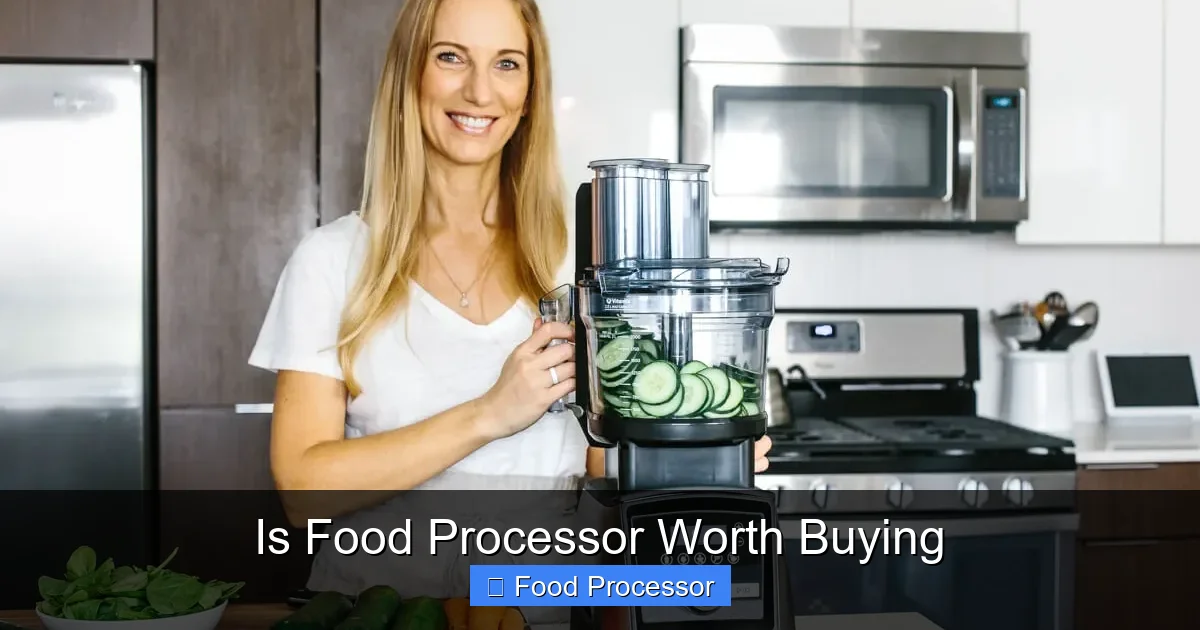
Visual guide about Is Food Processor Worth Buying
Image source: i2.wp.com
Consistency in Results
Achieving uniformly chopped vegetables or evenly shredded cheese by hand is challenging. A food processor delivers consistent results every time. This not only makes your dishes look more professional but also ensures even cooking.
Culinary Versatility
The range of tasks a food processor can handle is surprisingly broad. With different blades and discs, you can:
- Chop vegetables (onions, carrots, garlic, herbs)
- Slice vegetables (cucumbers, potatoes, bell peppers)
- Shred cheese, cabbage, or carrots
- Puree ingredients for sauces, soups, and baby food
- Make dips and spreads (hummus, pesto, salsa)
- Knead dough for bread, pizza, and pastries
- Grind nuts, breadcrumbs, or even meat
- Whip up homemade nut butters
It opens up a world of culinary possibilities, encouraging you to try new recipes and techniques.
Healthier Eating Made Easier
When healthy eating involves a lot of fresh produce, the prep work can be daunting. A food processor makes it simple to chop, slice, and shred fresh fruits and vegetables quickly, encouraging you to incorporate more whole foods into your diet. Want to make your own veggie burgers or healthy protein balls? A food processor makes it a breeze.
Reduced Effort and Manual Labor
Say goodbye to tired wrists and aching hands from repetitive chopping. The food processor does the hard work for you, making cooking more accessible and enjoyable, especially for those with limited mobility or strength.
Step 3: Consider the Potential Disadvantages
No kitchen appliance is perfect for everyone. While there are many reasons a food processor is worth buying, it’s equally important to consider the downsides to make a truly informed decision.
Countertop Space and Storage
Food processors, especially full-size models, can be bulky. If you have a small kitchen with limited counter space or storage, finding a home for it might be a challenge. Consider if you’re willing to sacrifice valuable space for its utility.
Initial Cost Investment
A good quality food processor can be an investment, with prices ranging from under $50 for mini models to several hundred dollars for high-end, professional-grade machines. You need to weigh this cost against your budget and how much use you anticipate getting out of it.
Cleaning Can Be a Chore
While food processors save time during prep, they do have multiple parts (bowl, lid, blade, pusher) that need cleaning. Some parts might be dishwasher safe, but intricate nooks and crannies can sometimes require manual scrubbing. If you dislike washing dishes, this could be a deterrent.
Learning Curve
While generally intuitive, mastering the perfect chop or slice without over-processing can take a little practice. Understanding which blade to use and how long to pulse is key to avoiding mushy results. It’s not difficult, but it’s not always plug-and-play perfection on the first try.
Not a Blender Replacement
This is a common misconception. While both blend, they have different strengths. A food processor is designed for thick, chunky mixtures and dough, while a blender is superior for smooth purees, smoothies, and liquids. If your primary need is making smoothies or very thin soups, a blender might be a better choice. To understand this difference more deeply, you might want to read our guide on why is a food processor better than a blender.
Step 4: Explore Different Types and Sizes
If you’re leaning towards “yes, a food processor is worth buying,” then the next step is understanding the variety available. Food processors come in different sizes, each suited for different needs.
Full-Size Food Processors (9-14 cups)
These are the workhorses for serious cooks, large families, or frequent batch cooking. They handle big quantities, knead dough effortlessly, and come with a wide array of blades and discs. They require significant storage space.
Compact Food Processors (3-7 cups)
A good middle-ground option for individuals, couples, or those with smaller kitchens. They can still handle most everyday tasks like chopping onions, making dips, or shredding a block of cheese, but in smaller batches.
Mini Food Processors (1-2 cups)
Perfect for small tasks like chopping nuts, mincing garlic, making salad dressings, or pureeing baby food. They take up minimal space and are very convenient for quick jobs, but won’t replace a full-size unit for larger recipes.
Food Processor/Blender Combos
Some appliances offer the functionality of both a food processor and a blender in one unit, often with interchangeable bases or attachments. These can be a great space-saving option if you need both. If you’re considering a versatile kitchen gadget that covers both bases, check out our insights on what is the best food processor and blender combo to find the perfect fit for your needs.
Step 5: Key Features to Look For (If You Decide “Yes!”)
If you’ve concluded that a food processor is worth buying for you, congratulations! Now, let’s quickly cover what to look for when you’re ready to purchase. To ensure you make the best choice, it’s important to know what to consider when buying a food processor.
Motor Power (Watts)
Higher wattage generally means a more powerful motor, which is better for tough tasks like kneading dough or grinding hard ingredients. Look for at least 600 watts for full-size models, and 250-400 watts for compact models.
Bowl Capacity
As discussed, choose a capacity that matches your typical cooking volume. It’s often better to go slightly larger if you’re on the fence, as you can always process smaller batches in a big bowl, but not vice-versa.
Blade Variety and Quality
Most come with a standard S-blade for chopping and pureeing. Look for models that include slicing and shredding discs, and perhaps a dough blade, to maximize versatility. Stainless steel blades are durable and effective.
Feed Chute Size
A wider feed chute allows you to process larger pieces of food (like whole potatoes or blocks of cheese) without pre-cutting, which further saves time.
Controls and Speeds
Simple controls (on/off, pulse) are often sufficient. Some models offer multiple speeds, which can be useful for precise processing.
Ease of Cleaning
Look for models with dishwasher-safe parts and minimal crevices where food can get stuck.
Step 6: Common Misconceptions & Clarifications
Let’s clear up a few common thoughts people have when pondering if a food processor is worth buying.
“It’s Just a Blender with a Different Blade”
As mentioned, this isn’t true. While both use rotating blades, their design and power delivery are optimized for different tasks. Food processors have wider, flatter bowls and wider blades designed to handle dense, solid ingredients with minimal liquid. Blenders have taller, narrower jars and often more powerful motors optimized for pulverizing and emulsifying liquids.
“It’s Too Hard to Use”
Modern food processors are generally very user-friendly. Assembly is usually intuitive (and often comes with clear diagrams), and basic operation is just a button press or two. The “difficulty” often comes from learning *which* blade for *what* task and *how long* to process for desired consistency, which comes with a little practice.
“It Takes Up Too Much Space”
While full-size models are indeed bulky, mini and compact food processors are incredibly space-efficient. If space is your primary concern, one of these smaller models could still provide significant benefits without dominating your counter.
Step 7: Making the Final Decision: Is a Food Processor Worth Buying for *You*?
So, after all this discussion, is a food processor worth buying? The answer, truly, depends on you.
If you are someone who:
- Cooks frequently at home.
- Enjoys fresh, homemade meals.
- Hates tedious chopping, slicing, or shredding by hand.
- Does a lot of meal prep or batch cooking.
- Wants to experiment with a wider range of recipes (dips, sauces, doughs).
- Values efficiency and time-saving in the kitchen.
Then, yes, a food processor is absolutely worth buying. It will quickly become one of your most used and cherished kitchen appliances, transforming your cooking experience.
However, if you:
- Cook very rarely.
- Have extremely limited kitchen space and budget.
- Don’t mind manual prep and even find it therapeutic.
- Primarily need an appliance for liquids (smoothies, thin soups).
Then, a food processor might not be the most essential purchase for you right now. You might consider starting with a mini chopper for small tasks or investing in a good set of knives first.
Maximizing Your Food Processor’s Value
If you do decide that a food processor is worth buying, here are some tips to ensure you get the most out of your new kitchen companion:
Start Simple
Don’t try to tackle complex recipes immediately. Begin with basic tasks like chopping onions, making a simple salsa, or shredding carrots. This helps you get comfortable with the machine’s power and speed.
Read the Manual
Yes, really! Your food processor’s manual contains vital information about assembly, blade usage, capacity limits, and cleaning instructions specific to your model. It can prevent common issues and extend the life of your appliance.
Explore Recipes
Look for recipes specifically designed for food processors. Websites, cookbooks, and even YouTube are great resources for inspiration on how to utilize all those different blades and functions.
Proper Cleaning and Storage
Clean your food processor immediately after use to prevent food from drying and sticking. Store it properly, ensuring all parts are dry and protected, which helps maintain its condition and readiness for your next culinary adventure.
Conclusion
The question “is a food processor worth buying” ultimately comes down to your personal culinary journey. For many, it’s an invaluable tool that saves time, reduces effort, and opens up a world of cooking possibilities. It transforms tedious prep into quick, consistent tasks, making healthy and delicious homemade meals more achievable than ever before.
By carefully assessing your cooking habits, weighing the pros and cons, and considering the types and features available, you can confidently decide if this powerful appliance deserves a spot in your kitchen. If you cook regularly and want to make your kitchen life easier and more efficient, then a food processor is very likely a smart and worthwhile investment that you’ll wonder how you ever lived without. Happy cooking!
