
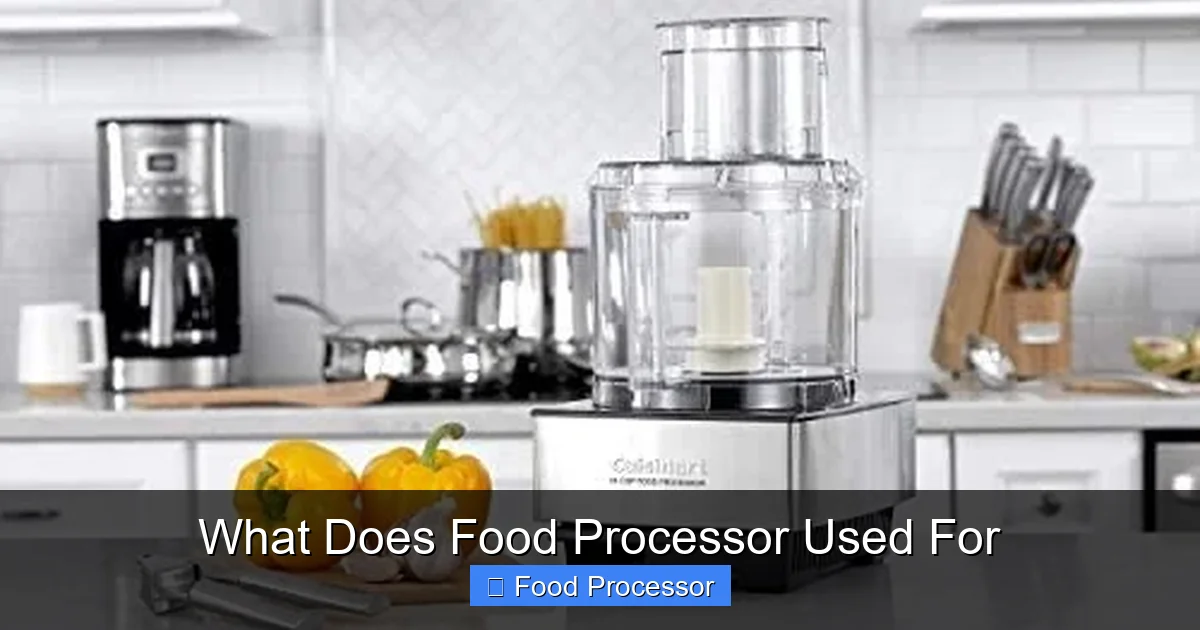
A food processor is an incredibly versatile kitchen appliance designed to simplify many food preparation tasks. It excels at quickly and efficiently performing actions like chopping, slicing, shredding, pureeing, and mixing dough. Mastering its uses can save you significant time and effort, making complex recipes more accessible and everyday cooking a breeze. This guide will reveal the myriad ways you can put your food processor to work, transforming your cooking experience and helping you create delicious dishes with ease.
What Does Food Processor Used For
Welcome to the wonderful world of food processors! If you’ve got one sitting on your counter or are thinking about getting one, you’re in for a treat. This powerful kitchen appliance is a true game-changer, designed to take the drudgery out of many common cooking tasks. Forget endless chopping, grating, and mixing by hand – your food processor is here to save the day!
In this comprehensive guide, we’re going to dive deep into all the amazing things your food processor can do. We’ll explore its many uses, from everyday meal prep to more advanced culinary creations. By the end, you’ll feel confident harnessing its power to make your time in the kitchen more efficient, enjoyable, and downright delicious. Get ready to transform your cooking!
Key Takeaways
- Versatility is Key: A food processor is a multi-functional kitchen tool capable of performing a wide array of tasks, from basic chopping to complex dough preparation, significantly reducing manual effort.
- Master Blade Usage: Understanding which blade or disc to use for specific tasks (e.g., S-blade for chopping/pureeing, slicing/shredding discs for vegetables/cheese) is crucial for optimal results.
- Pulsing vs. Continuous: Learn when to use the pulse function for precise control (e.g., coarse chop) and when continuous running is appropriate (e.g., pureeing, kneading dough).
- Time and Effort Saver: Utilizing a food processor dramatically cuts down on prep time for ingredients like vegetables, nuts, and cheeses, making meal preparation faster and more enjoyable.
- Expand Your Culinary Horizon: From homemade nut butters and pesto to perfect pie crusts and finely shredded salads, a food processor enables you to tackle recipes that might otherwise seem daunting.
- Safety and Cleaning First: Always prioritize safety by correctly assembling the unit and using the food pusher, and ensure longevity by cleaning all parts immediately after use.
The Core Capabilities: What Your Food Processor Excels At
At its heart, a food processor is a motor-driven kitchen appliance with interchangeable blades and discs that fit into a work bowl. This design allows it to perform a vast range of tasks with incredible speed and precision. Let’s break down its most common and valuable uses.
Chopping and Mincing
This is probably the most recognized use for a food processor, and for good reason! It can chop and mince ingredients in seconds, a task that would take ages by hand.
- Onions, Garlic, and Herbs: Say goodbye to teary eyes and sticky fingers. A few pulses will finely chop onions, garlic, parsley, cilantro, and other herbs evenly.
- Nuts: Need chopped nuts for baking or a salad? The food processor makes quick work of almonds, walnuts, pecans, and more.
- Vegetables for Salsas and Soups: Get perfectly uniform pieces of bell peppers, carrots, celery, and tomatoes for your favorite dishes.
Tip: Don’t overprocess! Use the pulse function in short bursts to achieve your desired consistency without turning ingredients into mush.
Slicing and Shredding
Many food processors come with reversible slicing and shredding discs that attach to the central spindle. These are fantastic for tasks that would be tedious and dangerous with a knife or box grater.
- Cheese: Shredding blocks of cheese takes mere seconds, much faster and less messy than a hand grater. This is perfect for tacos, pizzas, or casseroles.
- Vegetables for Salads and Slaws: Create uniform slices of cucumbers, zucchini, potatoes, and carrots. For coleslaw, the shredding disc turns cabbage into fine ribbons almost instantly. If you’re looking for the best food processor for slicing vegetables, consider models with a powerful motor and multiple disc options.
- Potatoes for Gratins: Achieve beautifully thin, even slices of potatoes for a professional-looking gratin.
Tip: For best results, cut larger vegetables or cheese blocks into pieces that fit easily into the feed tube. Apply gentle, even pressure with the food pusher.
Pureeing and Blending
While not a blender, a food processor is excellent for creating smooth purees and thick blends.
- Hummus and Dips: Transform chickpeas, tahini, lemon juice, and garlic into creamy, restaurant-quality hummus in minutes. Similarly, you can whip up various bean dips, pesto, or tapenade.
- Soups and Sauces: Puree cooked vegetables for silky smooth soups, or blend ingredients for rich pasta sauces.
- Baby Food: Make healthy, homemade baby food by pureeing cooked fruits and vegetables.
- Nut Butters: Turn roasted nuts into fresh, preservative-free nut butter. This might take a few minutes of continuous processing, scraping down the sides occasionally, but the results are worth it.
Tip: For the smoothest purees, ensure ingredients are cooked until very tender. You might need to add a little liquid (water, broth, oil) to help achieve the desired consistency.
Dough Making and Mixing
Believe it or not, a food processor can be a fantastic tool for making various types of dough, particularly those that require minimal kneading or incorporate cold fats.
- Pie Crusts and Pastry Dough: The cold butter or shortening is quickly cut into the flour, resulting in a perfectly flaky crust every time, without overworking the dough.
- Cookie Dough: Mixes ingredients for many cookie dough recipes, ensuring even distribution and a consistent texture.
- Bread Dough: Some food processors come with a dough blade and are powerful enough to knead smaller batches of bread dough, though it’s generally best for quicker, less developed doughs. If you don’t have a food processor for dough, don’t worry, there are still ways to get a great result by hand.
Tip: When making dough, use the pulse function initially to combine dry ingredients with cold fat, then run continuously briefly to bring the dough together. Be careful not to overmix, which can lead to tough results.
Grinding and Pulverizing
With its powerful motor and sharp S-blade, a food processor can grind a surprising variety of ingredients.
- Meat: Grind raw meat for burgers, meatballs, or sausages. This gives you control over the fat content and freshness. If you’re looking for a food processor specifically for raw meat, ensure it has a robust motor.
- Breadcrumbs: Turn stale bread into fresh breadcrumbs for coatings, stuffings, or toppings.
- Spices: Pulverize whole spices into fine powders, releasing maximum flavor.
- Coffee Beans: While a dedicated coffee grinder is ideal, a food processor can coarse grind coffee beans in a pinch. However, be cautious not to overdo it, or you’ll heat the beans and affect the flavor.
Tip: Process in small batches when grinding hard ingredients like spices or coffee beans to prevent overheating the motor and achieve an even grind.
Emulsifying
Emulsification is the process of combining two liquids that don’t normally mix, like oil and vinegar, to create a stable mixture.
- Mayonnaise: Making homemade mayonnaise from scratch is surprisingly easy with a food processor. You can slowly drizzle oil through the feed tube while the machine is running, creating a thick, creamy emulsion.
- Dressings and Vinaigrettes: Whip up creamy salad dressings or vinaigrettes quickly, incorporating all ingredients smoothly.
Tip: For emulsification, it’s crucial to add the oil very slowly in a steady stream through the feed tube while the processor is running on low or continuously.
Getting Started: Basic Operation of Your Food Processor
Visual guide about What Does Food Processor Used For
Image source: people.com
Ready to put your food processor to work? Here’s a quick guide to its basic operation.
Assemble It Correctly
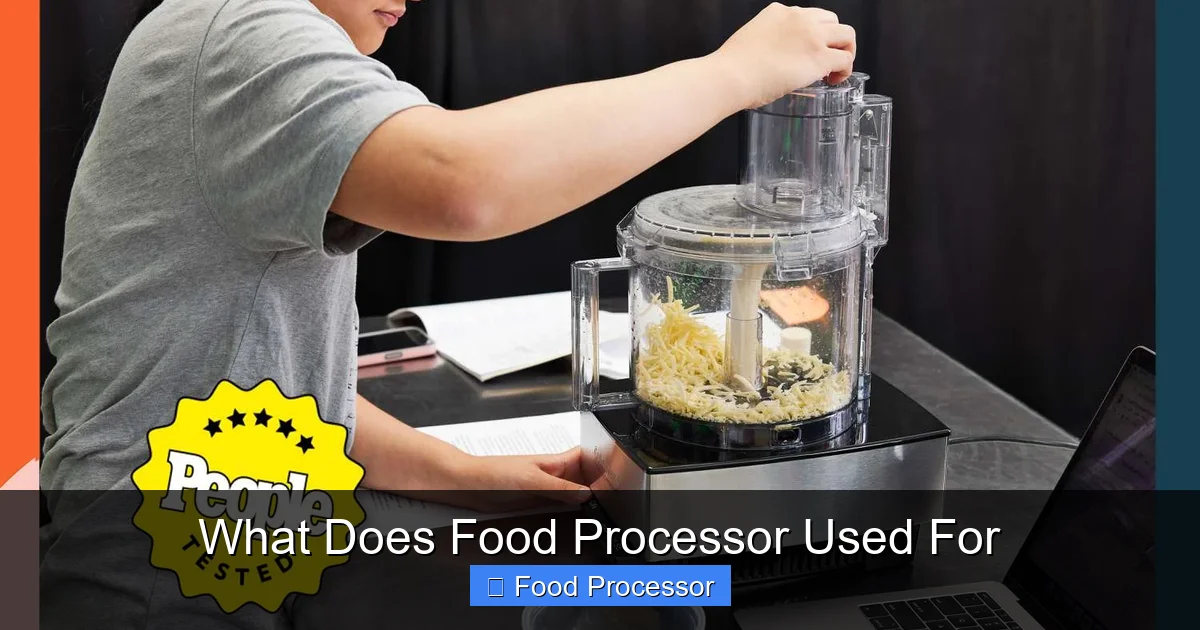
Before you do anything, ensure your food processor is properly assembled. The bowl must be locked onto the base, and the lid must be securely locked onto the bowl. Most modern food processors have safety interlocks that prevent them from operating if not assembled correctly.
Safety First!
Always remember that the blades are extremely sharp. Handle them with care, especially during assembly and cleaning. Never put your hands inside the work bowl while the food processor is running or plugged in. Always use the food pusher provided to guide ingredients into the feed tube, especially when using slicing or shredding discs.
Loading Ingredients
- For Chopping/Pureeing: Place ingredients directly into the work bowl. Cut larger items into 1-2 inch pieces to ensure even processing. Don’t overfill the bowl; leave enough space for ingredients to circulate freely.
- For Slicing/Shredding: Insert the desired disc onto the spindle, then secure the lid. Drop ingredients into the feed tube and use the food pusher to gently guide them against the spinning disc.
Pulsing vs. Continuous Run
Understanding when to pulse and when to run continuously is key to mastering your food processor.
- Pulse: This engages the blade briefly and then stops. It gives you maximum control, perfect for coarse chopping, mincing, or when you want to combine ingredients without overmixing. Use short, quick pulses.
- Continuous Run: This keeps the blade spinning. It’s used for pureeing, blending, kneading dough, or when using slicing/shredding discs. Only use continuous run when you need a very fine or smooth consistency.
Practical Tips for Food Processor Success
Visual guide about What Does Food Processor Used For
Image source: m.media-amazon.com
To get the most out of your food processor, keep these tips in mind.
Don’t Overfill the Bowl
Overfilling can lead to uneven processing, a strained motor, and food spilling out. Always adhere to the “max fill” line on your food processor bowl. If you have a large batch of ingredients, process them in smaller batches.
Cut Ingredients to the Right Size
While a food processor is powerful, cutting larger items into smaller, more manageable pieces (1-2 inches for chopping, or sizes that fit your feed tube for slicing/shredding) ensures more even processing and less strain on the motor.
Use the Right Blade or Disc for the Job
Your food processor likely came with an S-blade (the standard chopping blade) and maybe a few discs for slicing and shredding. Refer to your manual to understand which attachment is best for each task. Using the wrong blade can lead to poor results or damage. For example, trying to slice with the S-blade won’t work!
Clean Immediately After Use
Food residue can dry and become difficult to remove. Disassemble your food processor and wash all parts (bowl, lid, blades, pusher) immediately after use. Most parts are dishwasher-safe, but always check your manufacturer’s instructions. Be extra careful when handling sharp blades.
Troubleshooting Common Food Processor Issues
Even with the best kitchen tools, sometimes things don’t go exactly as planned. Here are some common issues and how to troubleshoot them.
My Food Processor Won’t Start
- Check Assembly: The most common reason is improper assembly. Ensure the work bowl is securely twisted onto the base and the lid is firmly locked into place. Most units have safety interlocks that prevent operation otherwise.
- Power Connection: Make sure the unit is plugged in securely to a working outlet.
- Overload Protection: Some food processors have an overload protection feature that trips if the motor is working too hard. Unplug the unit, remove some ingredients, let it cool for a few minutes, then try again.
Uneven Processing
- Too Many Ingredients: Overfilling the bowl prevents ingredients from circulating properly, leading to some parts being finely processed while others remain chunky. Reduce the batch size.
- Inconsistent Ingredient Size: If you start with very large and very small pieces of the same ingredient, you’ll get uneven results. Try to cut all pieces to a similar size before adding them.
- Not Enough Liquid (for Pureeing): If pureeing, adding a little liquid can help ingredients circulate and become smooth more evenly.
- Not Pulsing Correctly: For chopping, use quick, short pulses. Don’t just hold the button down. Scrape down the sides if necessary to redistribute ingredients.
Loud Noise or Burning Smell
- Overloading: This is a sign the motor is working too hard. Unplug immediately, remove some ingredients, and let the motor cool down before trying again.
- Improper Blade/Disc: Ensure you’re using the correct attachment and that it’s properly seated.
- Something Stuck: Check if a hard ingredient is jamming the blade. Unplug before attempting to clear anything.
- Internal Issue: If the noise or smell persists despite troubleshooting, there might be a mechanical issue. Contact the manufacturer’s support.
Conclusion: Embrace the Power of Your Food Processor
Hopefully, by now, you have a much clearer idea of what a food processor is used for. It’s far more than just a chopping machine; it’s a versatile kitchen workhorse that can revolutionize your cooking. From effortlessly preparing vegetables for weeknight dinners to tackling more ambitious projects like homemade pasta or nut butter, the possibilities are vast.
Embracing your food processor means less manual labor, faster prep times, and more consistent results, allowing you to spend less time stressing in the kitchen and more time enjoying delicious, homemade meals. If you’re considering buying one, think about the many advantages of a food processor and how it can fit into your culinary routine. So go ahead, experiment with new recipes, and let your food processor become your best kitchen companion!
