

Many home cooks wonder, “Where are Cuisinart food processor made?” The simple answer is that most Cuisinart food processors are primarily manufactured and assembled in China, a common practice for many global appliance brands. However, Cuisinart, a brand owned by Conair Corporation in the USA, maintains strict quality control standards and its products often incorporate components sourced from various countries, ensuring consistent performance and reliability regardless of assembly location. This global approach helps Cuisinart offer accessible and high-quality kitchen tools to consumers worldwide.
Where Are Cuisinart Food Processor Made
Have you ever wondered about the origins of your trusty kitchen companions? Specifically, if you own a Cuisinart food processor, you might have paused to ask, “Where are Cuisinart food processor made?” It’s a common and valid question in today’s globalized market, where brands often have complex supply chains stretching across continents. Understanding the manufacturing journey of your appliances can offer insights into the brand’s practices, quality control, and even the economics behind their pricing.
This comprehensive guide will take you on a journey to uncover the manufacturing footprint of Cuisinart food processors. We’ll delve into the brand’s history, explore its global production strategy, discuss why manufacturing location matters (or sometimes doesn’t), and provide practical tips on how to identify the origin of your own Cuisinart appliance. By the end, you’ll have a clear picture of Cuisinart’s manufacturing process and what it means for you as a consumer.
Key Takeaways
- Primary Manufacturing Location: Most Cuisinart food processors are manufactured and assembled in China. This is a standard practice for many appliance brands due to established manufacturing infrastructure and cost efficiencies.
- Global Brand, US-Owned: Cuisinart is an American brand, owned by the Conair Corporation, which designs and engineers its products in the United States, even if the final assembly occurs elsewhere.
- Quality Control is Key: Despite international manufacturing, Cuisinart enforces rigorous quality control standards to ensure all its food processors meet the brand’s specifications and performance expectations.
- Components from Diverse Sources: While assembly often happens in China, individual components and parts used in Cuisinart food processors can be sourced from various countries around the world.
- Focus on Features, Not Just Origin: For consumers, the manufacturing location often matters less than the product’s features, performance, warranty, and brand reliability. Cuisinart’s commitment to quality transcends its assembly points.
- Transparency in Labeling: You can typically find the “Made In” information on the product packaging, labeling, or in the user manual of your Cuisinart food processor.
The Cuisinart Brand Story: A Global Legacy
Before we dive into manufacturing locations, let’s briefly touch upon Cuisinart’s heritage. Cuisinart isn’t just any appliance brand; it’s a household name synonymous with innovative kitchen technology, especially the food processor. The brand was founded in 1971 by Carl Sontheimer, who introduced the first food processor to the North American market at a food show in 1973. This revolutionary appliance, initially a commercial French restaurant device, was adapted for home use and quickly transformed how people cooked.
Cuisinart quickly gained popularity, becoming a staple in many American kitchens. While its roots are in French culinary innovation and its establishment as a brand in the United States, Cuisinart has grown into a global entity. Today, it is owned by the Conair Corporation, a privately held American company. This blend of American ownership, French inspiration, and international reach sets the stage for its diverse manufacturing strategy.
Unpacking Cuisinart’s Manufacturing Footprint
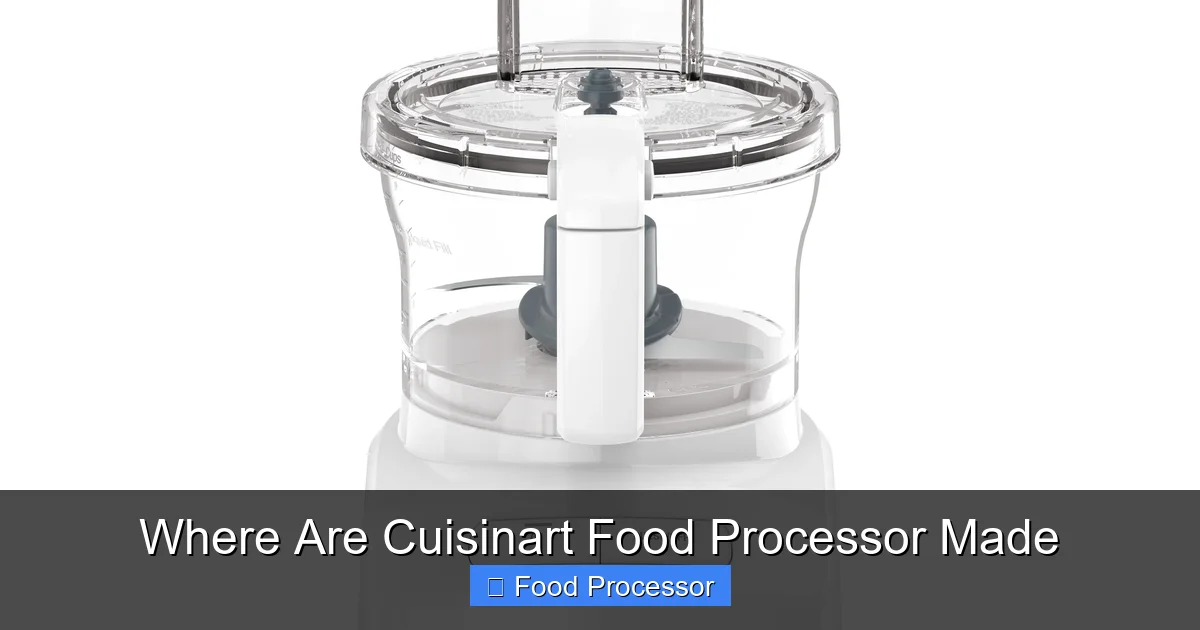
Visual guide about Where Are Cuisinart Food Processor Made
Image source: cuisinart.com
When you ask, “Where are Cuisinart food processor made?” the answer isn’t always a single country. Like many major appliance manufacturers, Cuisinart employs a global sourcing and manufacturing strategy.
Primarily Manufactured in China
For the vast majority of Cuisinart food processor models available today, the primary manufacturing and assembly location is China. This practice is not unique to Cuisinart; it’s a widespread trend across the consumer electronics and small appliance industries. There are several compelling reasons for this:
- Established Infrastructure: China has developed a highly sophisticated and extensive manufacturing infrastructure over decades, capable of producing a wide range of goods efficiently and at scale.
- Cost-Effectiveness: Labor costs, raw material sourcing, and overall production expenses can often be more competitive in China compared to many Western countries, allowing brands to offer products at more accessible prices.
- Supply Chain Integration: Many component suppliers are also located in Asia, streamlining the supply chain and reducing logistics costs and time.
- Expertise and Technology: Chinese factories often possess advanced manufacturing technologies and skilled workforces specializing in appliance production.
So, if you pick up a new Cuisinart food processor, it’s highly probable you’ll find “Made in China” or “Made in PRC” (People’s Republic of China) stamped on its packaging or base.
Components from Various Countries
It’s important to differentiate between where a product is *assembled* and where its *components are sourced*. While the final assembly of a Cuisinart food processor often occurs in China, many individual components – such as specialized motors, electronic circuitry, blades, or certain plastics – could be sourced from a variety of countries. For example, a motor might come from Germany, electronics from Taiwan, and steel for blades from another region, all converging in a Chinese factory for final assembly. This global integration is typical for complex modern appliances.
Global Sourcing, Local Presence
Remember, Cuisinart remains an American brand. Its product design, engineering, marketing, and corporate headquarters are based in the United States. The decision to manufacture abroad is a strategic business one, allowing the company to leverage global efficiencies while maintaining its brand identity and quality standards. This means that while your Cuisinart food processor might be physically built overseas, the innovation, brand management, and ultimate responsibility for the product still reside with the US-based company.
Why Manufacturing Location Matters (or Doesn’t)
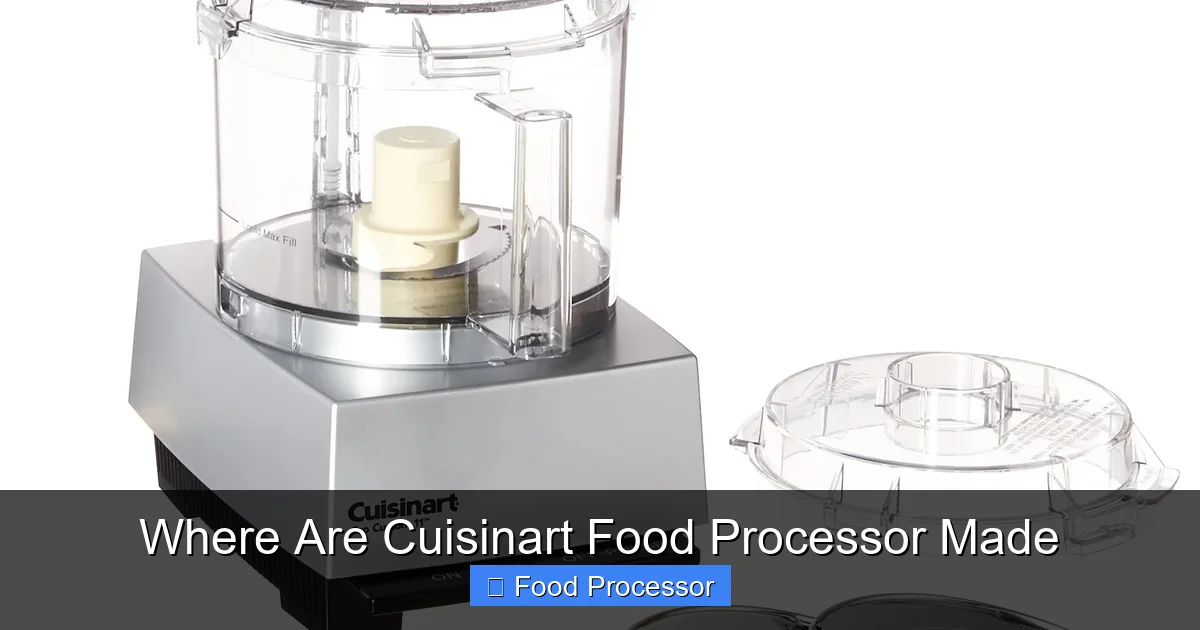
Visual guide about Where Are Cuisinart Food Processor Made
Image source: m.media-amazon.com
For many consumers, the country of origin can be a significant factor in purchasing decisions. Let’s explore why it might matter and why, in some cases, it’s less important than you think for your Cuisinart food processor.
Quality Control and Standards
A common concern about products made in certain countries is perceived quality. However, for reputable brands like Cuisinart, the manufacturing location does not dictate the quality standard. Cuisinart, like other major international brands, implements stringent quality control protocols throughout its entire production process, regardless of where the factory is located. This includes:
- Design and Specification: Cuisinart engineers in the US define precise specifications for materials, performance, and durability.
- Factory Audits: Regular audits of overseas factories ensure compliance with Cuisinart’s quality and ethical standards.
- Testing: Products undergo rigorous testing at various stages of production and before leaving the factory to ensure they meet performance benchmarks and safety regulations.
- Post-Production Checks: Further quality checks are often conducted once products arrive in destination markets.
This dedication means that a Cuisinart food processor made in China is expected to meet the same high standards as one theoretically made elsewhere.
Impact on Pricing
Manufacturing in regions with lower production costs, such as China, directly impacts the final retail price. These efficiencies allow Cuisinart to offer their food processors at competitive prices, making advanced kitchen technology more accessible to a wider audience. If Cuisinart were to manufacture solely in countries with significantly higher labor and operational costs, the price tag for consumers would likely increase substantially. To get a better understanding of potential costs, you might be interested in knowing how much does a Cuisinart food processor cost across different models.
Innovation and Design
While manufacturing happens globally, the core innovation, research and development, and industrial design for Cuisinart food processors largely originate in the company’s US facilities. This separation allows Cuisinart to focus on cutting-edge design and user experience, while leveraging global manufacturing expertise for efficient production. So, the smart features and ergonomic design you love in your Cuisinart food processor are typically a result of American ingenuity.
How to Identify a Cuisinart Food Processor’s Origin
If you’re curious about your specific Cuisinart food processor, finding its country of origin is usually straightforward.
Check the Product Label or Packaging
The most common place to find manufacturing information is on the product itself or its packaging. Look for a sticker or embossed text on the base of the food processor, usually near the power cord or the motor housing. The retail box will also prominently display “Made in…” information, often on the bottom or side panels.
Look at the User Manual
The instruction manual or warranty booklet included with your Cuisinart food processor often contains information about the manufacturer, importer, and country of origin. This is a reliable source for official details.
Visit Cuisinart’s Official Website
Sometimes, the product pages on the official Cuisinart website will list the country of origin in the specifications or “Details” section. While not always present for every model, it’s worth checking.
Contact Customer Support
If you can’t find the information elsewhere, Cuisinart’s customer support team can provide precise details for specific models. Have your model number ready (usually found on the product’s base or packaging) to expedite the inquiry.
What This Means for Consumers
For you, the home cook, understanding Cuisinart’s manufacturing approach should primarily reinforce confidence in the brand.
Focus on Features and Performance
Ultimately, when buying a food processor, your primary focus should be on its features, capacity, power, and how well it fits your cooking needs. A Cuisinart food processor, regardless of where it’s made, is designed to perform specific tasks efficiently, whether it’s chopping, slicing, shredding, or pureeing. If you’re looking for a compact option for smaller tasks, for example, a Cuisinart Mini Prep Plus Food Processor Review might be more relevant to your buying decision than its manufacturing location. Consider what to consider when buying a food processor, such as bowl size, motor power, and attachment versatility, as these aspects directly impact your user experience.
Warranty and Support
The country of manufacture does not affect your warranty or access to customer support. Cuisinart provides a standard warranty and customer service for all its products sold in your region, regardless of the factory where they were produced. This means you can expect the same level of post-purchase support.
Environmental and Ethical Considerations
For consumers interested in the broader impact of their purchases, understanding global manufacturing highlights the complexities of modern supply chains. Brands like Cuisinart are increasingly under scrutiny to ensure their overseas manufacturing partners adhere to ethical labor practices and environmental standards. While not always transparent, many major brands are making efforts to improve oversight in these areas.
Common Misconceptions About Manufacturing Locations
It’s easy to fall into traps of common misconceptions when discussing where products are made. Let’s clarify a couple.
“Made in X is Always Better”
This is a pervasive myth. While certain countries have reputations for specific types of manufacturing excellence, “Made in China” no longer automatically implies lower quality. Many of the world’s most innovative and high-quality electronics and appliances are manufactured in China under strict international brand oversight. The quality ultimately depends on the brand’s specifications, quality control, and testing protocols, not solely on the country of assembly. A brand like Cuisinart invests heavily in ensuring its standards are met globally.
All Parts Come from One Place
As discussed earlier, the “Made in…” label primarily indicates the country where the final assembly took place. It rarely means that every single component, from the smallest screw to the most complex circuit board, originated in that same country. Modern manufacturing is a global endeavor, drawing on specialized expertise and resources from around the world.
Choosing the Right Cuisinart Food Processor
Knowing where a Cuisinart food processor is made is interesting, but it shouldn’t be the sole determinant of your purchase. Instead, focus on finding the model that best suits your culinary needs. Do you need a large capacity for batch cooking, or a compact mini-processor for quick tasks? What attachments are essential for your cooking style? Consider motor power, bowl material, ease of cleaning, and overall design. Cuisinart offers a wide range of models, from compact choppers to full-sized 14-cup processors, each designed with specific users in mind.
Conclusion
So, where are Cuisinart food processor made? The answer, for the majority of their current models, is predominantly China. However, this fact is part of a larger story about Cuisinart’s global brand strategy. It reflects an American company leveraging international manufacturing capabilities to produce high-quality, innovative kitchen appliances that remain accessible to consumers worldwide.
The key takeaway is that Cuisinart maintains rigorous design, engineering, and quality control standards, ensuring that a Cuisinart food processor delivers reliable performance and durability, regardless of its specific assembly location. When you choose a Cuisinart food processor, you’re investing in a brand with a strong heritage of innovation and a commitment to transforming home cooking, backed by a global manufacturing and supply chain. So, feel confident in using your Cuisinart food processor to chop, slice, and blend your way to delicious meals, knowing it’s a product of thoughtful design and meticulous production, no matter where it was assembled.
