
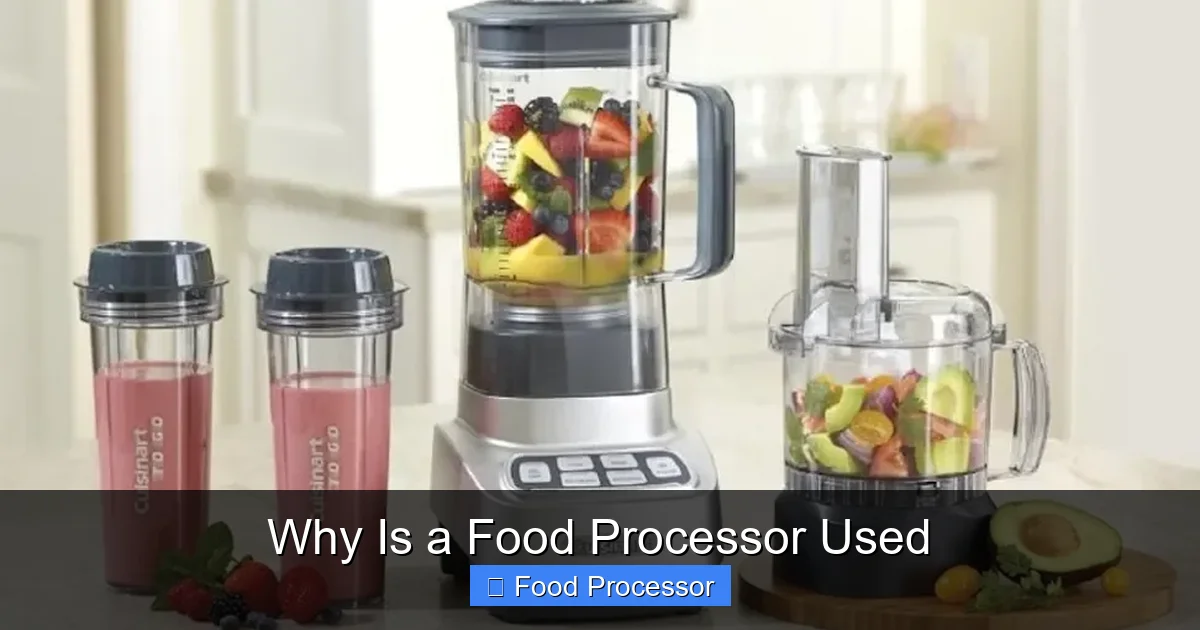
A food processor is an incredibly versatile kitchen appliance designed to handle a wide range of food preparation tasks quickly and efficiently. It excels at tasks like chopping, shredding, slicing, pureeing, and mixing dough, significantly reducing manual effort and saving time. Understanding why a food processor is used unlocks its full potential, making everyday cooking and complex recipes much more manageable and enjoyable.
Why Is a Food Processor Used
Welcome to the ultimate guide on why a food processor is a true kitchen hero! Have you ever wondered what makes this appliance so special, or why so many recipes call for one? You’re in the right place. We’re about to uncover the remarkable versatility and efficiency of the food processor, explaining exactly why it deserves a spot on your countertop.
A food processor isn’t just another gadget; it’s a powerful and multifaceted tool designed to revolutionize your meal preparation. It takes the tedious, time-consuming tasks of chopping, slicing, grating, and mixing, and performs them with incredible speed and consistency. By the end of this guide, you’ll not only understand the core reasons why a food processor is used, but you’ll also be inspired to unlock its full potential in your own kitchen. Let’s dive in!
Key Takeaways
- Time-Saving Efficiency: Food processors drastically cut down on manual chopping, slicing, and shredding time, making meal prep much faster.
- Versatile Functionality: Beyond basic chopping, they can puree, emulsify, mix dough, grind nuts, and even shred cheese, performing many different kitchen tasks.
- Consistent Results: They produce uniform cuts and textures, which is crucial for professional-looking dishes and even cooking.
- Reduces Manual Effort: Tasks that are physically demanding or tedious by hand become effortless with a food processor, easing strain and fatigue.
- Expands Culinary Possibilities: With its diverse capabilities, a food processor enables home cooks to confidently tackle more complex recipes like homemade hummus, pestos, and pie crusts.
- Essential for Batch Cooking: For those who prep meals in advance or cook for larger families, a food processor is invaluable for handling large quantities of ingredients.
- More Than Just a Blender: While some functions overlap, a food processor excels with solid and semi-solid foods, offering capabilities like slicing and shredding that blenders cannot.
Understanding the Core Function: What Makes a Food Processor Special?
At its heart, a food processor is built for precision and power. Unlike a blender, which is primarily designed for liquids and smooth purees, a food processor excels with solids and semi-solids. Its wide bowl, powerful motor, and interchangeable blades are key to its diverse capabilities. This design allows it to handle everything from firm vegetables to tough doughs, making it an indispensable appliance for any home cook looking to save time and effort.
The Power of Interchangeable Blades and Discs
One of the main reasons why a food processor is used for so many different tasks is its array of attachments. While the S-blade (or chopping blade) is the workhorse for most jobs, the slicing and shredding discs truly expand its utility. These various blades allow you to achieve specific textures and cuts that would be incredibly difficult, if not impossible, to replicate by hand.
Chopping and Mincing: Speed and Uniformity
Imagine chopping an entire onion, a handful of garlic cloves, and a bunch of parsley by hand for a soup or sauce. It’s tedious, often inconsistent, and can bring tears to your eyes. This is where a food processor shines.
Effortless Vegetable Prep
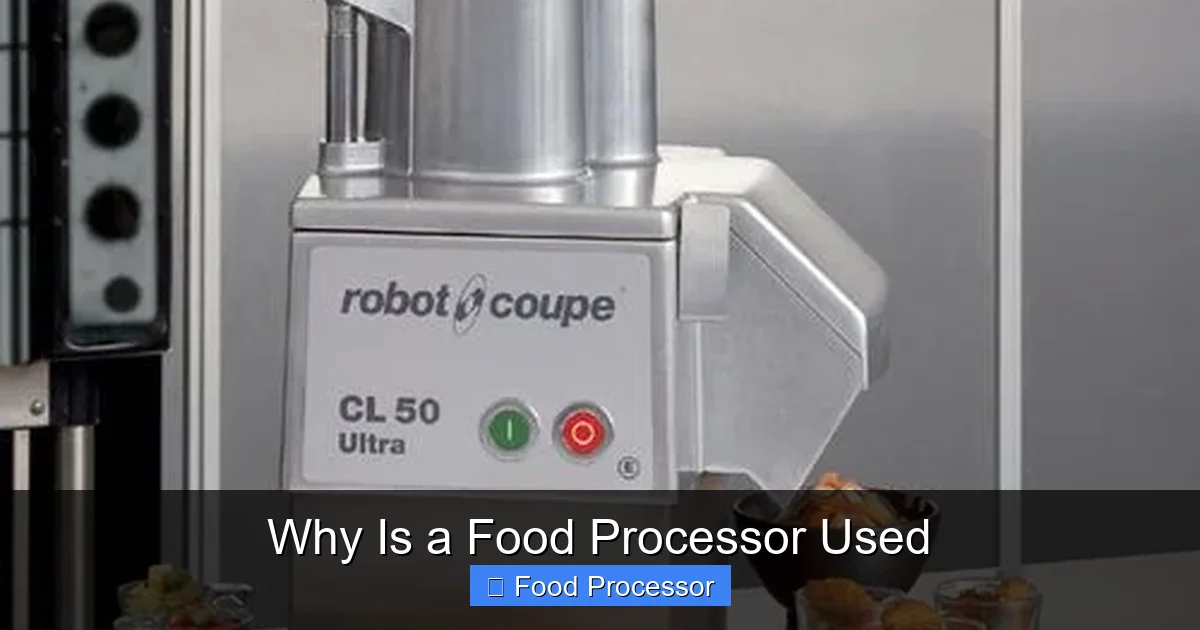
When a recipe calls for finely chopped vegetables, a food processor is your best friend. From onions and carrots to celery and bell peppers, it can process them in seconds. The pulsing action ensures you get consistent pieces without over-processing them into a mush. This uniform size isn’t just for aesthetics; it also ensures even cooking.
Visual guide about Why Is a Food Processor Used
Image source: fnb.msmmgroup.com
Minced Herbs and Spices
For fresh herbs like cilantro, parsley, or basil, a quick whirl in the food processor makes mincing a breeze. You can also quickly mince ginger and garlic, creating aromatic bases for countless dishes. This is one of the primary reasons why a food processor is used by chefs and home cooks alike – it makes complex flavor profiles accessible.
Slicing and Shredding: Effortless Prep
Hand-slicing vegetables for a gratin or shredding a block of cheese can be a tiresome and sometimes dangerous task. Food processors eliminate this effort, providing perfectly uniform results in a fraction of the time.
Perfectly Sliced Vegetables
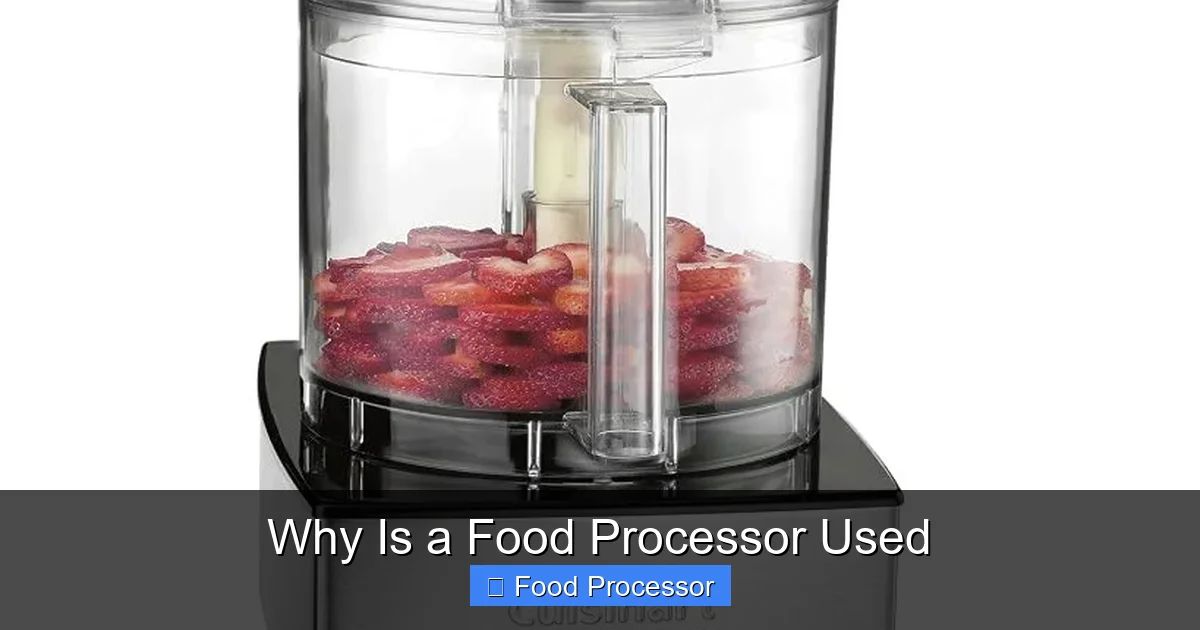
With a slicing disc, your food processor can turn potatoes into thin, even rounds for au gratin, cucumbers into delicate slices for salads, or firm tomatoes into uniform pieces for sandwiches. The precision of the machine ensures every slice is the same thickness, leading to better presentation and cooking results. Need to know how to use a food processor to shred cabbage for coleslaw or sauerkraut? It’s incredibly fast and simple with the shredding disc!
Visual guide about Why Is a Food Processor Used
Image source: m.media-amazon.com
Rapid Shredding of Cheese and Produce
Shredding a large block of cheese for tacos, casseroles, or pizza can take minutes and strain your arm. With a food processor’s shredding disc, it takes mere seconds. The same goes for carrots for salads, zucchini for bread, or potatoes for hash browns. This speed and efficiency are key advantages of using a food processor, especially for larger quantities. This capability is another clear advantage that illustrates why a food processor is different from a blender, as blenders lack this function entirely.
Pureeing and Blending: Smooth Textures
While blenders are known for their pureeing power, a food processor can handle many pureeing and blending tasks, especially for thicker mixtures or when you want some texture left.
Creamy Soups and Sauces
For chunkier soups that you want to partially or fully smooth out, a food processor does an excellent job. It’s also perfect for creating velvety smooth sauces like marinara or a classic béchamel. The wide bowl allows for good circulation of ingredients, though for very hot liquids, remember to vent the lid to prevent pressure buildup.
Homemade Baby Food
Making your own baby food is a breeze with a food processor. Cooked fruits and vegetables can be pureed to the perfect consistency, giving you control over what your little one eats. The precision offered makes this one of the safest and most efficient methods available.
Dough Making: Less Handwork, Better Results
For bakers, a food processor can be a game-changer, especially for tasks that require quick mixing or cutting in cold butter.
Perfect Pie Crusts and Pastry Doughs
One of the most popular reasons why a food processor is used by bakers is for making pie crusts and other pastry doughs. The machine quickly cuts cold butter into flour, preventing overworking the dough and ensuring a tender, flaky crust. It’s much faster and less messy than doing it by hand.
Quick Breads and Cookie Doughs
Many quick bread and cookie dough recipes can be mixed directly in the food processor. This saves time and effort, ensuring ingredients are well combined without developing too much gluten, which can make baked goods tough.
Emulsifying: Perfect Dressings and Sauces
Creating stable emulsions like mayonnaise, hollandaise, or vinaigrettes requires slowly adding oil while ingredients are vigorously mixed. Food processors often come with a small hole in their lid or a pusher designed for this exact purpose.
Silky Smooth Dressings
Making your own salad dressings is healthier and often more flavorful. With a food processor, you can emulsify oil and vinegar, along with herbs and spices, to create stable and delicious vinaigrettes that won’t separate quickly.
Homemade Mayonnaise and Aioli
For those who love homemade condiments, a food processor makes mayonnaise and aioli surprisingly simple. The continuous processing action while slowly drizzling in oil creates a thick, creamy emulsion that store-bought versions can’t beat.
Grinding and Crushing: From Nuts to Ice
A food processor’s powerful motor and sharp S-blade can tackle tough ingredients, turning them into various consistencies.
Nut Butters and Nut Flours
Forget expensive store-bought versions! With a food processor, you can make your own fresh nut butters from peanuts, almonds, or cashews. The machine also excels at grinding nuts into fine flour for gluten-free baking or coarse meals for coatings. You might even wonder can a food processor be used as a meat grinder? While not a dedicated grinder, it can certainly process raw meat for specific recipes.
Crushing Cookies and Crackers
Need crumbs for a pie crust or a topping? A food processor will pulverize cookies, crackers, or bread into fine crumbs in moments, saving you from tedious smashing. It’s an ideal tool for uniform crumb production.
Making Dips and Spreads: The Easiest Way
When it comes to dips, spreads, and pestos, the food processor is king. Its ability to thoroughly combine and finely process ingredients makes it perfect for these chunky or smooth creations.
Homemade Hummus and Pesto
These classic spreads are notoriously easy to make with a food processor. Chickpeas, tahini, lemon juice, and garlic transform into creamy hummus in minutes. Similarly, fresh basil, pine nuts, garlic, and Parmesan become vibrant pesto with minimal effort. The ease of preparation is a primary reason why a food processor is used so frequently for these recipes.
Salsas and Sauces
From chunky restaurant-style salsa to smooth, blended sauces for pasta or tacos, a food processor can handle it all. The pulse function allows you to control the texture precisely, ensuring you get the perfect consistency every time.
Creative Uses and Advanced Techniques
The versatility of a food processor extends beyond the everyday. With a little creativity, it can handle even more specialized tasks.
Homemade Breadcrumbs
Got stale bread? Don’t toss it! A food processor quickly turns it into fresh breadcrumbs, perfect for coating cutlets or topping casseroles. You can toast them afterward for extra flavor and crunch.
Making Flavored Butters
Compound butters infused with herbs, garlic, or spices are easy to make. Just combine softened butter with your desired additions in the food processor and blend until smooth. Roll into a log, chill, and slice for instant flavor enhancers.
Tips for Maximizing Your Food Processor’s Potential
To truly understand why a food processor is used so often by experienced cooks, it helps to know a few best practices. Learning how to use a food processor step by step effectively will unlock its full potential.
Don’t Overcrowd the Bowl
Process ingredients in batches if necessary. Overfilling can lead to uneven processing and strain the motor. Give your ingredients room to move.
Use the Pulse Function
The pulse button is your best friend. It gives you precise control over the texture, preventing ingredients from turning into mush. A few short pulses are often all you need for chopping or mincing.
Cut Ingredients to Size
While the food processor is powerful, large chunks of food can get stuck or process unevenly. Cut ingredients into roughly 1-inch pieces before adding them to the bowl for optimal results, especially for chopping tasks.
Clean Immediately
Food residue can dry and harden, making cleaning more difficult. A quick rinse or wash right after use will keep your food processor in top condition.
Common Pitfalls and How to Avoid Them
Even with a versatile tool like a food processor, there are a few things to watch out for to ensure smooth operation and longevity.
Liquids and Leaks
Food processors are generally not as leak-proof as blenders, especially at the shaft where the blade attaches. While they can handle some liquids for pureeing, be cautious with large volumes of very thin liquids to avoid spills. Never fill beyond the maximum liquid line indicated on the bowl.
Over-Processing
This is the most common mistake. A food processor works fast! Ingredients can go from perfectly chopped to pureed mush in a blink. Always use the pulse function and check progress frequently.
Hard or Frozen Ingredients
While powerful, very hard ingredients like whole coffee beans (unless specified for grinding), large ice cubes, or frozen fruits can dull blades or strain the motor. Break up larger frozen items or let them thaw slightly before processing. Also, consider the specific type of food processor; some models are better equipped for tougher tasks.
Improper Assembly
Always ensure the bowl, blade, and lid are securely locked into place before turning on the appliance. Safety mechanisms prevent operation if components are not correctly aligned.
Conclusion: An Indispensable Kitchen Tool
So, why is a food processor used? The answer is clear: for its unparalleled ability to save time, reduce effort, and deliver consistent, professional-quality results across a multitude of culinary tasks. From everyday chopping and slicing to advanced dough making and emulsifying, a food processor empowers you to explore new recipes and elevate your cooking.
Investing in a good food processor isn’t just buying another kitchen appliance; it’s investing in efficiency, convenience, and expanded culinary possibilities. Once you start using one, you’ll quickly realize how much time it saves and how many more delicious dishes you can create with ease. Embrace the power of the food processor, and transform your kitchen experience today!
