
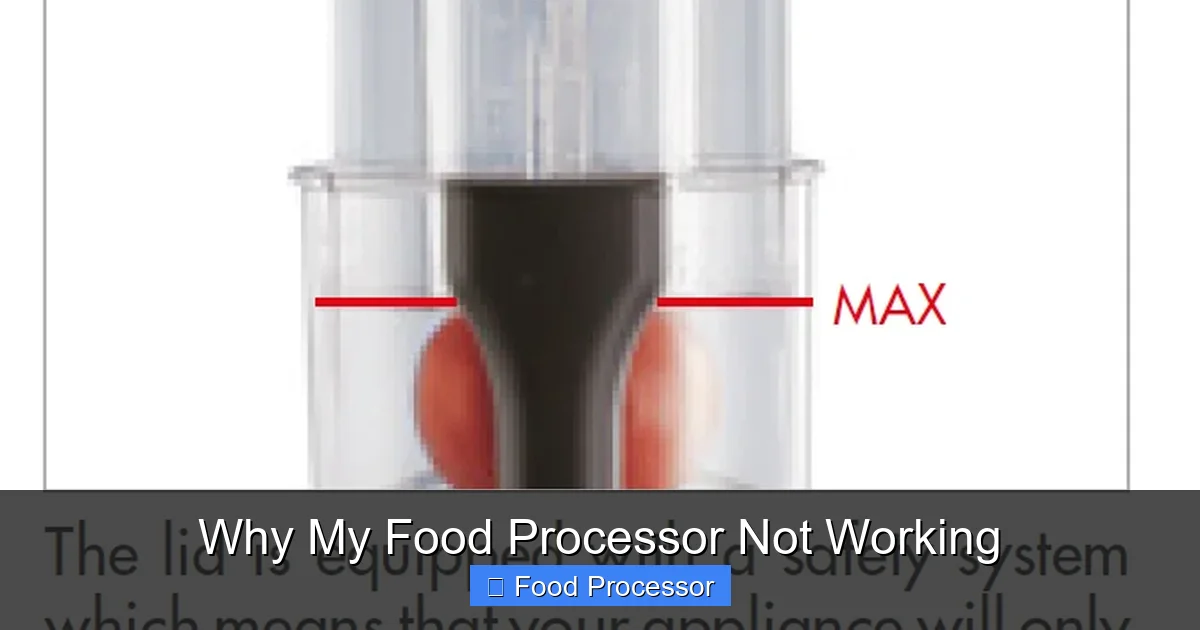
It can be incredibly frustrating when your food processor suddenly stops working, especially when you’re in the middle of preparing a meal. This guide aims to demystify common issues, providing a step-by-step troubleshooting approach to help you identify and fix why your food processor isn’t working. From simple power problems to complex assembly errors or even motor overload, you’ll learn how to diagnose the problem and get your appliance back in action efficiently.
Why My Food Processor Not Working
Imagine this: You’re all set to whip up a delicious meal, ingredients prepped, and you press the start button on your trusty food processor, but… nothing happens. Or maybe it hums but doesn’t spin. Frustrating, right? A non-responsive food processor can derail your kitchen plans and leave you wondering what went wrong. Don’t worry, you’re not alone, and often the solution is simpler than you think.
This comprehensive guide is here to walk you through all the common reasons why your food processor might not be working. We’ll cover everything from basic power issues to proper assembly, motor problems, and component failures. Our goal is to empower you with the knowledge to diagnose the problem, fix it if possible, and get back to enjoying the convenience your food processor offers. So, let’s roll up our sleeves and get your kitchen essential back in action!
Key Takeaways
- Safety First: Always unplug your food processor before performing any inspection or troubleshooting to prevent electric shock or injury.
- Check Power Supply: The most common reason a food processor not working is a simple power issue, so start by checking the outlet, cord, and circuit breaker.
- Ensure Correct Assembly: Food processors have strict safety interlocks. Misaligned bowls, lids, or blades are frequent causes of the appliance not turning on.
- Prevent Overload: Overloading the bowl with too much food can trip the motor’s thermal fuse or strain the motor, leading to the food processor not working or stopping mid-operation.
- Inspect Blades and Components: A jammed blade, a worn drive shaft, or a broken coupler can prevent your food processor from operating correctly.
- Listen for Clues: Unusual noises, burning smells, or a complete lack of response can help pinpoint whether the problem is electrical, mechanical, or motor-related.
- When to Seek Help: If basic troubleshooting doesn’t work or you suspect a serious electrical or motor issue, it’s best to consult a professional or consider replacement.
Step 1: Prioritize Safety – Always Unplug First!
Before you touch anything inside your food processor, or even try to move it, the very first and most crucial step is to ensure it’s unplugged from the wall outlet. Electricity can be dangerous, and you don’t want to risk an electric shock or accidental activation while you’re inspecting components.
1.1 Disconnect from Power Source
Reach behind your food processor and carefully pull the plug straight out of the wall socket. Do not pull by the cord itself, as this can damage the wiring over time.
1.2 Clear the Work Area
Move your food processor to a clean, well-lit workspace where you can comfortably examine all its parts. Having enough light and space makes troubleshooting much easier and safer.
Step 2: Check the Power Supply – Is It Plugged In and Powered?
It might sound obvious, but you’d be surprised how often a food processor not working comes down to a simple power issue. This is the easiest and quickest area to check, so it’s always the best place to start.
2.1 Inspect the Power Cord
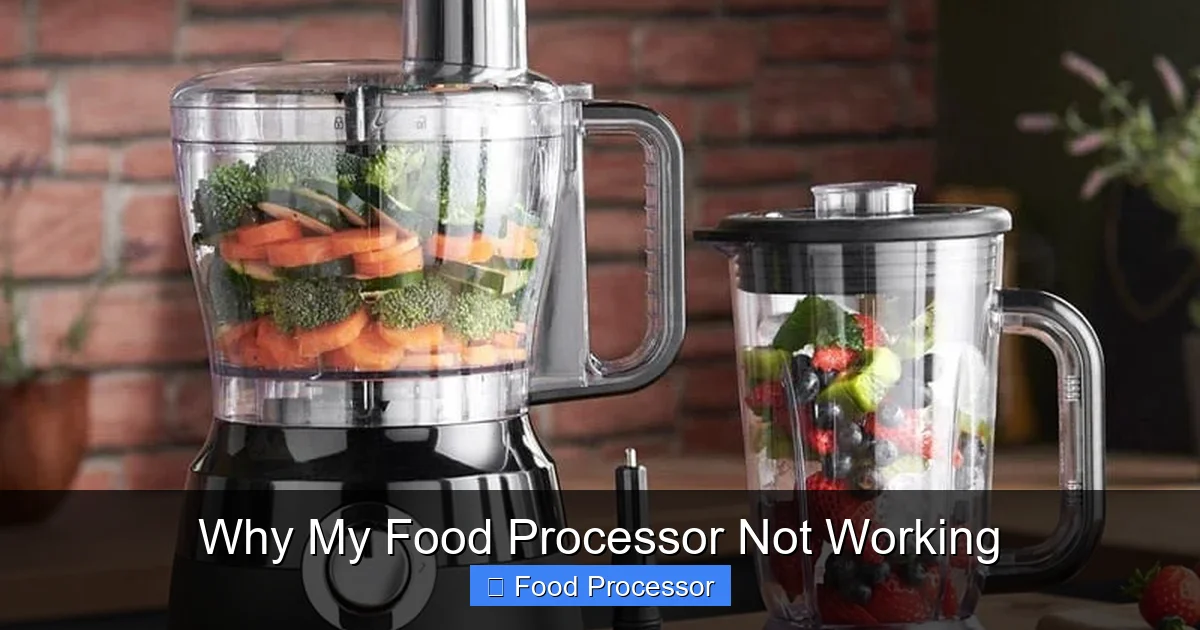
Look for any visible damage to the power cord, such as cuts, frayed wires, or kinks. A damaged cord can prevent power from reaching the appliance. If you find any damage, the cord will need to be replaced, and it’s often safer to have a professional do this or consider replacing the entire unit if the cord is integrated.
Visual guide about Why My Food Processor Not Working
Image source: applianceanalysts.com
2.2 Test the Wall Outlet
Plug another small appliance (like a lamp or a phone charger) into the same wall outlet where your food processor was plugged in. If the other appliance also doesn’t work, then the problem isn’t with your food processor but with the outlet itself. You might have a tripped circuit breaker.
2.3 Reset the Circuit Breaker or GFCI Outlet
If the outlet isn’t working, head to your home’s electrical panel. Look for a tripped breaker (it will usually be in the “off” position or somewhere between “on” and “off”) and flip it firmly to “off” and then back to “on.” If your food processor was plugged into a GFCI (Ground Fault Circuit Interrupter) outlet (the kind with “reset” and “test” buttons), press the “reset” button. For more detailed steps on this, you might find our guide on How To Fix A Food Processor That Is Not Turning On particularly helpful.
Step 3: Verify Proper Assembly – The Interlock System
Food processors are designed with safety in mind, which means they won’t operate unless all components are correctly assembled and locked into place. This is called the “interlock” system, and it’s a very common reason why your food processor not working. Even a slight misalignment can prevent it from starting.
3.1 Secure the Work Bowl
The work bowl must be correctly seated on the motor base and locked into place. Most models require you to twist the bowl clockwise until it clicks. Make sure it’s snug and doesn’t wiggle.
Visual guide about Why My Food Processor Not Working
Image source: applianceanalysts.com
3.2 Position the Lid Correctly
The lid is perhaps the most finicky part. It needs to be placed on top of the work bowl and locked into its specific position. There are often arrows or indicators on the lid and the bowl that need to line up. Twist the lid until it firmly clicks, engaging the safety tab that activates the motor. A common mistake is thinking the lid is on when it’s not fully engaged. This is a primary culprit when a food processor stopped working or simply refuses to start.
3.3 Install the Blade or Disc Properly
Ensure the processing blade or disc attachment is correctly placed on the central shaft (spindle) inside the work bowl. It should sit all the way down and be stable. If it’s not correctly positioned, it might prevent the lid from locking properly or the motor from engaging. If you’re unsure about the exact steps for your model, referring to your appliance’s user manual or our article on How To Assemble Food Processor Step By Step can be very beneficial.
3.4 Check the Feed Chute Pusher (Plunger)
Some food processors also have a safety interlock related to the feed chute pusher. While it usually doesn’t prevent the motor from starting initially, ensure it’s not jammed or preventing the lid from fully seating.
Step 4: Address Overload Protection – Did You Overfill It?
Food processors are powerful, but they have their limits. Overfilling the work bowl or processing ingredients that are too hard or dense can cause the motor to overwork, triggering a safety mechanism.
4.1 Look for a Reset Button
Many food processors have an overload protection feature that will automatically shut off the motor to prevent damage. Some models have a small red “reset” button on the underside or back of the base. If your food processor stopped working mid-task, press this button after clearing the bowl and letting the motor cool.
4.2 Reduce the Load
If you suspect overloading, remove some of the ingredients from the work bowl. For very dense or hard foods, process them in smaller batches. Let the motor cool down for at least 10-15 minutes before trying again. Attempting to restart immediately after an overload can further strain the motor.
4.3 Cut Ingredients into Smaller Pieces
Hard vegetables, large chunks of meat, or tough dough can put immense strain on the motor. Cut these items into smaller, more manageable pieces before processing. This makes the job easier for your food processor and prevents the motor from seizing up or overheating.
Step 5: Inspect the Blades and Drive Shaft – Is Everything Spinning Freely?
Even if the motor sounds like it’s running, a food processor not working might be due to issues with the actual cutting components. If you hear the motor but the blade isn’t spinning, this section is for you.
5.1 Clear Any Jams
With the food processor unplugged, carefully remove the lid and blade. Check for any food particles stuck underneath the blade or around the central spindle. Hard pieces of food can jam the blade, preventing it from rotating. Clear away any obstructions using a utensil, not your fingers.
5.2 Examine the Blade for Damage
Inspect the blade itself. Is it dull, bent, or chipped? A damaged blade might not spin correctly or could create an imbalance that the motor struggles to overcome. If the blade is significantly damaged, it may need replacement. Sometimes, the issue isn’t that the food processor isn’t working, but rather why is my food processor blade not spinning – and a jam is a top reason.
5.3 Check the Drive Shaft and Coupler
The drive shaft is the central rod that protrudes from the motor base, and the coupler is the part that connects the blade to the motor. Inspect both for any wear, cracks, or broken teeth. If the coupler (sometimes called a drive cog or gear) is stripped or broken, the motor will run, but the blade won’t turn. This part can often be replaced, but check your specific model for availability.
Step 6: Listen for Motor Sounds and Smells – Potential Internal Issues
Sometimes, your food processor not working can be accompanied by unusual sounds or smells, which can provide clues about internal problems.
6.1 Humming Sound but No Action
If you hear a humming sound when you press “on” but the blade doesn’t spin, it often indicates the motor is receiving power but can’t engage the blade. This could be due to a jammed blade, a broken coupler, or even a capacitor issue in older models. Refer back to Step 5 for blade and coupler inspection.
6.2 Burning Smell or Smoke
A burning smell (like burning plastic or electrical components) or, worse, visible smoke, is a serious warning sign. This usually means the motor is overheating or has a serious electrical fault. Immediately unplug the appliance. Do not attempt to use it again. At this point, the motor is likely damaged beyond economical repair, and it’s safer to consider replacing the unit. Continued use could be a fire hazard.
6.3 No Sound, No Power at All
If there’s absolutely no sound, light, or any sign of life when you press the power button, it strongly points to a power supply issue (go back to Step 2) or a complete motor failure. If the power supply is confirmed to be working, then the internal electronics or motor have likely failed. Unfortunately, this often means professional repair or replacement.
Step 7: Consider Specific Brand Quirks (e.g., Cuisinart)
While this guide covers general troubleshooting, some brands might have specific sensitivities or common issues. For example, some users report that if their Cuisinart food processor not working is a common complaint related to precise lid alignment and the safety interlock system. Always consult your specific model’s user manual for brand-specific troubleshooting tips. They often include diagrams and detailed instructions unique to your appliance.
Step 8: Advanced Troubleshooting and When to Seek Help
If you’ve gone through all the basic steps and your food processor not working persists, it might be time for more advanced solutions or professional intervention.
8.1 Check the Control Panel/Buttons
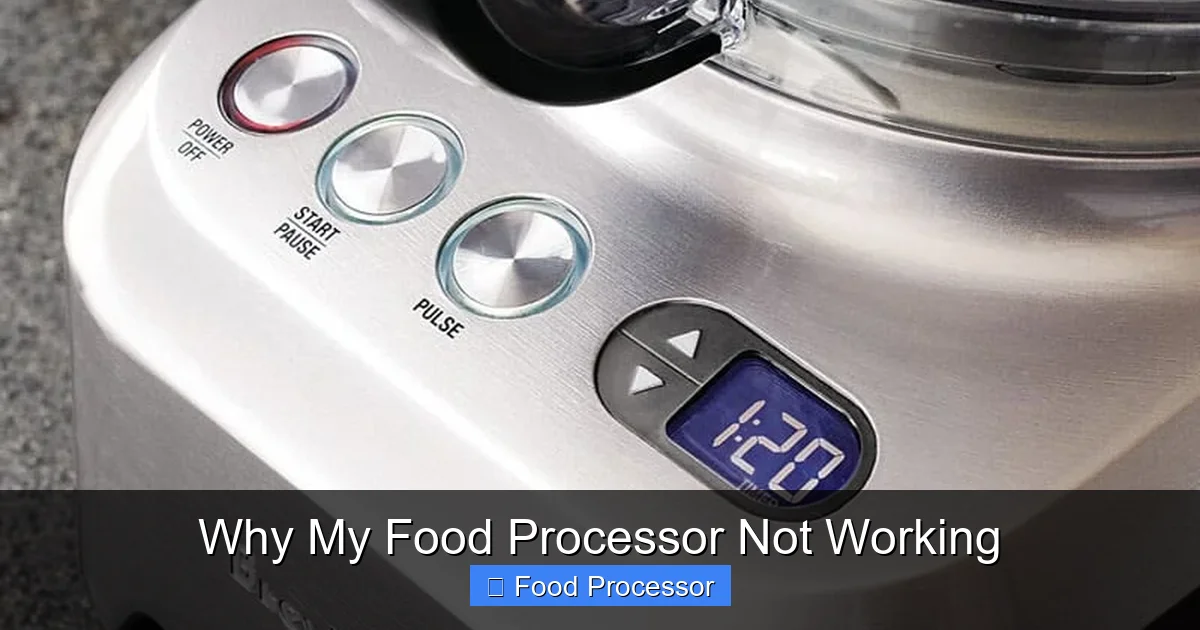
While less common, sometimes the control buttons or touch panel can malfunction. If one specific button (e.g., “pulse”) works but another doesn’t, it could be a faulty switch. This generally requires professional repair.
8.2 Loose Wiring Inside the Base
Only if you are comfortable and knowledgeable about electrical repairs should you consider opening the base of the food processor to check for loose wires. Even then, exercise extreme caution. For most users, this is beyond the scope of DIY repair and should be left to a qualified technician. Opening the base also often voids warranties.
8.3 When to Call a Professional
If you’ve checked everything above and your food processor still isn’t working, especially if you suspect a motor issue, electrical fault, or complex internal component failure, it’s best to:
- Contact the manufacturer’s customer service if the unit is still under warranty.
- Seek out a qualified appliance repair technician.
- Consider replacement, especially if the repair cost approaches the price of a new unit. For guidance on buying a new one, you might look at guides like Food Processor Stopped Working How To Fix It which often touches on when to repair versus replace.
Conclusion
Having your food processor suddenly stop working can be a real hassle, but as you’ve seen, many common problems have simple solutions. By systematically checking the power supply, ensuring correct assembly, clearing jams, and being mindful of overloading, you can often diagnose and fix the issue yourself. Remember, safety is paramount, so always unplug the appliance before inspection.
If, after all your troubleshooting efforts, your food processor remains stubbornly unresponsive, don’t despair. Sometimes, appliances reach the end of their lifespan, or a repair might be more costly than investing in a new, efficient model. Whatever the outcome, you’ve gained valuable troubleshooting skills and a deeper understanding of your kitchen companion. Happy cooking!
