

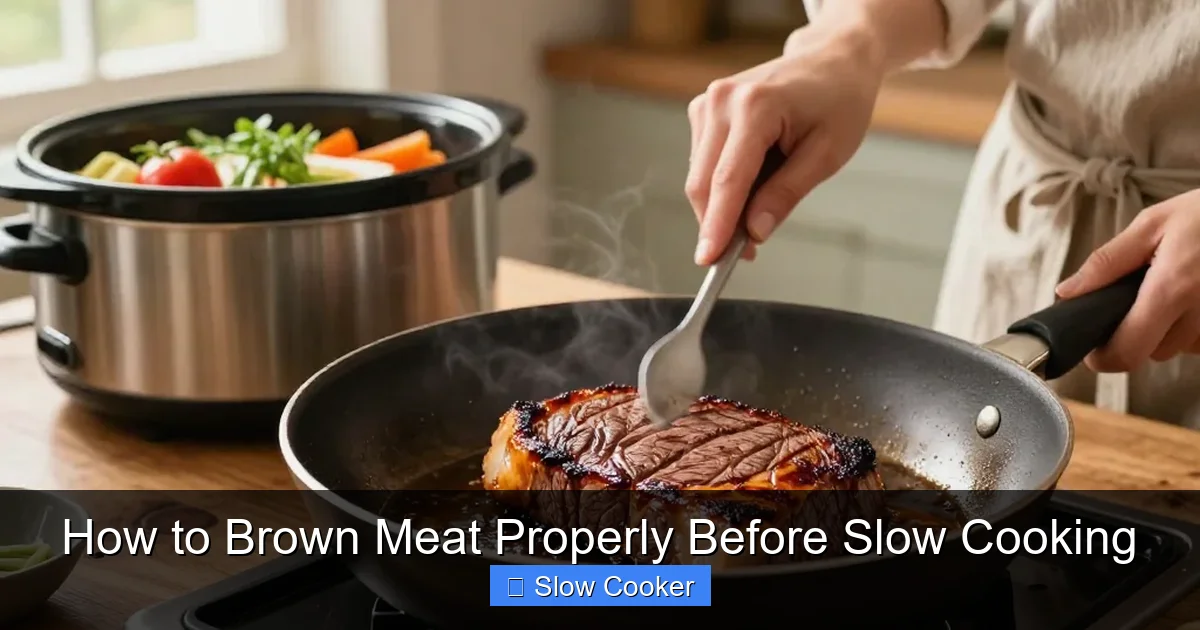
Browning meat before slow cooking enhances flavor and texture, making your dishes richer and more satisfying. In this guide, you’ll learn simple techniques to achieve perfect browning, ensuring your slow-cooked meals are full of depth and deliciousness.
Key Takeaways
- Proper heat is essential: Use medium-high heat to develop a flavorful crust without burning the meat.
- Pat meat dry: Removing excess moisture helps achieve better searing and prevents steaming.
- Use the right fat: Choose oils with high smoke points like vegetable or canola oil for browning.
- Avoid overcrowding the pan: Cook in batches if necessary to prevent steaming and ensure even browning.
- Don’t move the meat too soon: Let it develop a crust before flipping or stirring.
- Deglaze the pan: Use broth or wine to loosen flavorful bits, boosting the overall taste of your dish.
- Finish with patience: Proper browning takes time but results in more flavorful and tender slow-cooked meat.
Introduction
If you love hearty, flavorful slow-cooked dishes, then browning meat properly before adding it to your slow cooker is a step you shouldn’t skip. Proper browning develops rich flavors, adds a beautiful color, and improves the overall texture of your meat. In this comprehensive guide, you’ll learn how to brown meat effectively, with simple tips and techniques that anyone can follow. Whether you’re preparing beef, pork, chicken, or lamb, mastering this step can elevate your slow-cooked meals to a whole new level.
Why Browning Meat Matters
Browning meat isn’t just about making it look appealing; it’s about unlocking deep, complex flavors through a process called the Maillard reaction. This chemical reaction occurs when proteins and sugars in the meat are exposed to heat, creating new flavor compounds and a savory crust. Without proper browning, your dish may lack depth and richness. Plus, browned meat looks more appetizing and adds visual appeal to your final dish.
Tools and Ingredients Needed
- Quality meat: Choose fresh, well-cut pieces suitable for slow cooking.
- High smoke point oil: Vegetable oil, canola oil, or grapeseed oil work best.
- Heavy-bottomed skillet or pan: Cast iron or stainless steel pans distribute heat evenly.
- Paper towels: For drying meat.
- Optional: Deglazing liquid such as broth, wine, or water.
Step-by-Step Guide to Browning Meat
Step 1: Prepare Your Meat
Before you start browning, prepare your meat properly. Remove excess moisture by patting the meat dry with paper towels. Moisture on the surface can cause steaming, which prevents proper searing. If your meat is frozen or very wet, let it thaw completely and pat dry before proceeding.
Step 2: Season the Meat
Lightly season the meat with salt and pepper or your preferred spices. Seasoning enhances flavor and helps create a tasty crust. Avoid adding too much salt before browning, as it can draw out moisture.
Step 3: Preheat Your Pan
Place your skillet on the stove over medium-high heat. Allow the pan to heat for a few minutes until hot. To test if it’s ready, sprinkle a few drops of water—if they sizzle and evaporate immediately, your pan is at the right temperature.
Step 4: Add Oil
Add a thin layer of oil to the hot pan. Swirl to coat the surface evenly. The oil should shimmer but not smoke excessively. If it starts smoking heavily, reduce the heat slightly.
Step 5: Place the Meat in the Pan
Lay the meat pieces in the pan without crowding. Leave enough space so each piece has contact with the surface. Overcrowding causes the meat to steam rather than brown. If necessary, cook in batches.
Step 6: Let the Meat Sear
Do not move the meat immediately. Let it sit undisturbed for 2-4 minutes. When a deep, golden-brown crust forms, flip the meat using tongs or a spatula. Sear each side until browned—this usually takes 2-4 minutes per side.
Step 7: Flip and Sear Other Sides
Turn the meat to brown all sides evenly. For thicker cuts, sear the edges as well. This creates a uniform crust and lock in juices.
Step 8: Optional Deglazing
Once all meat pieces are browned, remove them from the pan and set aside. Pour a small amount of broth, wine, or water into the hot pan. Use a spatula to scrape up the flavorful browned bits (fond). This adds extra flavor to your slow cooker dish.
Additional Tips for Perfect Browning
- Use the right pan: Cast iron retains heat well and provides even searing. Avoid non-stick pans for browning.
- Control the heat: Too high heat can burn the meat, too low results in steaming. Find a balance for perfect searing.
- Patience is key: Allow each side to develop a crust before flipping. Rushing can lead to uneven browning.
- Batch cooking: If you’re browning a large amount of meat, do it in batches to prevent overcrowding and steaming.
Troubleshooting Common Issues
- Meat sticking to the pan: Ensure the pan is hot enough and the meat is dry. Use enough oil, and don’t move the meat too soon.
- Meat steaming instead of browning: Dry the meat thoroughly before cooking and avoid overcrowding the pan.
- Uneven browning: Use a heavy-bottomed pan and rotate the meat regularly for even searing.
- Too much smoke: Adjust the heat and ensure good ventilation. Use a high smoke point oil.
Conclusion
Mastering how to brown meat properly before slow cooking is a game-changer for flavor. It might take a little extra time and patience, but the results are worth it. With the right tools, techniques, and a little practice, you’ll create dishes that are rich, savory, and visually appealing. Remember, good browning sets the foundation for a delicious slow-cooked meal. Happy cooking!
Bonus: Quick Recap
Remember to pat your meat dry, use high heat and the right oil, avoid overcrowding the pan, and let each piece develop a crust before flipping. Finish with deglazing for an extra flavor boost!
