
Converting stovetop recipes for the slow cooker is simple once you understand key adjustments. This guide walks you through the essential steps, tips, and tricks to ensure your favorite dishes turn out deliciously in a slow cooker, saving you time and effort.
How to Convert Stovetop Recipes for Slow Cooker Use
Many home cooks love their stovetop recipes for their quickness and flavor, but sometimes, a slow cooker offers convenience and hands-off cooking. Whether you’re looking to make a hearty stew or tender pulled meats, knowing how to convert your favorite stovetop recipes for slow cooker use can save time and effort. In this comprehensive guide, you’ll learn the essential steps to adapt recipes seamlessly, ensuring they turn out flavorful and perfectly cooked every time.
Key Takeaways
- Understand the differences: Slow cookers cook at lower temperatures over longer periods, which changes how ingredients behave compared to stovetop cooking.
- Adjust liquid amounts: Reduce or modify liquids to prevent dishes from becoming too watery, as slow cookers retain moisture.
- Modify cooking times: Convert stovetop times to slow cooker durations, typically extending cooking time for most recipes.
- Pre-cook ingredients: Some ingredients, like beans or tougher meats, may need pre-cooking before slow cooking to ensure tenderness.
- Layer ingredients properly: Place denser, longer-cooking ingredients at the bottom and delicate ones on top.
- Use the right settings: Choose low or high settings based on the original recipe’s cooking time and intensity.
Understanding the Differences Between Stovetop and Slow Cooker Cooking
Before diving into conversions, it’s important to grasp how these two cooking methods differ:
- Temperature: Stovetop cooking uses direct heat, often high, with quick evaporation of liquids. Slow cookers operate at low temperatures (around 170-280°F), cooking food slowly over several hours.
- Cooking Time: Stovetop recipes can be completed in 30 minutes to a few hours, while slow cooker recipes typically take 4-8 hours on low or 2-4 hours on high.
- Moisture Retention: Slow cookers trap moisture, making dishes more tender and flavorful, but require adjustments in liquid amounts compared to stovetop recipes.
Step 1: Review Your Original Recipe
Start by analyzing your stovetop recipe. Note the ingredients, cooking time, liquid amounts, and any specific techniques used. Understanding these details helps determine necessary adjustments for slow cooker adaptation.
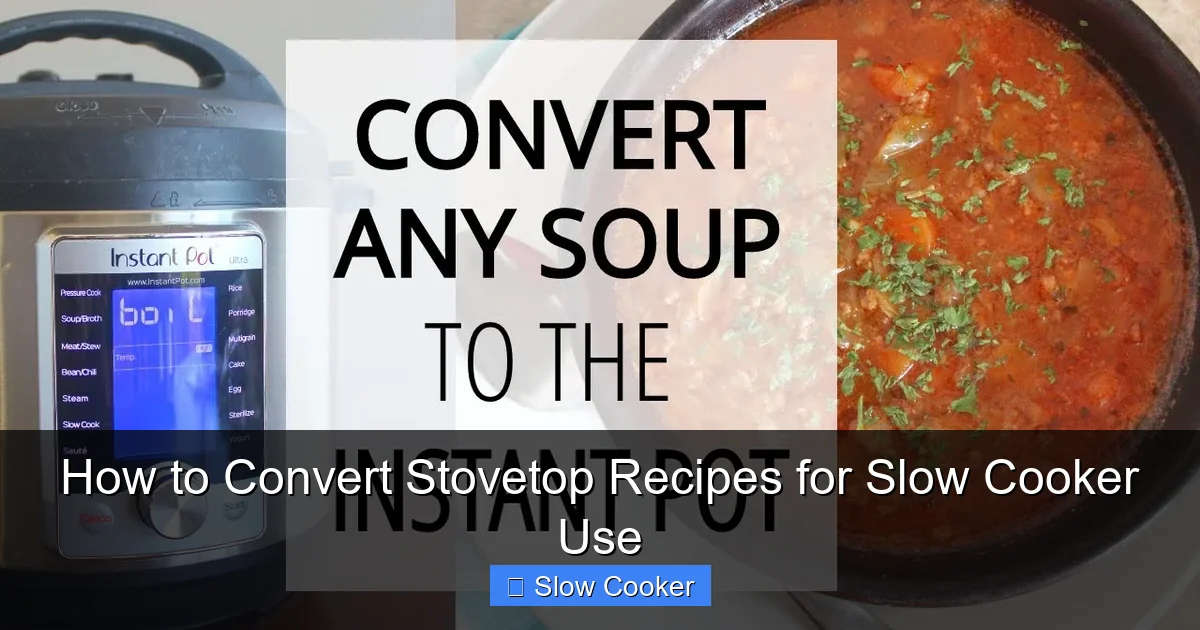
Visual guide about How to Convert Stovetop Recipes for Slow Cooker Use
Image source: i.ytimg.com
- Identify core ingredients: Meats, vegetables, spices, liquids.
- Note cooking time: How long does the recipe take on the stovetop?
- Observe liquid amounts: How much broth, water, or sauce is used?
Step 2: Adjust Liquids and Seasonings
Why Adjust Liquids?
Because slow cookers retain moisture, you often need less liquid than stovetop recipes. Too much liquid can make dishes watery, while too little might cause burning or sticking.
How to Adjust
- Reduce liquids by about 25-50% from the original recipe.
- For soups and stews, start with less liquid; you can add more during cooking if needed.
- Keep in mind that ingredients like beans or potatoes absorb some liquid, so adjust accordingly.
Example: If your recipe calls for 4 cups of broth, try starting with 2 to 3 cups in the slow cooker.
Step 3: Modify Cooking Times
Converting Time
Stovetop recipes often cook quickly, but slow cookers require longer. Here’s a general guideline:
- Stovetop 30 min – 1 hr: Slow cooker on high for 2-3 hours.
- Stovetop 1 – 2 hrs: Slow cooker on low for 4-6 hours.
- Stovetop 2+ hrs: Slow cooker on low for 6-8 hours or on high for 3-4 hours.
Practical Tips
- Use a slow cooker recipe as a guide, gradually increasing the time based on your dish.
- Check for doneness before serving, especially if you’re experimenting.
Step 4: Prepare Ingredients for Slow Cooking
Pre-Cooking Certain Ingredients
Some ingredients benefit from pre-cooking to improve texture and flavor:
- Meats: Brown or sear meats on the stovetop before adding to the slow cooker for extra flavor.
- Beans and Legumes: Pre-soak or pre-cook to reduce cooking time and prevent tough textures.
- Vegetables: Denser vegetables like carrots or potatoes can be added raw, but delicate ones like zucchini are best added later.
Step 5: Layer Ingredients Properly
Layering ensures even cooking:
- Denser ingredients: Place at the bottom.
- Meats and root vegetables: Keep towards the bottom for even heat exposure.
- Delicate ingredients: Add on top or later in the cooking process.
Step 6: Set the Right Temperature and Cooking Mode
Most slow cookers have Low and High settings:
- Use Low: For recipes originally taking longer or for tenderizing tougher cuts.
- Use High: For quicker cooking or delicate dishes.
Adjust based on your recipe’s needs and your schedule. When in doubt, start with a lower setting and extend cooking time if necessary.
Step 7: Monitor and Finish the Cooking
While slow cookers are forgiving, occasional checking can help. If a dish looks too watery, remove the lid in the last 30 minutes to allow some liquid to evaporate. For overcooked ingredients, reduce cooking time or use a timer to prevent mushiness.
Troubleshooting Common Issues
- Dish is too watery: Reduce liquids initially or remove the lid to evaporate excess moisture.
- Meat isn’t tender: Extend cooking time or check temperature; sometimes pre-searing helps.
- Ingredients are overcooked or mushy: Use less cooking time or add delicate ingredients later.
Conclusion
Converting stovetop recipes for slow cooker use is straightforward once you understand the basics. Adjust liquids, extend cooking times, and layer ingredients thoughtfully. With a little practice, you’ll be able to enjoy your favorite recipes with the convenience of slow cooking, all while maintaining great flavor and texture. Happy slow cooking!
