

Wondering, “can you use food processor instead of mixer?” The answer is often yes, for certain tasks! While not a perfect substitute for aeration-heavy mixing, a food processor excels at quickly combining ingredients for doughs, batters, and emulsifications. This guide shows you exactly when and how to leverage your food processor’s power to mix ingredients effectively, saving you time and counter space.
[FEATUREED_IMAGE_PLACEHOLDER]
Can You Use Food Processor Instead of Mixer
Have you ever found yourself in the middle of a recipe, only to realize you need a mixer, but all you have is your trusty food processor? It’s a common kitchen dilemma! Many home cooks wonder, “Can I really use my food processor instead of a mixer?” The good news is, for many tasks, the answer is a resounding “yes!” However, it’s not a one-to-one replacement, and understanding the nuances can make all the difference between culinary success and a kitchen mishap.
In this comprehensive guide, we’ll dive deep into using your food processor as a mixer. We’ll explore when it’s a brilliant hack, when you should definitely stick to a traditional mixer, and provide step-by-step instructions, practical tips, and troubleshooting advice. By the end, you’ll feel confident in leveraging your food processor’s power for a wide range of mixing tasks.
Key Takeaways
- Food Processors Excel at Quick Blending: They are ideal for rapidly combining ingredients, especially for pie crusts, cookie doughs, and quick bread batters, where you want to avoid overworking gluten.
- Not for Aeration: Food processors struggle to incorporate air into ingredients, making them unsuitable for tasks like whipping egg whites, making meringue, or achieving light, fluffy cake batters that require significant volume.
- Pulse, Don’t Run Continuously: To prevent overmixing and ensure optimal texture when using a food processor instead of a mixer, always use short, controlled pulses and scrape down the bowl frequently.
- Choose the Right Blade: The standard S-blade (or chopping blade) is usually the best choice for mixing tasks in a food processor, as it efficiently cuts and combines ingredients.
- Mind the Temperature: The high speed of a food processor can generate heat, which can be detrimental to delicate ingredients like butter in pastry dough. Work quickly and in short bursts.
- Understand Quantity Limitations: Food processors are best for medium-sized batches; they might struggle with very small amounts (not enough contact with the blade) or very large amounts (overfilling the bowl).
- Read Your Recipe and Processor Manual: Always consider the specific requirements of your recipe and familiarize yourself with your food processor’s capabilities and recommended usage for mixing.
Understanding the Tools: Food Processor vs. Mixer
Before we get into the “how-to,” let’s clarify the fundamental differences between these two indispensable kitchen appliances. Knowing what each tool is designed to do will help you make informed decisions. If you’re curious about a deeper dive into the specifics, you can explore what is the difference between a food processor and mixer.
The Food Processor: Your Kitchen Workhorse
A food processor is primarily designed for chopping, grinding, slicing, shredding, and puréeing. It uses a powerful motor and razor-sharp blades that spin at high speeds, rapidly cutting and pulverizing ingredients. Its strength lies in its ability to break down solid foods quickly and efficiently.
The Mixer (Stand or Handheld): The Baker’s Best Friend
Mixers, whether stand mixers or hand mixers, are designed for combining ingredients, creaming, beating, whisking, and kneading. Their attachments (like whisks, beaters, and dough hooks) are specifically engineered to incorporate air, create smooth textures, and develop gluten in doughs without overworking them. Stand mixers, in particular, offer hands-free operation and precise speed control for delicate tasks. If you’re comparing your options, you might be interested to know can a food processor be used as a stand mixer, or perhaps you’re wondering can you use a food processor instead of a hand mixer for smaller tasks.
Key Differences for Mixing
The main distinction lies in their primary action:
- Food Processor: Cuts and chops, great for quick blending and doughs that benefit from minimal gluten development. It generates heat due to friction.
- Mixer: Beats, whips, and kneams, excellent for aeration, creating volume, and developing strong gluten structures without overmixing. It typically runs at slower, more controlled speeds.
When a Food Processor Can Be Your Mixer
Your food processor can absolutely stand in for a mixer for several common kitchen tasks. Here’s where it shines:
Making Doughs (Quick Breads, Pie Crusts, Cookies)
This is where the food processor truly excels as a mixer. For pie crusts, scones, biscuits, or certain cookie doughs, where you want cold butter quickly incorporated into flour to create a tender, flaky texture, the food processor is often *better* than a traditional mixer. It can cut butter into flour in seconds. It also works well for quick bread batters like muffins or pancakes.
Blending Batters (Pancakes, Waffles, Muffins)
For batters that don’t require significant aeration, like those for pancakes, waffles, or muffins, a food processor can combine ingredients quickly. The key here is to pulse only until just combined to avoid overmixing.
Emulsifying (Mayonnaise, Dressings)
Making homemade mayonnaise, salad dressings, or even some sauces involves emulsifying oil into other liquids. A food processor with its feed tube is perfect for slowly drizzling oil while the blades rapidly blend, creating a stable emulsion.
Crushing & Grinding (Graham Crackers, Nuts)
While not strictly “mixing,” the food processor’s ability to grind ingredients like graham crackers for pie crusts or nuts for a bake is far superior to most mixers. You can then quickly add other ingredients and pulse to combine.
When to Stick to a Mixer (or a Whisk!)
There are certain tasks where a food processor simply can’t replace a mixer. Trying to force it will lead to disappointing results.
Whipping Air into Ingredients (Egg Whites, Meringue, Whipped Cream)
This is the biggest limitation. Food processors cannot incorporate enough air to create light, fluffy textures. They will merely liquefy egg whites or cream, never achieving stiff peaks for meringue or whipped cream. For these, you need the specialized whisk attachments of a stand or hand mixer.
Light, Fluffy Batters (Cakes, Soufflés)
Cakes and soufflés often rely on creaming butter and sugar until light and fluffy, or folding in whipped egg whites, to achieve their airy texture. A food processor will overmix and compact these batters, resulting in dense, heavy baked goods.
Incorporating Ingredients Gently (Folding)
Recipes sometimes call for “folding” delicate ingredients like whipped egg whites or berries into a batter. This gentle, manual action prevents deflating air or crushing soft ingredients. A food processor’s aggressive blades are completely unsuitable for folding.
Step-by-Step Guide: How to Use Your Food Processor as a Mixer
Ready to put your food processor to work as a mixer? Follow these steps for the best results. For general usage, it’s also helpful to review how do you use a food processor step-by-step.
Step 1: Assess the Task
Before you even touch your food processor, take a moment to understand what your recipe requires.
Understand Your Recipe’s Needs
Is the recipe asking for “creaming butter and sugar until light and fluffy”? If so, use a mixer. Is it asking to “cut butter into flour” or “combine wet and dry ingredients”? A food processor might be perfect. Look for clues about aeration, gluten development, and texture.
Choose the Right Blade
For almost all mixing tasks in a food processor, you’ll use the standard S-blade (also known as the chopping blade). This blade is designed to efficiently cut and combine ingredients. Avoid using slicing or shredding discs for mixing.
Step 2: Prepare Your Ingredients
Proper ingredient preparation is crucial for successful food processor mixing.
Portion Correctly
Ensure all your ingredients are measured accurately according to the recipe. This is true for any baking, but especially important when using a food processor, as small errors can be amplified.
Temperature Matters
For doughs like pie crusts or biscuits, butter should be very cold and cut into small pieces. For other batters, ingredients are often at room temperature. Follow your recipe’s temperature guidelines precisely.
Step 3: Load the Food Processor
There’s a specific order that works best for mixing in a food processor.
Follow the Order
Generally, add dry ingredients first, then pulse them briefly. Then, add any solid fats (like cold butter) and pulse. Finally, add liquids slowly. This allows the blades to work efficiently.
For doughs:
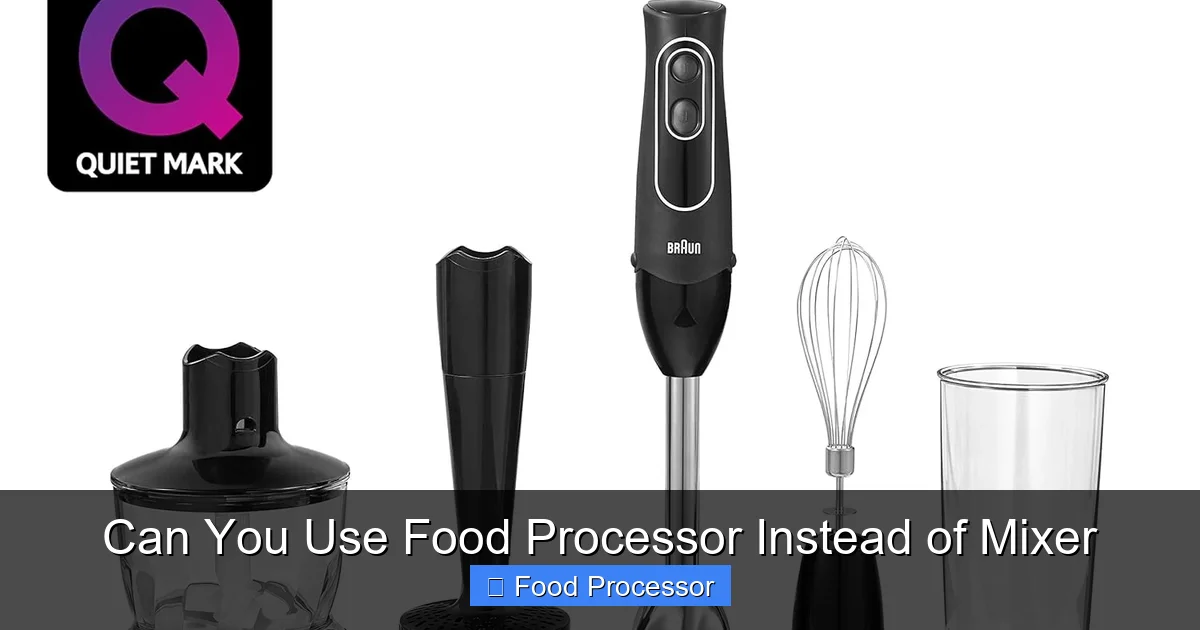
Visual guide about Can You Use Food Processor Instead of Mixer
Image source: images-na.ssl-images-amazon.com
Visual guide about Can You Use Food Processor Instead of Mixer
Image source: thumbs.dreamstime.com

Visual guide about Can You Use Food Processor Instead of Mixer
Image source: iupilon.com
- Add flour and other dry ingredients (sugar, salt) to the food processor bowl. Pulse once or twice to combine.
- Add cold, cubed butter or shortening. Pulse in short bursts (1-second pulses) until the mixture resembles coarse crumbs or small peas.
- With the machine running, slowly drizzle in any liquid (cold water, milk) through the feed tube until the dough just comes together. Stop immediately.
For batters (like muffins):
- Combine dry ingredients (flour, baking powder, sugar) in the food processor bowl and pulse to mix.
- In a separate bowl, whisk together wet ingredients (eggs, milk, oil).
- Add the wet ingredients to the dry in the food processor.
Don’t Overfill
Food processors have a maximum liquid and dry fill line. Never exceed these. Overfilling can lead to uneven mixing, strain the motor, and potentially cause leaks. For best results, keep the bowl about two-thirds full for most mixing tasks.
Step 4: Pulse, Don’t Process Continuously
This is perhaps the most critical tip for using a food processor as a mixer.
Short Bursts are Key
Instead of holding down the “on” button, use the “pulse” function exclusively. Pulse in 1-2 second bursts. This gives you more control and prevents overmixing. Overmixing can develop too much gluten in doughs, leading to tough baked goods, or create too much friction, heating up delicate ingredients.
Scrape Down Sides
After a few pulses, turn off the machine, remove the lid, and use a spatula to scrape down any ingredients that have clung to the sides of the bowl. This ensures everything is evenly incorporated.
Step 5: Check Consistency Regularly
Keep a close eye on your mixture.
Look for Visual Cues
Your recipe will describe the desired consistency – whether it’s coarse crumbs, a sticky dough, or a smooth batter. Stop processing as soon as you reach that point.
Avoid Overmixing
For most mixing tasks (especially baking), overmixing is the enemy. It can activate too much gluten, resulting in tough or rubbery textures. The goal is just to combine the ingredients until they are no longer streaky or until the dough just comes together.
Step 6: Finish Up and Clean
Once your mixing is done, it’s time for the final steps.
Transfer Safely
Carefully remove the blade before scraping the mixed ingredients out of the bowl. This prevents accidental cuts.
Easy Cleanup
Most food processor bowls and blades are dishwasher- safe, making cleanup a breeze. However, always double-check your appliance’s manual. Knowing can you put food processor parts in the dishwasher can save you a lot of time!
Specific Applications & Tips
Pie Crusts and Scones
Use very cold, cubed butter. Add to flour mixture and pulse quickly until the butter is pea-sized. Then, drizzle in ice water through the feed tube while pulsing until the dough just forms a ball. Avoid over-processing to keep the crust tender and flaky.
Cookie Dough
For certain cookie doughs, especially those that don’t rely heavily on creaming butter and sugar for volume, a food processor works. First, pulse flour and dry ingredients. Then, add softened butter and pulse until crumbly, then add sugar and pulse to combine. Finally, add eggs and extracts, pulsing just until a dough forms. Be careful not to overmix, as the S-blade can quickly overwork the dough.
Mayonnaise
Place egg yolk, mustard, lemon juice, and salt in the bowl. Process briefly. Then, with the motor running, slowly drizzle a neutral oil through the feed tube in a thin, steady stream until a thick emulsion forms.
Pancake/Waffle Batter
Combine dry ingredients, then add wet. Pulse just until combined. A few lumps are perfectly normal and preferred to an overmixed, tough batter.
General Tips for Using Your Food Processor as a Mixer
- Know Your Processor’s Limits: Smaller, less powerful food processors might struggle with very thick doughs.
- Smaller Batches: If possible, process ingredients in smaller batches to ensure even mixing and prevent strain on the motor.
- Watch the Temperature: The high speed of a food processor’s blades can generate heat. For recipes sensitive to heat (like pastry dough), work quickly and use chilled ingredients.
- Read Your Manual: Always consult your food processor’s user manual for specific instructions and safety guidelines regarding attachments and processing times.
Troubleshooting Common Issues
Overmixed Dough/Batter
If your dough or batter becomes tough, dense, or rubbery, it’s likely overmixed.
Solution: The next time, use shorter, more controlled pulses and stop as soon as the ingredients are just combined. Remember, a few lumps in batters are usually fine!
Ingredients Not Combining Evenly
Sometimes, you might find pockets of unmixed ingredients, or the mixture stays too dry or too wet in certain areas.
Solution: Ensure you’re scraping down the sides of the bowl frequently between pulses. If the mixture is very thick, you might need to process in smaller batches or add liquid more gradually.
Mixture Becoming Too Warm
This is common, especially with doughs containing butter, due to the friction of the blades.
Solution: Work very quickly with chilled ingredients. If you notice the mixture heating up, stop and chill it briefly in the refrigerator before continuing.
Conclusion
So, can you use food processor instead of mixer? Absolutely, for a surprising number of tasks! Your food processor is a versatile tool that can whip up anything from pie crusts and cookie doughs to batters and emulsified dressings, often more quickly and efficiently than a traditional mixer. The key is to understand its strengths – rapid blending and efficient cutting – and its limitations, particularly when it comes to aeration.
By following the steps and tips outlined in this guide, you can confidently use your food processor to handle many mixing needs, expanding its utility in your kitchen and simplifying your cooking and baking adventures. Happy processing!
