

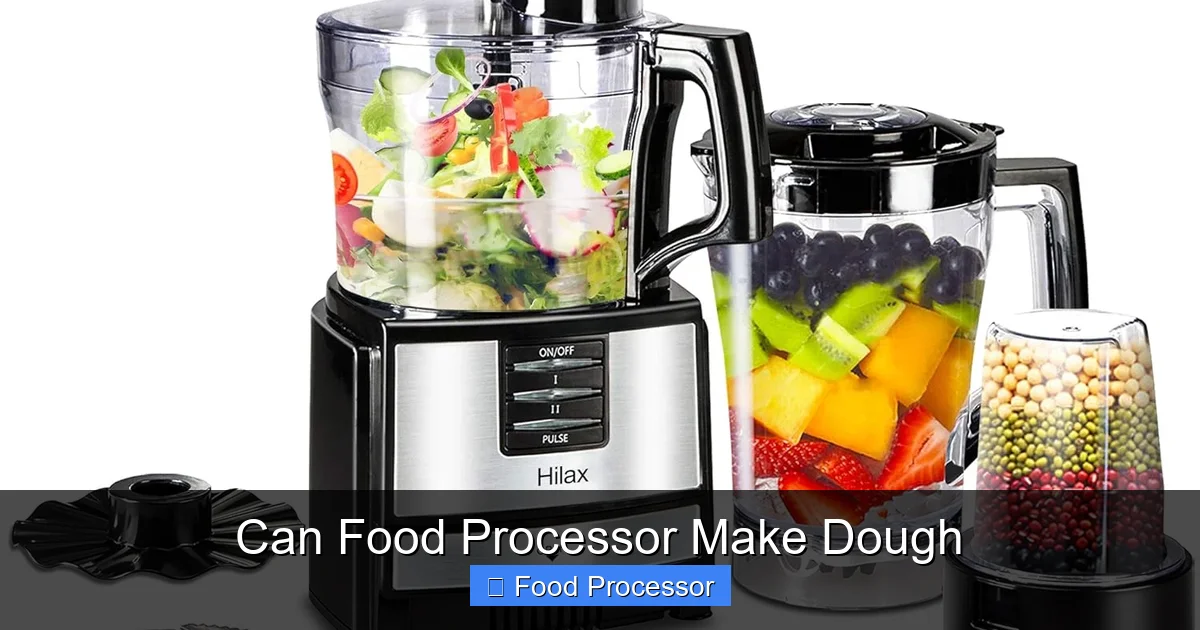
Yes, your food processor can make dough with surprising ease and efficiency! It’s a fantastic tool for quickly preparing various doughs, from flaky pie crusts and tender cookie doughs to even some lighter yeast breads. This guide will show you how to leverage your appliance to create perfect dough every time, saving you time and effort in the kitchen and proving that a food processor make dough is not only possible but practical.
Can Food Processor Make Dough? Absolutely! Your Guide to Perfect Dough
Have you ever wondered if your trusty food processor can handle more than just chopping veggies or making smooth purees? Perhaps you’ve stared at a recipe for pie crust or homemade bread and thought, “There has to be an easier way than kneading by hand!” Well, get ready for some exciting news: yes, your food processor can make dough!
A food processor is a remarkably versatile kitchen appliance, and making dough is one of its superpowers. From light, flaky pastry to tender cookie doughs, and even some types of yeast breads, your food processor can make dough quickly, efficiently, and with surprisingly little mess. This comprehensive guide will walk you through everything you need to know about how a food processor make dough, ensuring you get perfect results every time. We’ll cover the types of dough it handles best, step-by-step instructions, essential tips, and even some troubleshooting advice. So, let’s get ready to transform your dough-making experience!
Key Takeaways
- Versatile Tool: A food processor can make dough for many recipes, including pie crusts, cookie doughs, scones, and even some lighter yeast doughs.
- Speed and Efficiency: Using a food processor significantly reduces preparation time and effort compared to traditional hand-mixing or stand mixers for many dough types.
- Proper Blade Usage: Always use the standard S-blade (also known as the chopping or mixing blade) for making dough in a food processor.
- Avoid Overmixing: Doughs made in a food processor come together very quickly. Use short pulses to prevent overworking the gluten, which can lead to tough results.
- Cold Ingredients are Key: For flaky doughs like pie crust, ensure butter or fat is very cold to achieve the desired texture.
- Batch Size Matters: Work with appropriate batch sizes for your food processor’s capacity to ensure even mixing and prevent motor strain.
- Add Liquids Gradually: Slowly adding liquids through the feed tube while the processor runs ensures better absorption and prevents the dough from becoming too wet too quickly.
Why Use a Food Processor to Make Dough?
Before we dive into the “how-to,” let’s explore why using a food processor make dough is such a game-changer:
- Speed and Efficiency: Dough preparation, especially for things like pie crust, can be time-consuming when done by hand. A food processor slashes this time dramatically, often completing the task in minutes.
- Consistent Results: The powerful motor and sharp blades ensure ingredients are evenly distributed, leading to uniform dough texture. This consistency is especially beneficial when you want a perfectly flaky crust or tender cookies.
- Less Mess: All the mixing happens within the work bowl, keeping your countertop much cleaner than traditional hand-mixing or even stand mixer methods.
- Hands-Off Approach: No more sticky hands or tired arms from kneading. Your food processor does the hard work for you.
- Temperature Control: For doughs requiring cold fat (like pie crust), the speed of the food processor helps keep the ingredients cool, preventing the butter from melting and ensuring that coveted flaky texture.
What Kinds of Dough Can a Food Processor Make?
While a food processor is incredibly capable, it’s particularly suited for certain types of dough:
Pie Crusts and Pastries
This is where the food processor truly shines. Its ability to quickly cut cold butter into flour results in the flakiest, most tender pie crusts and pastry doughs imaginable. Think tarts, quiches, and empanadas.
Cookie Dough
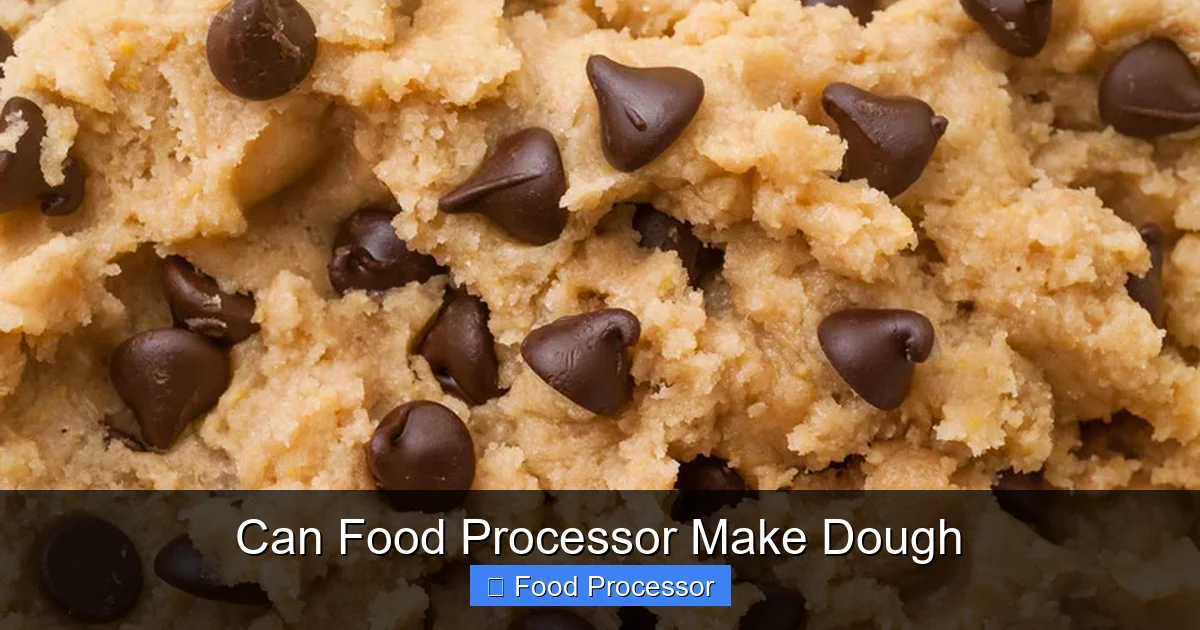
Most cookie doughs, from shortbread to chocolate chip, can be made effortlessly in a food processor. It handles creaming butter and sugar, then mixing in dry ingredients, with ease.
Scones and Biscuits
Similar to pie crusts, the food processor is perfect for creating light and fluffy scones and biscuits. It quickly incorporates cold butter, yielding tender results.
Quick Breads and Muffins
For batters that don’t require much gluten development, like banana bread, cornbread, or muffins, the food processor makes quick work of combining ingredients.
Lighter Yeast Doughs
Yes, a food processor can make dough that contains yeast! For lighter yeast doughs like pizza dough, focaccia, or even some rustic bread loaves, the food processor can handle the initial mixing and a brief kneading period. However, it’s generally not ideal for very large batches or highly elastic, stiff bread doughs that require prolonged, intensive kneading. For specific recipes like roti, you might want to look into the best food processor for roti dough to ensure optimal results.
Essential Equipment You’ll Need
To successfully make dough in your food processor, ensure you have these items:
- Food Processor: Of course! Make sure it’s clean and in good working order. A larger capacity (10-14 cups) is generally better for dough, allowing more room for ingredients to circulate.
- Standard S-Blade: This is the multi-purpose blade that comes with most food processors, designed for chopping and mixing. It’s the only blade you’ll need for dough.
- Measuring Cups and Spoons: Accuracy is key in baking, especially when making dough in a food processor.
- Scraper/Spatula: For scraping down the sides of the work bowl.
- Floured Surface: A clean counter or pastry board for turning out and briefly shaping the dough.
Step-by-Step Guide: How to Make Dough in a Food Processor
Here’s a general guide that applies to most doughs. We’ll use a pie crust as a primary example since it demonstrates many key techniques.
Step 1: Gather and Prepare Your Ingredients
Precision is important when you want your food processor to make dough perfectly. Measure all your ingredients accurately. For doughs requiring fat (like butter for pie crust), ensure your butter is very cold and cut into small cubes (about 1/2 to 1 inch). This helps create those desirable pockets of fat that lead to flakiness.
Visual guide about Can Food Processor Make Dough
Image source: tastingtable.com
Visual guide about Can Food Processor Make Dough
Image source: img.freepik.com
- Tip: Place your flour in the freezer for 10-15 minutes before starting, especially on a warm day, to keep everything as cold as possible for flaky doughs.
Step 2: Assemble Your Food Processor
Place the standard S-blade into the work bowl of your food processor. Make sure the lid is ready to secure properly. Always ensure the food processor is unplugged during assembly for safety.
Step 3: Combine Dry Ingredients
Add your dry ingredients – flour, salt, sugar (if any) – to the food processor work bowl. Secure the lid. Give it a few quick pulses (2-3 seconds each) to combine them evenly. This aeration also helps ensure your food processor make dough with an even texture.
Step 4: Incorporate Cold Fat (For Pie Crusts, Biscuits, Scones)
If you’re making a dough that requires cold fat, add the cubed cold butter or shortening to the dry ingredients in the food processor. Secure the lid.
- Pulse, Don’t Blend: Use the “pulse” function in short bursts, about 1-2 seconds each. Continue pulsing until the fat is cut into pea-sized pieces, or smaller, depending on the desired texture. For flaky crusts, aim for a mix of pea-sized and crumbly bits. This step should take less than a minute.
- Avoid Overmixing: Be careful not to over-process at this stage. You don’t want a uniform paste, but rather a crumbly mixture with visible pieces of fat.
Step 5: Add Liquid Gradually
This is a crucial step when you want your food processor make dough. With the food processor running, slowly pour your cold liquid (water, milk, eggs, etc.) through the feed tube in a steady stream. For most doughs, especially pie crusts, cold liquid is essential. You’ll add just enough for the dough to come together.
- Observe Carefully: As the liquid is added, watch the dough. It will start to clump together and form a ball, or at least a shaggy mass that gathers around the blade. Stop adding liquid as soon as this happens.
- Patience is Key: Don’t dump all the liquid in at once. Sometimes you’ll need less or more than the recipe calls for, depending on your flour and environment. Continue pulsing until it just comes together.
- Don’t Overdo It: For a flaky pie crust, you want the dough to just come together. If you’re wondering how long can you leave a food processor running when making dough, the answer is usually not long at all! Overmixing will develop too much gluten, resulting in a tough crust.
Step 6: Assess Dough Consistency
Once the dough has formed, stop the food processor. Carefully remove the lid and blade. Pinch a small piece of dough between your fingers. It should hold together without being sticky or overly crumbly. If it’s too dry, add liquid a teaspoon at a time and pulse briefly. If it’s too wet, add a tablespoon of flour and pulse.
Step 7: Turn Out and Briefly Knead (If Necessary)
For most doughs made in a food processor (like pie crust), simply turn the dough out onto a lightly floured surface. Gently gather it into a cohesive ball or disc. Avoid heavy kneading; a few gentle folds are usually sufficient to bring it completely together. For yeast doughs, you might give it 30-60 seconds of light kneading on a floured surface, or even a few more short pulses in the processor if your recipe calls for it, being mindful not to overheat the motor or overwork the gluten. Some specialized recipes might require specific food processors, such as finding the best food processor for thick dough recipes, but for most home cooks, the general technique applies.
Step 8: Chill the Dough
Most doughs, especially those with fat (pie crust, cookies), benefit from chilling. Wrap the dough tightly in plastic wrap and refrigerate for at least 30 minutes (or as the recipe specifies). Chilling allows the gluten to relax, the fat to firm up, and the flavors to meld, making the dough easier to handle and resulting in a better final product.
Practical Tips for Success When a Food Processor Make Dough
- Don’t Overfill: Respect your food processor’s capacity. Overfilling can lead to uneven mixing and strain the motor. If you have a large recipe, consider splitting it into two batches.
- Pulse, Pulse, Pulse: This cannot be stressed enough. The “pulse” button is your best friend when a food processor make dough. It gives you precise control, preventing overmixing and overheating.
- Scrape Down the Sides: Periodically stop and scrape down any flour or ingredients clinging to the sides of the work bowl to ensure everything is incorporated evenly.
- Use Cold Water/Ice Water: For flaky pastry doughs, using ice-cold water (or even a few ice cubes pulsed with the water) is crucial.
- Know Your Dough: Different doughs behave differently. A pie crust will be shaggy, while a cookie dough might form a more cohesive ball. Understand what the ideal consistency for your specific dough should be.
- Consider Your Food Processor: While a food processor can handle many tasks, it’s not always a direct replacement for a stand mixer, especially for very large quantities or extremely stiff doughs that need extensive kneading. If you’re often wondering can a food processor be used as a stand mixer, the answer is “sometimes, for certain tasks,” but they have different strengths.
Troubleshooting Common Dough-Making Issues
Even with the best intentions, sometimes things don’t go perfectly. Here are some common issues and how to fix them when your food processor make dough:
Dough is Too Dry and Crumbly
- Cause: Not enough liquid or too much flour.
- Fix: With the food processor running, add cold liquid (water, milk) one teaspoon at a time through the feed tube, pulsing after each addition, until the dough just comes together.
Dough is Too Sticky
- Cause: Too much liquid.
- Fix: Remove the dough from the processor, dust it lightly with flour on a floured surface, and gently knead it a few times until it’s less sticky. Don’t add too much flour at once, or the dough will become tough.
Dough is Tough or Rubbery
- Cause: Overmixing! You’ve developed too much gluten. This is a common pitfall when a food processor make dough quickly.
- Fix: Unfortunately, there’s not much you can do to “undo” overmixing. For pie crusts, it might result in a less tender crust. For yeast doughs, it might be denser. Try to be more cautious with pulsing next time. Allowing the dough to rest for an extended period (chilling) can help relax the gluten somewhat.
Fat Isn’t Evenly Incorporated (For Pastry)
- Cause: Not enough pulsing, or fat was too warm.
- Fix: If the fat pieces are too large, you can try a few more pulses, but be careful not to overmix and melt the butter. Ensure your butter is very cold next time.
Conclusion: Embrace Your Food Processor for Dough!
The answer to “can food processor make dough” is a resounding yes! It’s a powerful, efficient, and surprisingly easy way to prepare a wide variety of doughs, saving you time and effort while delivering excellent results. From flaky pie crusts that will impress everyone to tender cookies and even straightforward bread doughs, your food processor is an invaluable ally in the kitchen.
By understanding its capabilities, using the pulse function wisely, and following these simple steps and tips, you’ll soon be confidently using your food processor to create perfect doughs for all your baking adventures. So go ahead, dust off that appliance, and let your food processor make dough for your next culinary masterpiece. And if for some reason you don’t have a food processor available, don’t despair, there are still ways to achieve great results, as explored in what to do if you don’t have a food processor for dough. Happy baking!
