

Unlocking the full potential of your food processor is easier than you think! This guide will walk you through everything from proper assembly and ingredient preparation to mastering its controls and advanced techniques. You’ll learn how to use your appliance safely and efficiently, transforming your cooking experience and making meal prep a breeze. Get ready to chop, shred, and puree with confidence and ease.
How to Make Food Processor Work
Welcome to the wonderful world of effortless meal prep! A food processor is one of the most versatile and time-saving appliances you can have in your kitchen. It can chop, slice, shred, grate, mix, and even knead dough in mere seconds, drastically cutting down your cooking time. But if you’re new to using one, or perhaps you’ve had it sitting in your cupboard because you’re unsure how to make food processor work correctly, you’re in the right place.
This comprehensive guide will demystify your food processor. We’ll cover everything from safe setup and proper assembly to understanding its controls, mastering various processing techniques, and troubleshooting common hiccups. By the end of this article, you’ll be confident in making your food processor work efficiently and safely, ready to tackle any recipe with ease.
Key Takeaways
- Safety First: Always prioritize safety by reading your manual, ensuring proper assembly, and keeping hands clear of moving parts.
- Correct Assembly is Crucial: Your food processor won’t work if the bowl, blade, and lid aren’t correctly aligned and locked into place.
- Ingredient Preparation Matters: Cut ingredients into uniform, manageable pieces to ensure even processing and prevent motor strain.
- Master the Pulse Function: Pulsing gives you greater control over texture, preventing over-processing and achieving desired results like coarse chops or fine crumbs.
- Don’t Overload: Overfilling the work bowl can lead to uneven processing, motor overheating, and potential damage to your appliance.
- Clean Thoroughly After Each Use: Disassemble all parts carefully and wash them promptly to maintain hygiene and prolong your food processor’s lifespan.
- Troubleshoot Common Issues: Be familiar with simple fixes for problems like the unit not turning on or the blade not spinning to keep your machine running smoothly.
Understanding Your Food Processor
Before we dive into making your food processor work, let’s quickly review its basic anatomy. Knowing the different parts helps with both assembly and understanding how the machine operates.
Key Components
- Motor Base: This is the heaviest part, housing the powerful motor that drives the blades and discs.
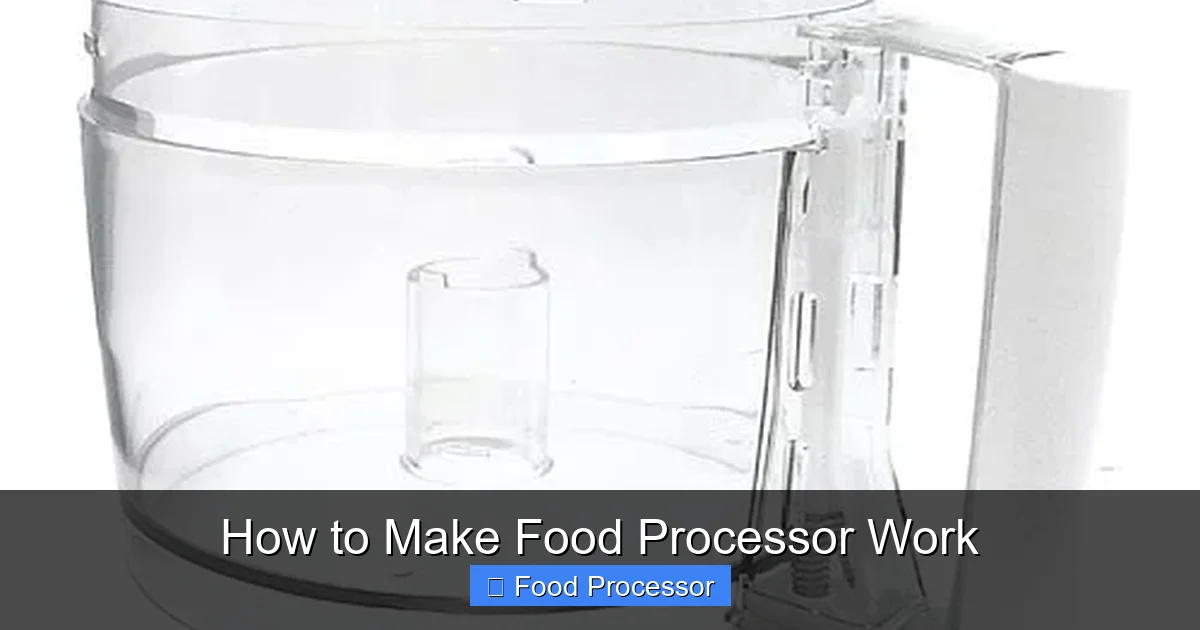
- Work Bowl: The main container where food is processed. It usually has a handle and locking tabs.
- Lid: Secures onto the work bowl, often featuring a feed tube and pusher. Most food processors have safety interlocks that prevent the machine from operating unless the lid is properly locked.
- Feed Tube and Pusher: The tube in the lid allows you to add ingredients while the machine is running, and the pusher helps guide them down towards the blades or discs.
- Blades: The S-blade (or chopping blade) is your go-to for chopping, pureeing, mixing, and kneading. Some models come with mini blades for smaller tasks.
- Discs: These sit on top of a disc stem and are used for slicing, shredding, or grating. Common types include reversible slicing/shredding discs and grating discs.
- Disc Stem (or Spindle): This accessory fits onto the motor shaft inside the work bowl and holds the discs in place.
- Controls: Typically include “On,” “Off,” and “Pulse” buttons. Some models offer different speed settings.
Safety First: Read the Manual
Every food processor is slightly different. Even if you’ve used one before, it’s always a good idea to quickly consult your specific model’s instruction manual. It will provide details on its unique safety features, proper assembly, and cleaning instructions. Prioritizing safety is paramount to ensure your food processor works without incident.
Step-by-Step Assembly
Proper assembly is critical for your food processor to work. Most food processors have safety mechanisms that prevent them from turning on if not assembled correctly. Here’s a general guide:
Visual guide about How to Make Food Processor Work
Image source: cuisinart.com
Securing the Work Bowl
First, place the motor base on a clean, stable, and dry countertop. Then, take the work bowl and place it onto the motor base. You’ll usually need to twist or rotate it clockwise until it clicks securely into place. You should feel it lock, ensuring a stable connection to the motor shaft.
Inserting the Blade or Disc
Next, carefully insert your chosen accessory. If you’re chopping, pureeing, or mixing, use the S-blade. Grasp the blade by its central plastic hub, *never* the sharp edges, and carefully lower it onto the motor shaft in the center of the work bowl. Make sure it sits all the way down. If you’re slicing or shredding, first place the disc stem (spindle) onto the motor shaft, then carefully place the chosen disc on top of the stem, ensuring the cutting edge faces up.
For a detailed visual guide and more tips on setting up your appliance, you might find our article on How To Assemble Food Processor Step By Step particularly helpful.
Attaching the Lid
This is often where people get stuck. Place the lid onto the work bowl, aligning the locking tabs on the lid with the corresponding slots on the bowl’s handle. Twist the lid clockwise until it securely locks into place. You might hear a click or feel it engage. The safety interlock switch, usually located on the lid or handle, must be properly aligned for the food processor to work. If the lid isn’t locked, the motor will not engage when you press “On” or “Pulse.”
Preparing Your Ingredients for Processing
Proper ingredient preparation is key to making your food processor work efficiently and achieve consistent results. It also prevents your motor from straining.
Sizing Matters
For most tasks, cut your ingredients into uniform pieces that are small enough to fit comfortably into the feed tube (if using discs) or directly into the work bowl without exceeding the maximum fill line. Overloading or using overly large pieces can lead to uneven processing, where some pieces are pulverized while others remain whole.
Batch Processing
Avoid overfilling the work bowl. Most food processors have a maximum liquid or dry fill line. If you have a large quantity of ingredients, process them in smaller batches. This allows the blades to move freely and process everything evenly.
Liquid Ingredients
When adding liquids, use the feed tube while the machine is running (on a low speed or continuous setting) for even incorporation, especially when making dressings or emulsifying sauces. For large amounts of liquid, ensure it doesn’t exceed the liquid fill line to prevent leaks from the lid.
For specific tasks like chopping, consider how to optimize your ingredients. For instance, if you’re looking to efficiently chop vegetables in a food processor, cutting them into roughly 1-inch pieces often yields the best outcome.
Powering On and Using Controls
Once assembled and loaded, it’s time to make your food processor work its magic. Familiarize yourself with the control panel.
Plugging It In Safely
Ensure the food processor is turned off or in the ‘Off’ position before plugging it into a grounded electrical outlet. This prevents accidental startup.
Mastering the Pulse Function
The “Pulse” button is your best friend for precision. When you press “Pulse,” the motor runs only as long as you hold the button down. This gives you bursts of power, ideal for:
- Coarse Chopping: For onions, nuts, or herbs, use short pulses (1-2 seconds) to achieve a desired texture without over-processing.
- Controlling Consistency: It allows you to check the consistency between pulses and stop exactly when you’ve reached your goal.
- Starting Tough Ingredients: A few pulses can break down harder foods before continuous processing.
- Mixing Lightly: For gently incorporating ingredients without over-mixing.
Utilizing Continuous Speed
The “On” or continuous speed setting keeps the motor running constantly until you press “Off.” This is best for:
- Pureeing: Making smooth sauces, soups, or baby food.
- Emulsifying: Creating mayonnaise or dressings while slowly adding oil through the feed tube.
- Kneading Dough: Many food processors can quickly mix and knead dough for bread or pastry.
- Shredding/Slicing: When using the discs, continuous speed ensures a steady flow of ingredients through the feed tube for consistent results.
Always start with the pulse function if you’re unsure, especially with delicate ingredients, to avoid over-processing.
Optimal Processing Techniques
Different tasks require different approaches to make your food processor work optimally. Here are some common techniques:
For Chopping and Mincing
Use the S-blade. Place evenly sized ingredients (e.g., carrots, celery, onions) into the work bowl. Use short, quick pulses. Process until desired consistency is reached. Remember to scrape down the sides of the bowl between pulses if needed. For very fine mincing, continue pulsing, but be careful not to turn it into a puree.
For Shredding and Slicing
Use the appropriate shredding or slicing disc. Place the ingredients in the feed tube. Turn the food processor to the “On” or continuous setting. Use the food pusher to gently guide the ingredients through the feed tube. Do not force the pusher down, as this can damage the motor or yield uneven results. Let the blade do the work. This technique is perfect for quickly shredding cabbage in a food processor for coleslaw or prepping vegetables for stir-fries.
For Pureeing and Emulsifying
Use the S-blade. Add ingredients to the work bowl. Turn the food processor to the “On” setting and let it run until smooth. For emulsifying (like making mayo), gradually drizzle liquids through the feed tube while the machine is running until the mixture thickens and combines.
For Doughs and Batters
Use the S-blade or a specialized dough blade if your model includes one. Add dry ingredients first, then slowly add wet ingredients through the feed tube while pulsing or running on a continuous setting. Process until a dough ball forms and cleans the sides of the bowl, or until the batter is just combined. Be careful not to overmix, especially with pastries, to avoid tough results.
Essential Safety Precautions
Operating your food processor safely is just as important as knowing how to make food processor work. Always keep these points in mind:
Keep Hands Clear
Never, ever put your hands into the work bowl while the unit is plugged in, let alone running. The blades are extremely sharp. Always use the food pusher for the feed tube and a spatula for scraping down the sides or removing food once the machine is off and unplugged.
Never Overfill
Respect the maximum fill lines for both dry and liquid ingredients. Overfilling can lead to leaks, strain the motor, and result in poorly processed food.
Unplug When Not in Use
Always unplug your food processor when assembling, disassembling, cleaning, or when you are not actively using it. This eliminates any risk of accidental startup.
Wait for Blades to Stop
Before removing the lid or work bowl, ensure that the blades or discs have come to a complete stop. They can continue to spin for a few seconds after the motor is turned off.
After Use: Disassembly and Cleaning
Once you’re done making your food processor work, proper disassembly and cleaning are crucial for hygiene and maintaining the appliance.
Safe Disassembly
First and foremost, UNPLUG the unit. Once unplugged, carefully remove the lid. Then, grasping the blade or disc by its plastic hub (or the disc stem), carefully lift it out of the work bowl. Place it in a safe spot, away from busy areas. Finally, unlock and remove the work bowl from the motor base.
Thorough Cleaning
Wash all removable parts (work bowl, lid, blade, discs, pusher) immediately after use. Most parts are dishwasher-safe, but check your manual for specific instructions. Handwashing with warm, soapy water is always a safe bet. Be extremely cautious when handling sharp blades and discs. Use a brush to clean around crevices if necessary. Wipe the motor base with a damp cloth; never immerse it in water.
Troubleshooting Common Issues
Sometimes, even when you follow all the steps, your food processor might not seem to work as expected. Here are a few common issues and their solutions:
Food Processor Won’t Turn On
This is often the most frustrating problem. Here are some checks:
- Is it Plugged In? Sounds obvious, but double-check the power cord is securely plugged into a working outlet.
- Proper Assembly: The most common reason for a food processor not starting is improper assembly. Ensure the work bowl and lid are correctly aligned and locked into place. The safety interlock mechanism must be engaged for the motor to start.
- Overheating: If you’ve been processing for a long time or with very tough ingredients, the motor might have overheated. Unplug the unit and let it cool down for 15-30 minutes before trying again.
For more in-depth guidance, you can refer to our article on How To Fix A Food Processor That Is Not Turning On.
Blade Not Spinning or Jammed
If the motor runs but the blade isn’t spinning, or it makes a humming noise and struggles:
- Overload: You might have too much food in the work bowl, or the pieces are too large or too hard. Remove some ingredients and try again in smaller batches.
- Improper Blade Placement: Ensure the S-blade or disc stem is fully seated on the motor shaft.
- Obstruction: A large, hard piece of food might be wedged under the blade, preventing it from turning. Unplug, carefully remove the obstruction, and try again.
If you’re experiencing a situation where your food processor blade isn’t spinning, don’t worry, there are solutions. You can find detailed steps and advice in our guide on How To Fix Food Processor Blade Not Spinning.
Uneven Processing
If some food is chopped finely while other pieces are still large, it usually points to:
- Unevenly Sized Ingredients: As mentioned, cut ingredients into uniform pieces.
- Overfilling: Too much food prevents proper circulation and even contact with the blades.
- Insufficient Pulsing/Processing Time: You might need more pulses or a longer continuous run to achieve desired consistency.
Conclusion
Congratulations! You now have a comprehensive understanding of how to make food processor work, from initial setup to advanced techniques and troubleshooting. This powerful kitchen tool is designed to simplify your cooking and expand your culinary horizons. By following these steps and prioritizing safety, you’ll be confidently chopping, shredding, pureeing, and mixing like a pro in no time. Embrace the efficiency and versatility your food processor offers, and enjoy the extra time it gives you back in the kitchen!
