
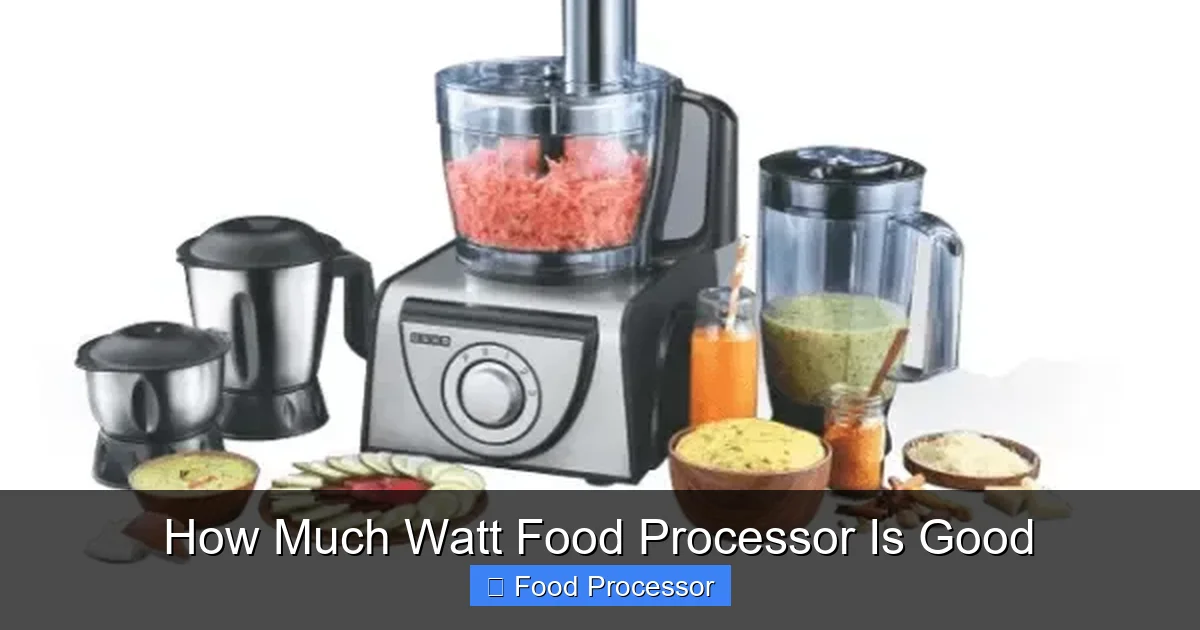
Choosing the right food processor wattage is key to culinary success. This guide helps you understand how different power levels affect performance, from light chopping to heavy-duty kneading. Learn to match wattage with your specific cooking needs to ensure efficiency, durability, and perfect results every time. It covers compact to full-size models, explaining what tasks each wattage range handles best and what other features to consider for an informed purchase.
How Much Watt Food Processor Is Good
Choosing a food processor can feel a bit like a puzzle. You look at all the different models, and one number often stands out: the wattage. But what does that number really mean? And more importantly, how much watt food processor is good for *your* kitchen and *your* cooking style?
You’re not alone if you’ve wondered about this. Many people assume higher wattage always equals better performance. While there’s truth to that, it’s not the whole story. The “good” wattage for you depends entirely on what you plan to do with your food processor.
In this comprehensive guide, we’ll break down everything you need to know about food processor wattage. We’ll explore what wattage means, how it impacts performance, and help you pinpoint the ideal power level for your culinary adventures. By the end, you’ll be able to confidently choose a food processor that’s perfectly suited to your needs, ensuring efficiency, durability, and delicious results.
Key Takeaways
- Wattage is Power: A higher wattage generally means a more powerful motor, allowing the food processor to handle tougher ingredients and larger batches with ease and efficiency.
- Match Wattage to Tasks: Light tasks like chopping herbs or making dressings require less power (250-400W). Medium tasks like slicing vegetables or shredding cheese benefit from mid-range wattage (500-750W). Heavy-duty tasks like kneading dough or grinding nuts need high wattage (800W+).
- Don’t Overlook Bowl Capacity: The size of the food processor’s bowl often correlates with its motor wattage. A larger bowl usually comes with a more powerful motor to process bigger quantities effectively.
- Consider Motor Type: While wattage indicates raw power, the motor type (e.g., induction vs. universal) affects noise levels, lifespan, and consistent performance, especially under heavy loads.
- Balance Wattage with Quality: A very high wattage doesn’t automatically mean the best food processor. Look for a reputable brand with good build quality, sharp blades, and sturdy construction to ensure durability and safety alongside power.
- Pulse Function is Your Friend: Regardless of wattage, using the pulse function gives you greater control, prevents over-processing, and is gentler on the motor, extending the life of your appliance.
Understanding Food Processor Wattage
First things first, let’s demystify wattage.
What is Wattage?
Wattage is a measurement of electrical power. In the context of a food processor, it tells you how much power the motor can draw and convert into mechanical energy to spin the blades. Think of it as the horsepower of your kitchen appliance. A higher wattage rating typically indicates a more powerful motor.
Why Does Wattage Matter for a Food Processor?
The wattage of a food processor directly impacts its ability to process different types of food.
- Performance: Higher wattage motors can handle tougher ingredients (like nuts, hard cheeses, or dense doughs) without straining or stalling. They can also process larger quantities more quickly and smoothly.
- Efficiency: A powerful motor works more efficiently, meaning it accomplishes tasks faster and often with less effort, reducing the time your appliance needs to run.
- Durability: A motor that doesn’t have to strain constantly to do its job is likely to last longer. If you frequently push a low-wattage food processor to its limits, its motor may wear out faster.
- Versatility: Food processors with higher wattage are generally more versatile, capable of performing a wider range of tasks, from delicate chopping to heavy-duty grinding and kneading.
Determining Your Needs: What Will You Be Processing?
This is the most crucial step in deciding how much watt food processor is good for you. Be honest about your cooking habits and the types of foods you prepare most often.
Light-Duty Tasks (250-400 Watts)
If your primary uses for a food processor are quick, simple tasks, a lower wattage model might be perfectly sufficient.
- Examples: Chopping herbs, mincing garlic, making salad dressings, preparing small batches of dips, whisking eggs, or pureeing baby food.
- Who it’s for: Occasional cooks, individuals living alone, or those with very limited kitchen space who opt for compact or mini food processors.
Medium-Duty Tasks (500-750 Watts)
This is the sweet spot for many home cooks. A mid-range wattage handles a good variety of everyday tasks without being excessively powerful or expensive.
- Examples: Slicing and shredding vegetables (like for salads, stir-fries, or coleslaw), making breadcrumbs, blending salsas, making pestos, processing cooked meats, or mixing cake batters.
- Who it’s for: Regular home cooks who prepare meals daily, families, or those who enjoy baking and experimenting in the kitchen.
Heavy-Duty Tasks (800 Watts and Above)
When you need serious power for demanding tasks, a high-wattage food processor is the way to go.
- Examples: Kneading stiff bread dough, grinding hard cheeses, making nut butter from scratch, processing large quantities of ingredients, crushing ice, or pureeing tough fibrous vegetables. You might also want a higher wattage if you frequently shred chicken in your food processor.
- Who it’s for: Avid bakers, serious home chefs, people who cook for large families, those who regularly meal prep, or anyone who frequently tackles challenging food processing tasks.
Recommended Wattage Ranges for Different Food Processor Sizes
Food processor wattage often correlates with the size of the processing bowl. Generally, larger bowls need more powerful motors to handle the increased volume of ingredients.
Compact/Mini Food Processors (250-400 Watts)
These are typically 1-4 cup capacity bowls.
- Good for: Small tasks, single servings, limited counter space. They are excellent for quickly chopping small amounts of nuts, garlic, or herbs.
- Limitations: Not designed for large batches, stiff dough, or very hard ingredients.
Mid-Size Food Processors (500-750 Watts)
These usually come with 7-9 cup bowls.
- Good for: Most everyday cooking needs. They strike a good balance between power, capacity, and price. This range is generally what to consider when buying a food processor for a versatile kitchen.
- Limitations: Might struggle with very stiff dough or extremely tough ingredients in large quantities.
Full-Size/Large Food Processors (800-1200+ Watts)
These models boast 10-14 cup bowls, or even larger for some professional models.
- Good for: Large families, meal prepping, serious baking, and handling almost any task you throw at them. If you frequently knead dough or make big batches of sauces, this is where you want to be.
- Limitations: Can be bulky and more expensive.
Professional/Commercial Grade Food Processors (1000 Watts and Above)
While primarily for commercial kitchens, some high-end home models approach this wattage.
- Good for: Unparalleled power, durability, and continuous use. These are built to withstand constant, heavy-duty processing.
- Limitations: Often very expensive, large, and sometimes overkill for the average home cook.
Beyond Wattage: Other Factors to Consider
While “how much watt food processor is good” is a key question, wattage isn’t the only metric. Several other factors contribute to a food processor’s overall performance and user experience.
Motor Type
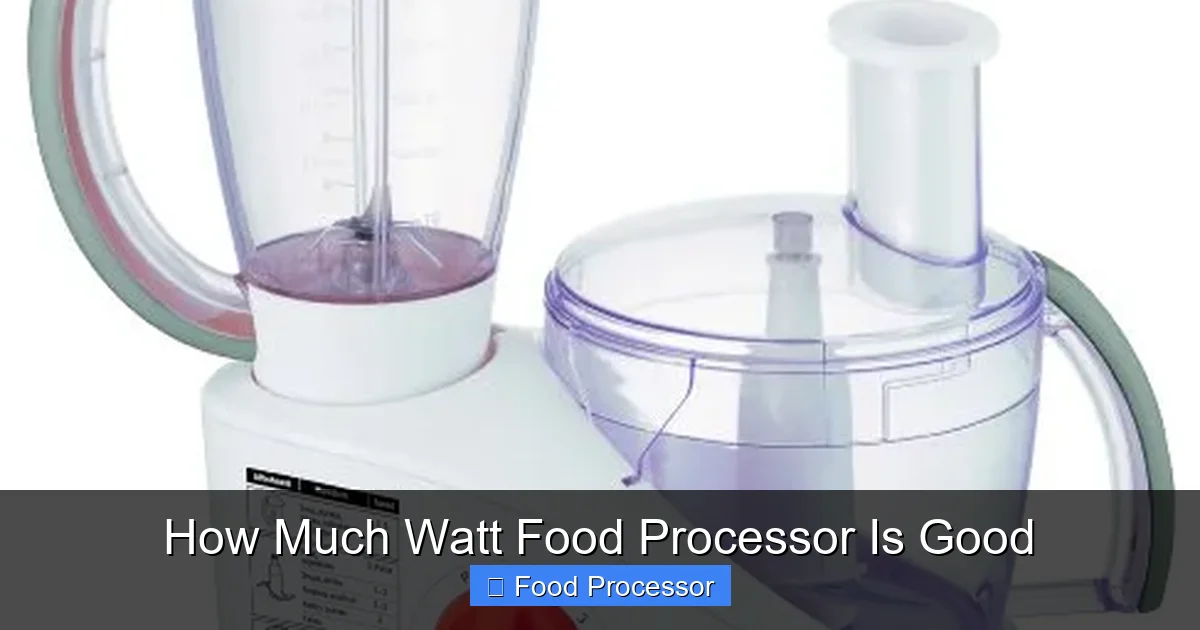
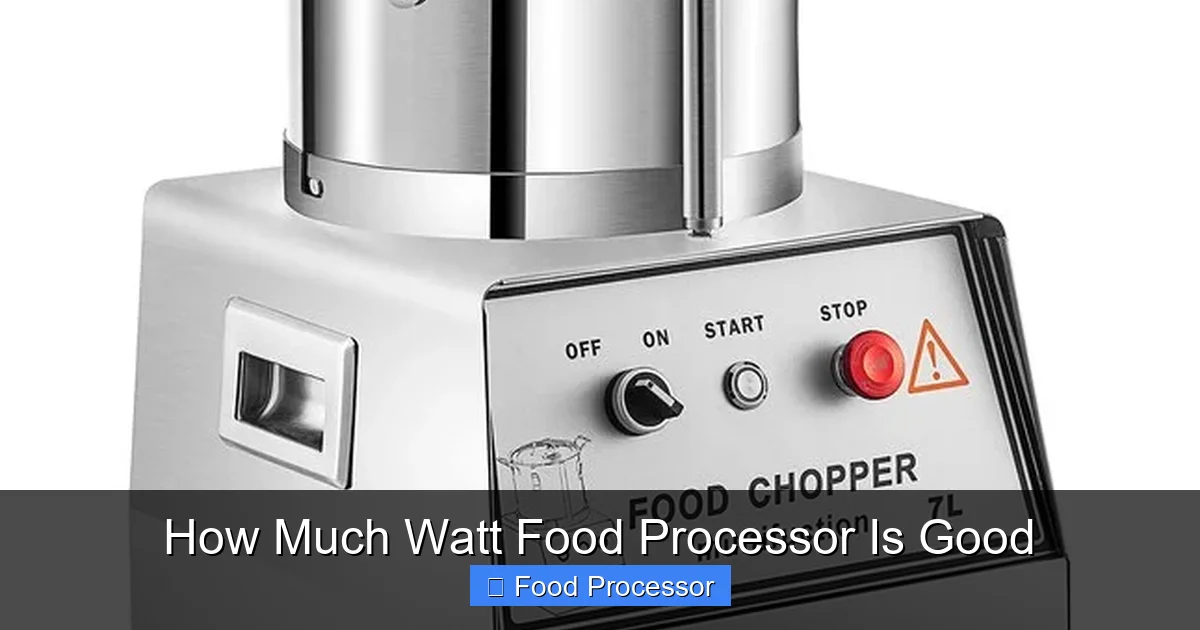
There are two main types of motors in food processors:
Visual guide about How Much Watt Food Processor Is Good
Image source: foodprocessorsstore.com
Visual guide about How Much Watt Food Processor Is Good
Image source: mobileimages.lowes.com
- Universal Motors: These are typically found in more affordable, smaller food processors. They are powerful for their size but can be noisy and might have a shorter lifespan with heavy use.
- Induction Motors: Found in higher-end, larger models, induction motors are generally quieter, more durable, and maintain consistent speed even under heavy loads. They tend to be more efficient but also increase the appliance’s weight and cost.
Bowl Capacity
The size of the processing bowl is just as important as the motor’s power. A high-wattage motor with a tiny bowl won’t be useful for large batches, and a large bowl with a weak motor will struggle. Consider how to choose the right size food processor to match your cooking volume. A general rule of thumb:
- 1-4 cups: Mini/Compact – great for small jobs.
- 7-9 cups: Mid-size – good for most families and everyday tasks.
- 10-14+ cups: Full-size – ideal for large families, entertaining, or serious meal prep.
Blade Quality and Material
Even the most powerful motor is useless without sharp, durable blades. Look for stainless steel blades that are robust and designed to stay sharp over time. Different blades and discs (slicing, shredding, grating) also enhance versatility.
Attachments and Accessories
Many food processors come with a variety of attachments beyond the standard S-blade. These can include:
- Slicing discs (adjustable thickness is a plus)
- Shredding/grating discs
- Dough blades
- Whisking attachments
- Small work bowls for mini tasks
Consider which attachments would be most useful for your specific cooking needs.
Brand Reputation and Warranty
Reputable brands often offer better build quality, reliable motors, and excellent customer support. Look for good warranties, especially on the motor, as this indicates the manufacturer’s confidence in their product. Brands like Cuisinart are well-known, and knowing how much does a Cuisinart food processor cost can give you an idea of the investment involved in quality.
Price
Food processors vary widely in price, from under $50 to several hundred dollars. Generally, higher wattage and better build quality come with a higher price tag. Setting a budget can help narrow down your options, and knowing how much does a food processor cost at Walmart or other retailers can give you a starting point for budget planning.
Matching Wattage to Your Kitchen Habits
Let’s summarize how to pick the right wattage based on your culinary persona:
Occasional Cook / Beginner
If you only use a food processor a few times a month for basic chopping or mixing, a model in the 250-450W range with a smaller bowl (3-7 cups) is probably perfect. It’s budget-friendly and won’t take up too much space.
Everyday Home Cook / Family Cook
For daily meal prep, batch cooking, or a variety of tasks like shredding, slicing, and pureeing, aim for a food processor in the 500-750W range with an 8-11 cup bowl. This offers a great balance of power and versatility for most family needs.
Serious Home Chef / Baker / Entertainer
If you frequently tackle tough tasks like kneading dough, making nut butter, grinding meat, or preparing large quantities for parties, you’ll benefit most from an 800W+ food processor with a 12-16 cup bowl. This provides the robust power and capacity needed for demanding culinary projects.
Tips for Maximizing Performance (Regardless of Wattage)
Even with the perfect wattage, proper technique can significantly improve your food processor’s performance and longevity.
Don’t Overload the Bowl
Always process ingredients in batches if necessary. Overfilling the bowl forces the motor to work harder, can lead to uneven processing, and may cause premature wear.
Cut Food into Uniform Pieces
Before adding food to the processor, cut larger items into roughly similar-sized pieces. This helps ensure even processing and prevents the motor from struggling with very large, dense chunks.
Use the Pulse Function
The pulse function is your best friend. Instead of holding down the “on” button, use short bursts. This gives you more control, prevents over-processing, and is gentler on the motor, especially when starting with tough ingredients.
Proper Assembly
Ensure all parts, especially the bowl and lid, are correctly locked into place before starting. A food processor won’t operate if the safety mechanisms aren’t engaged. If you’re unsure, follow a guide on how to assemble food processor step by step to ensure everything is secure.
Regular Maintenance and Cleaning
Keep your blades sharp and clean your food processor after each use. Food residue can build up and affect performance. Refer to your manual for specific cleaning instructions.
Troubleshooting Common Power-Related Issues
Sometimes, even a good wattage food processor can seem to underperform or stop working. Here are a few common issues and solutions:
Food Processor Not Turning On
If your food processor won’t start, it’s often a safety lock issue. Ensure the bowl and lid are correctly assembled and locked into place. Check the power cord connection and try a different outlet. If these don’t work, there might be an internal issue. For specific guidance, you can check resources like how to fix a food processor that is not turning on.
Motor Straining or Slowing Down
This is usually a sign of overloading. Reduce the amount of food in the bowl, or cut larger ingredients into smaller pieces. If it persists, ensure your ingredients aren’t too hard or dense for your food processor’s wattage.
Motor Overheating
If you smell burning or the motor gets very hot, immediately turn off and unplug the appliance. Let it cool down completely. Overheating can be caused by continuous running for too long, overloading, or processing very tough ingredients. Always allow the motor to rest between batches, especially with lower wattage models.
Conclusion
Choosing how much watt food processor is good for your kitchen doesn’t have to be complicated. By understanding what wattage means and honestly assessing your culinary needs, you can make an informed decision.
Remember, it’s about matching the tool to the task. A powerful 1000W machine is overkill for chopping a single onion, just as a 300W mini-processor will struggle with a batch of bread dough. Focus on your typical recipes, the types of ingredients you handle, and the quantity you usually process.
Factor in bowl capacity, blade quality, and additional features, but always start with wattage as your foundation. With this guide, you’re now equipped to select a food processor that will be a reliable, efficient, and powerful partner in your kitchen for years to come. Happy processing!
