

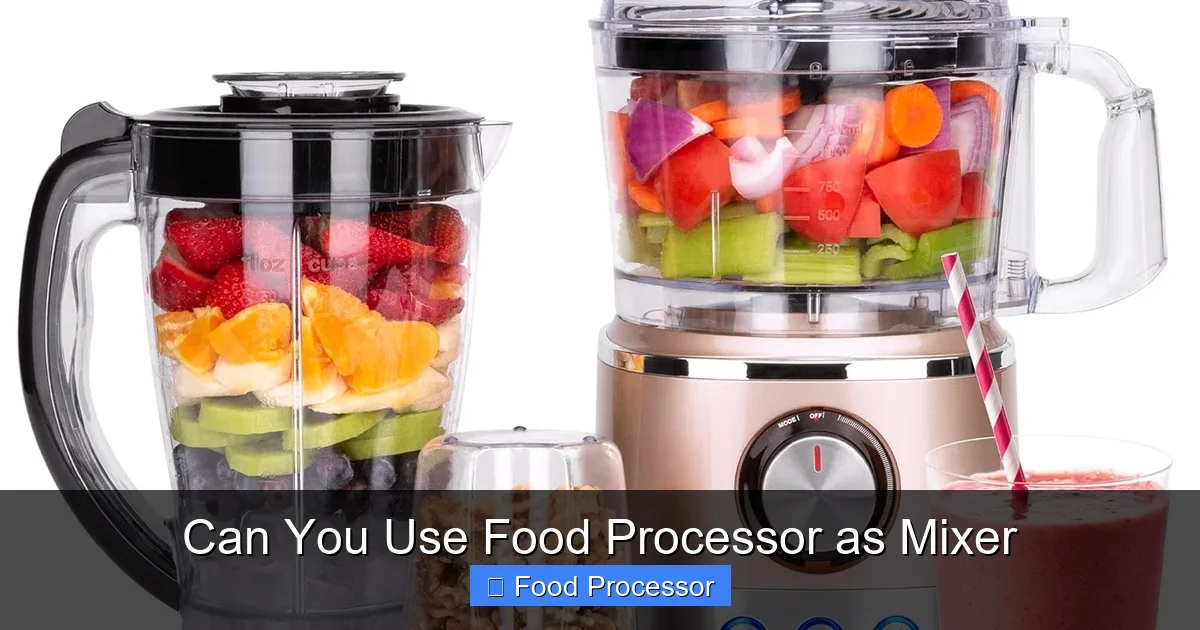
Yes, you *can* use a food processor as a mixer for many kitchen tasks, but it’s important to understand its strengths and limitations. While excellent for quickly combining ingredients and making certain doughs, its sharp blades are not ideal for incorporating air or delicate whipping. This guide will show you when and how to effectively use your food processor as a mixer, ensuring successful outcomes without overworking your ingredients or your machine.
Can You Use Food Processor as Mixer?
Have you ever found yourself in the middle of a recipe, needing to mix ingredients, only to realize your stand mixer is packed away, or perhaps you don’t even own one? Many home cooks wonder, “Can I use my food processor as a mixer?” It’s a fantastic question, and one we hear often. The short answer is yes, you absolutely can use a food processor as a mixer for many tasks, but there are important caveats.
Your trusty food processor is a versatile kitchen workhorse. It chops, slices, shreds, and purees with ease. But can it step in when a recipe calls for creaming butter and sugar, or kneading dough? The answer depends largely on the specific task, the ingredients involved, and how you use the machine.
In this comprehensive guide, we’re going to dive deep into the world of using your food processor as a mixer. We’ll explore what tasks it excels at, when it’s best to reach for a different tool, and provide you with step-by-step instructions, practical tips, and troubleshooting advice. By the end, you’ll be a pro at making the most of your food processor’s mixing capabilities, confidently whipping up everything from pie crusts to cookie doughs!
Key Takeaways
- Food processors can mix: They are excellent for quick mixing of dry ingredients, making stiff doughs (like pie crusts), thicker batters, and emulsifications.
- Not ideal for airy tasks: Avoid using a food processor for whipping egg whites, heavy cream, or creating light, airy cake batters, as its sharp blades will cut rather than aerate.
- Pulse is your best friend: The pulse function offers precise control, preventing overmixing and overheating, which are common pitfalls when using a food processor as a mixer.
- Attachment matters: The S-blade (universal blade) is suitable for most mixing, but a dedicated dough blade (if available) is superior for kneading.
- Watch for overmixing: Food processors work very quickly. Overmixing can lead to tough doughs, dense baked goods, or broken emulsions.
- Specific tasks excel: Think pie dough, cookie dough, quick bread batters, hummus, and vinaigrettes as prime candidates for food processor “mixing.”
- Know the difference: Understand that a food processor’s primary function is chopping and processing, while a traditional mixer is designed for aerating and thoroughly combining wet ingredients.
Understanding the Tools: Food Processor vs. Mixer
Before we get into the nitty-gritty of using your food processor as a mixer, it’s crucial to understand the fundamental differences between these two kitchen appliances. While they both feature motors and bowls, their primary functions and how they achieve them are quite distinct.
A traditional mixer, whether it’s a stand mixer or a hand mixer, is designed primarily for *aerating* and *combining* ingredients. Its attachments, like whisks, beaters, and dough hooks, are engineered to incorporate air, cream fats, and develop gluten in doughs through a folding and stretching action. They typically operate at varying speeds, allowing for gentle folding or vigorous beating. If you’re curious about the specifics, you can learn more about what is the difference between food processor and mixer.
On the other hand, a food processor is built for *processing* ingredients. Its most common attachment, the S-blade (or universal blade), features sharp, rotating blades that chop, grind, and puree by cutting through food. While some food processors come with plastic dough blades or even whisk attachments, their core design focuses on rapid, high-speed cutting. This fundamental difference in action is key to understanding when your food processor can mimic a mixer and when it simply can’t.
When Can Your Food Processor Act as a Mixer?
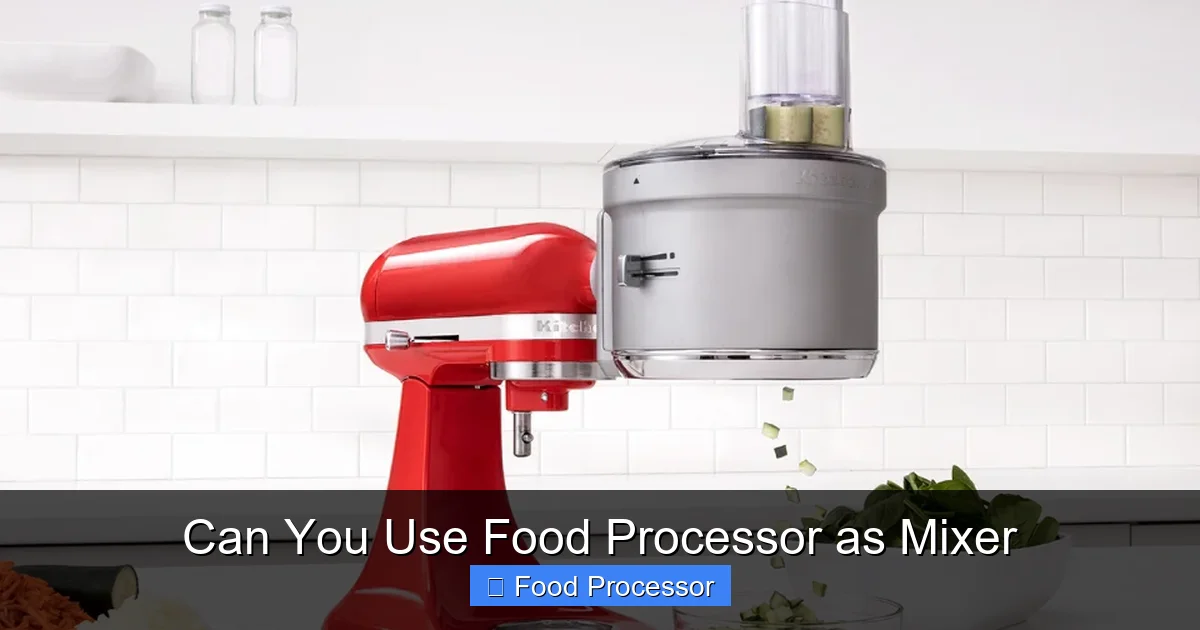
Visual guide about Can You Use Food Processor as Mixer
Image source: images.ctfassets.net
Your food processor can be a surprisingly effective “mixer” for several common kitchen tasks. The key is to leverage its power for quick, efficient combining rather than delicate aeration.
Mixing Stiff Doughs
This is where a food processor truly shines as a mixer substitute. Its powerful motor and sharp blades are excellent for quickly cutting fat into flour, which is ideal for pastries and some cookie doughs.
- Pie Crusts and Pastry Dough: The pulse function allows you to quickly cut cold butter or shortening into flour, creating those perfect pea-sized crumbs without overworking the dough. This process is much faster than doing it by hand.
- Cookie Dough (Thicker Varieties): For sturdier cookie doughs, especially those that benefit from minimal gluten development, a food processor can combine ingredients effectively. Think shortbread or basic sugar cookie dough.
- Quick Bread Doughs: Many quick breads and muffins require simply combining wet and dry ingredients until just mixed. The food processor can handle this with a few quick pulses.
- Certain Yeast Doughs: For some no-knead or rustic bread doughs that require minimal kneading, a food processor with a plastic dough blade (if available) can combine ingredients and initiate gluten development. However, it’s not ideal for prolonged, intensive kneading like a stand mixer. If you’re wondering if can a food processor be used as a stand mixer for these tasks, the answer is generally yes for initial mixing, but not for heavy-duty kneading.
Making Thicker Batters
For batters that don’t rely heavily on aeration, your food processor can do the job.
- Muffin and Quick Bread Batters: As mentioned, these typically need only a few pulses to come together. The goal is to mix until just combined to avoid toughness.
- Pancake and Waffle Batters: For a lump-free batter, a food processor can quickly blend ingredients. Be careful not to overmix.
Creaming Butter and Sugar (with caution)
While not its primary strength, you can carefully cream butter and sugar in a food processor for certain recipes. The key is to use very soft (but not melted) butter and pulse strategically. The sharp blades can melt the butter if run continuously, so control is paramount. This method won’t incorporate as much air as a mixer, resulting in a denser product.
Emulsifying
This is another area where the food processor performs exceptionally well as a mixer.
- Mayonnaise: The continuous action of the blades, combined with a slow drizzle of oil through the feed tube, creates a perfect emulsion.
- Vinaigrettes and Dressings: Quickly blend oil, vinegar, herbs, and spices into a well-combined dressing.
Making Spreads and Dips
Though often considered “processing,” these tasks involve combining multiple ingredients into a smooth mixture, which is a form of mixing.
- Hummus, Pesto, Nut Butters: The food processor excels at blending these ingredients into creamy, uniform textures.
When NOT to Use Your Food Processor as a Mixer
Visual guide about Can You Use Food Processor as Mixer
Image source: c8.alamy.com
While versatile, the food processor has limitations when it comes to mixing. Its fundamental design, with sharp, high-speed blades, makes it unsuitable for tasks that require air incorporation or delicate handling.
- Whipping Egg Whites or Heavy Cream: This is the most crucial distinction. The sharp blades of a food processor will *cut* the proteins in egg whites or the fat globules in cream, preventing them from forming stable, airy peaks. Instead of fluffy meringue or whipped cream, you’ll get a watery, often gritty mess. For these tasks, a hand mixer or stand mixer with a whisk attachment is essential.
- Light, Airy Cake Batters: Cakes that rely on creaming butter and sugar until light and fluffy, or folding in aerated egg whites, will not achieve the desired texture in a food processor. The aggressive action will overmix the batter, leading to a dense, tough crumb.
- Delicate Folding of Ingredients: If a recipe calls for gently folding in ingredients like chocolate chips, berries, or nuts, a food processor will crush or pulverize them. These tasks are always best done by hand.
- Prolonged Kneading of Yeast Doughs: While a food processor can *start* a yeast dough, it’s not designed for the long, slow kneading that develops gluten effectively in many bread recipes. The rapid action can overheat the dough, which kills yeast and affects texture. Plus, it puts a lot of strain on the motor.
- Merengues and Soufflés: Any recipe requiring a significant volume of incorporated air for lift and lightness is off-limits for the food processor.
Essential Food Processor Attachments for “Mixing”
To effectively use your food processor as a mixer, knowing your attachments is key.
- The S-Blade (Universal Blade): This is your go-to blade for most mixing tasks. Its sharp, curved design is excellent for chopping, pureeing, and, with careful pulsing, combining ingredients. It works well for pie dough, thick cookie doughs, and quick batters.
- Dough Blade (Plastic Blade): Some food processors come with a dedicated plastic dough blade. This blade is designed to push and fold dough rather than cut it, reducing friction and heat. If you have one, use it for bread doughs or heavier batters. It’s generally gentler on the motor and the dough itself.
- Whisk Attachment (Rare): A few high-end food processor models include a whisk attachment, which functions more like a traditional mixer’s whisk. If you have this, it’s the only way you’ll get any aeration for egg whites or cream in a food processor. Most standard models do not have this.
How to Use Your Food Processor as a Mixer: Step-by-Step Guide
Using your food processor to mix requires a slightly different technique than traditional mixing. The key is control and speed.
Step 1: Choose the Right Attachment
Always start by selecting the appropriate blade. For most general mixing, the metal S-blade is sufficient. If you’re working with dough, especially yeast dough, and your food processor came with a plastic dough blade, use that. Ensure the blade is securely seated on the spindle.
Step 2: Add Dry Ingredients First
For recipes involving flour, sugar, and other dry ingredients, add them to the food processor bowl first. This helps ensure they are evenly combined before liquids are introduced. Secure the lid.
Step 3: Pulse to Combine Dry Ingredients
Use the pulse function several times to thoroughly mix your dry ingredients. This step is quick, usually just 5-10 pulses. The goal is to distribute everything evenly, preventing pockets of unmixed flour.
Step 4: Add Cold Fats (if applicable)
If your recipe calls for cold butter or shortening (like for pie crust), add it in cubes over the dry ingredients. Pulse until the fat is cut into the flour mixture to your desired consistency (e.g., pea-sized crumbs for pie dough). For other recipes, like thicker cookie doughs, you can add softened butter after the dry ingredients are combined.
Step 5: Gradually Introduce Wet Ingredients
This is a critical step. For most recipes, you’ll add wet ingredients (eggs, milk, water, oil) through the feed tube while the machine is either pulsing or running continuously on low (if the recipe calls for it). Adding slowly helps the ingredients emulsify or combine evenly without shocking the mixture.
Step 6: Use the Pulse Function – Your Best Friend!
The pulse button is your secret weapon when using a food processor as a mixer. Instead of letting the machine run continuously, which can overmix ingredients or generate too much heat, use short bursts.
- For Doughs: Pulse in 1-2 second increments until the dough just comes together. Stop immediately when it forms a ball or crumbly mixture.
- For Batters: Pulse just enough times (e.g., 5-10 pulses) to combine the wet and dry ingredients. A few lumps are often desirable in quick breads and muffins.
Step 7: Scrape Down the Sides
Periodically stop the food processor and scrape down the sides of the bowl with a spatula. Ingredients can stick to the sides, leading to uneven mixing. This ensures everything gets incorporated.
Step 8: Monitor Consistency – Don’t Overmix!
Food processors are powerful and fast. Overmixing is a common pitfall. Keep a close eye on the mixture. As soon as it reaches the desired consistency – whether it’s a shaggy dough, a crumbly mixture, or a just-combined batter – stop the machine. Overmixing can develop too much gluten in doughs (making them tough) or create a dense texture in batters. If you need a more general guide on how to use your food processor, check out our article on how do you use a food processor step by step.
Example: Mixing Pie Dough in a Food Processor
- Add flour, salt, and sugar to the food processor bowl with the S-blade. Pulse 2-3 times to combine.
- Add cold, cubed butter (or shortening) over the dry ingredients.
- Pulse in 1-second bursts about 10-15 times, until the butter is cut into pea-sized pieces. Avoid over-processing.
- With the machine running, slowly drizzle ice water through the feed tube, 1 tablespoon at a time, until the dough just starts to come together and forms a ball or cohesive crumbs. Stop immediately.
- Remove the dough, gently form into a disk, wrap, and chill.
Tips for Successful “Mixing” with a Food Processor
To get the best results when using your food processor as a mixer, keep these tips in mind:
- Don’t Overfill: Your food processor has a maximum liquid capacity line. For dry ingredients and doughs, don’t fill the bowl more than two-thirds full. This allows ingredients to move freely and mix properly.
- Prioritize the Pulse Function: We can’t stress this enough. Pulsing gives you control, prevents overheating, and ensures you don’t overmix. Continuous running is rarely needed for mixing tasks.
- Add Liquids Slowly: When adding liquids to dry ingredients or fats, do so gradually through the feed tube while pulsing or running on a low setting. This allows for better absorption and emulsification.
- Keep an Eye on Temperature: Especially with doughs, the friction from the blades can generate heat. If your dough feels warm, it’s a sign of over-processing or continuous running. This is particularly important for delicate items like pie crusts.
- Scrape Down Regularly: Ingredients can get stuck to the sides or bottom of the bowl. Stop the machine, scrape everything down with a spatula, and then resume pulsing.
- Know Your Food Processor’s Limits: If your machine struggles or the motor sounds strained, you might be asking too much of it. Food processors are powerful, but they aren’t designed for sustained, heavy-duty kneading like some stand mixers. If you’re using it for an extended period, be mindful of how long can you leave a food processor running to prevent overheating.
- Practice Makes Perfect: Like any new technique, using your food processor as a mixer might take a little practice. Start with simple recipes and pay close attention to the texture changes.
Troubleshooting Common Issues
Even with the best intentions, you might run into a few snags when using your food processor for mixing.
- Ingredients Not Combining Evenly:
- Solution: Ensure you’re not overfilling the bowl. Stop and scrape down the sides more frequently. Add liquids very slowly. Increase the number of pulses slightly, but still use short bursts.
- Dough Becoming Tough or Oily:
- Solution: This is almost always a sign of overmixing or running the machine continuously. The dough has developed too much gluten or the fat has been overworked/melted. Next time, use fewer, shorter pulses and stop as soon as the dough just comes together.
- Mixture Too Liquid/Runny:
- Solution: Double-check your recipe measurements. If ingredients like butter were too soft or melted, it could affect the consistency. Over-processing can also break down ingredients too much.
- Motor Straining or Overheating:
- Solution: This indicates the machine is overloaded or being run for too long on a heavy task. Reduce the batch size. Ensure you’re using the pulse function for heavy loads, and give the motor a rest if it feels hot.
Conclusion
So, can you use a food processor as a mixer? Absolutely, for a significant number of tasks! Your food processor is a highly capable appliance that can step in for your mixer when it comes to combining dry ingredients, cutting in fat for pastries, mixing thick batters, and creating smooth emulsifications. It’s a fantastic solution for making quick doughs and certain spreads.
However, it’s vital to respect its limitations. For delicate tasks that require air incorporation, like whipping cream or egg whites, or for creating light and airy cake batters, a traditional mixer is still the undisputed champion. The key to success lies in understanding the difference in how these machines operate and mastering the pulse function.
By following the tips and techniques outlined in this guide, you can confidently integrate your food processor into your baking and cooking routine, maximizing its utility and making your time in the kitchen more efficient. Happy mixing (and processing)! Remember, if you’re ever in a bind and don’t have a dedicated mixer, your food processor can often be a surprisingly effective alternative. In fact, many people find it to be a very capable tool when they ask, can you use food processor instead of mixer?
