
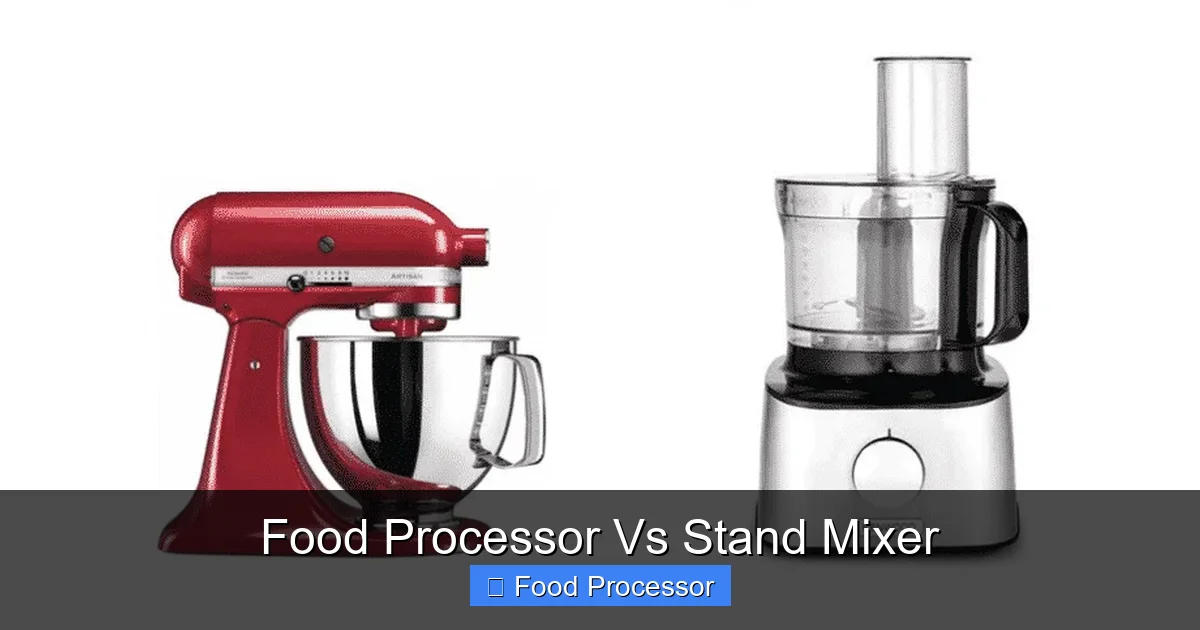
Deciding between a food processor vs stand mixer can be tricky, as both are powerful kitchen appliances, but they excel at very different tasks. A food processor is your go-to for chopping, slicing, shredding, and pureeing, while a stand mixer is indispensable for mixing, whipping, and kneading dough. Understanding their unique strengths will help you choose the right tool for every culinary creation.
Food Processor Vs Stand Mixer: A Comprehensive Guide
In the bustling world of modern kitchens, two appliances often stand out as essential workhorses: the food processor and the stand mixer. Both promise to save you time and effort, transforming daunting culinary tasks into simple pleasures. Yet, they are fundamentally different tools, designed for distinct purposes. If you’ve ever found yourself wondering whether to reach for your food processor or your stand mixer, or perhaps you’re debating which one to invest in first, you’ve come to the right place.
This comprehensive guide will demystify the “food processor vs stand mixer” debate. We’ll dive deep into what each appliance does best, explore their unique features, and compare their capabilities across various kitchen tasks. By the end, you’ll have a clear understanding of their strengths and weaknesses, empowering you to make informed decisions for your cooking and baking adventures.
Key Takeaways
- Core Functions Differ: Food processors specialize in prep work like chopping, slicing, and shredding, while stand mixers are built for aeration, mixing, and kneading.
- Blade vs. Attachment Power: Food processors use razor-sharp S-blades and various discs for quick, powerful processing, whereas stand mixers rely on planetary action with paddle, whisk, and dough hook attachments for thorough, consistent mixing.
- Dough Handling: Stand mixers are superior for yeast doughs due to their consistent kneading, while food processors can make quick pastry doughs but often overmix delicate doughs.
- Aeration Tasks: For whipping egg whites, cream, or making light batters, a stand mixer’s whisk attachment and consistent speed are unmatched. Food processors struggle with significant aeration.
- Versatility vs. Specialization: A food processor offers more versatility for various prep tasks beyond mixing, while a stand mixer is a highly specialized tool for baking and heavy-duty mixing.
- Consider Your Needs: Your primary cooking and baking habits should dictate which appliance takes priority. Frequent bakers need a stand mixer; those focused on meal prep benefit more from a food processor.
- Complementary Tools: Ideally, a well-equipped kitchen might benefit from having both appliances, as they perfectly complement each other’s capabilities.
Understanding the Food Processor
A food processor is a versatile kitchen appliance designed for rapid, efficient food preparation. Think of it as your personal assistant for chopping, slicing, shredding, grinding, and pureeing ingredients in mere seconds.
What It Is and How It Works
At its core, a food processor consists of a sturdy base housing a powerful motor, a work bowl with a lid, and a central spindle onto which various blades and discs attach. The motor spins these attachments at high speeds, allowing them to process ingredients quickly.
Key Features and Attachments of a Food Processor
- S-Blade (Universal Blade): This is the primary blade, resembling an “S” shape. It’s used for chopping, mincing, pureeing, mixing, and kneading small batches of dough.
- Slicing Disc: A flat disc with a sharp blade that slices ingredients uniformly. You can often adjust the thickness.
- Shredding/Grating Disc: A disc with raised teeth designed to shred cheese, vegetables, or other ingredients.
- Dough Blade (Plastic Blade): Some food processors come with a blunt, plastic dough blade, specifically designed for mixing and kneading dough, though it’s less effective than a stand mixer’s dough hook for yeast doughs.
- Pusher/Feed Tube: Located on the lid, this allows you to add ingredients while the machine is running, particularly useful for slicing and shredding.
Primary Functions of a Food Processor
Food processors excel at:
- Chopping & Mincing: Onions, garlic, herbs, nuts – a few pulses and they’re perfectly minced.
- Slicing & Shredding: Vegetables like carrots, potatoes, cabbage, or cheese can be uniformly sliced or shredded in moments. Need to shred cabbage for coleslaw? A food processor makes it a breeze.
- Pureeing: Smooth soups, sauces, hummus, baby food, or nut butter.
- Grinding: Nuts for flour, breadcrumbs, or even meat (with caution and appropriate models).
- Making Dough: Primarily for quick doughs like pie crusts, biscuits, or certain bread doughs that don’t require extensive kneading.
Pros and Cons of a Food Processor
Pros:
- Speed: Incredibly fast for prep tasks.
- Versatility: Can perform many different functions with various attachments. In fact, understanding what are the advantages of a food processor truly highlights its all-around utility.
- Consistency: Provides uniform chopping, slicing, and shredding.
- Ease of Use: Generally straightforward to operate once assembled.
Cons:
- Limited Aeration: Not ideal for whipping cream or egg whites.
- Over-processing Risk: Easy to turn ingredients into mush if not careful.
- Noise: Can be quite loud during operation.
- Cleaning: Multiple parts can sometimes make cleanup a bit cumbersome.
Understanding the Stand Mixer
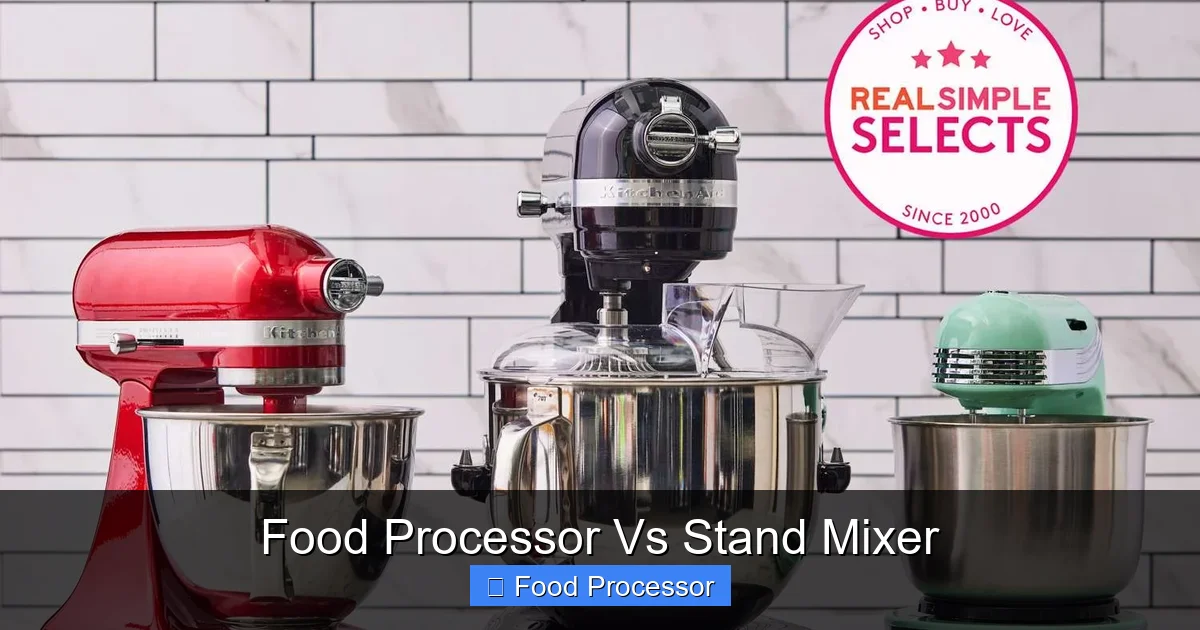
A stand mixer is a dedicated mixing machine, designed to tackle a wide range of baking and cooking tasks that involve combining, beating, whipping, and kneading ingredients. It’s a baker’s best friend.
Visual guide about Food Processor Vs Stand Mixer
Image source: kitchenaiding.com
What It Is and How It Works
A stand mixer features a heavy base that houses a powerful motor, a locking head (tilt-head or bowl-lift), and a sturdy bowl that locks into place. The motor drives attachments in a planetary mixing action, meaning the attachment spins on its own axis while also orbiting around the inside of the bowl, ensuring thorough mixing.
Key Features and Attachments of a Stand Mixer
- Flat Beater (Paddle Attachment): The most common attachment, used for creaming butter and sugar, mixing batters, mashing potatoes, and making cookies or cakes.
- Wire Whip (Whisk Attachment): Ideal for incorporating air into ingredients, perfect for whipping egg whites, cream, and light batters.
- Dough Hook: Specifically designed for kneading yeast doughs for breads, pizzas, and pasta. Its shape mimics hand kneading.
- Mixing Bowl: Typically made of stainless steel, glass, or ceramic, these bowls are deep and designed for substantial mixing.
- Speed Control: Multiple speed settings allow for precise control over the mixing process, from gentle stirring to high-speed whipping.
Primary Functions of a Stand Mixer
Stand mixers excel at:
- Mixing Batters: Cakes, cookies, muffins, pancakes.
- Kneading Dough: Breads, pizzas, pasta, brioche – the dough hook is invaluable for developing gluten.
- Whipping: Egg whites for meringue, heavy cream for whipped cream, or creating fluffy frostings.
- Creaming: Butter and sugar together until light and fluffy.
- Mashing: Large batches of potatoes or other root vegetables.
Pros and Cons of a Stand Mixer
Pros:
- Hands-Free Operation: Once started, you can often walk away and tend to other tasks.
- Superior Kneading: Unmatched for developing gluten in yeast doughs.
- Excellent Aeration: Whips air into ingredients beautifully for light, fluffy results.
- Large Capacity: Bowls are generally large enough for big batches.
- Durability: Often built with robust metal gears for longevity.
Cons:
- Specialized: Primarily a mixing tool, not designed for chopping or slicing.
- Expensive: Can be a significant investment.
- Heavy & Bulky: Takes up considerable counter or storage space.
- Not for Small Batches: Can sometimes struggle with very small quantities of ingredients.
Food Processor Vs Stand Mixer: A Direct Comparison
Now that we’ve explored each appliance individually, let’s put them head-to-head on common kitchen tasks. Understanding what is the difference between food processor and mixer is crucial here.
Visual guide about Food Processor Vs Stand Mixer
Image source: missvickie.com
1. Dough Making
Food Processor:
- Best for: Quick doughs like pie crust, pastry, biscuits, shortbread, or scone dough. The sharp blade quickly cuts cold butter into flour, preventing overworking.
- Limitations: Not ideal for yeast doughs that require extensive kneading to develop gluten. The high speed can overwork the dough, and the blade can sometimes “chop” the gluten strands rather than stretching them, leading to a tougher texture.
Stand Mixer:
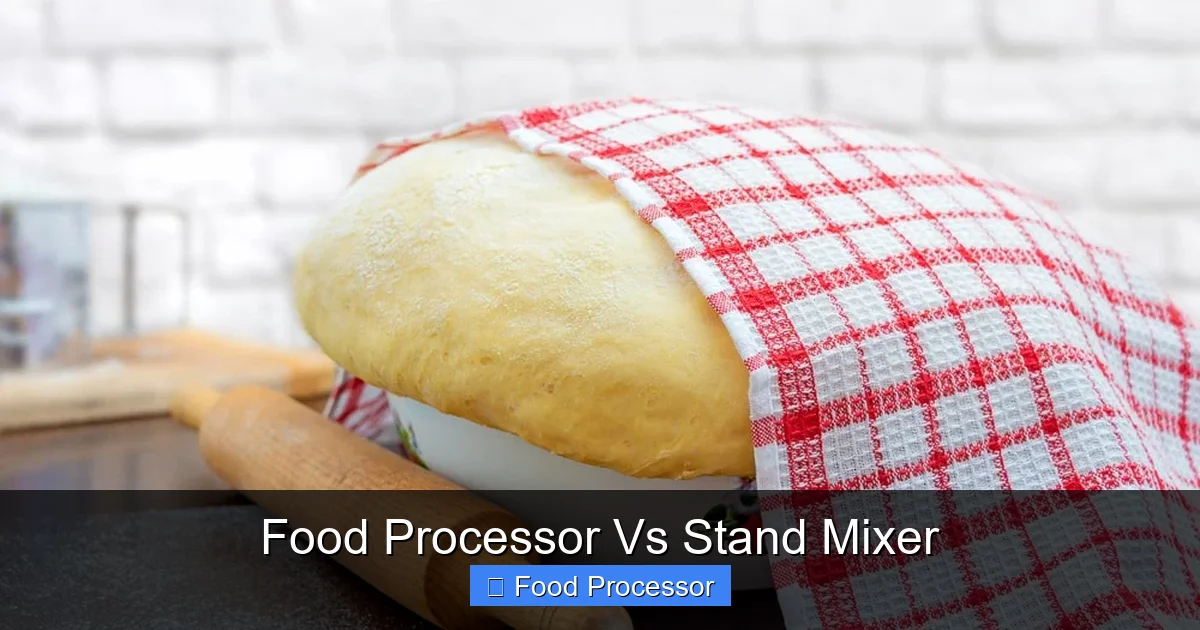
- Best for: All yeast doughs (bread, pizza, brioche, pasta), cookie doughs, cake batters. The dough hook mimics hand kneading, developing gluten effectively without overheating. The paddle attachment is perfect for thoroughly combining cookie and cake ingredients.
- Limitations: Not suitable for cutting cold butter into flour for flaky pastry. The paddle attachment is too gentle for this task, and the dough hook is for kneading, not combining butter into flour finely.
2. Whipping and Aerating
Food Processor:
- Limitations: Poor for whipping. While you can sometimes get a loose whipped cream or foamy egg whites in a food processor using the S-blade, it’s inefficient and won’t achieve the stiff peaks or airy volume a stand mixer can. It tends to create more foam than true aeration.
Stand Mixer:
- Best for: Whipping egg whites for meringue, heavy cream for dessert toppings, or making light, airy batters and frostings. The wire whip attachment is specifically designed to incorporate maximum air, creating stable, voluminous results.
3. Chopping, Slicing, Shredding, & Grinding
Food Processor:
- Best for: This is where the food processor shines. Rapidly chop vegetables, nuts, herbs. Perfectly slice potatoes, cucumbers, or shred cheese and cabbage with specialized discs. Grind spices, make breadcrumbs, or coarse purees.
- Limitations: Not designed for very delicate cuts that require precision knife skills, but excellent for bulk prep.
Stand Mixer:
- Limitations: Cannot chop, slice, shred, or grind ingredients. These functions are entirely outside its capabilities.
4. Pureeing and Emulsifying
Food Processor:
- Best for: Smooth purees like hummus, pesto, baby food, or smooth soups. It’s also excellent for emulsifying dressings and sauces, like mayonnaise, by slowly adding oil through the feed tube.
Stand Mixer:
- Limitations: Not suitable for pureeing or emulsifying. Its attachments are designed to mix and beat, not to break down solids into a smooth consistency.
5. Mixing Batters and Spreads
Food Processor:
- Limited Use: Can mix thick batters quickly, but careful not to overmix. It can also make nut butters or chunky spreads effectively.
Stand Mixer:
- Best for: Blending cake batters, cookie doughs, and combining ingredients for various recipes smoothly and thoroughly with the paddle attachment. Its planetary action ensures all ingredients are incorporated from the sides and bottom of the bowl.
When to Use Which Appliance
When to Reach for Your Food Processor:
- When you need to quickly chop a large quantity of onions, garlic, or other vegetables.
- When preparing a batch of homemade pesto or hummus.
- For shredding cheese for tacos or a gratin.
- To slice vegetables uniformly for salads or gratins.
- To make a quick pie crust or scone dough.
- When grinding nuts into flour or making breadcrumbs.
- If you’re making homemade salsa or a smooth soup.
When to Pull Out Your Stand Mixer:
- When baking bread or pizza dough that requires extensive kneading.
- To whip egg whites for meringue or a soufflé.
- For making fluffy whipped cream for desserts.
- When creaming butter and sugar for cookies or cakes.
- For mixing large batches of cookie dough or cake batter.
- If you’re making frosting or buttercream.
Can a Food Processor Be Used as a Stand Mixer (and vice versa)?
This is a common question, and the answer is usually: not effectively, or only for very limited tasks. A food processor with its S-blade can mix some thick batters or light doughs, but it lacks the planetary mixing action and specialized attachments of a stand mixer. You might be able to blend ingredients, but you won’t get the aeration for whipping or the consistent kneading for yeast dough that a stand mixer provides. While you may wonder can you use a food processor instead of a mixer for certain things, it’s generally a compromise.
Conversely, a stand mixer cannot perform any of the chopping, slicing, shredding, or pureeing tasks of a food processor. Some stand mixers offer attachments (like food grinder or pasta maker) that expand their utility, but these are separate purchases and do not replicate the core functions of a food processor. For instance, can a food processor be used as a stand mixer? It can, to a very limited extent for simple mixing, but it truly excels in its own domain.
Making the Right Choice for Your Kitchen
If your budget or kitchen space only allows for one, consider your primary cooking and baking habits:
- You Love to Bake (especially bread, cakes, cookies, and meringues): A stand mixer is likely your best investment. Its ability to knead dough and whip ingredients will be invaluable.
- You Love to Cook (and need help with prep work, sauces, and purees): A food processor will be a game-changer. It will drastically cut down on chopping, slicing, and shredding time.
- If you do a bit of both: Consider which tasks you find most tedious or time-consuming, and let that guide your decision. Many home cooks eventually find having both appliances beneficial, as they complement each other so well. You might also want to think about how to choose the right size food processor if you lean towards that side.
Practical Tips for Maximizing Both Appliances
For Your Food Processor:
- Don’t Overfill: Process in batches if necessary to ensure even results and prevent the motor from straining.
- Use the Pulse Function: For chopping and mincing, pulse rather than continuously running the motor. This gives you more control and prevents over-processing.
- Add Liquids Slowly: When making dressings or mayonnaise, use the feed tube to drizzle in liquids gradually while the processor is running.
For Your Stand Mixer:
- Scrape the Bowl: Periodically stop the mixer and scrape down the sides of the bowl with a spatula to ensure all ingredients are incorporated.
- Start Low, Go Slow: Begin mixing on a low speed to prevent ingredients from splattering, then gradually increase to the desired speed.
- Don’t Overmix: Be mindful of recipes that specify not to overmix, especially for cakes and muffins, as it can lead to tough results.
Troubleshooting Common Issues
Food Processor Troubleshooting:
- Uneven Chopping: Often caused by overfilling or not pulsing enough. Remove some ingredients, or use shorter, more frequent pulses. Ensure ingredients are cut into similar-sized pieces before adding.
- Motor Overheating: If the motor feels hot or smells burnt, you might be overworking it. Process in smaller batches, or give the machine a break to cool down.
- Leaking from the Bowl: Check that the blade and lid are correctly assembled and locked into place. Some models aren’t designed to handle very thin liquids without some leakage.
Stand Mixer Troubleshooting:
- Ingredients Sticking to Bottom/Sides: This is normal. Regularly scrape down the bowl with a spatula to ensure everything is fully incorporated.
- Motor Straining/Overheating: Usually happens when kneading very stiff doughs or mixing extremely thick batters. Check your mixer’s capacity limits. If it feels like it’s struggling, give it a rest, or knead a portion by hand.
- Attachments Don’t Reach Bottom: The beater-to-bowl clearance might need adjustment. Most stand mixers have a screw near the attachment shaft that can be adjusted to raise or lower the attachment. Consult your owner’s manual.
Conclusion
The “food processor vs stand mixer” isn’t a battle to declare a single winner, but rather an understanding of two distinct champions in the kitchen. Each appliance offers unique benefits and excels at different culinary tasks. The food processor is your speed demon for prep work, making quick chopping, slicing, and pureeing effortless. The stand mixer, on the other hand, is the indefatigable workhorse for bakers, mastering mixing, whipping, and kneading with grace and power.
Ultimately, the best choice depends on your individual cooking style, needs, and priorities. Many seasoned home cooks eventually find that both a reliable food processor and a sturdy stand mixer are invaluable additions to their kitchen arsenal, creating a powerhouse duo that can tackle virtually any recipe you throw at them. By understanding their specific roles, you can truly unlock the full potential of your kitchen and elevate your culinary creations to new heights.
