

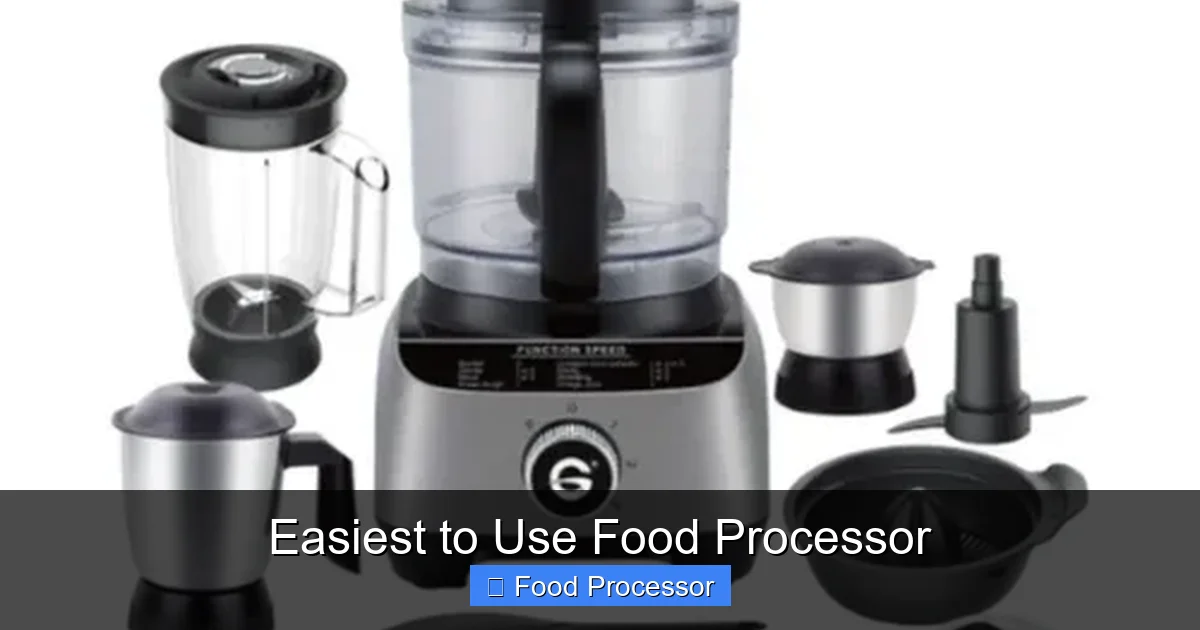
Finding the easiest to use food processor can transform your kitchen experience, making meal prep a breeze. This guide will walk you through identifying features like simple assembly, intuitive controls, and easy cleaning that define user-friendly models. Learn practical steps for basic operations, essential tips for efficient processing, and quick troubleshooting to ensure you get the most out of your hassle-free appliance.
Easiest to Use Food Processor
Welcome to the world of effortless cooking! If you’ve ever felt intimidated by kitchen gadgets or spent too much time chopping and prepping, an easy to use food processor is about to become your new best friend. This guide is designed to demystify the food processor, focusing on what makes one truly user-friendly and how you can get the most out of it without any fuss.
We’ll cover everything from choosing the simplest model to mastering its basic functions, offering practical tips and easy troubleshooting along the way. Our goal is to empower you to confidently use your food processor, saving you precious time and energy in the kitchen. Get ready to chop, slice, shred, and puree like a pro, all with the greatest ease.
Key Takeaways
- Simplicity is Key: An easy-to-use food processor prioritizes straightforward assembly, intuitive controls, and minimal, versatile attachments to streamline your kitchen tasks.
- Choose Wisely: Look for features like clearly labeled buttons, dishwasher-safe parts, a secure locking mechanism, and an appropriate size for your needs when selecting the easiest to use food processor.
- Master Basic Operations: Learn how to effectively chop, shred, slice, and puree using the pulse and continuous settings, understanding that less is often more for perfect results.
- Prep for Success: Always cut ingredients to a uniform size and avoid overfilling the work bowl to ensure consistent processing and prevent strain on your appliance.
- Effortless Cleaning: The best easy food processors have parts that detach easily and are often dishwasher safe, making cleanup as simple as the operation itself.
- Troubleshoot Simply: Most common issues, like a non-spinning blade or a processor that won’t turn on, are usually related to improper assembly or overloading, which are easily fixed.
- Maximize Versatility: Even the simplest food processors can handle a wide range of tasks, from mincing garlic to shredding cheese, saving you significant time and effort.
Understanding What Makes a Food Processor Easy to Use
When we talk about an “easiest to use food processor,” we’re really focusing on specific design and functional elements that prioritize user convenience. It’s not about lacking power or capability, but about streamlining the experience.
Simple Assembly and Disassembly
The most straightforward food processors click together intuitively. You shouldn’t have to consult the manual every time you want to assemble the bowl, blade, and lid. Look for models with clearly marked alignment points and minimal components. An easy to use food processor will often have a stack-and-snap design, where parts fit together without complex twisting or locking mechanisms.
Intuitive Controls
Forget a dizzying array of buttons. The easiest to use food processor typically features a few clear, well-labeled buttons: “On,” “Off,” and “Pulse.” The “Pulse” function is particularly important as it gives you bursts of power for precise control over consistency, preventing over-processing. Some might have a “Low” and “High” setting, but the simpler, the better for ease of use.
Dishwasher-Safe Parts
Cleanup is often the least favorite part of cooking. An easy food processor makes this a non-issue by having most, if not all, of its removable parts (bowl, lid, blades, pushers) be dishwasher safe. This saves you from tedious hand washing and allows you to enjoy your meal without dreading the aftermath.
Compact Design and Easy Storage
While not directly related to *using* the processor, how easily it fits into your kitchen and gets stored influences the overall “ease” factor. Smaller footprints, cord storage, and nesting parts contribute to a hassle-free experience both before and after use. An easy to use food processor won’t feel like a chore to pull out and put away.
Versatility with Minimal Accessories
You don’t need a dozen different blades to have a versatile food processor. The easiest models come with a sharp S-blade for chopping and pureeing, and often one reversible disc for slicing and shredding. These three tools cover 90% of what most home cooks need, eliminating the confusion of too many attachments.
Choosing Your Easiest Food Processor
Selecting the right model is the first step towards a stress-free kitchen. Here’s what to keep in mind when looking for the easiest to use food processor.
Size Matters for Your Needs
Food processors come in various sizes, usually measured by the capacity of their work bowl (e.g., 7-cup, 11-cup, 14-cup). If you’re cooking for one or two, a compact 7-cup model might be perfect. For families or those who entertain often, an 11 or 14-cup might be more suitable. Consider how to choose the right size food processor to ensure it meets your specific requirements without being too bulky or too small.
Power and Speed Settings
While simplicity is key, sufficient power is still important. Look for a motor powerful enough to handle common tasks like shredding carrots or kneading dough without bogging down. For the easiest experience, choose models with clear “low” and “high” settings, or simply an “on” and “pulse” button. Avoid models with complex digital displays or too many pre-set programs, as these can complicate operation.
Attachment Simplicity
As mentioned, fewer attachments often mean easier use. Ensure the basic S-blade and a reversible slicing/shredding disc are included. If a model comes with more, check if they store neatly or if you’ll actually use them. An easy to use food processor prioritizes essential tools over a daunting collection.
Safety Features
All modern food processors have safety interlocks, meaning they won’t operate unless the bowl and lid are correctly assembled and locked into place. This is a crucial safety feature that also guides you to proper assembly. Ensure these locking mechanisms are easy to engage and disengage.
Getting Started: Your First Steps
Once you’ve chosen your easiest to use food processor, it’s time to get it ready for action!
Unboxing and Initial Setup
Carefully remove all components from the packaging. Wash all removable parts (work bowl, lid, blades, pusher) in warm, soapy water before their first use, or run them through the dishwasher if they are machine-safe. Dry them thoroughly.
How to Assemble Your Easiest Food Processor
This is where ease truly shines. Most user-friendly models follow a simple stack-and-lock system.
-
Place the Work Bowl
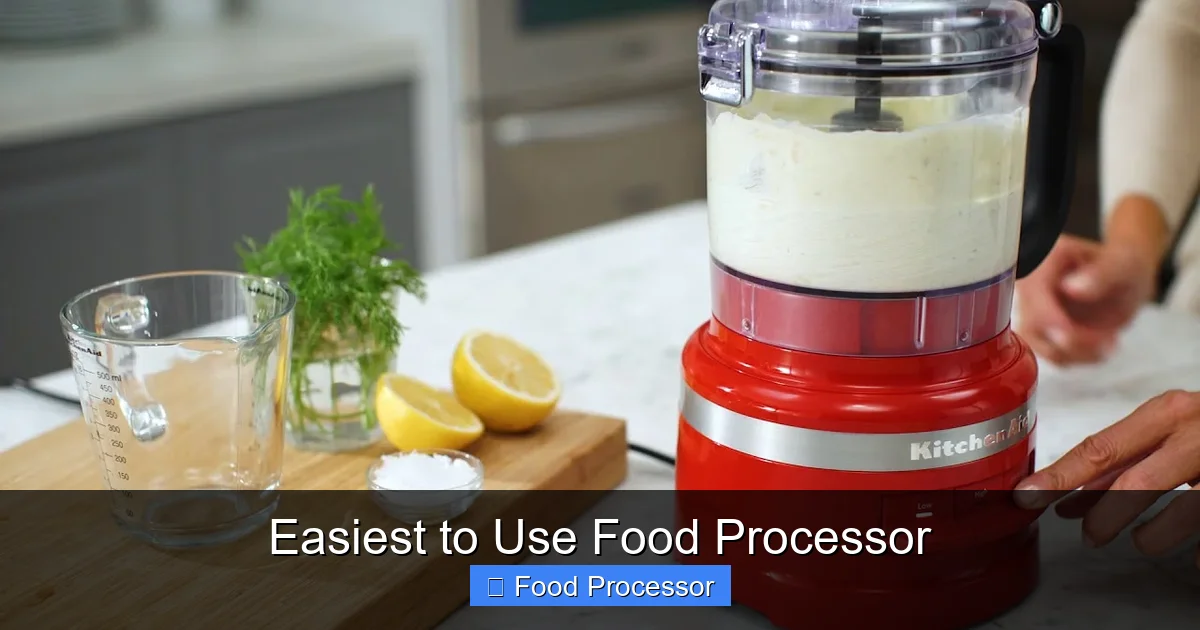
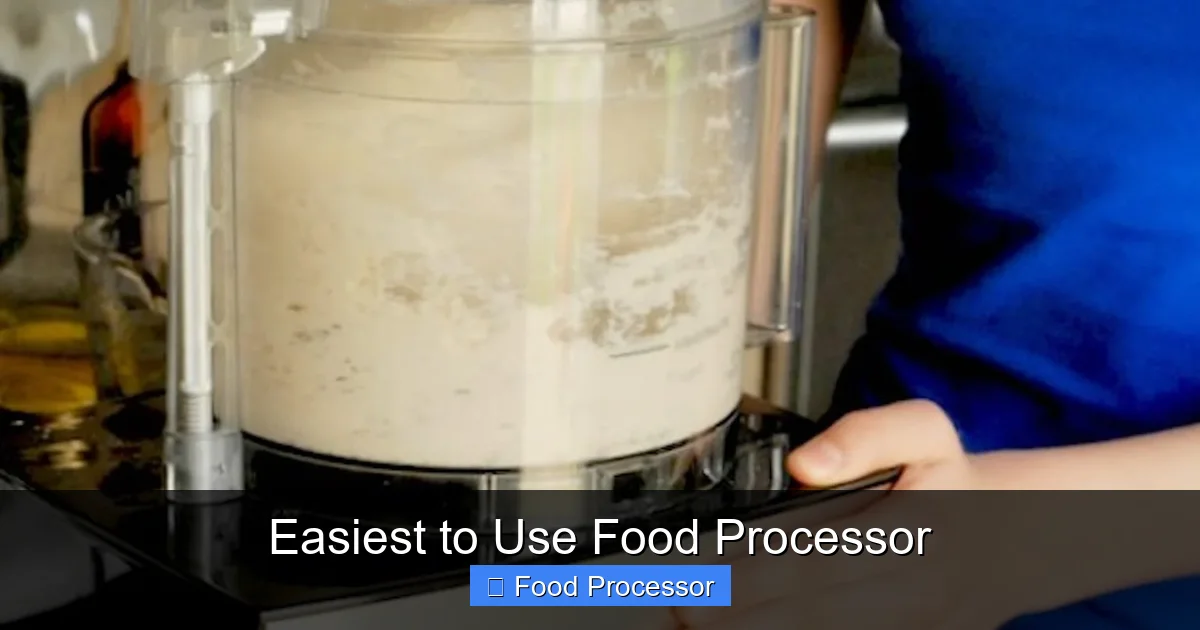
Start by placing the work bowl onto the motor base. Look for alignment arrows or notches and twist until it clicks securely into place. You can find more detailed instructions on how to assemble a food processor step by step.
Visual guide about Easiest to Use Food Processor
Image source: i.ytimg.com
Visual guide about Easiest to Use Food Processor
Image source: simpleeverydayhome.com
-
Insert the Blade or Disc
For most chopping or pureeing tasks, you’ll use the S-blade. Carefully lower it onto the spindle inside the work bowl. It should slide down easily and sit snugly. For slicing or shredding, place the disc attachment onto the spindle instead.
-
Attach the Lid
Align the lid with the work bowl, ensuring the feed tube is positioned correctly (usually facing forward). Twist the lid until it locks into place. You’ll often hear a click or feel a firm resistance, indicating it’s secure. The processor will not turn on if the lid is not properly locked.
-
Plug It In
Once fully assembled, plug your food processor into a grounded electrical outlet. Now you’re ready to add ingredients!
Safety First
Always ensure your hands are dry before plugging in or operating the appliance. Never put your hands into the work bowl when the food processor is plugged in. Always use the food pusher when feeding ingredients through the feed tube, never your fingers.
Mastering Basic Operations
Even the easiest to use food processor is incredibly versatile. Here’s how to tackle common kitchen tasks.
Chopping and Mincing
This is the most frequent use for a food processor.
-
Prep Your Ingredients
Cut larger ingredients (like onions, carrots, bell peppers) into 1-2 inch chunks. This helps them process more evenly and reduces strain on the motor. For garlic or herbs, you can often add them whole or in larger pieces.
-
Load the Bowl
Add your prepped ingredients to the work bowl with the S-blade inserted. Don’t overfill the bowl; leave some space for the food to circulate. Generally, fill to about two-thirds of the bowl’s capacity.
-
Use the Pulse Function
Press the “Pulse” button in short bursts. This gives you maximum control. For a coarse chop, pulse 3-5 times. For finer mincing, continue pulsing, checking the consistency after every few pulses. Stop when you reach your desired texture to avoid turning everything into a paste.
Shredding (e.g., Cheese, Cabbage)
Shredding is incredibly fast with an easy to use food processor.
-
Insert the Shredding Disc
Assemble the processor with the reversible shredding disc (ensure the correct side is facing up for your desired shred size). For instance, to shred cheese easily, you’ll want the grater side.
-
Prepare Ingredients
Cut blocks of cheese or firm vegetables like cabbage into pieces that fit comfortably into the feed tube. Make sure they are chilled for best results.
-
Start the Processor and Feed
Turn the food processor to the “On” or “High” setting. Use the food pusher to guide the ingredients through the feed tube and onto the spinning disc. Apply gentle, even pressure. The shredded food will collect in the work bowl below.
Slicing
Achieve uniform slices for salads, gratins, or stir-fries.
-
Insert the Slicing Disc
Assemble the processor with the slicing disc. Again, check for the correct side up for your desired slice thickness.
-
Prepare Ingredients
Trim vegetables like cucumbers, potatoes, or carrots to fit the feed tube. Ensure they are firm for clean cuts.
-
Start and Feed
Turn the food processor to the “On” or “High” setting. Use the food pusher to gently guide the ingredients through the feed tube. Don’t force them; let the blade do the work. Uniform slices will accumulate in the bowl.
Pureeing and Blending
Perfect for sauces, dips, and smooth soups.
-
Use the S-Blade
Insert the S-blade into the work bowl.
-
Add Ingredients
Place cooked vegetables, fruits, or liquids into the bowl. For best results, ensure ingredients are cut into smaller pieces and add any necessary liquids (broth, water, oil) to aid in smooth processing.
-
Process Continuously
Press the “On” or “High” button and process continuously until smooth. You might need to stop once or twice to scrape down the sides of the bowl with a spatula to ensure everything gets incorporated evenly. This is great for chopping a variety of vegetables into fine textures.
Kneading Dough (For Specific Models)
Some easy to use food processors come with a plastic dough blade.
-
Insert the Dough Blade
If your model includes one, use the plastic dough blade. If not, the S-blade can sometimes be used for quick doughs but be careful not to overwork.
-
Add Ingredients
Combine flour, salt, and cold fat (like butter) in the bowl. Pulse a few times until crumbly. Then, add liquid (like ice water) gradually through the feed tube while pulsing until the dough just comes together.
-
Avoid Overworking
For most pastry doughs, you want minimal processing. Pulse just until a shaggy ball forms. Overworking can lead to tough results.
Practical Tips for Effortless Processing
These simple tips will make using your food processor even easier and ensure great results every time.
Prep Your Ingredients Properly
Cut ingredients into uniform sizes before adding them to the bowl. This ensures even processing. For example, when chopping onions, cut them all into similar-sized chunks. For hard vegetables, blanching them slightly can make them easier to process.
Don’t Overfill the Work Bowl
Overfilling can lead to uneven processing, strain the motor, and potentially damage your food processor. Always respect the “max fill” line, or simply ensure there’s enough room for ingredients to tumble and circulate freely. Two-thirds full is a good general guideline.
Utilize the Pulse Function
The pulse button is your best friend for control. Instead of holding down “On,” use short bursts. This allows you to check consistency frequently and prevents over-processing, which can turn ingredients into mush.
Add Liquids Slowly
When pureeing or blending, add liquids gradually through the feed tube while the processor is running. This helps you achieve the perfect consistency without making your mixture too thin too quickly.
Keep it Clean Between Tasks
If you’re processing multiple ingredients, do dry ingredients first, then wet. A quick rinse of the bowl and blade between tasks can prevent flavor transfer and make final cleanup easier.
Troubleshooting Common “Easy” Issues
Even the easiest to use food processor might occasionally present a hiccup. Most issues are simple to resolve.
Food Processor Won’t Turn On
This is almost always a safety interlock issue.
-
Check Assembly
Ensure the work bowl is securely locked onto the motor base. Then, check that the lid is also properly twisted and locked into place. The safety mechanism prevents the motor from engaging if any part is misaligned.
-
Plugged In?
Double-check that the appliance is firmly plugged into a working electrical outlet.
Blade Not Spinning or Food Isn’t Processing Evenly
If your food processor blade is not spinning or ingredients aren’t moving, consider these points:
-
Overloaded Bowl
You might have too much food in the bowl. Remove some ingredients and try processing in smaller batches.
-
Ingredients Too Large/Hard
If trying to process very large or hard items (like whole root vegetables or frozen fruits), they might be jamming the blade. Cut them into smaller, more manageable pieces.
-
Blade Misplaced
Ensure the blade is correctly seated on the spindle.
Loud Noise or Burning Smell
If you hear a grinding noise or detect a burning smell, turn off and unplug the unit immediately. This often indicates the motor is being overworked due to overloading or trying to process extremely hard ingredients. Let the unit cool down, reduce the load, and ensure ingredients are appropriately sized.
Cleaning and Maintenance for Long-Term Ease
Keeping your food processor clean and well-maintained ensures it remains the easiest to use kitchen tool for years to come.
Immediate Cleaning
As soon as you’re done using it, unplug the unit. Carefully remove the blade, then the lid, and finally the work bowl. Scrape out any remaining food. Rinse all removable parts under warm running water to prevent food from drying and sticking.
Deep Cleaning
For a thorough clean, wash the removable parts with warm, soapy water using a sponge or brush (be extremely careful with sharp blades!). Alternatively, if they are dishwasher safe, load them into your dishwasher. The motor base can be wiped clean with a damp cloth; never immerse it in water.
Storage Tips
Store your food processor with its parts nested together to save space. Many models allow the S-blade to be stored safely within the work bowl, and discs can often stack. Keep it in an easily accessible spot so it’s always ready to use.
Conclusion
Choosing and learning to use the easiest to use food processor doesn’t have to be complicated. By focusing on models with simple assembly, intuitive controls, and straightforward cleaning, you unlock a powerful kitchen ally. We’ve walked through the key features to look for, step-by-step instructions for common tasks, and handy tips to make your experience even smoother.
Embrace the convenience this appliance offers, from lightning-fast chopping to perfectly uniform slices. With this guide, you’re well-equipped to make your food processor an indispensable, stress-free part of your daily cooking routine. Happy processing!
