

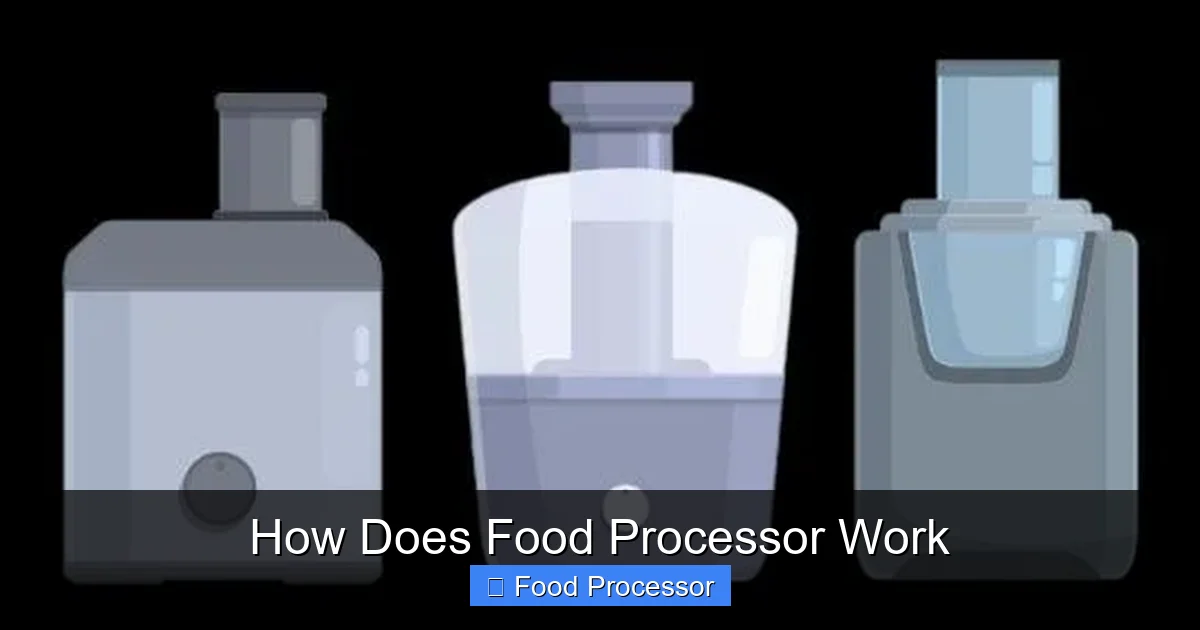
A food processor is a versatile kitchen appliance that simplifies meal preparation by performing repetitive tasks like chopping, slicing, shredding, and pureeing. It works by using a powerful motor housed in the base, which spins a drive shaft connected to interchangeable blades or discs within a sealed work bowl. Safety interlocks ensure the appliance only operates when properly assembled, turning raw ingredients into perfectly processed food with speed and efficiency.
How Does Food Processor Work
Have you ever wondered what magic happens inside that whirring kitchen appliance that turns chunky vegetables into perfectly diced bits or tough nuts into creamy butter in seconds? That’s your food processor at work! It’s an indispensable tool for many home cooks and professional chefs alike, simplifying countless kitchen tasks and saving a tremendous amount of time. But how exactly does this powerful machine do what it does?
Learning how a food processor works isn’t just about satisfying curiosity; it’s about empowering you to use your appliance more effectively, safely, and to its full potential. When you understand the mechanics, you can troubleshoot minor issues, choose the right settings for specific ingredients, and unlock a whole new world of culinary possibilities.
In this comprehensive guide, we’re going to pull back the curtain on the food processor. We’ll explore its fundamental components, delve into the science behind its operation, explain the function of different blades, and provide step-by-step instructions for using it like a pro. We’ll also share practical tips and offer solutions to common problems, ensuring your food processor remains a reliable workhorse in your kitchen. Get ready to transform your meal prep experience!
Key Takeaways
- Core Components: A food processor consists of a motor base, a work bowl, a lid with a feed tube, a drive shaft, and various interchangeable blades or discs, each designed for specific tasks.
- Motor-Driven Action: The powerful electric motor in the base is the heart of the appliance, converting electrical energy into mechanical force that rapidly spins the attached blade or disc.
- Safety First: Modern food processors incorporate essential safety interlocks that prevent the machine from operating unless the work bowl and lid are correctly locked into place, protecting users from accidental injury.
- Versatile Blades: Different blades (like the S-blade for chopping, or grating/slicing discs) allow the food processor to perform a wide range of functions, from finely mincing garlic to evenly slicing vegetables.
- Pulse Function Mastery: The pulse button offers precise control over processing, allowing for short bursts of power to achieve desired textures without over-processing ingredients, preventing mushy results.
- Efficient Workflow: Understanding how a food processor works enables you to use it more effectively, preparing ingredients properly, choosing the right attachment, and mastering techniques for consistent and quick meal prep.
- Maintenance and Troubleshooting: Regular cleaning and knowing how to address minor issues like a non-spinning blade or uneven processing are key to maintaining your food processor’s longevity and performance.
1. Understanding the Core Components of Your Food Processor
Before we dive into the “how,” let’s get familiar with the “what.” Every food processor, regardless of brand or size, shares a few key components that work in harmony.
The Base Unit and Motor
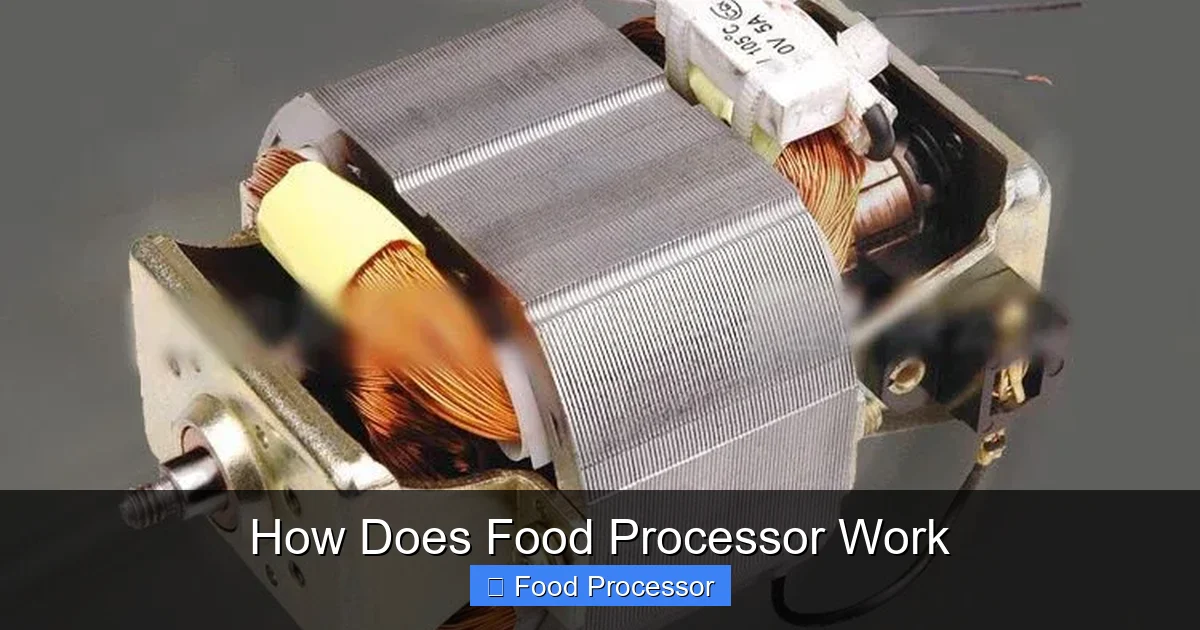
The base unit is the foundation of your food processor. It’s the heaviest part because it houses the powerful electric motor. This motor is the heart of the machine, responsible for generating the rotational force needed to process food. The motor’s power, often measured in watts, directly impacts the food processor’s ability to handle tough ingredients like dough or hard vegetables.
The Work Bowl
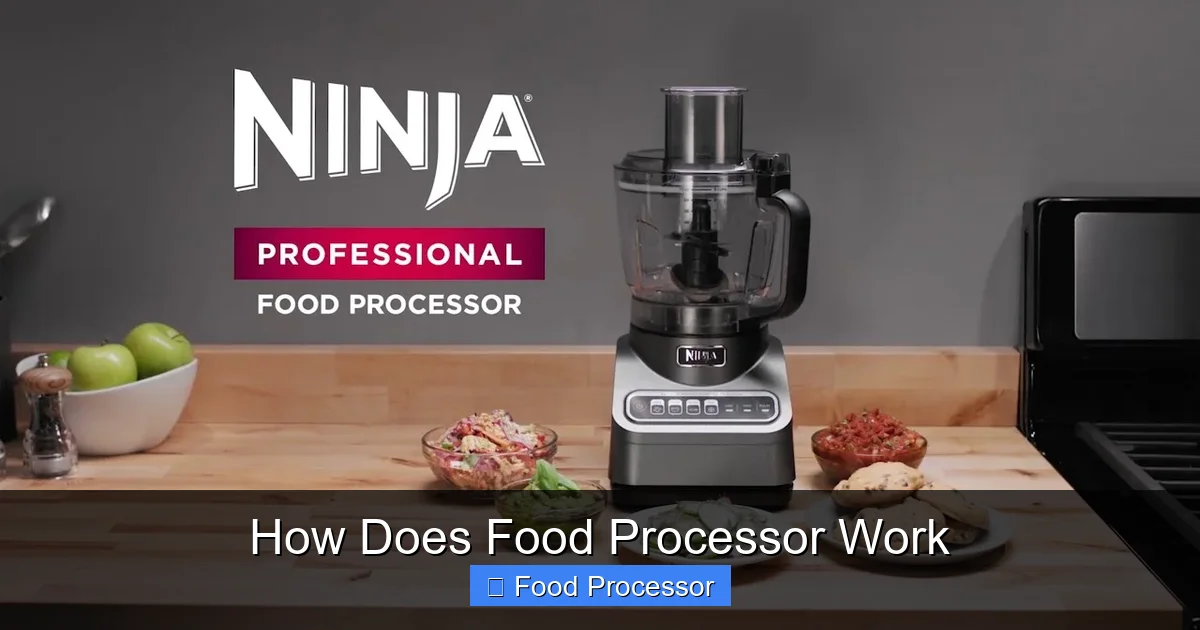
Perched securely on the base, the work bowl is where all the action happens. These bowls are typically made from durable, clear plastic (like Tritan or polycarbonate) or sometimes glass, allowing you to see your ingredients as they process. Work bowls come in various sizes, from compact 3-cup models to large 14-cup capacities, making it important to choose the right size food processor for your needs. A central spindle or drive shaft extends up from the base into the work bowl, ready to receive the blades or discs.
The Lid and Feed Tube
The lid is a crucial safety component that locks onto the top of the work bowl. It usually features a feed tube, a cylindrical opening through which you can add ingredients while the machine is running. Most lids also come with a pusher, which fits into the feed tube, allowing you to safely guide food down towards the spinning blades without putting your hands near them.
The Blades and Discs
This is where the versatility of the food processor truly shines. Depending on the model, your food processor will come with an assortment of attachments designed for different tasks.
- S-Blade (Chopping Blade): This is the most common blade, shaped like an “S” or a scimitar. It’s typically made from stainless steel and is used for chopping, mincing, pureeing, mixing, and even kneading dough in some cases.
- Slicing Disc: A flat disc with a sharp blade or series of blades, designed to create uniform slices of vegetables, fruits, or cheese.
- Shredding/Grating Disc: Similar to a slicing disc but with raised perforations or teeth that grate or shred ingredients like cheese, carrots, or cabbage.
- Dough Blade: Some food processors include a plastic dough blade, which is gentler than the S-blade and ideal for mixing and kneading bread dough without overworking it.
- Whisk/Emulsifying Disc: Less common but useful for whipping cream, beating eggs, or emulsifying dressings.
2. The Magic Behind the Motion: How It All Connects
Visual guide about How Does Food Processor Work
Image source: tw-motor.com
Now that you know the parts, let’s explore how they interact to perform culinary tasks. The process is a clever blend of electrical engineering and mechanical design.
Powering Up: Electrical Energy to Mechanical Force
When you plug in your food processor and press the “on” button (or “pulse”), you complete an electrical circuit. Electricity flows from your wall outlet into the motor in the base unit. This electric motor then converts that electrical energy into mechanical energy, specifically, a rapid rotational motion. Think of it like a small but powerful engine.
The Drive Shaft’s Role
Extending from the motor, upwards through the center of the base and into the work bowl, is the drive shaft. This shaft is designed to securely engage with the chosen blade or disc attachment. When the motor spins, the drive shaft spins with it, transferring that rotational energy directly to the attachment.
Blade Attachment and Movement
The blades or discs sit on the drive shaft inside the work bowl. As the shaft spins, the attached blade or disc rotates at high speed. For example, the S-blade rapidly chops and blends ingredients by continuously cutting and throwing them against the sides of the bowl, allowing them to fall back down into the blades’ path. Slicing and shredding discs work differently, using centrifugal force to push ingredients against the disc’s surface, where they are then cut or grated by the sharp edges.
Safety Interlocks: Why Your Food Processor Won’t Start Without Them
Food processors are powerful machines with very sharp blades, so safety is paramount. Almost all modern food processors have a series of safety interlocks. These are mechanical or electrical switches that prevent the motor from operating unless the work bowl is correctly seated on the base and the lid is securely locked into place. If you’ve ever tried to turn on your food processor and it didn’t respond, chances are a safety interlock wasn’t engaged. This design prevents accidental starts and protects users from coming into contact with moving blades.
3. How Different Blades and Discs Work
Visual guide about How Does Food Processor Work
Image source: i.ytimg.com
Understanding how each attachment functions can dramatically improve your results and help you achieve the perfect texture every time.
The S-Blade (Chopping/Mixing Blade)
This is your go-to blade for most tasks. When the S-blade spins, its sharp edges rapidly cut through food. The design of the blade and the bowl ensures that food is constantly circulated. Ingredients at the bottom are chopped, then flung upwards and outwards, while ingredients from the top fall back down into the blade’s path. This continuous motion results in even chopping, mincing, pureeing, or mixing. It’s excellent for making pesto, hummus, chopping nuts, or mincing garlic.
Slicing Discs
Slicing discs are placed on top of the drive shaft, usually just under the lid. They typically have a single, long, sharp blade set at an angle or specific height. When food is pushed down the feed tube onto the spinning disc, the blade shaves off uniform slices. The thickness of the slice can often be adjusted on higher-end models by changing the disc or adjusting a lever. This is perfect for cucumbers, potatoes, or carrots.
Shredding Discs
Similar to slicing discs, shredding discs are also positioned on top of the drive shaft. Instead of a single blade, they have numerous small, sharp holes or teeth. As food is pushed through the feed tube, the spinning disc grates it into small pieces. Different discs offer fine, medium, or coarse shredding. This is ideal for cheese, carrots, or even for learning how to use food processor to shred cabbage for coleslaw.
Dough Blades (Plastic Blades)
Some food processors come with a specialized plastic dough blade. Unlike the sharp S-blade, the plastic dough blade has a blunt edge. It’s designed to gently mix and knead dough, simulating the action of hand-kneading without cutting the gluten strands excessively. This helps develop the dough’s structure while preventing it from becoming tough.
4. Using Your Food Processor: A Step-by-Step Guide
Now that you understand the mechanics, let’s put that knowledge into practice. Proper use ensures both safety and optimal results.
Step 1: Assemble Your Food Processor Safely
Begin by placing the motor base on a clean, stable, and dry countertop. Ensure it’s unplugged before assembly. Then, carefully place the work bowl onto the base, twisting it until it locks into position. Next, select the appropriate blade or disc for your task and carefully place it onto the drive shaft within the work bowl. If using a disc, it will sit higher up, often near the top rim of the bowl. For detailed instructions, check out our guide on how to assemble a food processor step-by-step.
Step 2: Prepare Your Ingredients
This step is crucial for consistent results. Cut larger ingredients into pieces that will fit comfortably through the feed tube (if using discs) or are small enough for the S-blade to handle efficiently without overloading. For chopping, aim for roughly uniform sizes so they process evenly. Remove any hard pits, cores, or tough skins that could damage the blades.
Step 3: Load the Work Bowl Correctly
For the S-blade, add your prepared ingredients directly into the work bowl. Don’t overfill it – most manufacturers recommend not filling past the maximum fill line, or about two-thirds full, to allow ingredients to circulate properly. For slicing or shredding discs, load ingredients into the feed tube, but only when the lid is securely in place and the machine is ready to run.
Step 4: Secure the Lid
Place the lid onto the work bowl and twist it firmly until it locks into place. You’ll often hear a click or feel it snap. This action engages the safety interlock, allowing the machine to power on. If the lid isn’t properly secured, the food processor won’t start.
Step 5: Select the Right Speed and Technique (Pulse vs. Continuous)
Most food processors have “On,” “Off,” and “Pulse” settings.
- Pulse: This is your best friend for most chopping and coarse processing tasks. The pulse button provides short bursts of power, giving you precise control over the texture. It allows you to check the consistency frequently and prevents over-processing, which can quickly turn ingredients into mush.
- On (Continuous): Use the continuous setting for longer tasks like pureeing, kneading dough, or finely grinding ingredients. Be mindful not to run the motor continuously for too long, as this can lead to overheating, especially with tougher ingredients.
Step 6: Process Your Food
Plug in your food processor. For chopping, press the “Pulse” button in short bursts until you reach your desired consistency. For slicing or shredding, turn the machine to “On,” then slowly feed ingredients through the feed tube using the pusher. Never use your fingers! For general chopping tasks, you might find our guide on how to use food processor to chop vegetables very helpful.
Step 7: Empty and Clean
Once finished, unplug the food processor. Carefully remove the lid, then the blade or disc (always handle blades by the plastic hub, not the sharp edges). Scrape out your processed food. Most work bowls, lids, pushers, and blades are top-rack dishwasher safe, but always check your manufacturer’s instructions. Wipe down the motor base with a damp cloth; never immerse it in water.
5. Practical Tips for Optimal Performance
To get the most out of your food processor and ensure its longevity, keep these tips in mind:
- Don’t Overfill: Overloading strains the motor and results in uneven processing. Work in batches if necessary.
- Cut Food Uniformly: Especially for chopping or mincing, cutting ingredients into similar sizes before adding them to the bowl helps ensure even results.
- Use the Pulse Button: As mentioned, pulsing gives you control. It’s almost always better to under-process and pulse again than to over-process.
- Add Liquids Slowly: When making dressings, sauces, or purees, add liquids through the feed tube while the machine is running (on continuous) to emulsify properly.
- Chill Sticky Ingredients: For items like soft cheeses or certain meats, chilling them slightly before processing can make them firmer and easier to shred or chop without clumping.
- Alternate Hard and Soft: When processing a mix of hard and soft ingredients, add harder items first or alternate them to help the blade work through everything more effectively.
- Clean Immediately: Food residue can dry and harden, making cleaning more difficult. A quick rinse or wash right after use saves time and effort.
6. Troubleshooting Common Food Processor Issues
Even with the best care, you might encounter a few hiccups. Here’s how to address common problems:
Food Processor Won’t Start
This is almost always a safety interlock issue. Double-check that the work bowl is securely twisted onto the base and the lid is firmly locked into place. Make sure it’s plugged in correctly. If it still doesn’t turn on, refer to your appliance’s manual or our guide on how to fix a food processor that is not turning on.
Blade Not Spinning
If the motor hums but the blade isn’t turning, the blade might not be correctly seated on the drive shaft, or the drive shaft itself might be jammed. Unplug the unit, remove the lid and bowl, and check that the blade is properly aligned and freely spinning by hand. Sometimes, too much food or an oversized piece can prevent the blade from moving. If your food processor blade not spinning, check our dedicated article for more in-depth solutions.
Unevenly Processed Food
This usually happens due to overfilling, inconsistent ingredient size, or not using the pulse function effectively. Ensure ingredients are cut to similar sizes, don’t overload the bowl, and use short pulses to achieve an even chop. Sometimes, scraping down the sides of the bowl with a spatula between pulses can help.
Motor Overheating or Smelling Burnt
If your food processor gets hot or emits a burning smell, turn it off immediately and unplug it. This often indicates the motor is being overworked. You might be processing too much food, ingredients that are too tough, or running it continuously for too long. Let it cool down completely (at least 30 minutes) before attempting to use it again. Consider processing in smaller batches or cutting ingredients into smaller pieces.
Food Gets Stuck Under the Blade
This is common with sticky or very finely chopped ingredients. Stop the machine, unplug it, remove the blade, and scrape the food from underneath. Using slightly larger pieces or pulsing for shorter durations can sometimes prevent this.
Conclusion
Understanding how a food processor works truly demystifies this incredible kitchen appliance. From the powerful motor silently whirring in the base to the precision of its interchangeable blades, every component plays a vital role in transforming raw ingredients into culinary masterpieces. By grasping the mechanics and applying the practical tips we’ve discussed, you’re not just operating a machine; you’re harnessing its full potential.
So go ahead, experiment with new recipes, chop vegetables with unprecedented speed, and whip up delicious purees and sauces with confidence. Your food processor is more than just a convenience; it’s a gateway to more efficient, enjoyable, and creative cooking. Keep it clean, use it safely, and it will be a trusty companion in your kitchen for years to come. Happy processing!
