

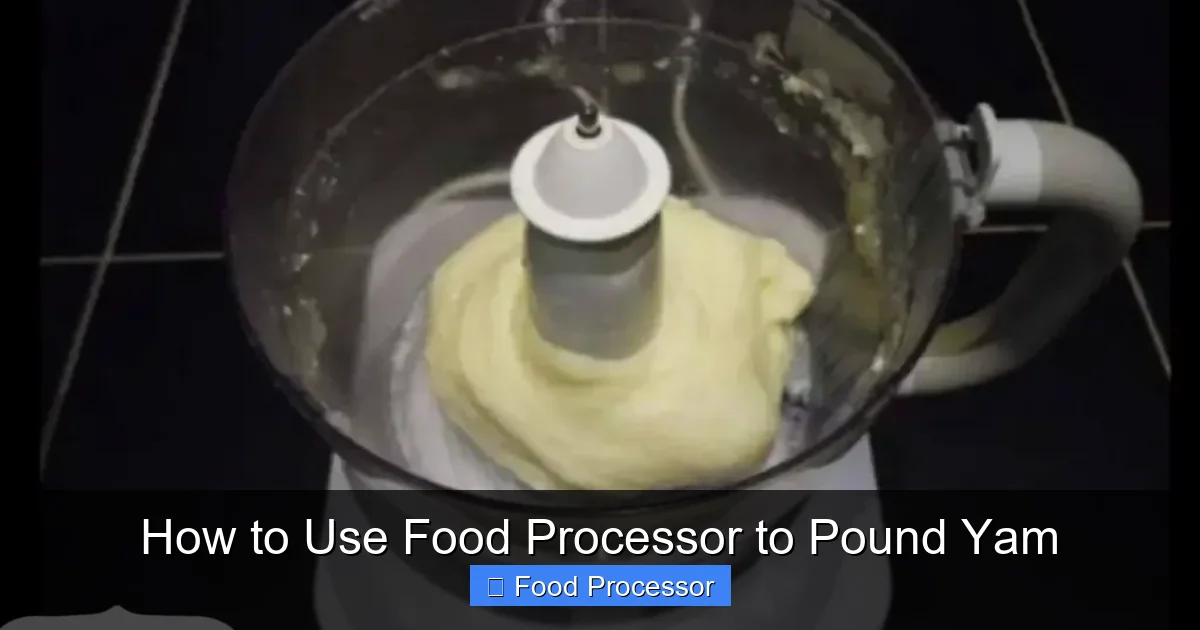
Transforming boiled yam into smooth, fluffy pounded yam is a breeze with a food processor. This guide teaches you the simple steps to achieve a traditional staple with modern convenience, eliminating the need for tedious manual pounding. You’ll learn how to select and prepare yam, assemble your food processor, and use the pulsing technique to create perfect pounded yam. Say goodbye to heavy pounding and hello to a quick, delicious meal!
How to Use Food Processor to Pound Yam
Pounded yam is a beloved staple in many West African cuisines, known for its smooth, dough-like texture and its perfect pairing with rich, flavorful soups and stews. Traditionally, preparing pounded yam involves a mortar and pestle – a strenuous, time-consuming process that requires significant physical effort. While the traditional method offers a certain charm and authentic experience, it’s not always practical for busy home cooks.
Enter the food processor – a modern kitchen marvel that can transform the tedious task of pounding yam into a quick, efficient, and much easier process. If you’ve ever wondered if your trusty food processor can handle this task, the answer is a resounding yes! With the right technique and a few simple steps, you can achieve wonderfully smooth and fluffy pounded yam right in your own kitchen. This guide will walk you through everything you need to know, from selecting the right yam to serving your delicious creation, ensuring you get perfect results every time.
By the end of this comprehensive guide, you’ll be a pro at using your food processor to pound yam, saving time and effort without compromising on taste or texture. Let’s get started!
Key Takeaways
- Proper Yam Preparation is Key: Always start with well-cooked, hot yam cut into small, uniform pieces for best results.
- Use the Correct Food Processor Blade: The S-blade (also known as the chopping or mixing blade) is essential for effectively pounding yam.
- Work in Small Batches: Avoid overfilling your food processor to ensure efficient processing and prevent strain on the motor, leading to a smoother consistency.
- Master the Pulsing Technique: Short, controlled pulses are crucial for breaking down the yam without turning it into a gluey paste. Process just until smooth.
- Keep Yam Hot and Add Liquid Sparingly: Processing hot yam yields the best texture. If needed, add a tablespoon of hot water or yam cooking water at a time to achieve desired consistency.
- Check for Optimal Consistency: Pounded yam should be smooth, pliable, and able to form a ball without sticking excessively.
- Prioritize Safety and Cleaning: Always unplug your food processor before assembling, disassembling, or cleaning, and clean components thoroughly after use.
Before You Begin: Gathering Your Tools and Ingredients
Preparation is half the battle when it comes to any cooking task. Make sure you have everything you need within reach before you start.
Essential Equipment
To successfully pound yam with a food processor, you’ll need a few key items:
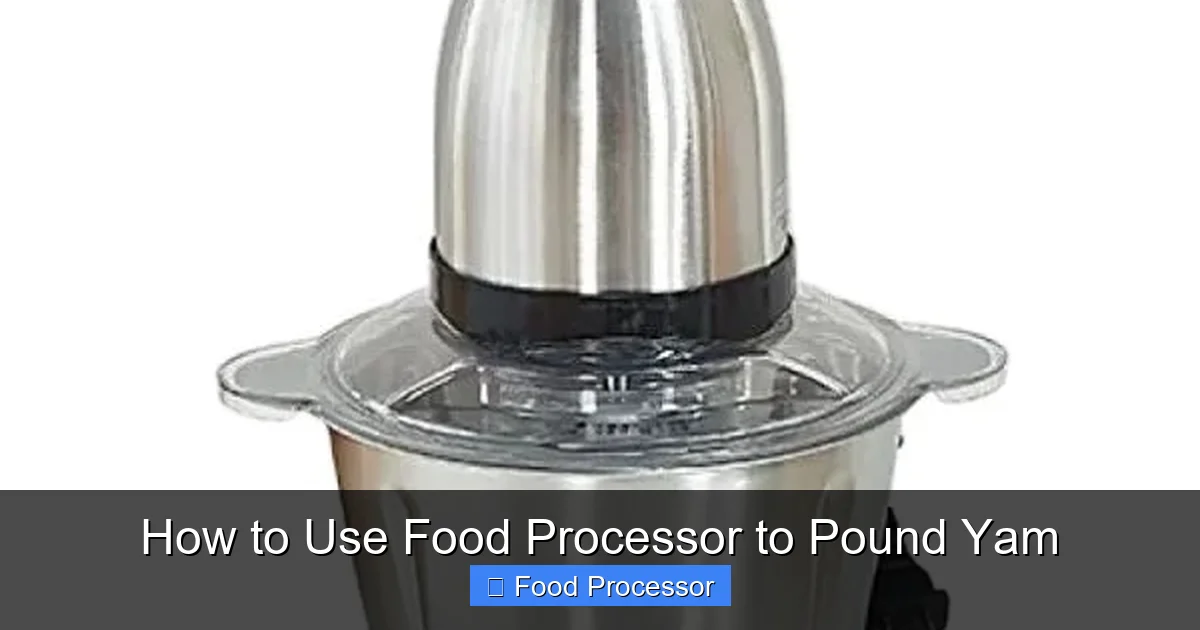
- Food Processor: A sturdy food processor with a powerful motor is essential. Ideally, choose one with a capacity of at least 7 cups. Larger models (11-14 cups) are even better as they allow you to process bigger batches, which can be useful when you need to make more pounded yam. If you’re still considering your options, learning how to choose the right size food processor can help you make an informed decision.
- S-Blade (Chopping/Mixing Blade): This is the standard blade that comes with most food processors and is the one you’ll use for pounding yam. Do not use grating or slicing discs.
- Large Pot: For boiling the yam.
- Sharp Knife and Peeler: For preparing the yam.
- Colander: For draining the boiled yam.
- Spatula or Wooden Spoon: For scraping down the sides of the food processor bowl and for mixing.
- Serving Bowl: To hold your finished pounded yam.
- Oven Mitts or Tongs: To handle hot yam safely.
Ingredients You’ll Need
The beauty of pounded yam is its simplicity, requiring just one main ingredient:
- Fresh Yam: White or puna yam is the traditional choice for pounded yam due to its starchy texture and ability to become smooth and pliable when cooked and processed. Avoid sweet potatoes or other types of yams that might have a different consistency or flavor profile.
- Water: For boiling the yam.
- Optional: A pinch of salt: Some people add a little salt to the boiling water for flavor, but it’s not strictly necessary.
Step 1: Preparing Your Yam
Proper preparation of the yam before it goes into the food processor is crucial for achieving the desired smooth texture.
Choosing the Right Yam
When selecting yam, look for firm, unblemished tubers. White or puna yam varieties are ideal. They should feel heavy for their size and have no soft spots. Avoid yams that show signs of sprouting or decay, as these will affect the final taste and texture.
Visual guide about How to Use Food Processor to Pound Yam
Image source: nenisabizworld.com.ng
Peeling and Cutting
- Peel the Yam: Carefully peel the tough outer skin of the yam using a sharp knife or a sturdy vegetable peeler. Yam skin can be quite tough, so exercise caution.
- Wash Thoroughly: Rinse the peeled yam under cold running water to remove any dirt or residue.
- Cut into Chunks: Cut the peeled yam into small, uniform chunks, about 1-1.5 inches (2.5-4 cm) in size. Smaller, consistent pieces will cook more evenly and be easier for your food processor to handle. This also helps to ensure the yam gets fully cooked through.
Boiling the Yam
- Place in Pot: Put the cut yam chunks into a large pot.
- Cover with Water: Add enough cold water to fully cover the yam chunks. You can add a pinch of salt if desired.
- Boil Until Tender: Bring the water to a boil over medium-high heat. Reduce the heat to medium and cook until the yam is very tender when pierced with a fork. This usually takes about 20-30 minutes, depending on the size of your yam pieces. It’s essential that the yam is thoroughly cooked; undercooked yam will result in lumpy pounded yam.
- Drain Well: Once cooked, immediately drain the hot yam in a colander. Shake off as much excess water as possible.
Pro Tip: Ensure the yam is still very hot when you transfer it to the food processor. Hot yam processes much better into a smooth paste; cold yam tends to become gluey or tough. It’s safe to put hot food in a food processor, but exercise caution. For more details on this, you might find our article on is it safe to put hot food in a food processor helpful.
Step 2: Setting Up Your Food Processor
Correct assembly of your food processor is vital for both safety and optimal performance.
Assembling the Blade
- Unplug First: Always ensure your food processor is unplugged from the power outlet before assembly or disassembly.
- Place the S-Blade: Carefully place the S-blade onto the central spindle inside the food processor bowl. Make sure it’s securely seated.
- Attach the Bowl to the Base: Place the food processor bowl onto the motor base, twisting it until it locks into place. If you need a refresher on how to set up your appliance, our guide on how to assemble your food processor provides detailed instructions.
Securing the Lid
Place the lid onto the food processor bowl and twist it clockwise until it locks securely into position. Most food processors have safety mechanisms that prevent them from operating if the lid isn’t properly locked.
Visual guide about How to Use Food Processor to Pound Yam
Image source: 9jafoods.com
Step 3: Pounding the Yam in Batches
This is where the magic happens! Pounding yam with a food processor requires a specific technique to achieve that smooth, elastic texture.
Loading the Food Processor
- Work in Batches: Do not overfill your food processor. For most standard-sized food processors (7-12 cups), you’ll want to process no more than 2-3 cups of cooked yam chunks at a time. Overfilling can strain the motor and result in unevenly pounded yam.
- Transfer Hot Yam: Carefully transfer a batch of hot, drained yam chunks into the food processor bowl.
The Pulsing Technique
The key to perfect pounded yam is using the ‘pulse’ function, not continuous blending. Continuous blending can over-process the yam, making it gluey or pasty rather than smooth and fluffy.
- Start Pulsing: Secure the lid and begin pulsing the yam. Press the ‘pulse’ button for 1-2 seconds, then release. Repeat this action.
- Scrape Down Sides: After about 10-15 pulses, stop the food processor. Use a spatula to scrape down any yam stuck to the sides of the bowl, pushing it back towards the blade. This ensures all pieces are evenly processed.
- Continue Pulsing: Continue to pulse and scrape until the yam begins to form a rough, sticky ball and the chunks are mostly broken down.
Adding Moisture (If Needed)
Sometimes, the yam might appear too dry or stiff to fully come together. This is when you can add a little liquid.
- Use Hot Water: Add hot water (or the reserved hot yam cooking water) one tablespoon at a time through the feed tube while the processor is off.
- Pulse Again: Pulse a few more times after each addition, scraping down the sides, until the yam comes together into a cohesive, smooth dough. Be careful not to add too much water, as this can make the pounded yam too soft or watery.
Step 4: Achieving the Perfect Pounded Yam Consistency
The goal is a smooth, elastic, and lump-free texture.
Checking for Smoothness
Once the yam has been pulsed for a few minutes and looks mostly smooth, stop the processor and check the consistency. It should be:
- Smooth: No noticeable lumps.
- Pliable: Easy to manipulate and shape.
- Slightly Sticky: It will naturally be a bit sticky, but not excessively so.
- Elastic: When stretched slightly, it should have some give.
Continuous Pulsing or Processing
If your yam still has small lumps or isn’t as smooth as you’d like, continue pulsing. Some food processors have a “mix” or “dough” setting that you can use for a short, continuous run (no more than 30-60 seconds at a time) once the initial breakdown has occurred. However, pulsing generally gives better control and prevents over-processing. Keep processing until it reaches your desired smoothness. Remember, the ultimate goal is a texture similar to firm dough, not a purée or a paste. You want it to be reminiscent of traditional pounded yam, which is elastic enough to be torn and dipped into soup.
Step 5: Serving Your Delicious Pounded Yam
Once your pounded yam is perfectly smooth, it’s time to enjoy the fruits of your labor!
Transferring and Shaping
- Scoop Out: Use a sturdy spoon or a wet spatula to scoop the pounded yam out of the food processor bowl and into a serving bowl. Wetting your spoon or hands slightly can help prevent sticking.
- Shape into Balls (Optional): Many prefer to serve pounded yam shaped into individual balls. You can do this by using a small bowl lined with cling film, pressing a portion of pounded yam into it, and then inverting it onto a plate. Alternatively, lightly wet your hands and shape the yam into neat balls.
Pairing with Soups and Stews
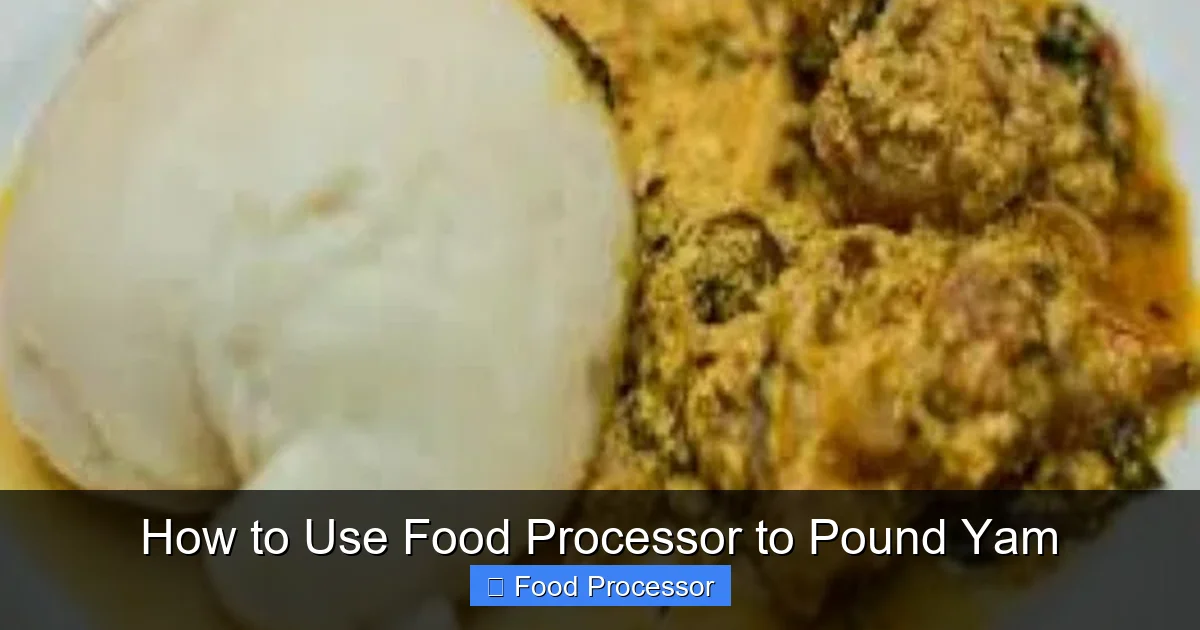
Pounded yam is traditionally eaten with various rich and savory West African soups and stews. Popular choices include:
- Egusi Soup (melon seed soup)
- Okro Soup (okra soup)
- Efo Riro (spinach stew)
- Ogbono Soup (wild mango seed soup)
- Bitter Leaf Soup
Serve immediately while still warm. Pounded yam is best enjoyed fresh.
Practical Tips for Success
- Don’t Overfill: This is perhaps the most important tip. Working in small batches prevents your food processor from struggling and ensures a consistent, smooth result.
- Keep Yam Hot: The heat helps the yam break down more easily and achieve that characteristic elastic texture. If your yam cools down too much between batches, you can briefly warm it in the microwave or a double boiler.
- Use the Right Blade: As mentioned, the S-blade is your go-to. Other blades will not yield the correct texture.
- Add Liquid Sparingly: Only add a tablespoon of hot water or cooking liquid at a time if the yam seems too dry or stiff. Too much liquid will make it watery and less enjoyable.
- Consistency is Key: Aim for a smooth, pliable dough that you can easily form into a ball. It should not be sticky like mashed potatoes, nor should it be overly firm.
- Safety First: Always ensure the food processor is unplugged when assembling, disassembling, or cleaning. Make sure the lid is properly locked before operating.
- Consider a Dedicated “Yam Pounder”: While a food processor works great, for those who make pounded yam very frequently or in large quantities, a specialized appliance often called a “yam pounder” can offer even faster and more consistent results. For more information, check out our article on food processor and yam pounder.
Troubleshooting Common Issues
Even with the best instructions, sometimes things don’t go exactly as planned. Here are solutions to common pounded yam problems:
Pounded Yam is Too Lumpy
This usually happens if the yam wasn’t cooked thoroughly enough, or if it wasn’t processed long enough in the food processor. Ensure your yam is very tender before pounding. If it’s still lumpy, return it to the food processor and pulse a bit longer, scraping down the sides frequently to ensure all lumps come into contact with the blade. You might also need to add a tiny splash of hot water if it’s too dry to break down.
Food Processor is Struggling
If your food processor seems to be working too hard, it’s likely overloaded. Turn it off immediately, unplug it, and remove about half of the yam. Process in smaller batches. Also, ensure your yam pieces are small enough (1-1.5 inches) before processing. If your food processor is consistently struggling with small batches, it might not be powerful enough, or the motor could be overheating. Let it rest for a few minutes.
Yam is Too Sticky
A little stickiness is normal, but if it’s overly sticky and hard to handle, you might have added too much water, or the yam variety itself might be higher in moisture. You can try mixing in a very small amount of dry yam flour (if available) to absorb some moisture, or simply handle it with lightly oiled or wet hands. Ensure you’ve drained the boiled yam thoroughly.
Pounded Yam is Too Watery or Soft
This is a common issue from adding too much water during processing or not draining the boiled yam properly. Unfortunately, it’s hard to completely reverse. You can try to salvage it by gently heating it in a non-stick pan over very low heat, stirring constantly, to evaporate some moisture. Be careful not to burn it. This might alter the texture slightly but can make it more palatable.
Conclusion
Congratulations! You’ve successfully learned how to use a food processor to pound yam, transforming a traditionally laborious task into a quick and easy culinary adventure. This method not only saves you time and effort but also consistently delivers smooth, lump-free pounded yam, perfect for pairing with your favorite West African soups.
Embrace this modern approach to a classic dish. Your food processor is a powerful ally in the kitchen, making even the most challenging recipes accessible. Now, you can enjoy the delicious taste and satisfying texture of homemade pounded yam more often, sharing this wonderful culinary experience with family and friends. So go ahead, plug in your food processor, get pounding, and savor the rich flavors of tradition, made easy!
